Inspiration
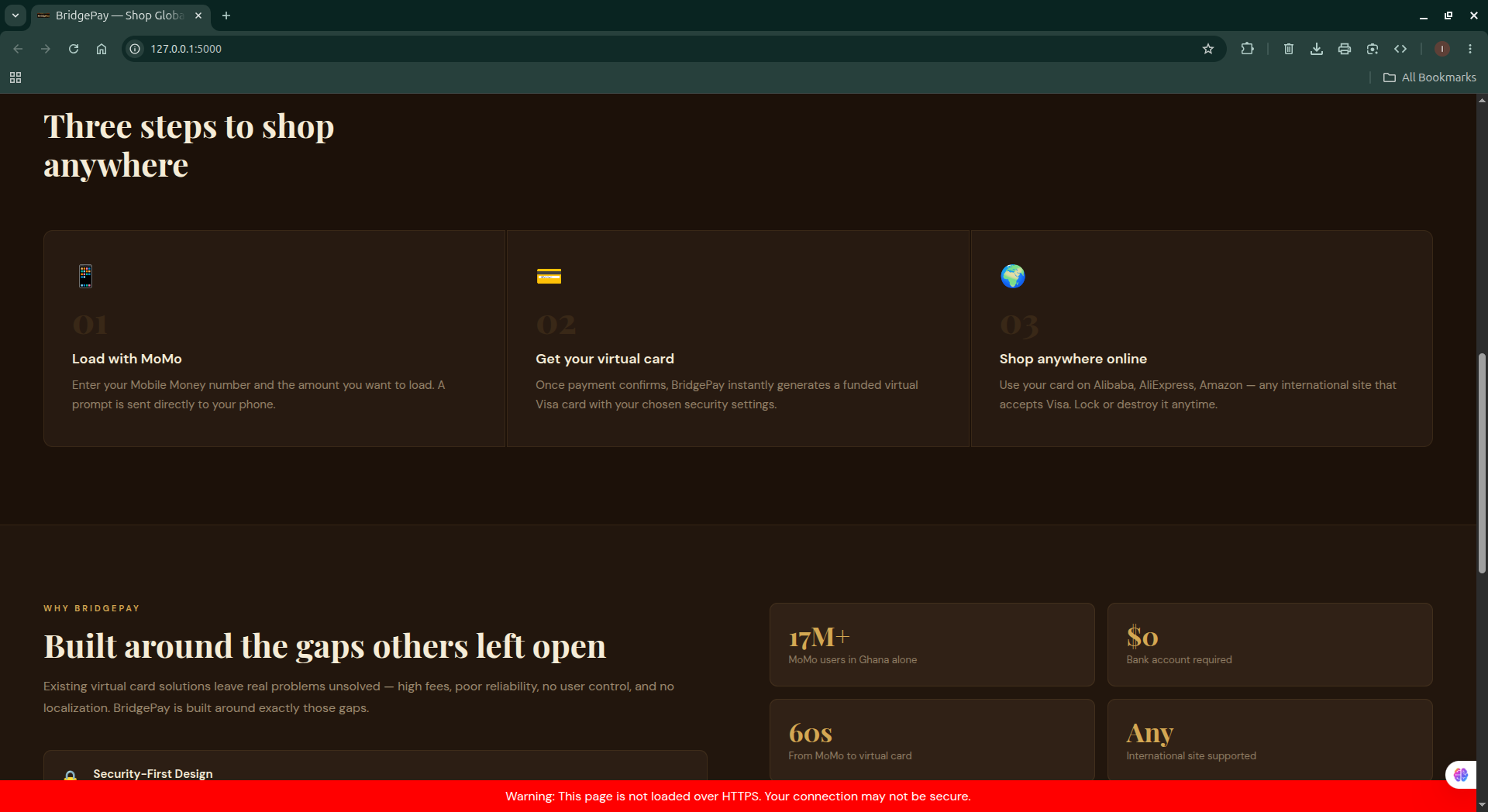
If you've ever tried to pay for something online from Ghana, you know the frustration. You get to checkout and the only options are PayPal or a credit card. Your MoMo is sitting right there but it's useless.
That's where BridgePay came from. Not from a business plan or a market research report. From actually living this problem.
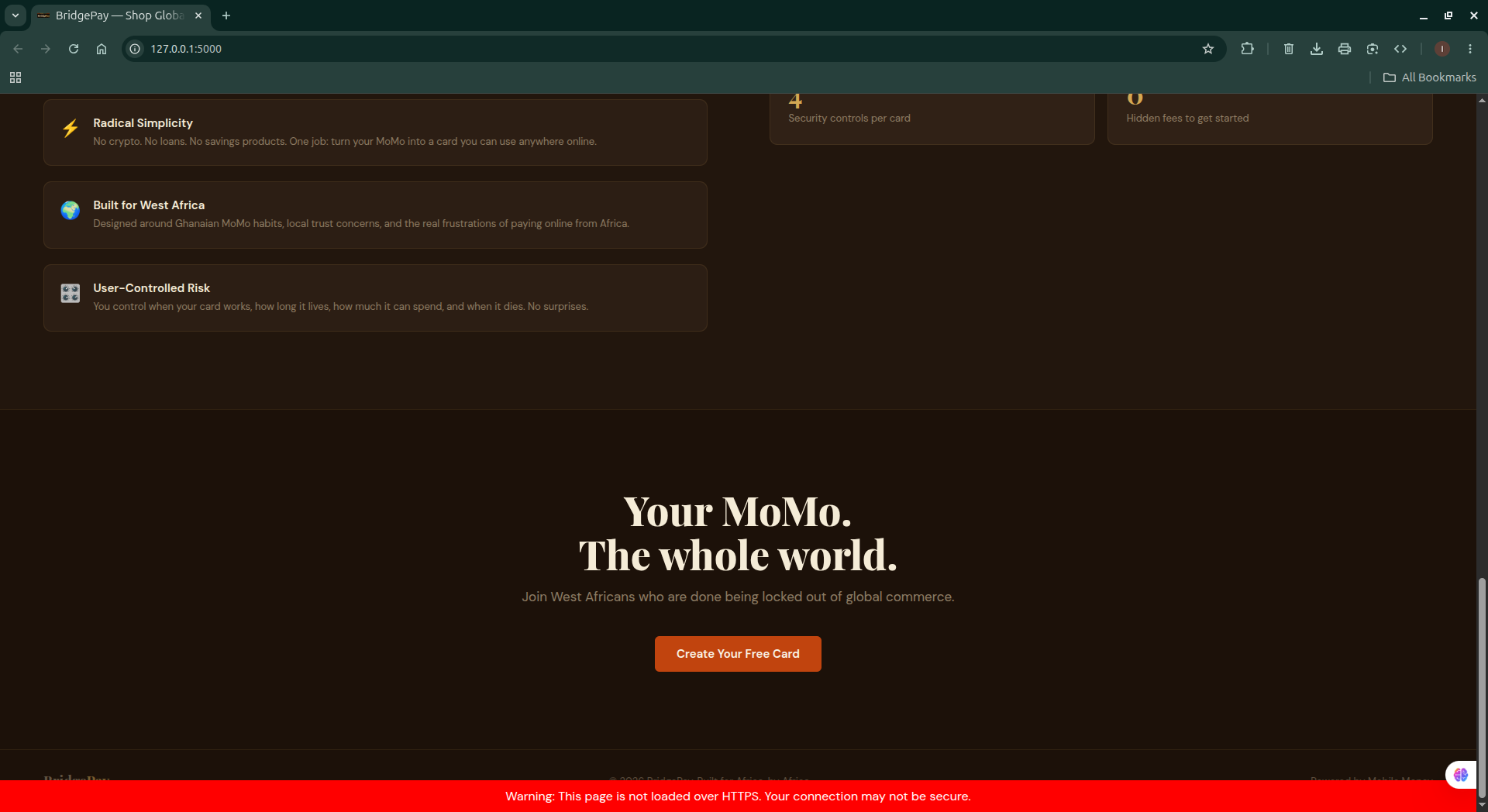
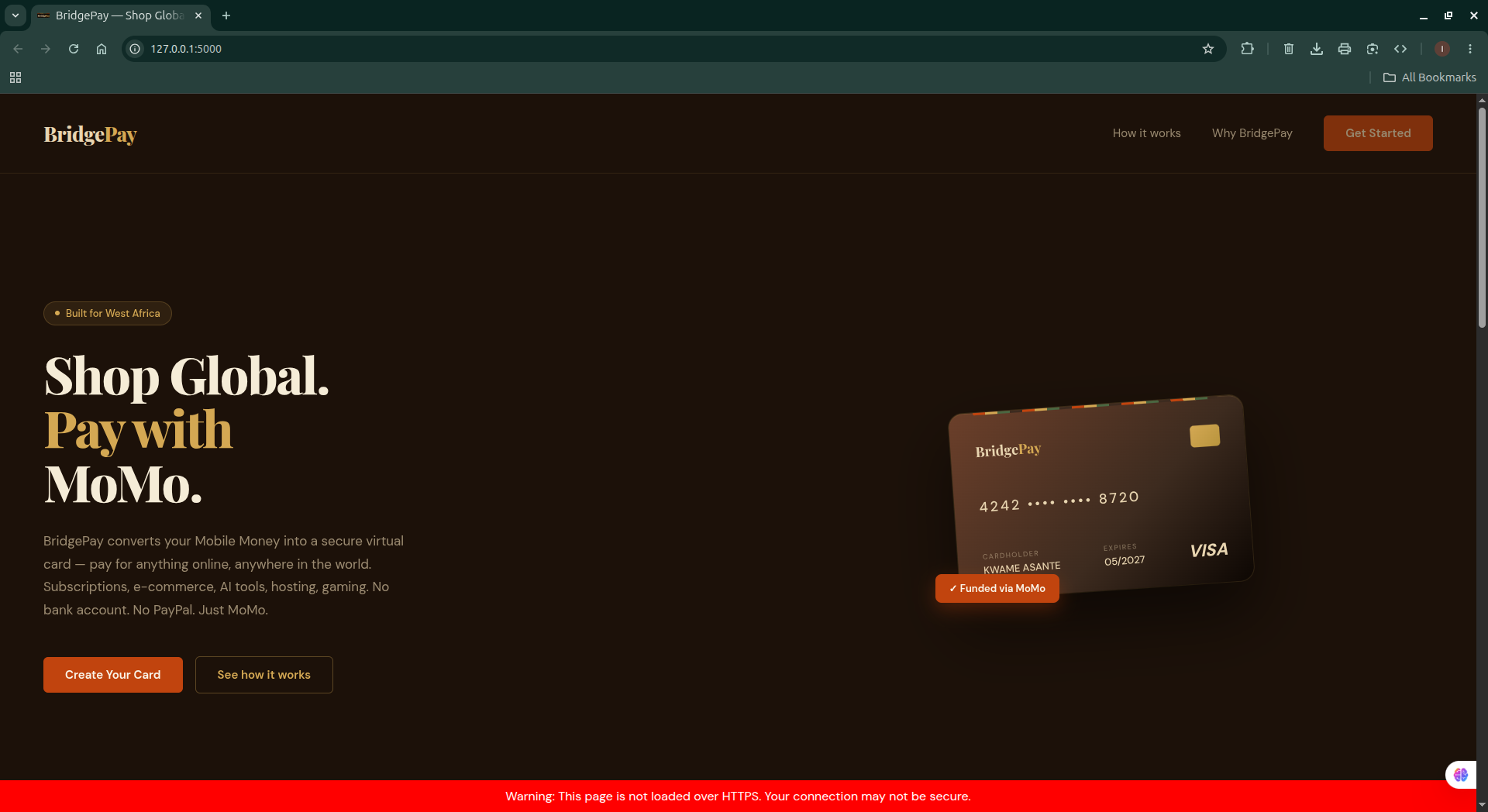
We wanted to build something that gives MoMo users access to the same internet everyone else has — subscriptions, e-commerce, AI tools, hosting, gaming, anything. Without needing a bank account. Without needing PayPal. Just MoMo.
How we built it
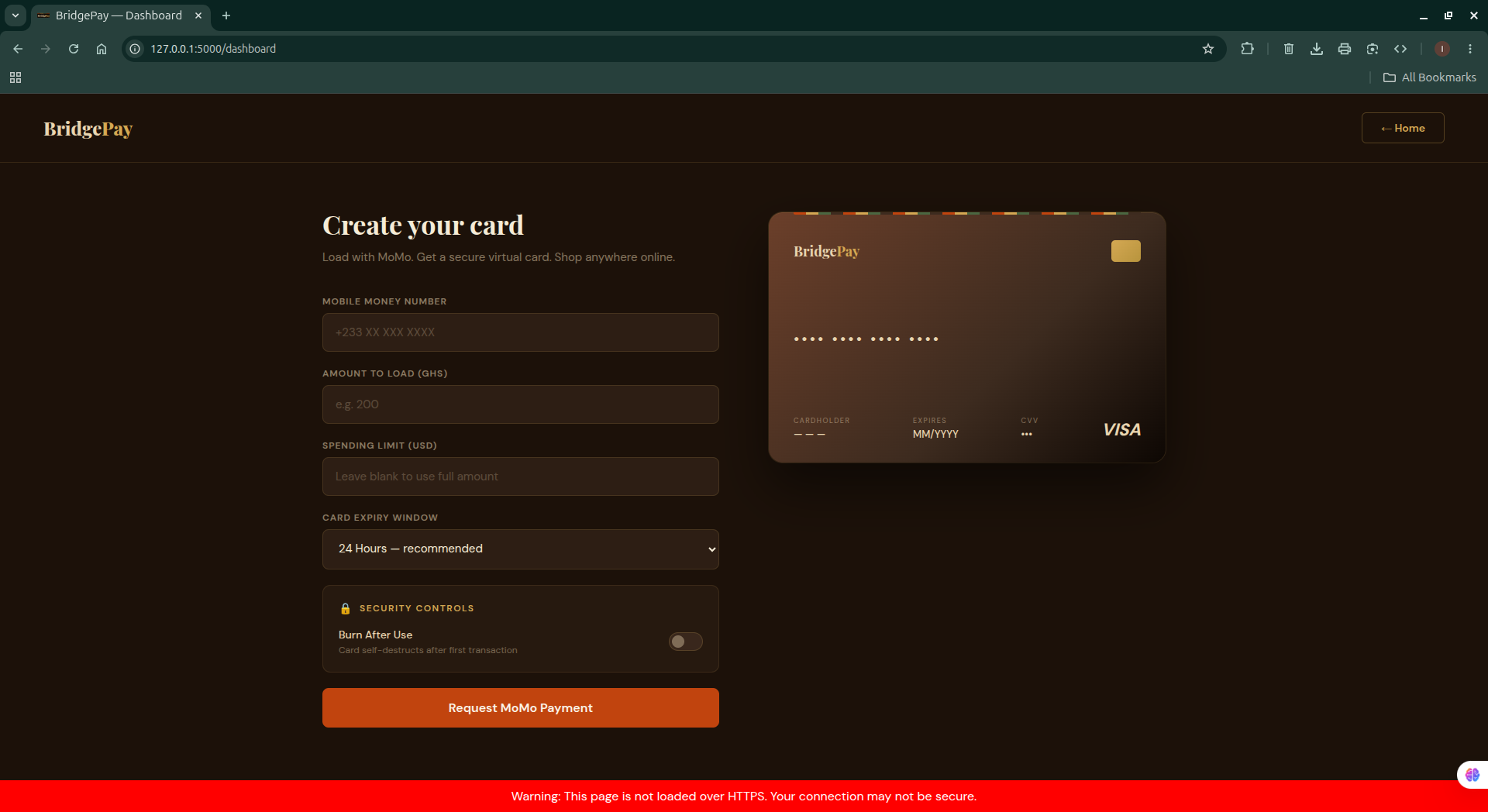
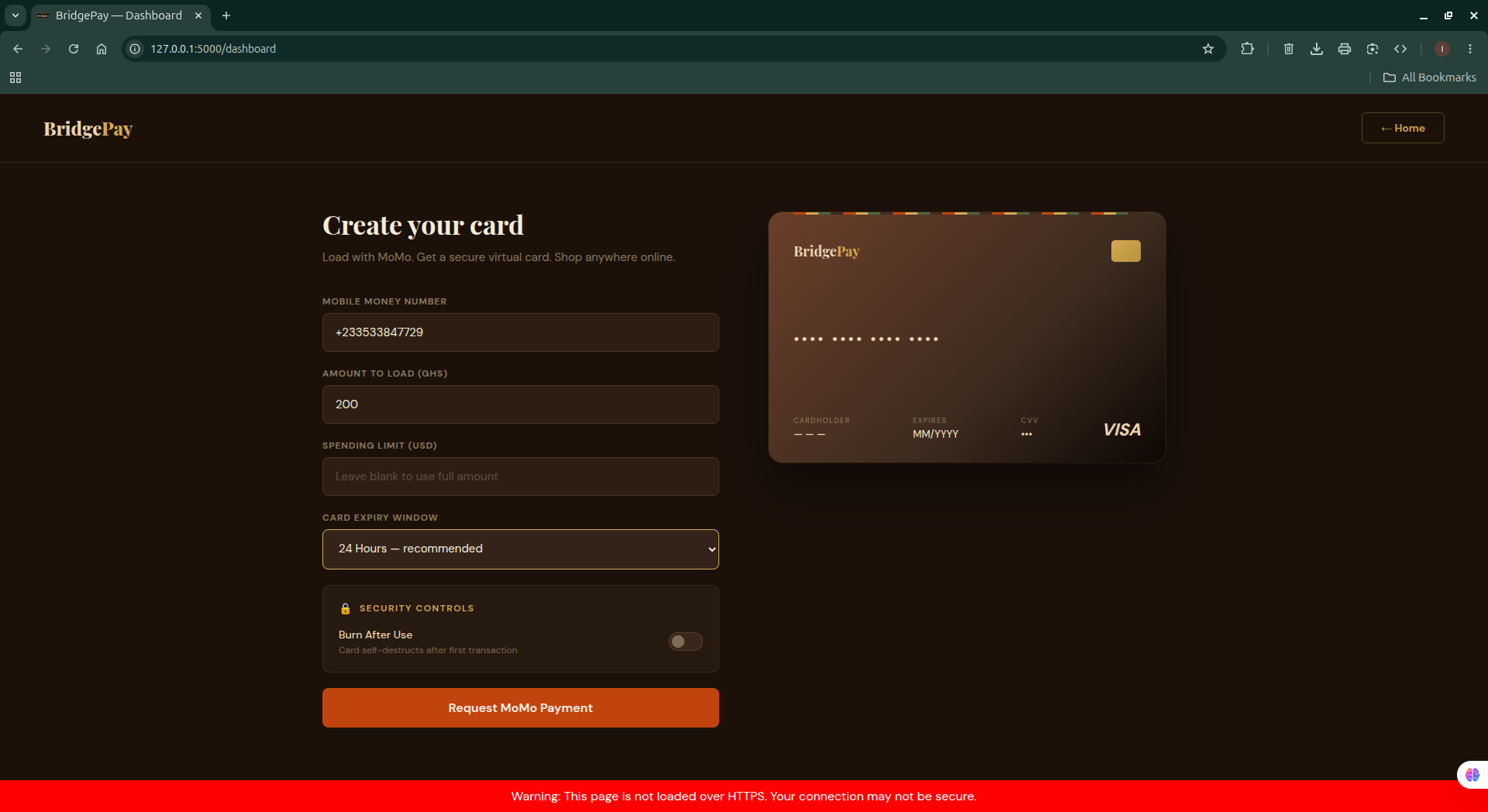
The backend is Python and Flask. We used Africa's Talking for MoMo payment requests and Flutterwave for virtual card generation. SQLite handles the database so your card stays there even after a page refresh. The frontend is plain HTML, CSS, and JavaScript.
The design was intentional. We wanted it to feel Ghanaian, warm earthy colors, Kente-inspired details on the card.
Challenges we ran into
Getting the virtual card API to work was the hardest part. Both Sudo Africa and Flutterwave require business registration before they give you real sandbox access. We're a solo developer, not a registered company. So we built a working mock for the demo and documented exactly how the live integration would work in production.
Africa's Talking sandbox also had DNS issues on our network. Same solution — mock the response, keep building, document the path forward.
These aren't excuses. They're the real barriers African developers hit every day. And honestly they're part of why BridgePay needs to exist in the first place.
Accomplishments that we're proud of
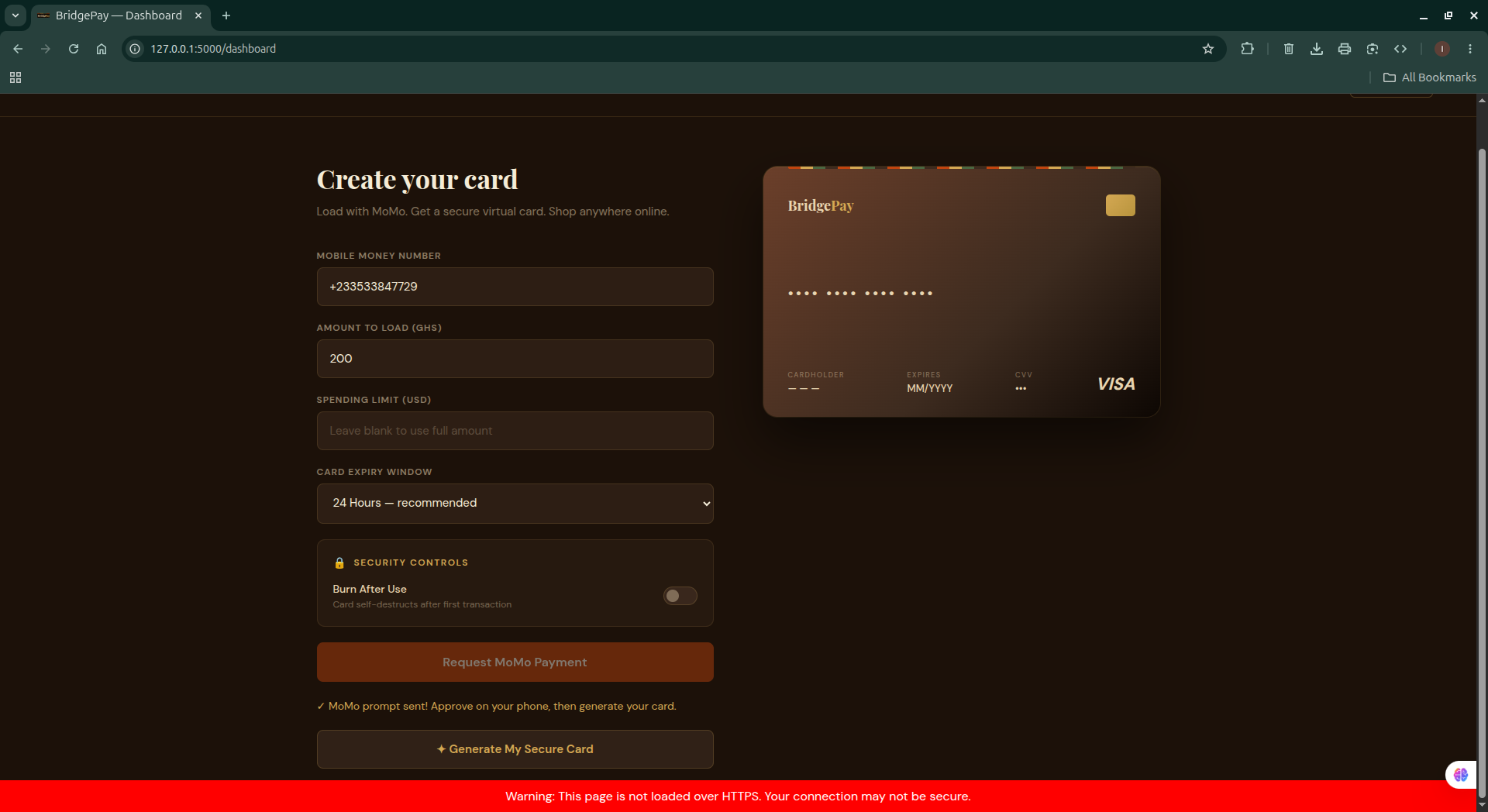
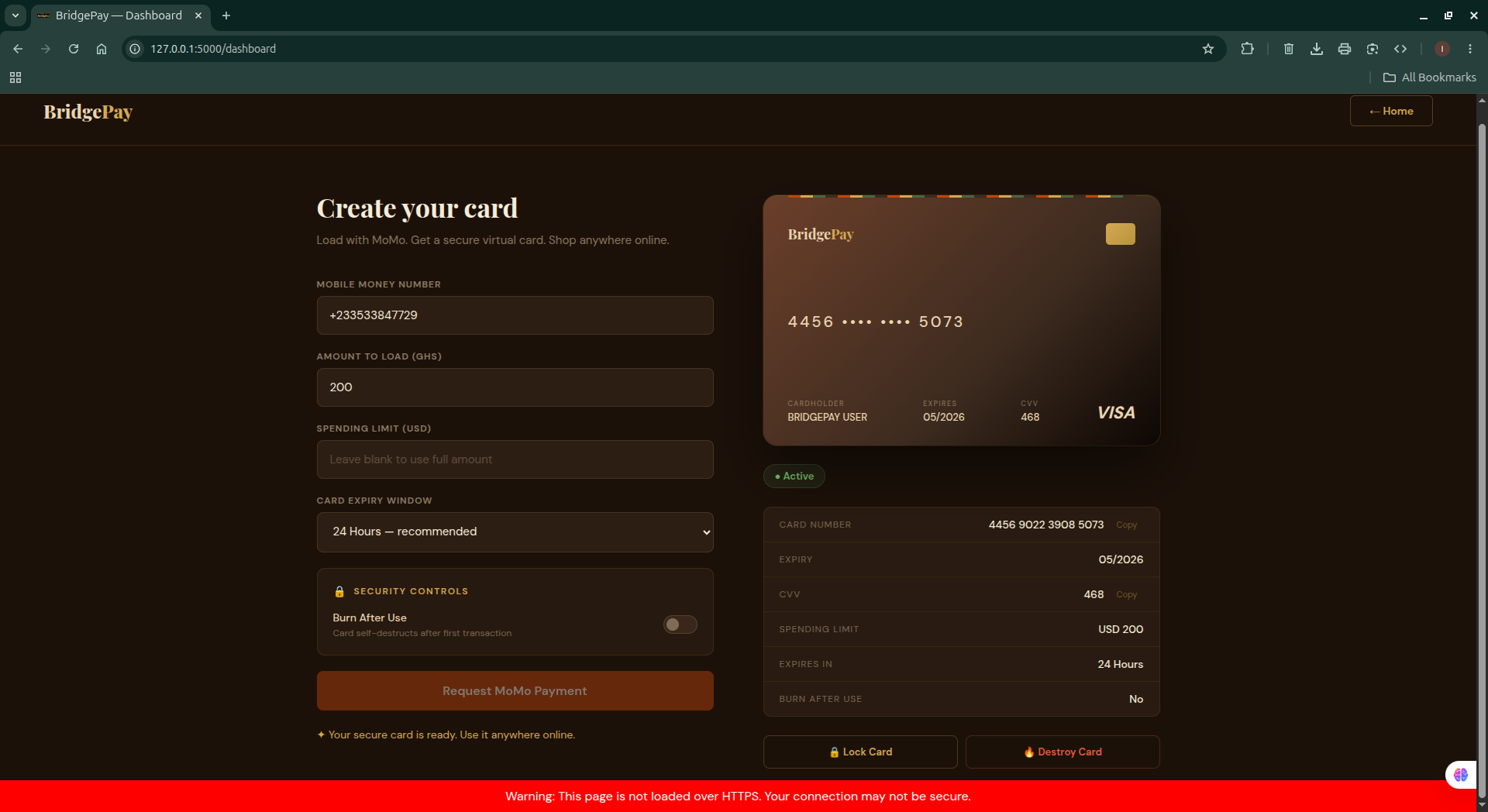
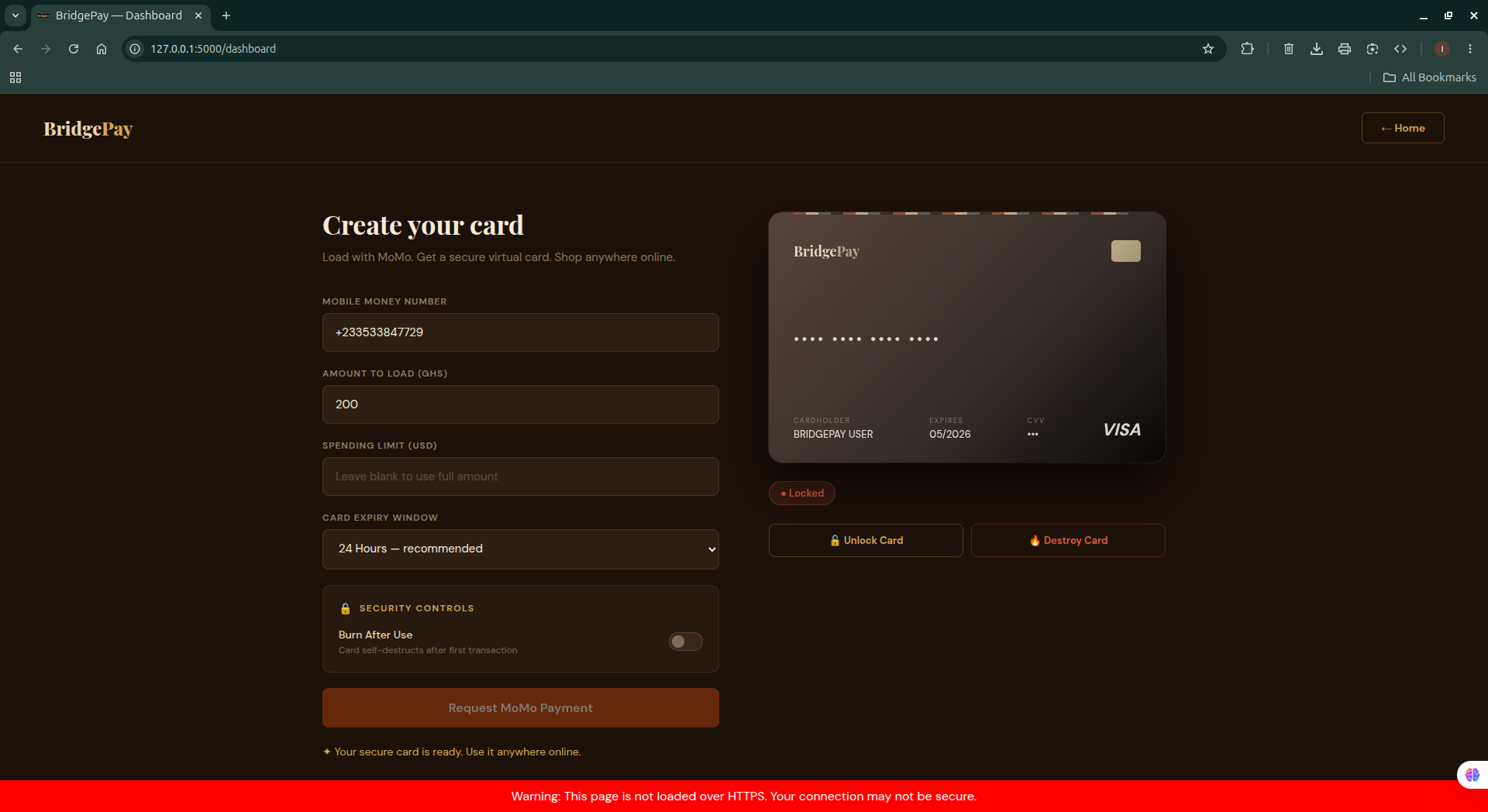
Building a working product in under three weeks, solo. The full flow works — MoMo request, card generation, lock, unlock, burn, balance recovery after destroying a card. The UI looks like something real. The database persists across sessions.
We're also proud of the security features. Most virtual card apps give you a card and that's it. BridgePay lets you burn the card after one use, lock it when you're not using it, set a spending limit, and choose how long it stays alive. That's real user control.
What we learned
That simple beats complicated every time. We almost built three different products before we came back to this one clear idea.
We also learned that API access in Africa is genuinely hard — not because the technology doesn't exist, but because the onboarding process assumes you're already a registered business. That's a real problem for solo developers trying to build real things.
What's next for BridgePay
Get the live card issuance working once business registration is sorted. Add proper user accounts and transaction history. Run a small beta with real users in Accra. Then expand to Nigeria and the rest of West Africa.
The demo is the beginning, not the end.

Log in or sign up for Devpost to join the conversation.