-
BridgeNote (presentation link contains demo videos)
-
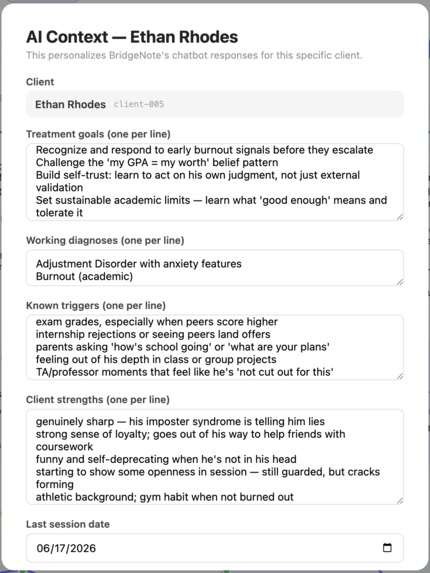
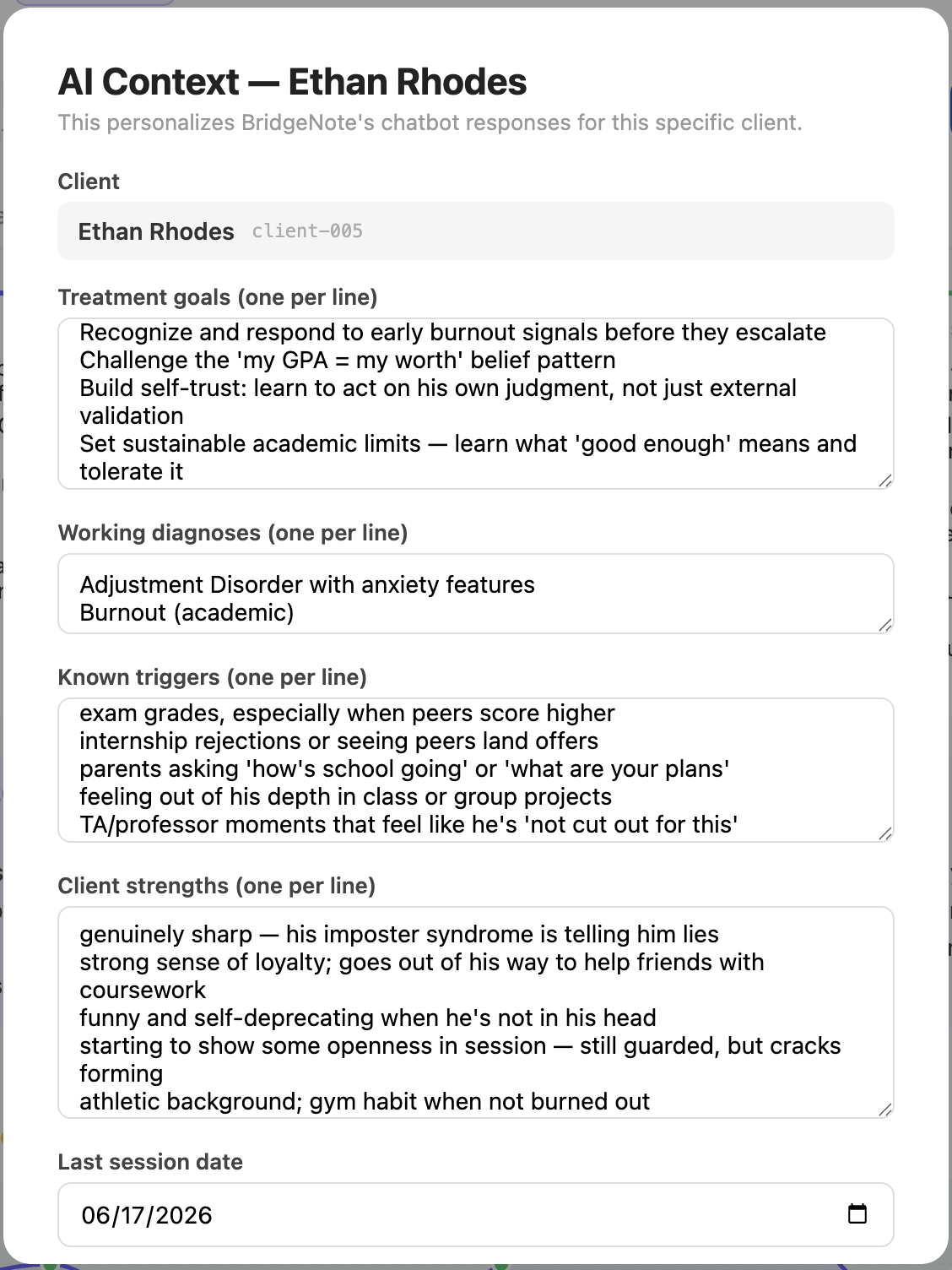
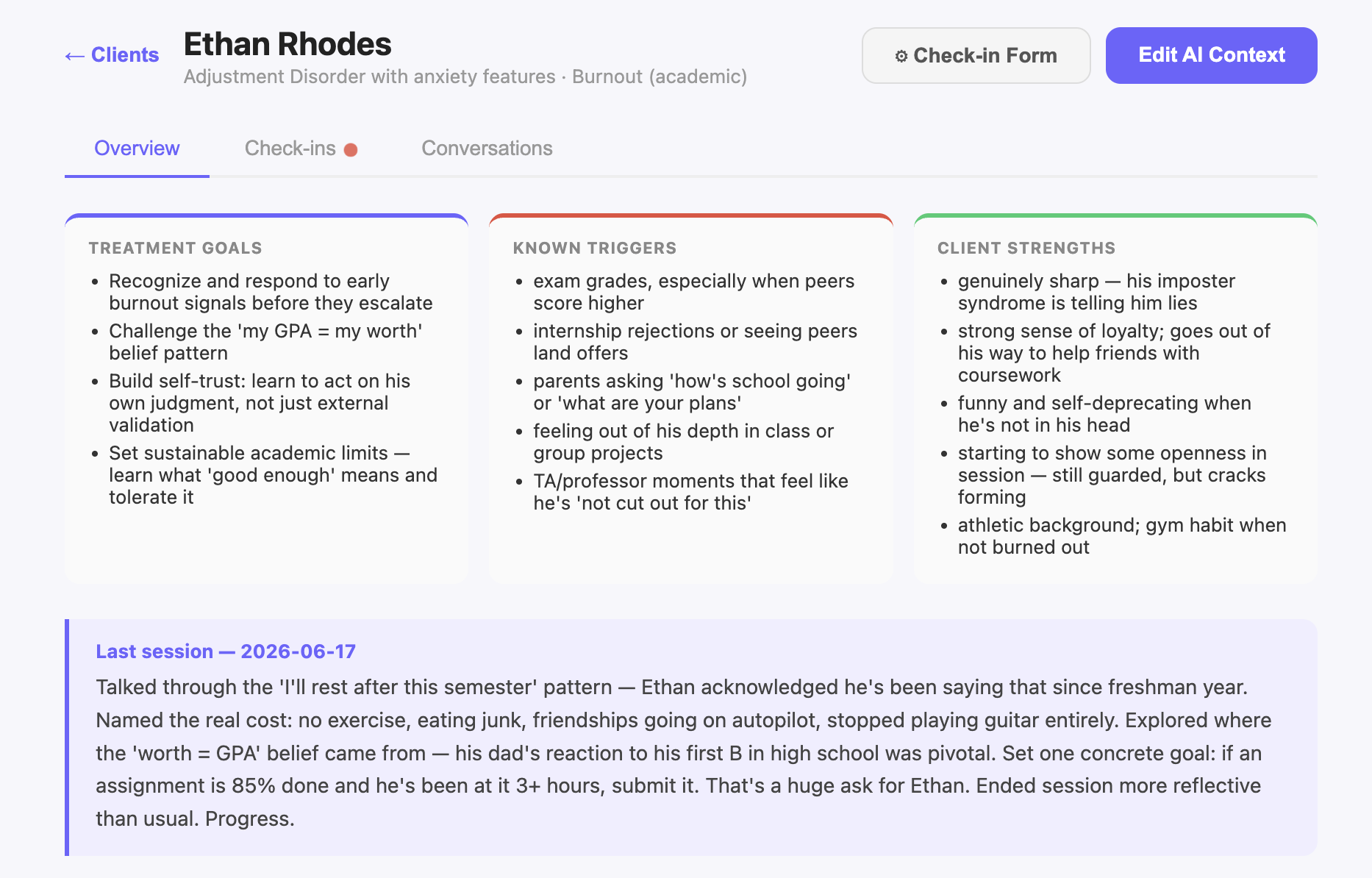
Therapist enters client context for the AI
-
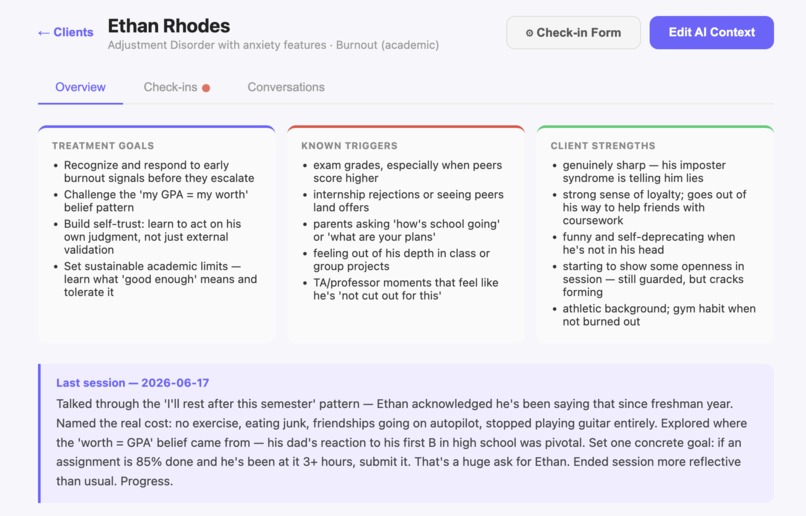
Therapist dashboard part 1
-
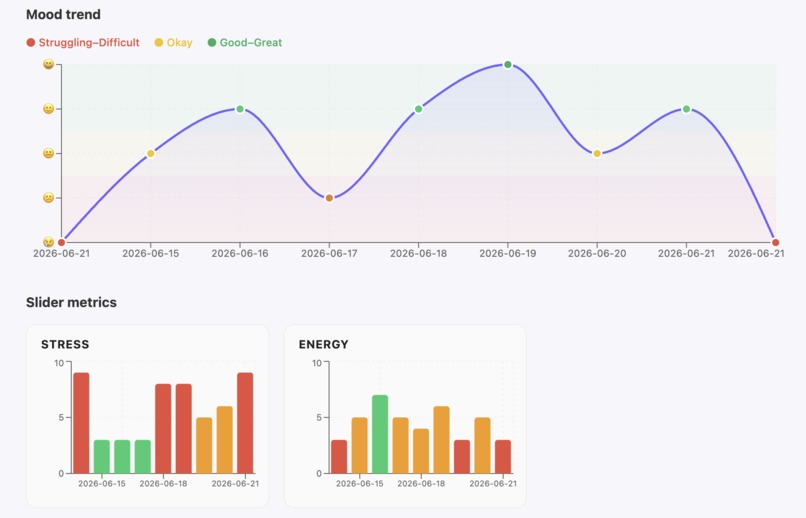
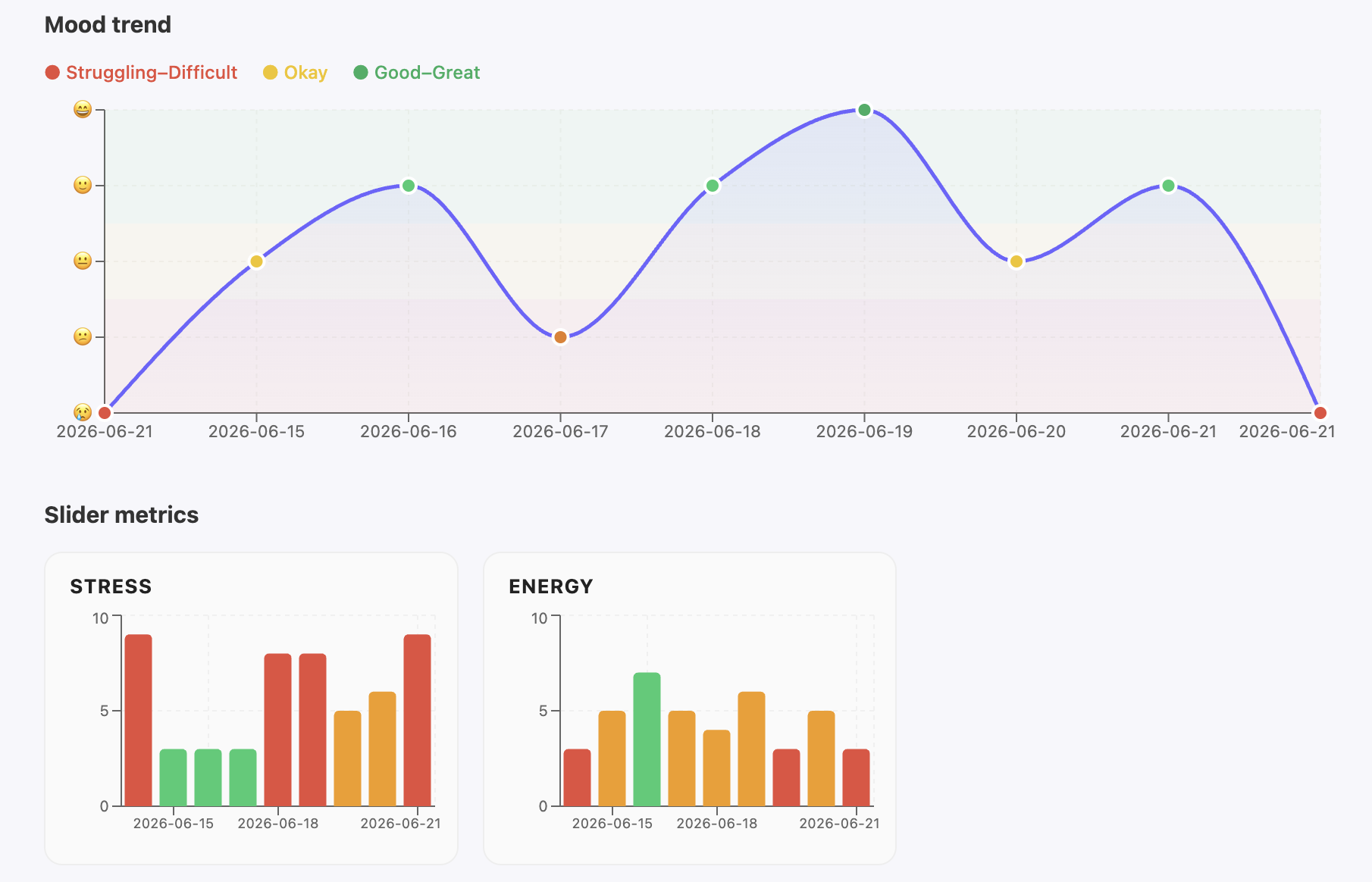
Therapist dashboard part 2
-
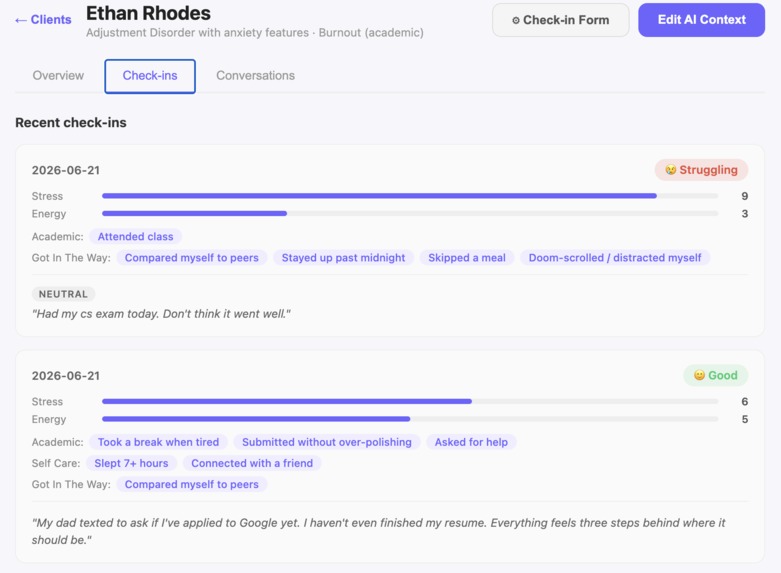
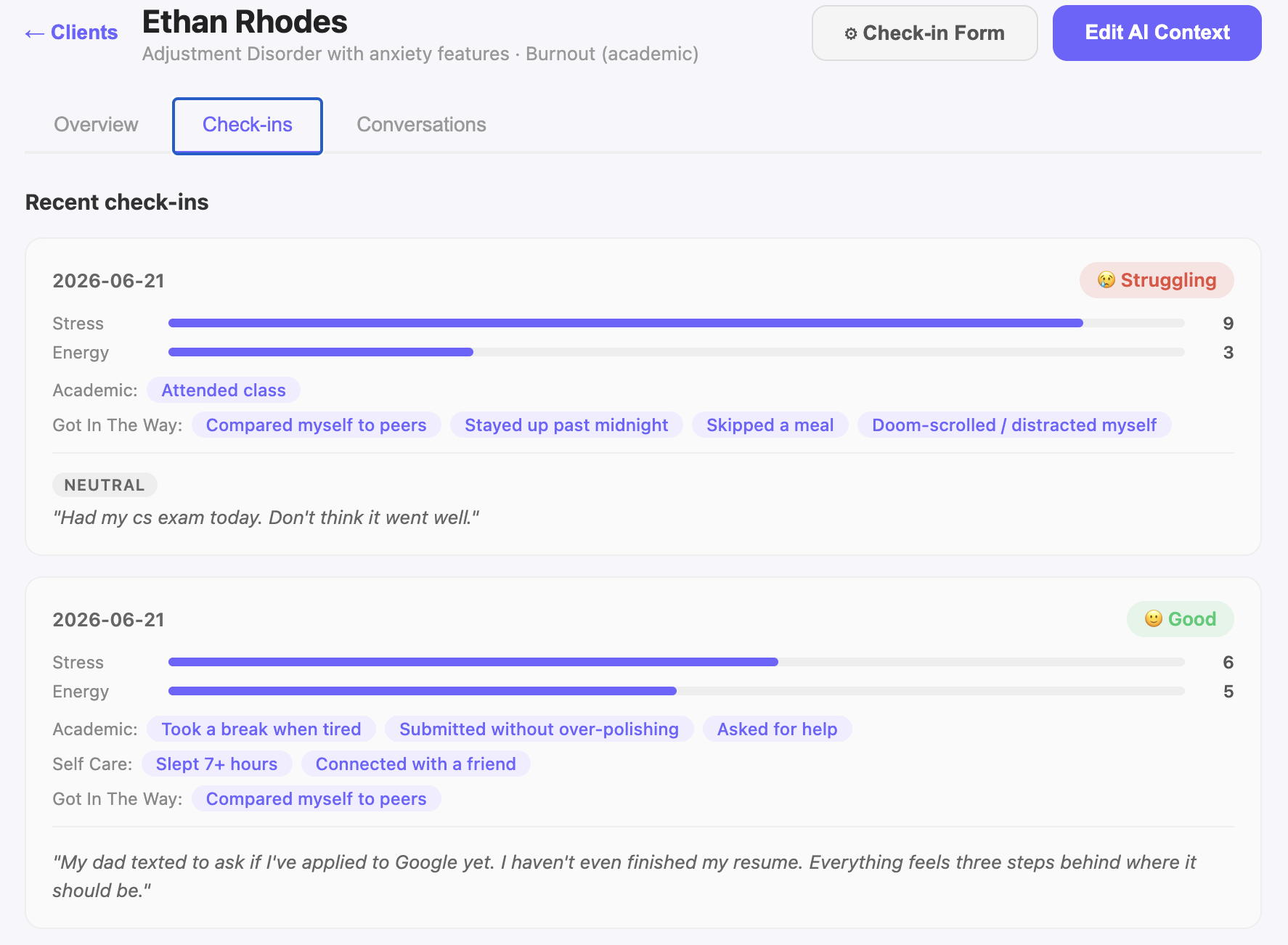
Check-in review section
-
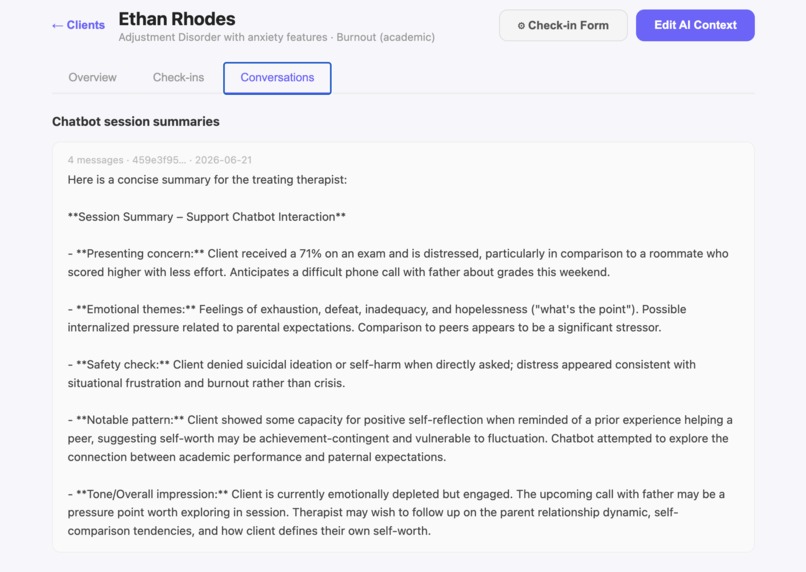
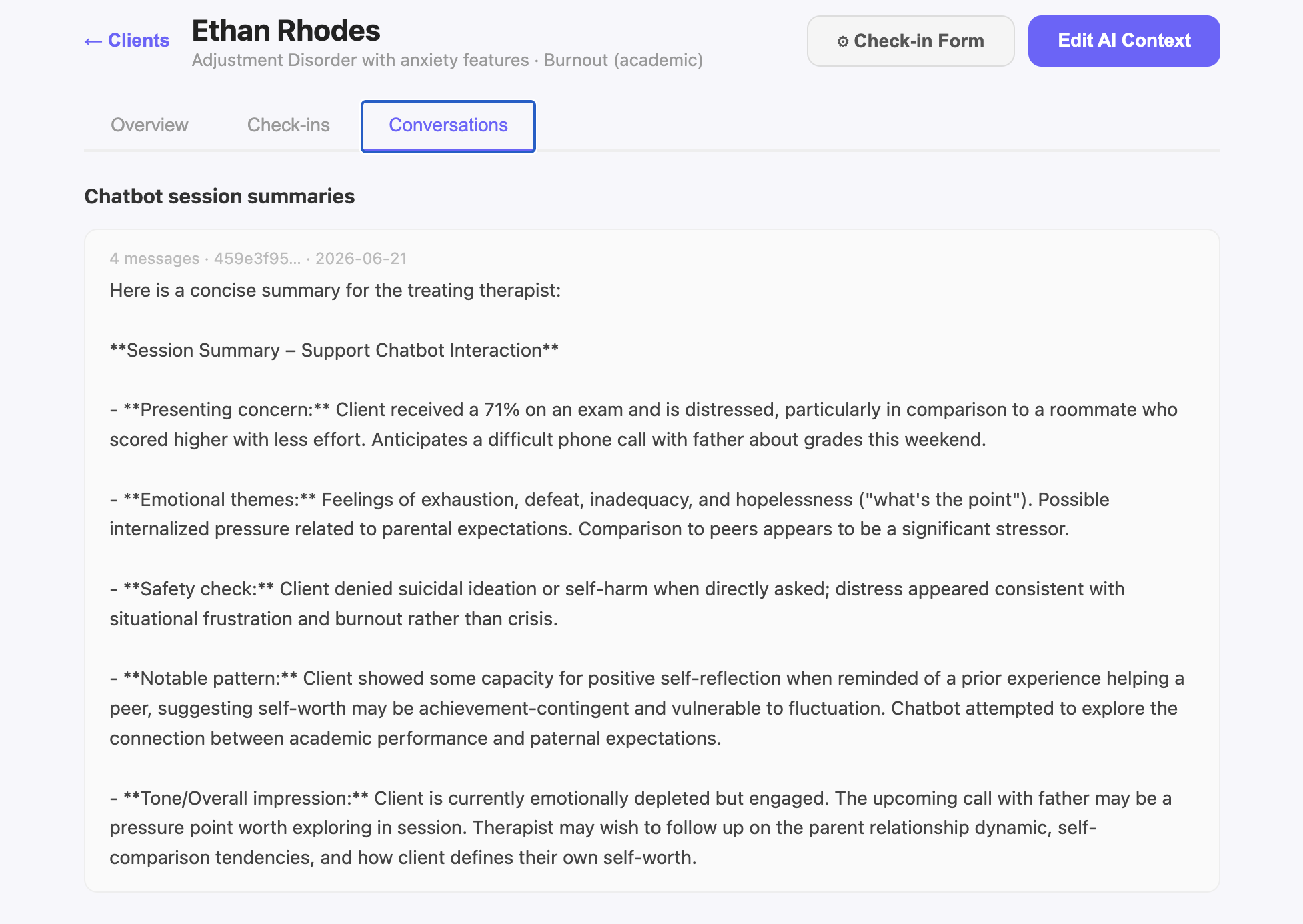
Conversation review section
Inspiration
Mental health has been a huge part of my life — and I'm not alone.
50% of Americans will face a mental health condition in their lifetime. Most therapy happens in 50-minute sessions every two weeks — leaving clients on their own during the times they need the most help. That gap is where crises escalate, progress gets lost, and people fall through the cracks. I wanted to build something for the other 13 days.
The populations who suffer most from this gap — low-income individuals, LGBTQ+ youth, Black, Latino and Indigenous communities, women — are also the least likely to have the resources to fill it themselves. BridgeNote is an attempt to give them something that actually knows who they are.
What it does
BridgeNote has two sides. For clients: a daily check-in (mood, sliders, habit buttons, journal prompt) and an AI companion they can talk to between sessions. For therapists: a dashboard showing mood trends, slider charts, journal sentiment, and AI-generated conversation summaries — all waiting before the next session starts.
The key design decision was that the AI is not generic. The therapist enters clinical context once — treatment goals, triggers, strengths, diagnoses, last session notes — and every chatbot response is built on that foundation. It's not ChatGPT with a journal chat. It knows this specific person and how to respond with and encourage use of the tactics being learned in therapy — decided by the therapist, a licensed professional.
How I built it
- React 18 + Recharts on the frontend
- FastAPI (Python) backend with streaming SSE for the chatbot
- Claude Sonnet via the Anthropic API — streaming responses, dynamic system prompt built at request time from Redis data
- Redis for all persistence: check-ins, therapist context, conversation history, check-in configs
- TextBlob for sentiment analysis on journal entries
- Docker Compose for Redis
Challenges I ran into
The human challenge: How do I make this solution resonate with the people who have the power to implement it — and the people whose lives it could change?
The technical challenge: Getting the system prompt right. It has to pull therapist context, 7 days of check-in history, a safety protocol, and a persona — all within token budget and without overwhelming the model. I ended up capping therapist context at 300 words, conversation history at 10 messages, and max output at 400 tokens to keep responses concise and costs manageable.
The hardest part was the safety guardrail. Getting an AI to stay warm and present while disclosing it isn't human, providing crisis resources, and not panicking or going clinical — that's a delicate tone to hold. It went through many iterations.
Accomplishments that I'm proud of
A working prototype of something I believe can make a real difference for people in mental health treatment. In 24 hours, I built a full-stack application where a therapist can enter clinical context once, and from that moment forward — their client has a companion that actually knows them, 24 hours a day, between every session.
What I learned
I learned that the most important design decisions weren't technical — they were ethical. Who controls the AI's behavior? (The therapist, not the user.) What does the AI do when someone is in crisis? (Stay present, disclose, refer, and never abandon the conversation.) What does it not do? (Diagnose, advise, or replace professional care.)
On the technical side, I learned how much a well-structured system prompt matters. The difference between a generic mental health chatbot and one that says "I noticed your stress scores spiked the last three days — that pattern matches what you described after exam week" comes entirely from what you feed the model before the first message is sent.
I also learned that Redis is underrated as a primary data store for this kind of application — fast, flexible, and more than sufficient for structured clinical data at this scale.
What's next for BridgeNote
- Real authentication — secure login for both clients and therapists, with role-based access
- HIPAA-compliant infrastructure — encrypted storage, Business Associate Agreements, audit logs
- 24/7 human crisis loop — real-time escalation pathway to a live counselor when the AI safety guardrail fires
- EHR/FHIR integration — connect to existing electronic health record systems so therapists don't have to re-enter context they already have
- Insurance and reimbursement pathways — digital therapeutics reimbursement is an emerging category; BridgeNote is positioned for it
- B2B model — per-therapist SaaS subscription, starting with group practices and university counseling centers — the exact settings where the treatment gap is widest

Log in or sign up for Devpost to join the conversation.