



Inspiration
What it does
How we built it
Challenges we ran into
Accomplishments that we're proud of
What we learned
What's next for BridgeCare
Inspiration
Community support groups often coordinate food deliveries, medication pickup, clinic rides, wellness checks, and shelter supplies through chat threads and spreadsheets. During a local emergency, those tools make it hard to see what is urgent, what is already matched, and which supplies are ready.
What it does
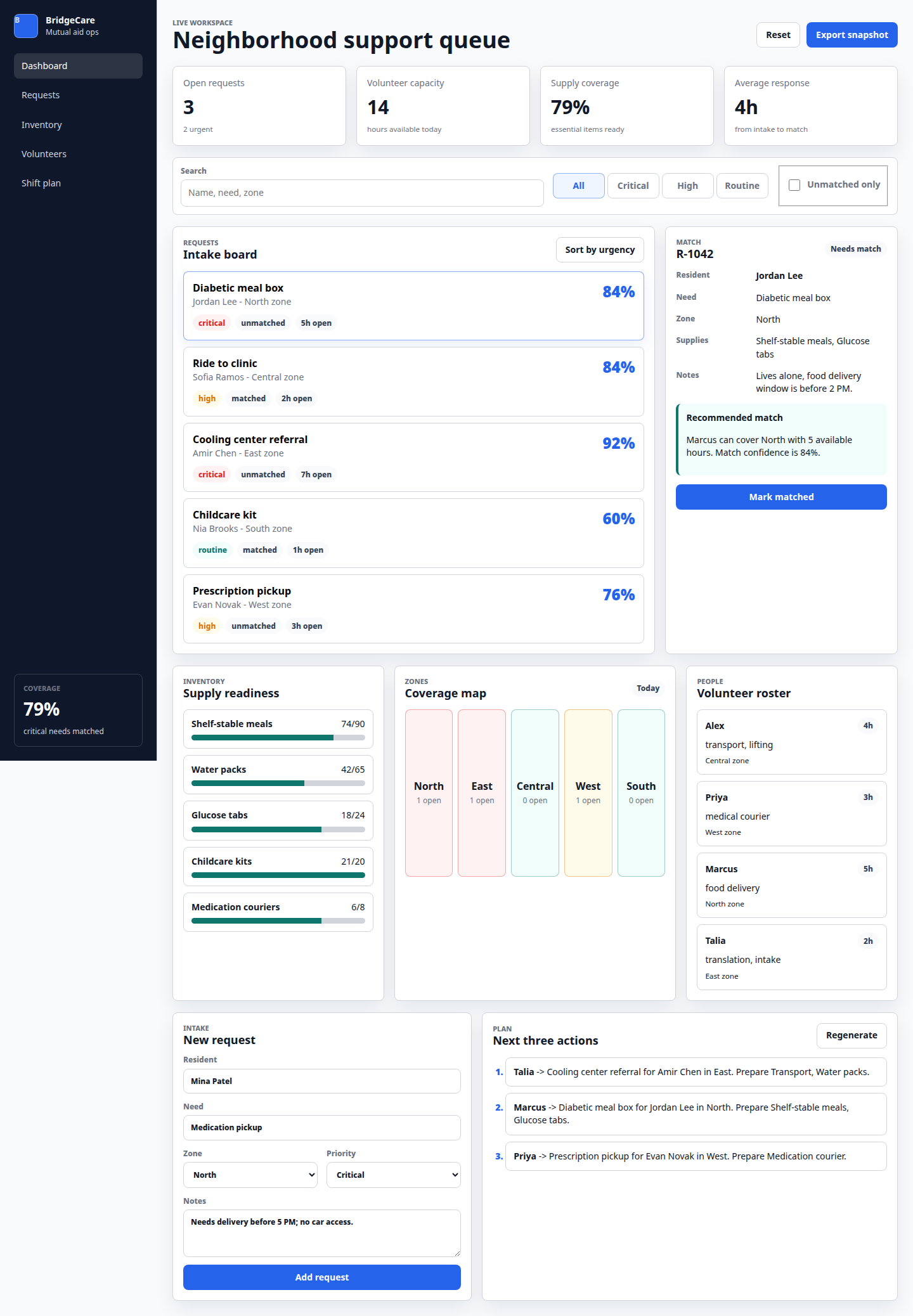
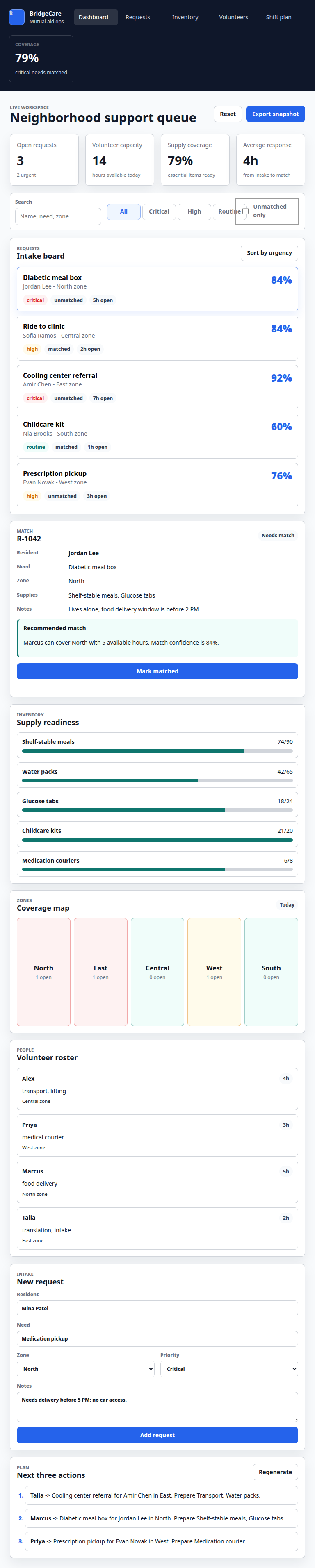
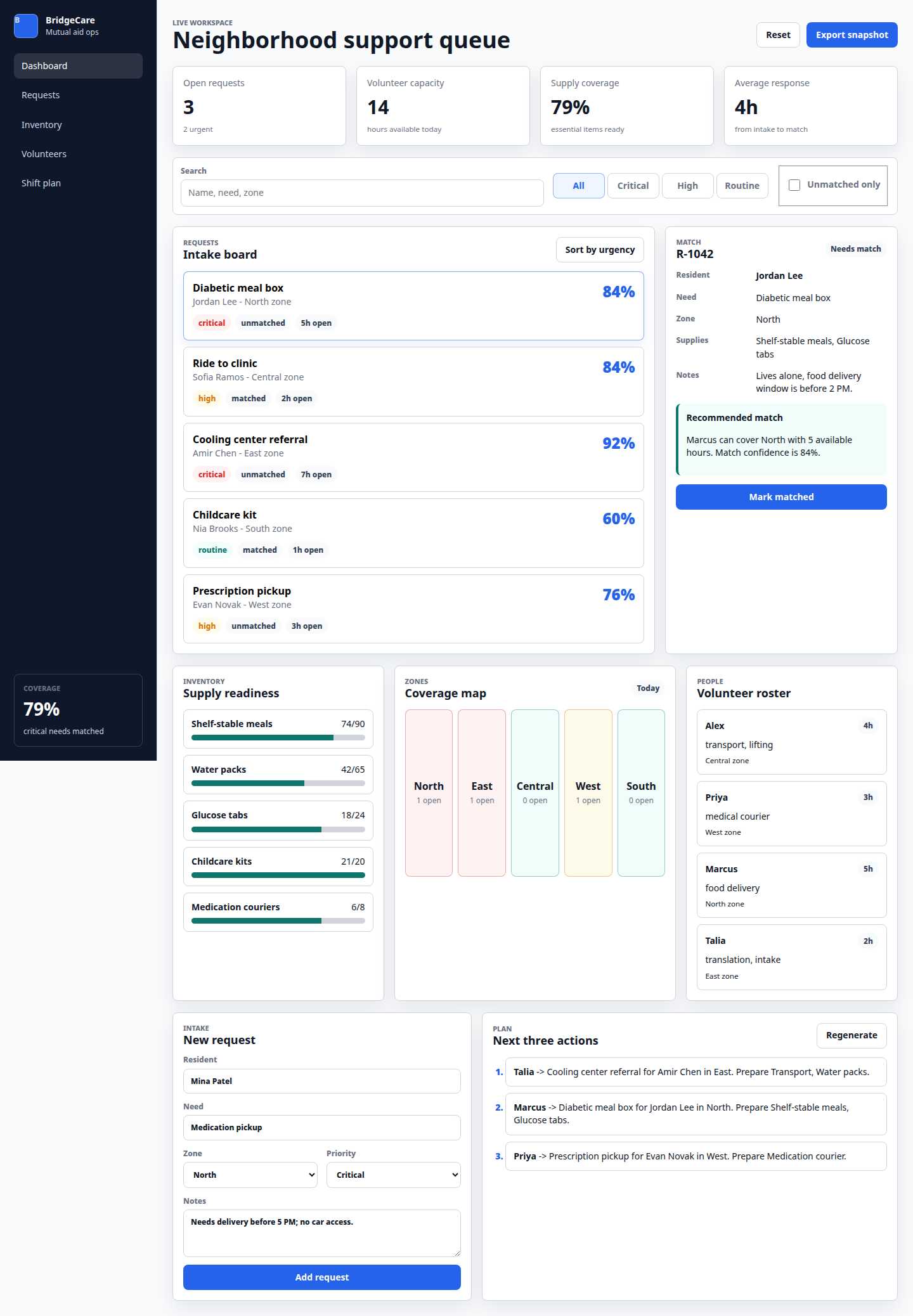
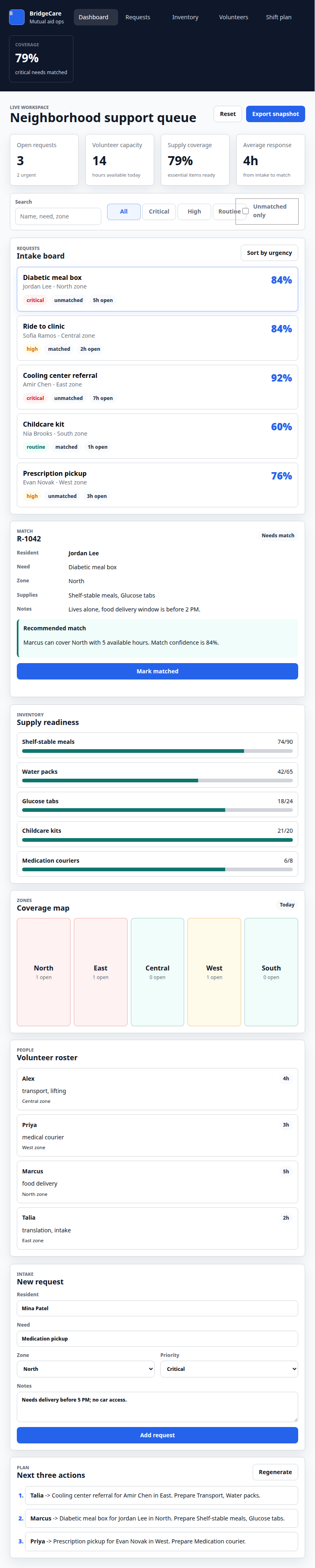
BridgeCare puts the core mutual-aid workflow into one browser-based workspace. Volunteers can review incoming requests, filter by priority, inspect a request, see a suggested volunteer match, track supply readiness, monitor zone coverage, add new requests, and generate the next three actions for a shift lead.
How I built it
I built BridgeCare as a static HTML, CSS, and JavaScript app with a local-first data model. The prototype seeds realistic support requests, applies simple matching heuristics, tracks supply readiness, maps zone coverage, supports new request intake, and exports a JSON handoff for shift leads.
Challenges I ran into
The main challenge was keeping the interface dense enough for repeated operations while staying readable on mobile. I also kept the prototype credential-free so it can be reviewed without external APIs or private accounts.
Accomplishments that I am proud of
BridgeCare has a usable intake board, priority filters, volunteer matching, inventory tracking, zone coverage, new request intake, generated shift actions, responsive layouts, and screenshot evidence.
What I learned
I learned how to compress a real mutual-aid workflow into a low-friction local prototype while preserving enough operational detail for a shift lead to act.
What's next for BridgeCare
Next steps would be role-based access, encrypted sync, audit logs, SMS/email integrations, privacy review for resident data, and a hosted deployment.
Built With
- css
- html
- javascript
- localstorage
- playwright

Log in or sign up for Devpost to join the conversation.