-
-
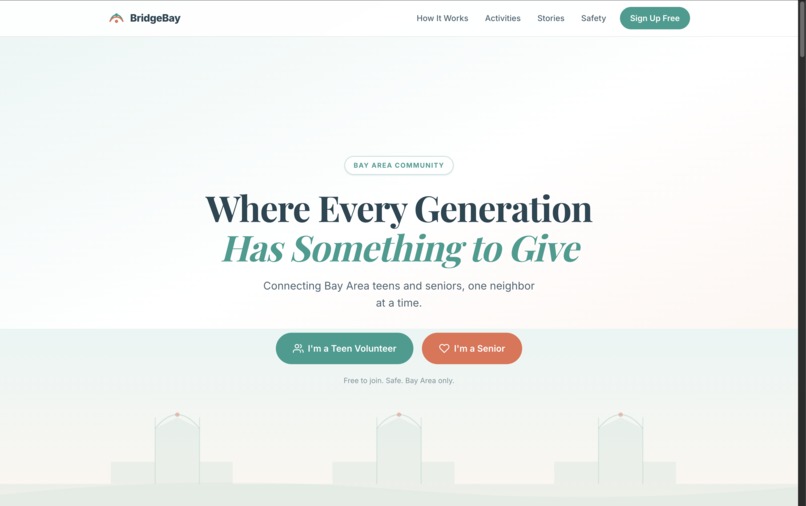
Home page
-
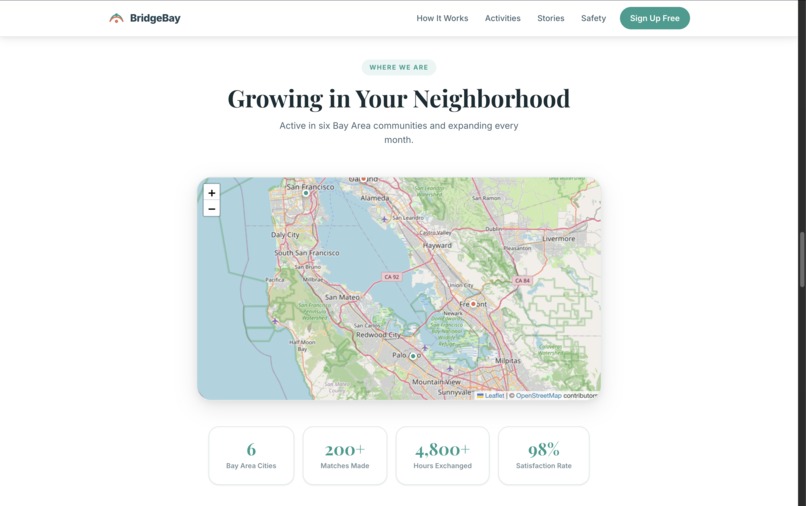
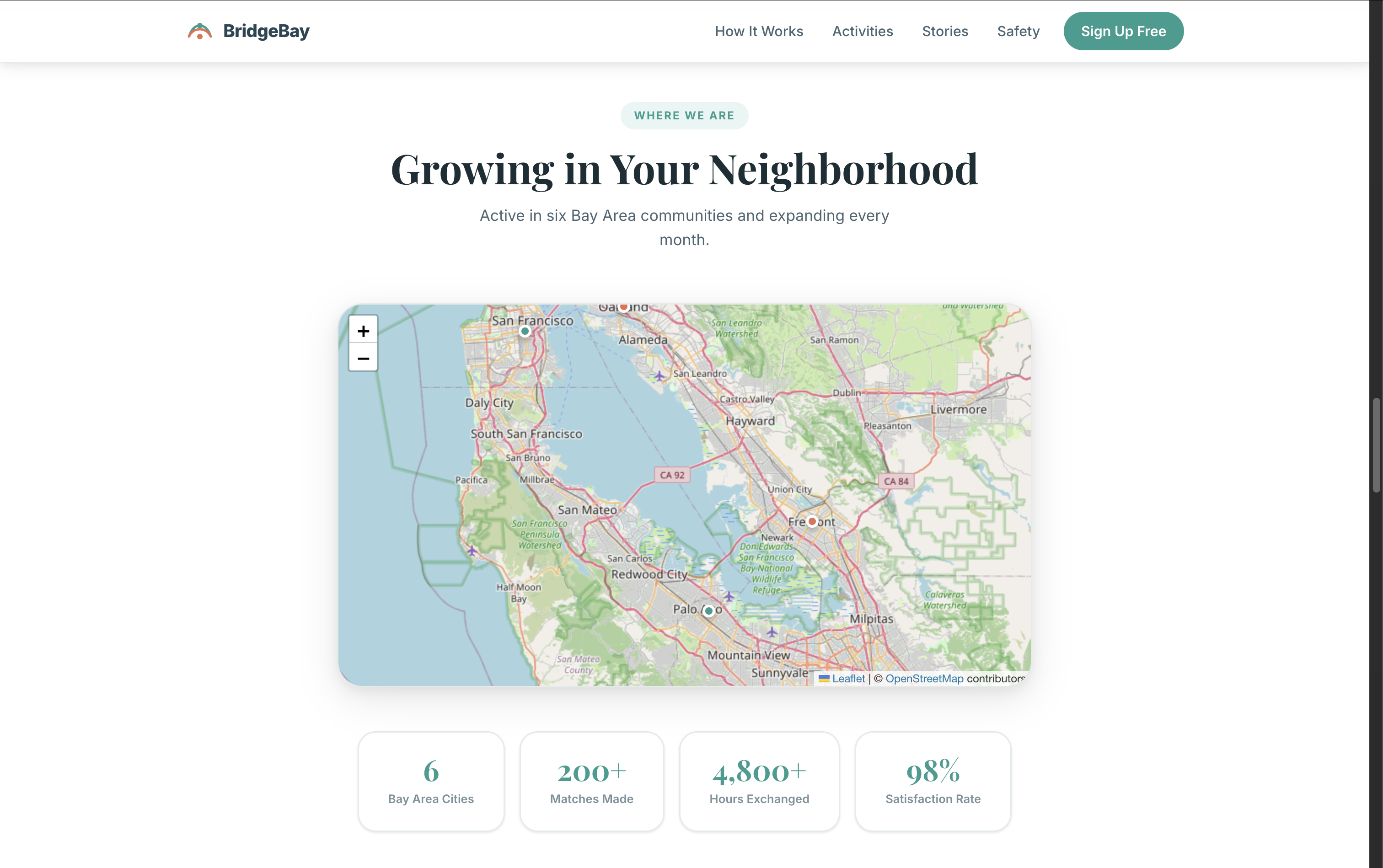
Local map
-
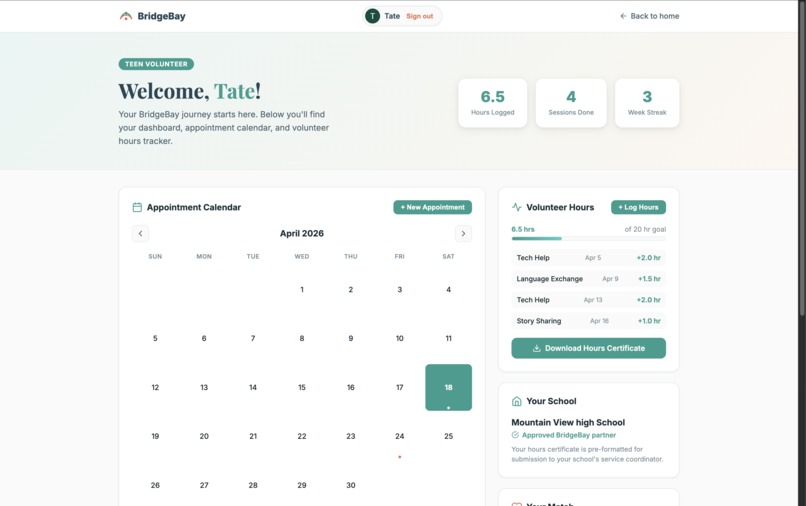
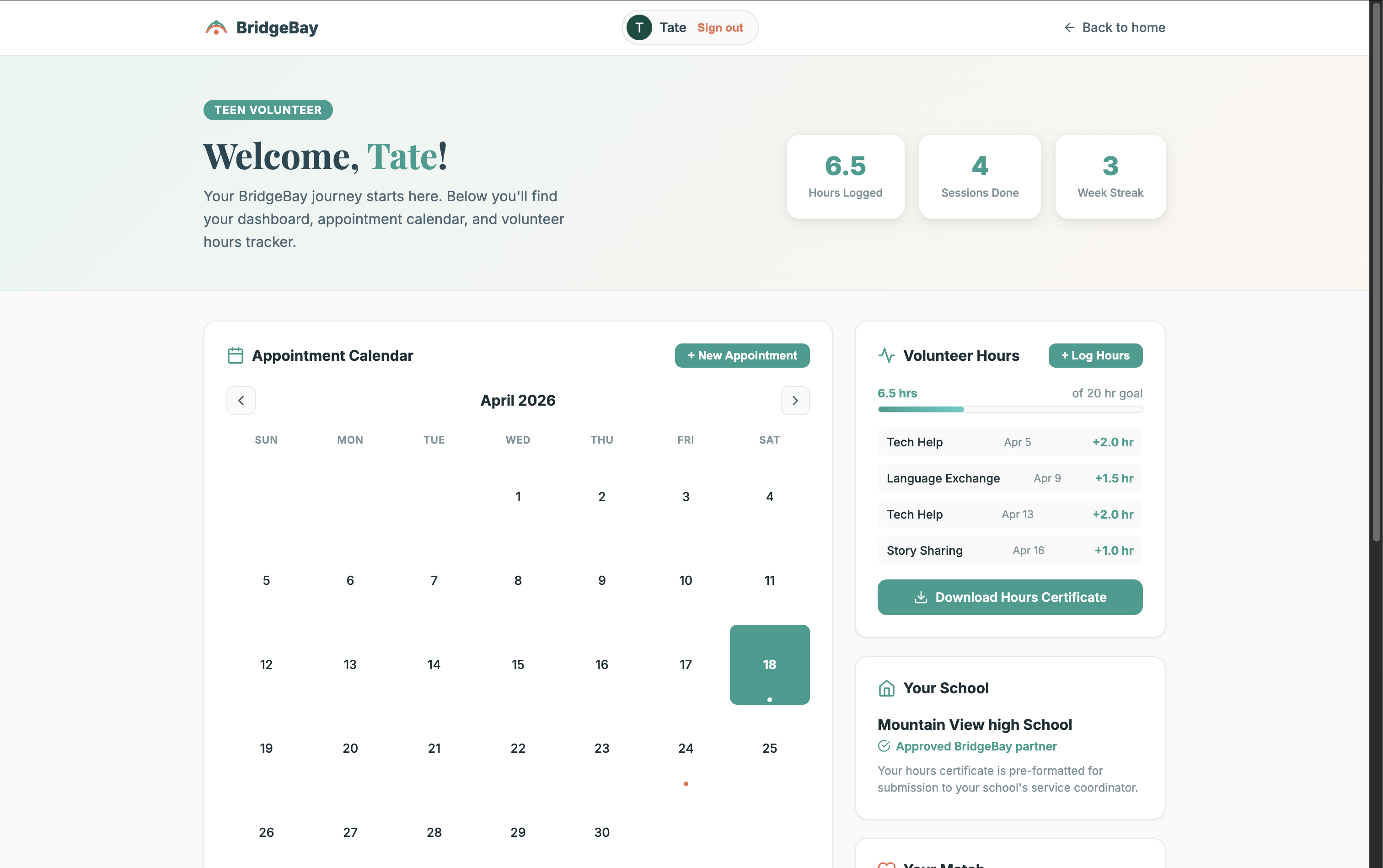
Dashboard and calendar
Inspiration
The Bay Area is home to some of the most connected people on the planet and some of the most isolated. Senior loneliness is a quiet epidemic: 1 in 4 older adults reports feeling chronically lonely, and in dense urban areas like San Francisco and Oakland, many seniors go days without meaningful human contact. At the same time, teens are increasingly disconnected from their communities, craving purpose and real-world impact beyond a screen.
We asked: what if those two problems were actually one solution? BridgeBay was inspired by the idea that the best kind of help is not charity, it is exchange. Teens have energy, tech fluency, and time. Seniors have wisdom, life experience, and stories worth hearing. We wanted to build a platform that brought them together not as helper and recipient, but as neighbors.
What it does
BridgeBay is a hyperlocal intergenerational platform connecting Bay Area high schoolers with nearby seniors for structured, meaningful tasks. Teens help with things like tech setup, errands, yard work, and weekly companionship check-ins. Seniors offer mentorship, life advice, language lessons, and career introductions in return. Both sides get something real out of it.
Teens earn community service hours and both parties build a profile, get matched by neighborhood on an interactive Bay Area map, and rate each interaction to maintain trust and accountability across the platform.
How we built it
BridgeBay was built as a fully designed, demo-ready web platform using HTML, CSS, and JavaScript for the front end, with a custom design system built around the Bay Area's green and blue palette. We used the Google Maps Embed API for the neighborhood matching map with real Bay Area pin locations, and deployed instantly on Netlify for a shareable live URL.
The site is structured around two distinct user journeys, one for teens and one for seniors, with a shared matching flow that brings them together. Safety features like parent verification, check-in and check-out logging, and two-way ratings are built into the UX from the first screen, not added as an afterthought.
Challenges we ran into
Trust and safety design was the hardest problem. How do you make parents feel safe sending their teenager to a stranger's home? How do you make seniors feel confident opening their door to someone they met online? We spent significant time designing a verification flow and a structured task model that limits open-ended interactions and keeps every visit accountable.
Bridging the digital divide was a real tension too. Seniors who most need the platform are least likely to find it online. Our solution was to design the senior-facing onboarding to be phone-friendly and to build partnerships with local senior centers and libraries as offline entry points. Keeping teens engaged beyond the first visit also required careful thinking about motivation, landing on a mix of service hour tracking, community reputation points, and the genuine reward of a real human relationship.
Accomplishments that we're proud of
We designed a full, polished product experience from scratch in under 24 hours. We built a safety model that addresses real concerns from both parents and seniors without adding friction to the core experience. We also developed a mutual exchange framing, rather than a charity model, that makes both sides feel respected and valued throughout the interaction.
We identified real institutional partners including school districts, senior centers, and public libraries that could make BridgeBay immediately distributable across the Bay Area without needing to build a user base from zero.
What we learned
Building BridgeBay taught us that the hardest part of a community platform is not the technology, it is the trust architecture. Every design decision, from how profiles are displayed to how tasks are structured, either builds or erodes confidence. We learned to design for the most skeptical user first and let that inform everything else.
We also learned that the most compelling pitches solve two problems at once. Helping seniors is a good idea. Helping seniors while giving teens something they are missing too is a story that resonates with almost everyone.
What's next for BridgeBay
Our immediate next step is a pilot program with one Bay Area school district and one senior center to run 50 real matches in 60 days. From there we plan to build a mobile app with push notifications, a school dashboard for counselors to track and approve service hours in bulk, and a Stories feature where teens record short audio or video clips capturing what they learned from their senior, creating a living archive of neighborhood wisdom.
Longer term, the model works in any city with a high school and a senior population, which is essentially everywhere. We want to expand BridgeBay beyond the Bay and make intergenerational connection a normal part of how communities take care of each other.
Built With
- api
- css
- figma
- html
- javascript
- maps
- netlify


Log in or sign up for Devpost to join the conversation.