-
-
Crossfade
-
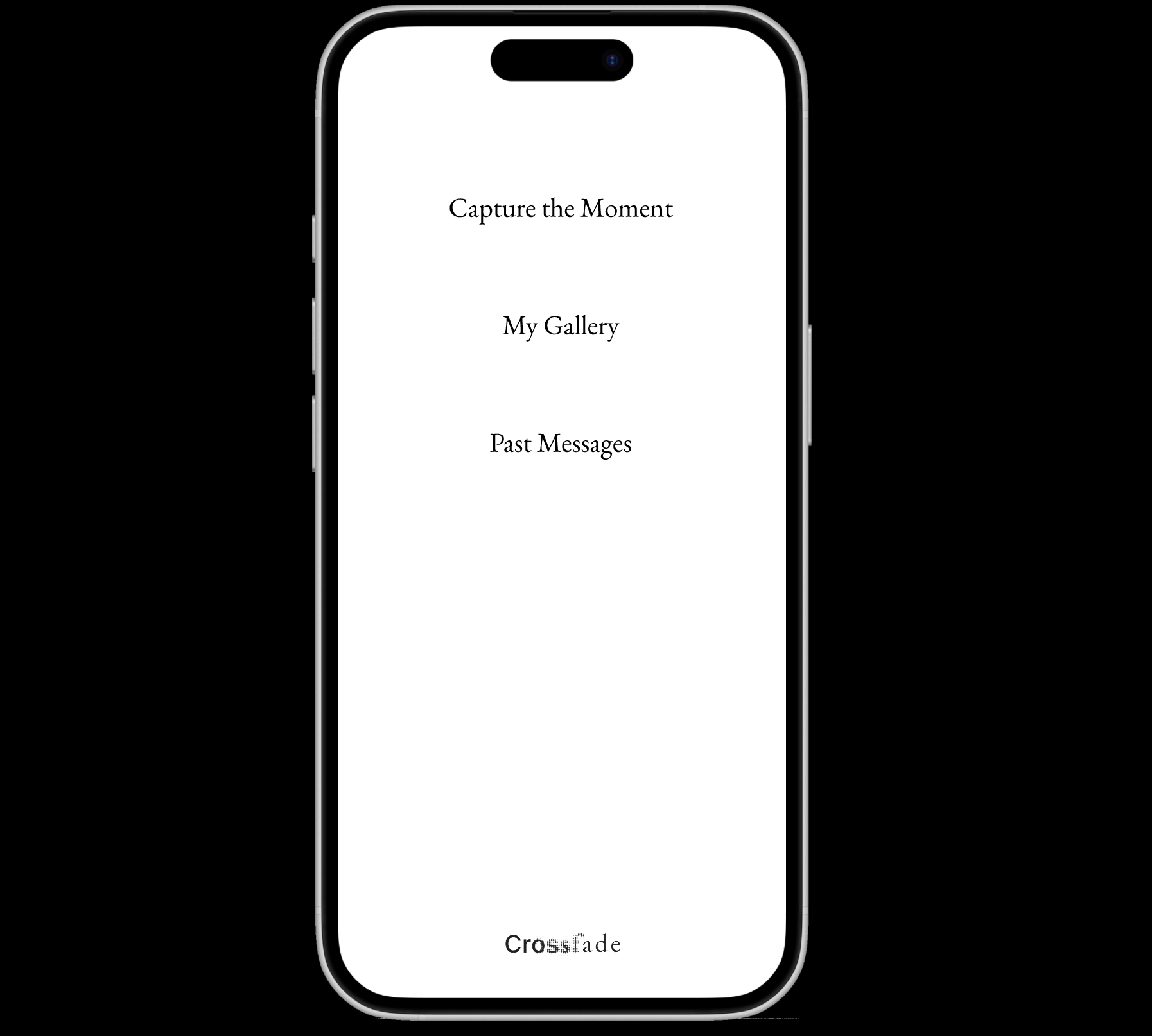
Start Page
-
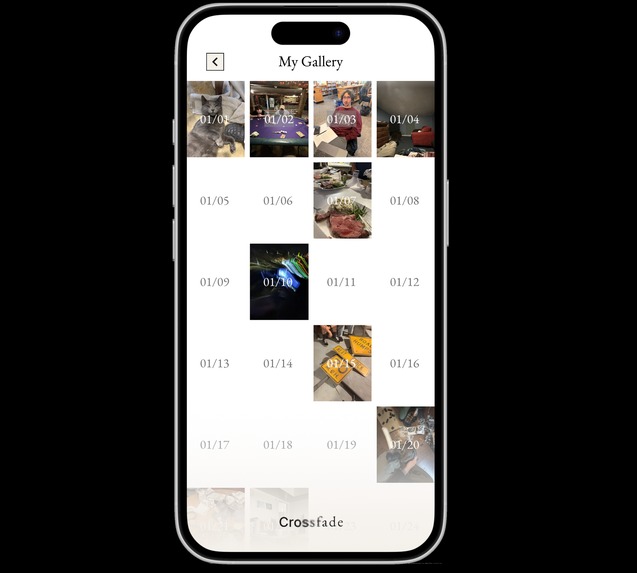
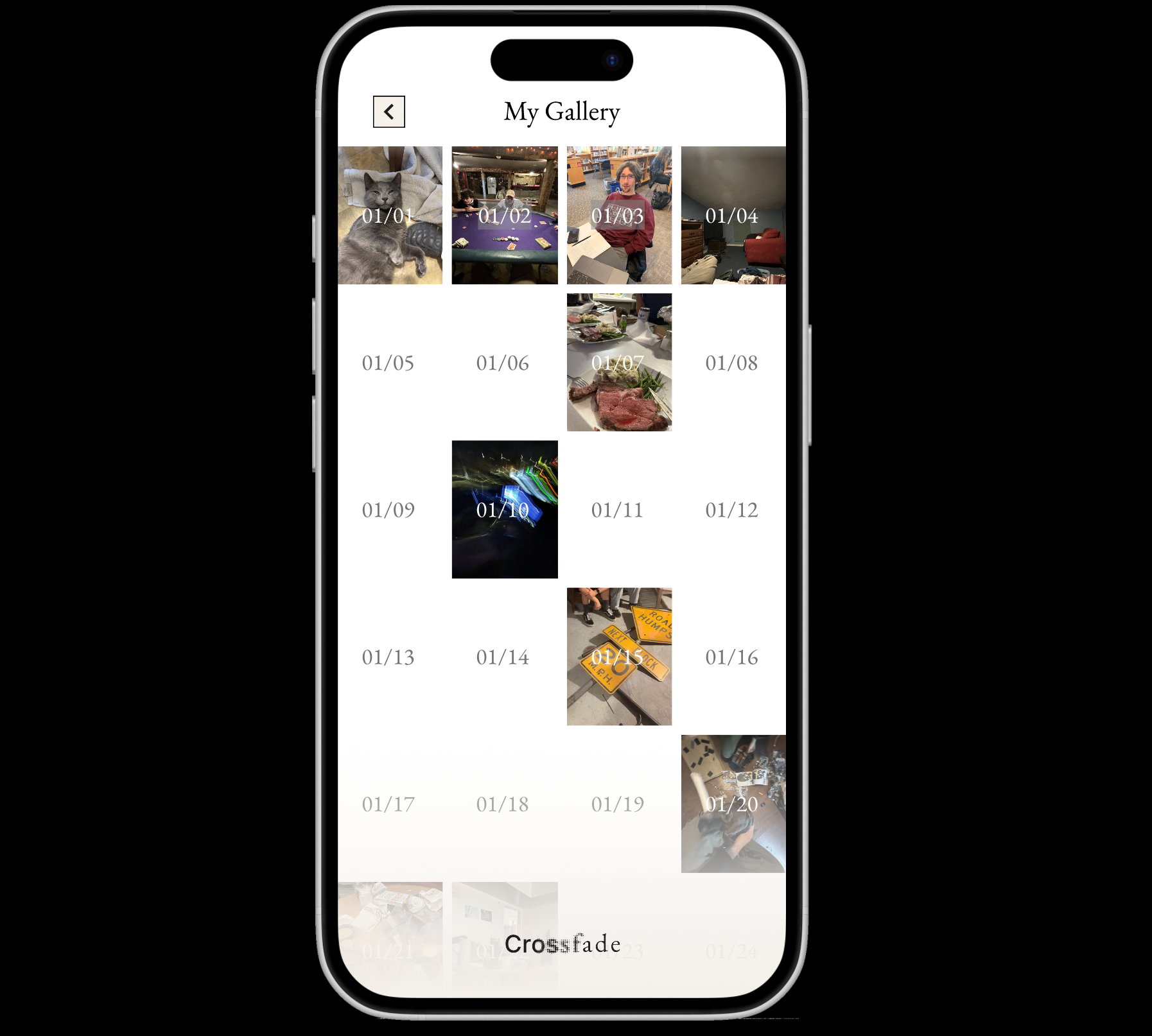
My Gallery
-
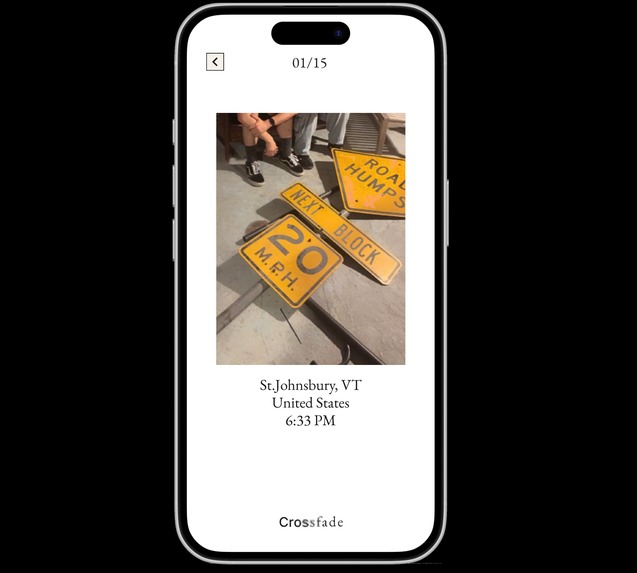
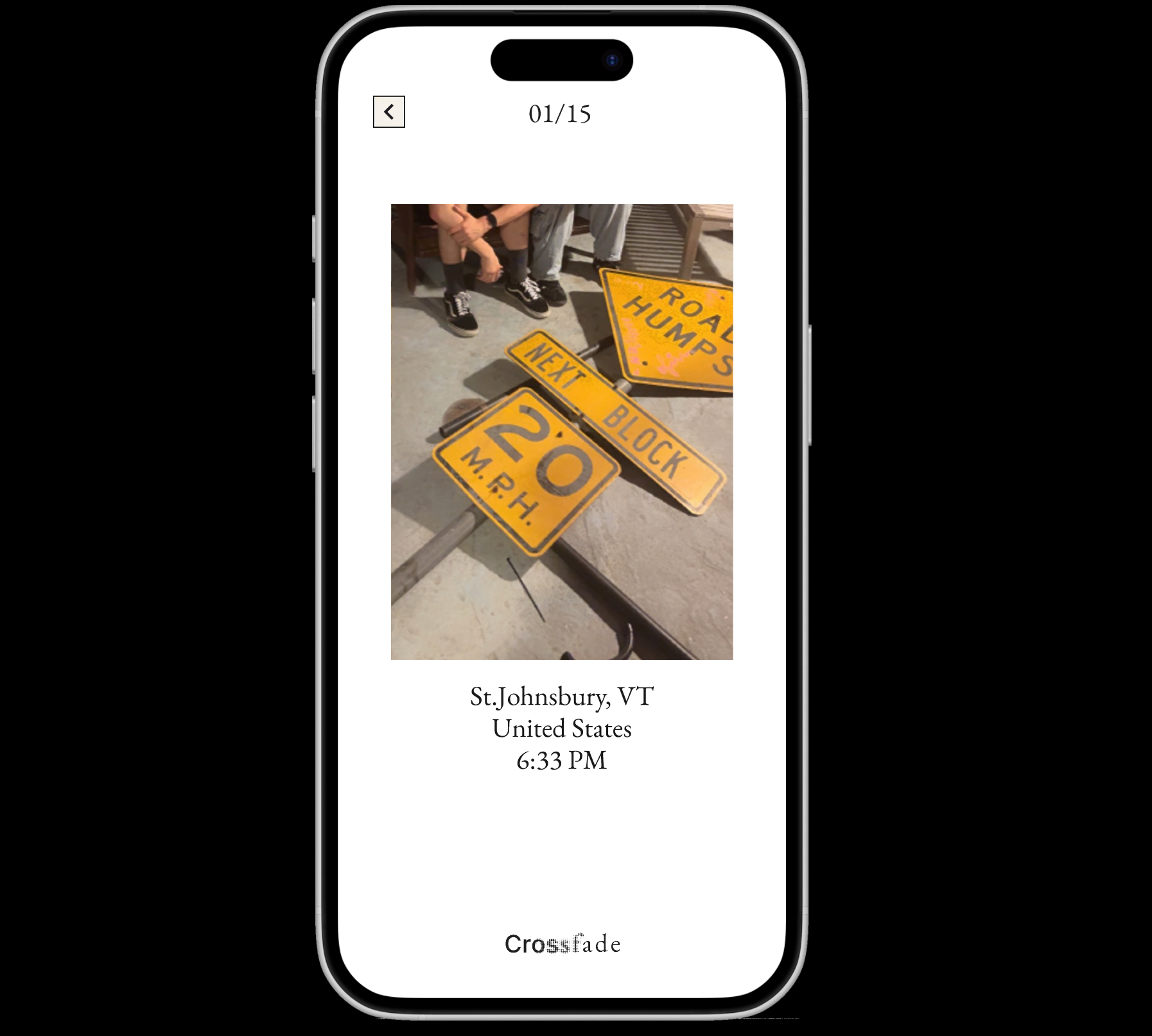
Gallery Image
-
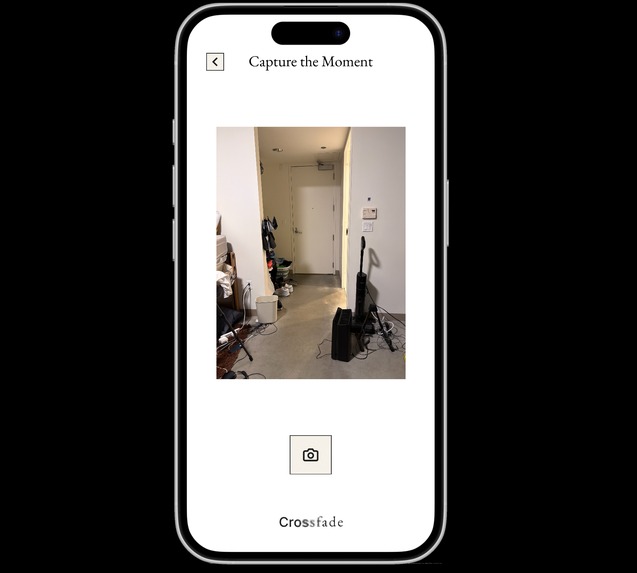
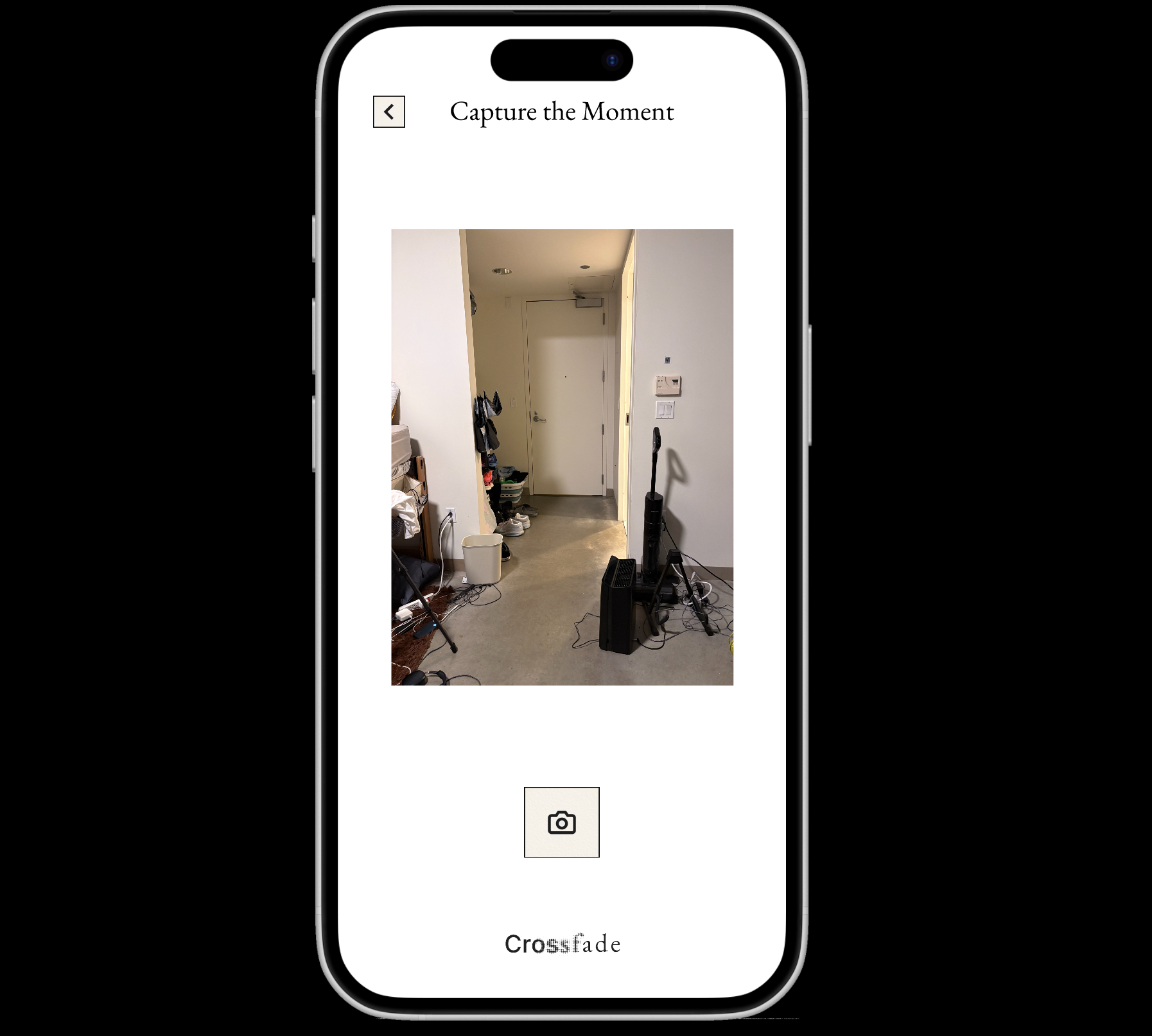
Capture the Moment
-
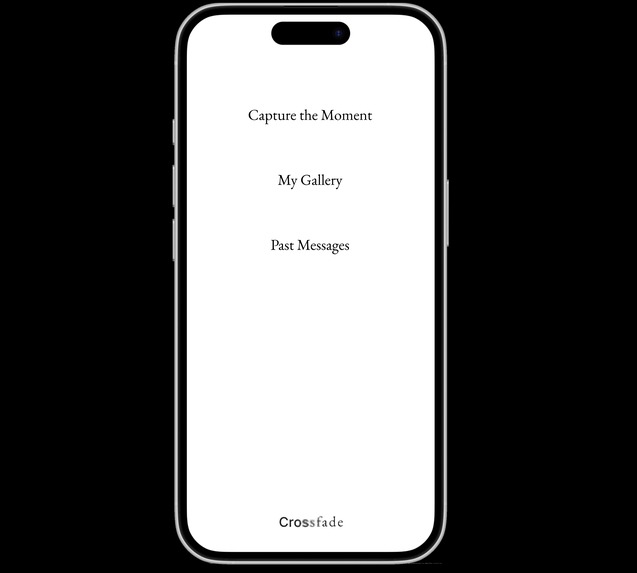
Home Page
-
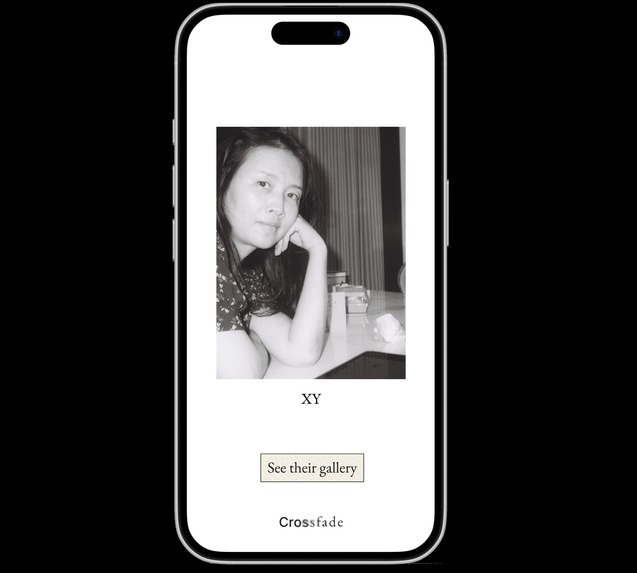
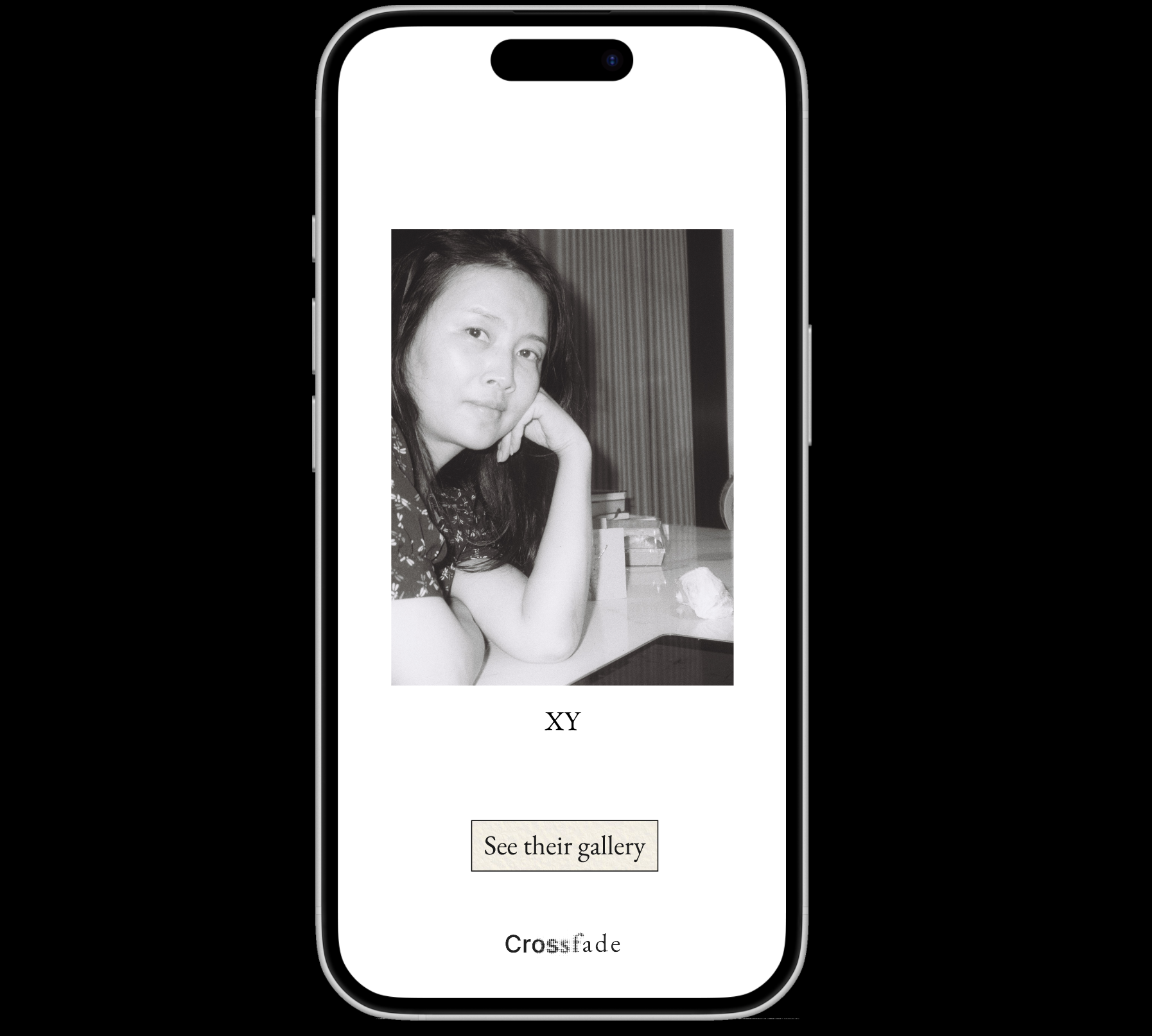
Their Gallery
Prototype link: (Link)
Project description
Crossfade is a quiet photo-diary platform that creates brief encounters between different generations. Each day, users can upload a single photo to their personal gallery. After uploading, they are shown the gallery of someone from another generation and may leave one message in response.
In this project, serif and sans serif fonts serve as visual metaphors for older and younger generations. The project's name suggests a Crossfade - an overlapping moment of lives across different ages. Interaction is intentionally limited to reduce pressure, encourage thoughtfulness, and ensure accessibility across ages. Through the exchange of galleries filled with moments from another person's life, users gain deeper understanding of other generations' daily experiences. Hopefully, this will help them to see that people from different generations as fully human and living rich lives, and ultimately bridge some of the distance that separates us.
Process and Findings
I conducted a small survey by posting tear-off flyers in multiple residential colleges at my university at 9AM, Saturday. The flyer asked a single question: “Do you feel a generational gap?” with tear-off strips labeled “Yes” and “No.” After collecting responses at about 9 PM, the final ratio was Yes:No = 23:10, indicating that a majority of participants felt the presence of a generational gap. I then conducted five semi-structured interviews with students at Rice University and adults aged between 40-65. The interview questions focused on participants’ lived experiences and perceptions of intergenerational relationships:
- Do you feel a generational gap?
- How often do you interact with people from a different generation in your daily life?
- What do you find most challenging about understanding other generations?
- Have you ever felt misunderstood or stereotyped because of your age? Can you describe that experience? Across interviews, most of the participants acknowledged the existence of a generational gap and described feelings of being misunderstood or stereotyped based on age.
To support these findings, I also reviewed a literature review on how differences in communication styles between Generation Y (Millennials) and Baby Boomers create misunderstandings and conflict, particularly due to the rise of computer-mediated communication (CMC) (Venter, E. (2017). Bridging the communication gap between Generation Y and the Baby Boomer generation. International Journal of Adolescence and Youth, 22(4), 497–507. https://doi.org/10.1080/02673843.2016.1267022). Prior studies suggest that CMC often lacks nonverbal cues such as tone, facial expression, and body language, which reduces social presence. Lower social presence can make messages feel colder, more ambiguous, or emotionally flat. While tools such as emoticons, avatars, and video calls can partially compensate, they are not perfect substitutes for face-to-face communication, while both generations risk stereotyping each other, which worsens the communication gap. These findings informed my decision to focus on quiet, image-focused interaction rather than text-heavy communication.
Important Design Decisions
During interviews, most interviewees expressed awareness of generational gaps and wished they could be reduced. However, many also described past intergenerational interactions as uncomfortable or unsuccessful. Several interviewees noted that explicit attempts to bridge the gap often felt performative or emotionally draining, compounding the stress they already experienced in daily life. For many, the effort required to explain themselves, defend their views, or adapt to other generations outweighed the potential benefit. This insight led to a core design decision: to limit interaction and minimize cognitive load, allowing participation without obligation or emotional burden.
This approach was reinforced by the digital art project Minutiae, a quiet photo-sharing platform centered on everyday moments without commentary. Team member Brody had prior experience using Minutiae and described it as low-pressure and emotionally sustainable.
As a result, Crossfade deliberately avoids complex features or constant engagement. Verbal communication through leaving messages is optional rather than mandatory. Users only engage by viewing a single daily photo from someone of another generation, with the option to leave one short message. This structure reduces the pressure to articulate opinions on difficult topics, argue positions, or respond in real time, while still enabling reflection and connection.
In early brainstorming, we explored more feature-intense concepts. One idea was teaching generational slang paired with meme imagery like Duolingual; another involved an anonymous, mind-map–like interface where users could add thoughts to shared “bubbles,” labeled only by birth decade. However, personal experience and interview feedback suggested that the first approach risked feeling forced or cringey (Imagine your professor making fun of six-seven in class.) The second approach risked exposing users to a large volume of opposing viewpoints, potentially triggering frustration or anger, making the experience closer to doomscrolling than improving mutual understanding. These concepts were therefore abandoned.
Human cognitive and emotional capacities evolve far more slowly than technology. People are not naturally equipped to process large amounts of conflicting perspectives at once. When generational gaps already produce resistance and defensiveness, increasing informational intensity can backfire rather than foster empathy. Therefore, Crossfade only has minimalist features and visual style. Serif and sans serif typography are used as subtle visual metaphors for generational difference, but without explicit labeling or categorization. A Serif typefaces that is familiar to everyone was chosen to the main font to ensure readability for older users while remaining likable to younger users. By creating a calm, familiar, and non-overwhelming environment, the project invites a gentler, more sustainable form of interaction to make change happen.
AI in design process
AI played a supportive but limited role in our design workflow. We used AI tools to identify relevant research sources that informed early design decisions. AI also helped clean up brainstorming notes, allowing us to rephrase concepts more clearly and ensure alignment as a team while refining the AI-generated text.
Additionally, we used AI for technical assistance, such as learning how to implement specific interactions in Figma and refining written descriptions of the project.
However, AI did not influence our core design decisions. The central concept and interaction model of Crossfade were developed independently, before any AI use. AI served primarily as a tool to support execution and articulation, not ideation or strategic direction.
Built With
- figma

Log in or sign up for Devpost to join the conversation.