-
-
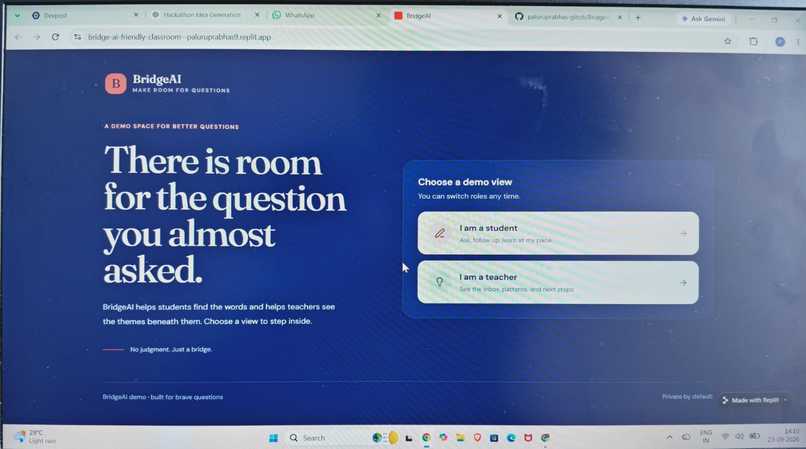
A bridge between every question and every helping hand.”
-
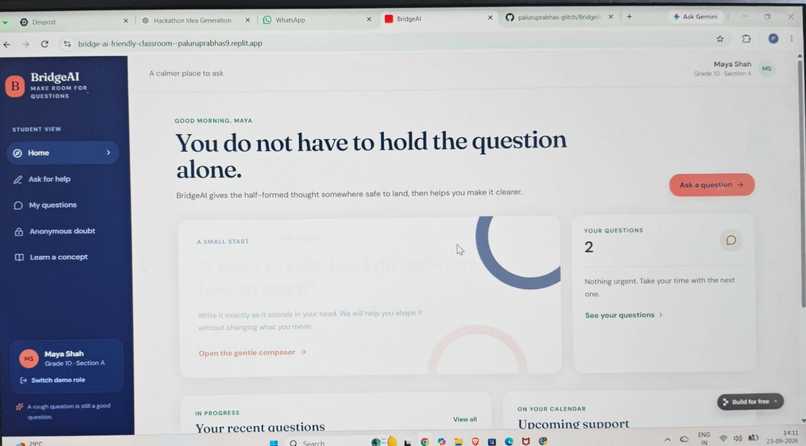
“Your questions deserve a place, your learning deserves support.”
-
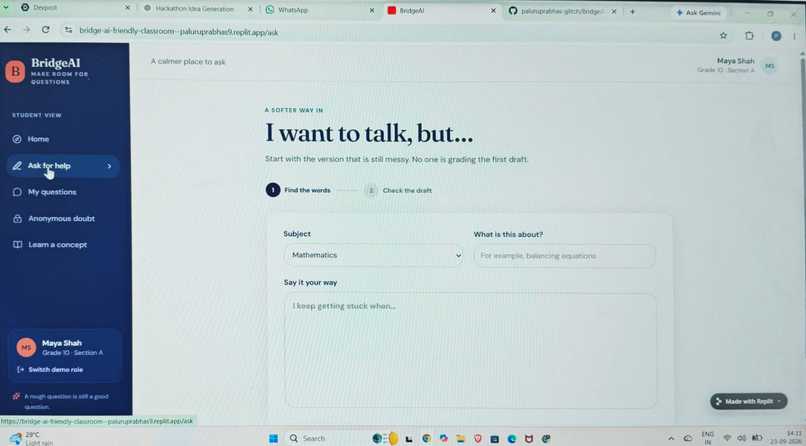
“You don't need the perfect words to ask for help.”
-
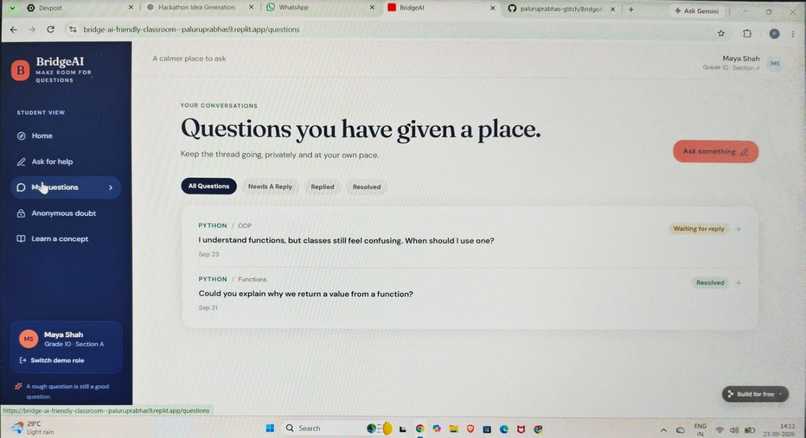
“Every question starts a conversation, not a judgment.”
-
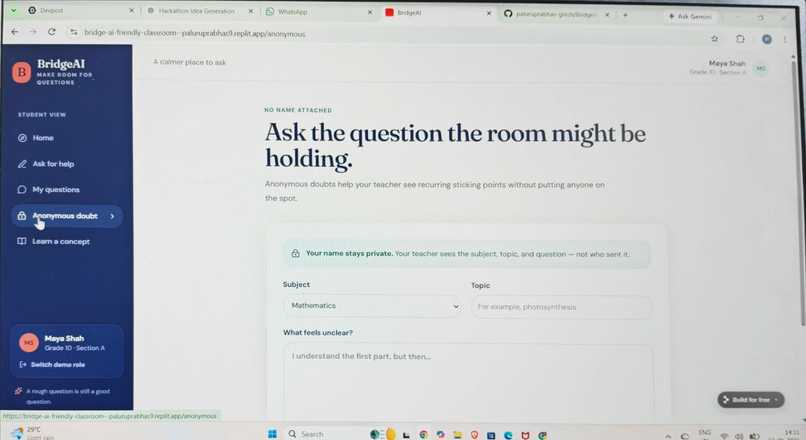
“Ask the question everyone is afraid to ask.”
-
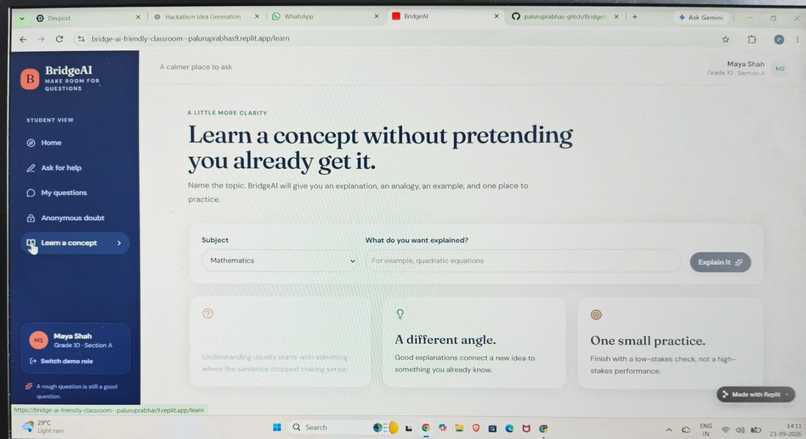
“Understand it your way, not just memorize it.”
Inspiration
Many students hesitate to ask teachers questions because they are afraid of being judged, asking something too basic, discussing exam difficulties, or speaking in front of their classmates. At the same time, teachers may not know which students are struggling because they cannot personally communicate with every student.
We wanted to create a solution that makes the distance between students and teachers smaller. This inspired us to build BridgeAI, a friendly communication platform where students can express their doubts comfortably and teachers can understand and support them more effectively.
What is BridgeAI?
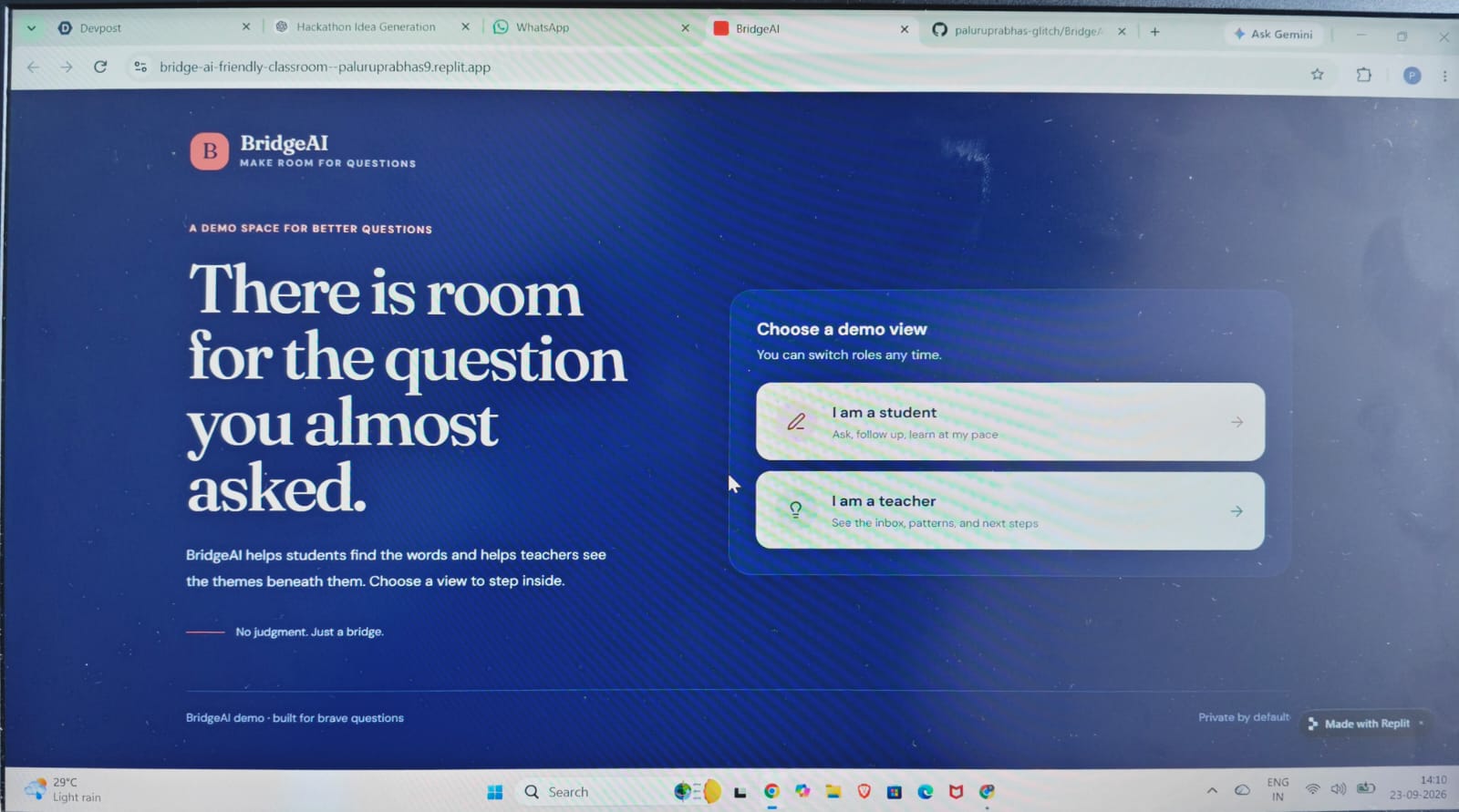
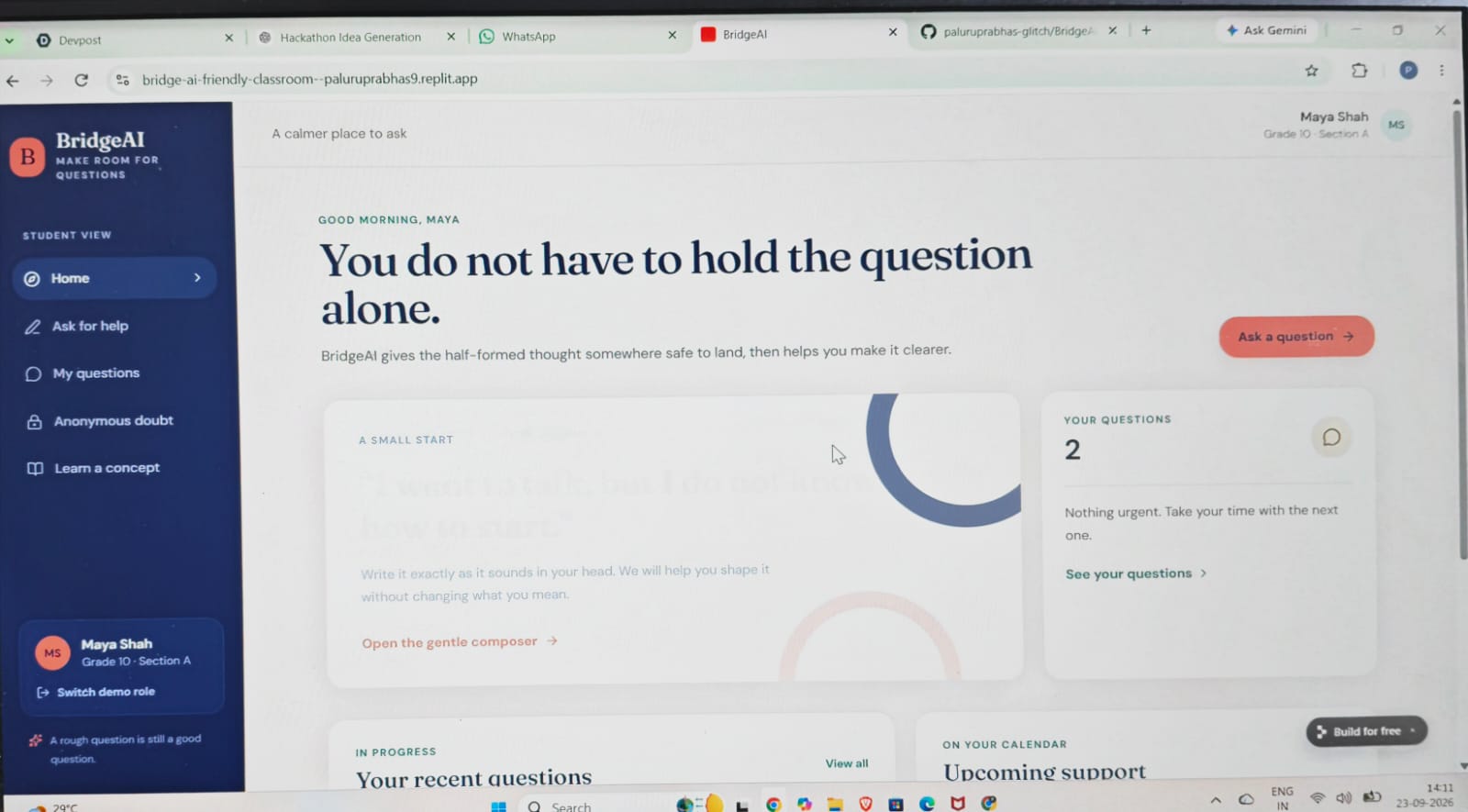
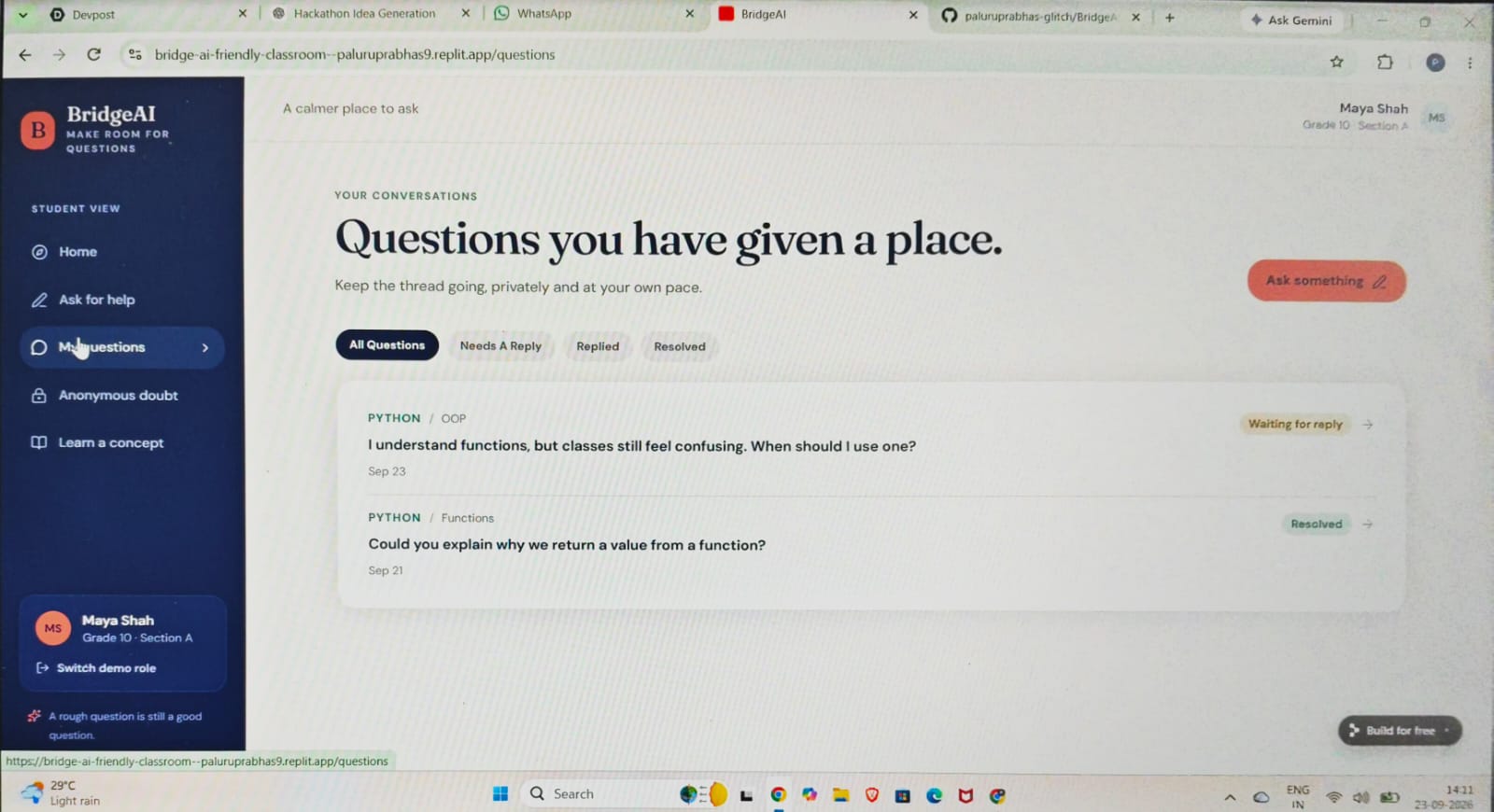
BridgeAI is a student-teacher communication platform designed to create a more comfortable and supportive classroom environment.
Students can ask questions privately, submit anonymous academic doubts, get beginner-friendly explanations from AI, request exam guidance, and join teacher-led doubt sessions.
Teachers can receive student questions, respond privately, view common anonymous doubts, create doubt sessions, send supportive announcements, and identify topics that may require additional explanation.
The main idea is simple:
Students should be able to ask without fear, and teachers should be able to understand what their students need.
Key Features
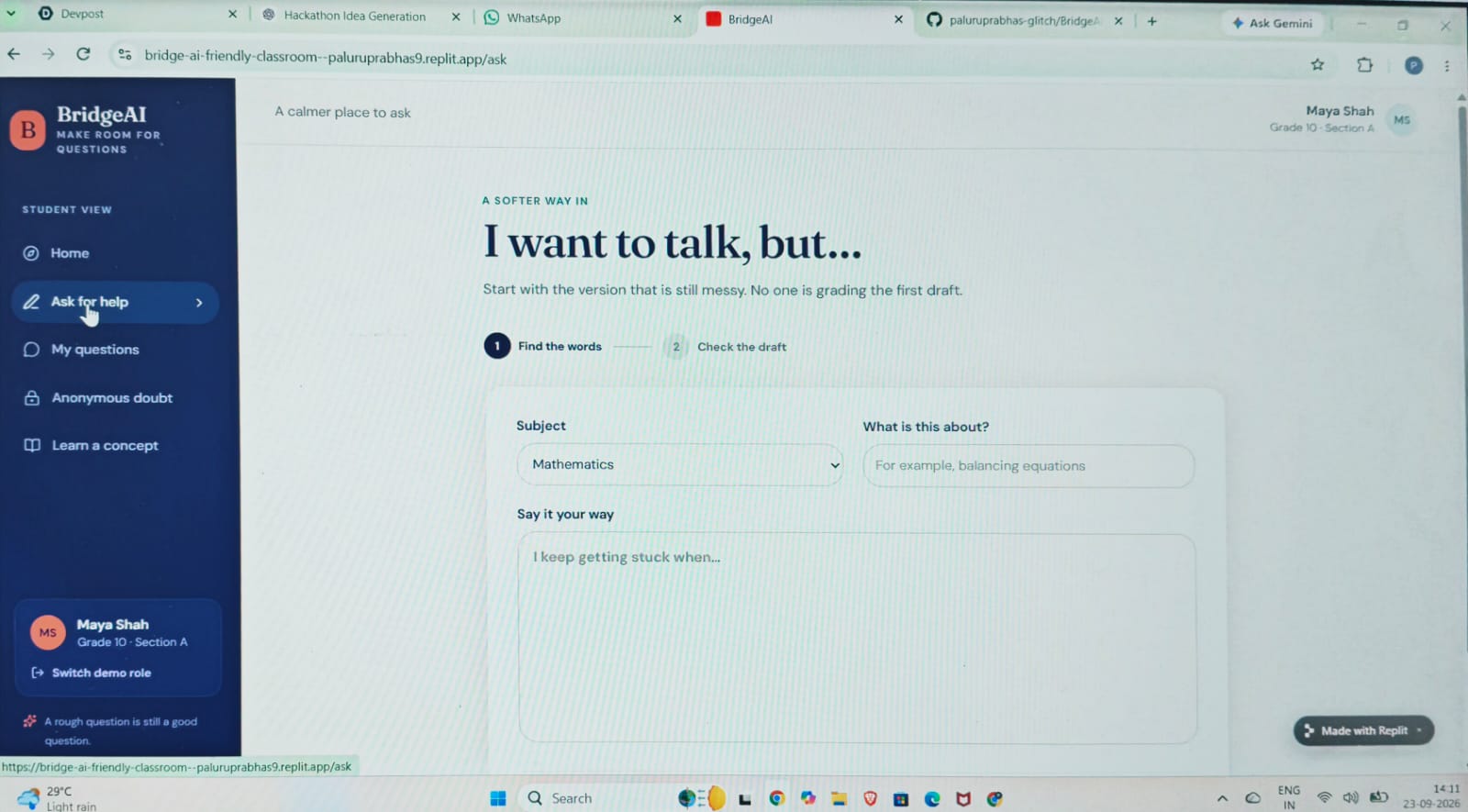
1. I Want to Talk, But...
Students can select situations such as:
- I don't understand a concept.
- I am afraid to ask a question in class.
- I need help preparing for an exam.
- I am struggling with a topic.
- I want to talk to my teacher privately.
BridgeAI helps the student turn their thoughts into a clear and respectful message that they can review before sending.
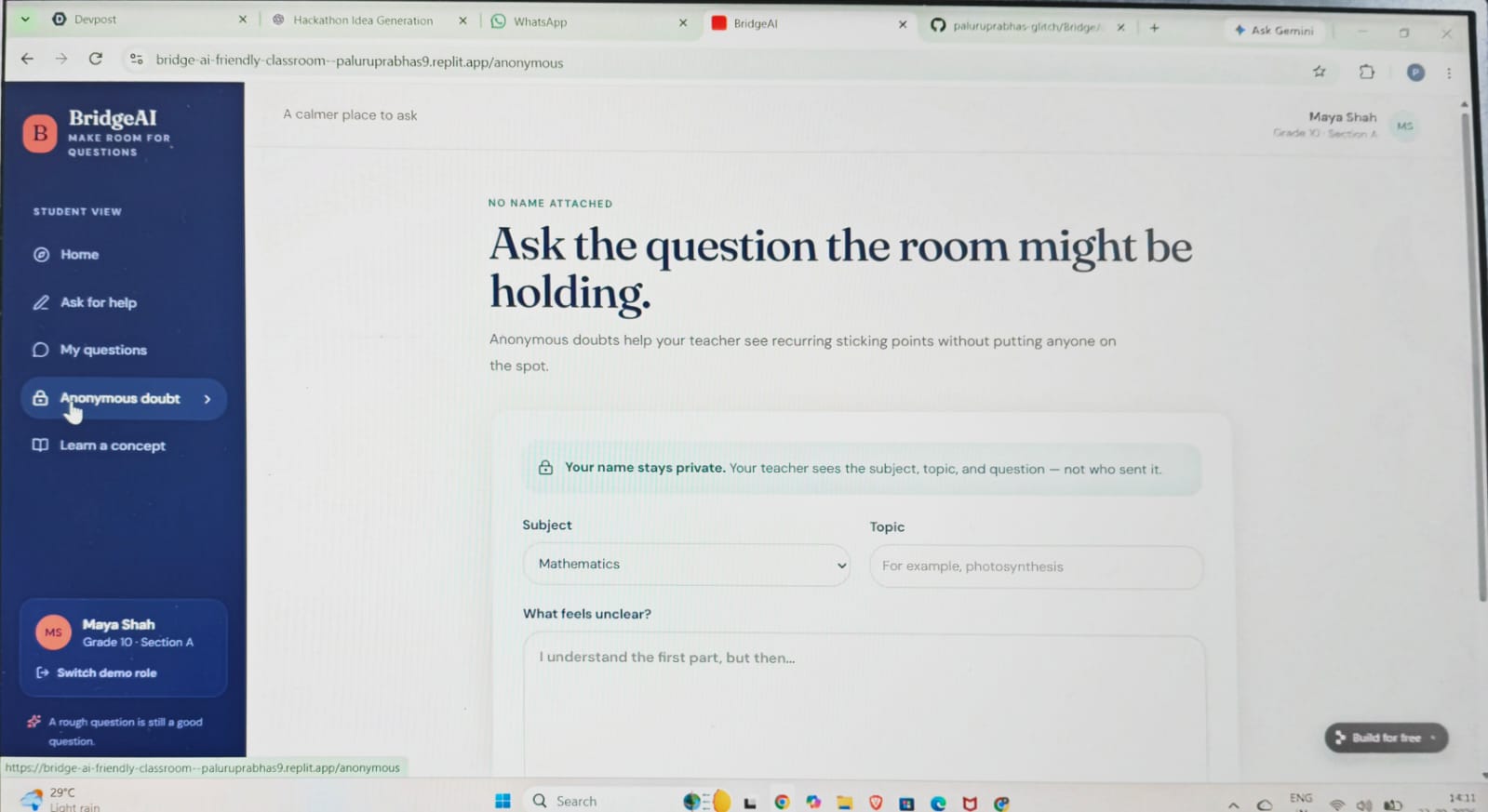
2. Anonymous Doubt Box
Students can submit academic concept questions anonymously. This allows students to ask questions they may feel uncomfortable asking publicly.
Teachers can view common doubts and provide explanations without unnecessarily exposing the student's identity.
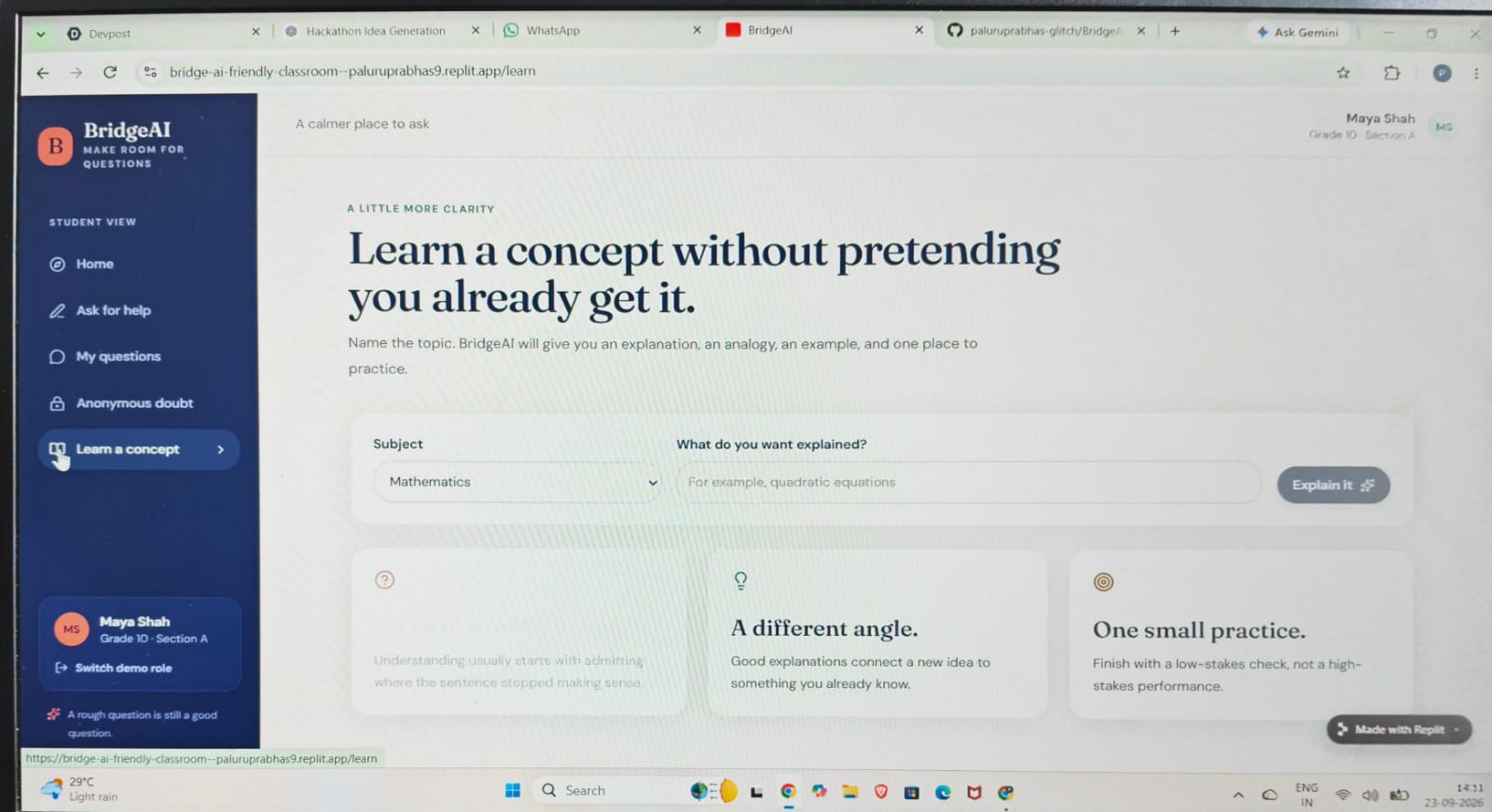
3. AI Concept Assistant
Students can ask the AI to explain difficult academic concepts using simple language, examples, analogies, and practice questions.
The AI is designed to support learning rather than replace the teacher.
4. Exam Support
Students can enter their subject, exam date, difficult topics, and current preparation level. BridgeAI can generate a practical revision plan and help the student formulate a request for guidance from their teacher.
5. Teacher Dashboard
Teachers can manage student questions, respond to doubts, view recurring topics, create doubt sessions, and send friendly classroom announcements.
6. Common Doubt Analysis
AI can group similar anonymous questions.
For example, if several students ask about Python OOP, the teacher can see that "Classes and Objects" or "Inheritance" is a recurring area of confusion and decide to revise it.
How We Built It
The application is designed as a full-stack web platform.
Frontend
- React.js
- Vite
- Tailwind CSS
Backend
- Node.js
- Express.js
Database
- MongoDB
Authentication
- JWT
- Password hashing with bcrypt
- Role-based access for students, teachers, and administrators
AI
- Gemini API for concept explanations, message assistance, exam planning, practice questions, and grouping common doubts.
The application follows a frontend-backend-database architecture, with protected APIs for student and teacher functionality.
What We Learned
While developing BridgeAI, we learned that solving an education problem is not only about adding AI. The communication experience, privacy, simplicity, and trust between students and teachers are equally important.
We learned about:
- Full-stack web application development.
- Role-based authentication and authorization.
- MongoDB database design.
- REST API development.
- AI API integration.
- Prompt design for educational assistance.
- Designing student-friendly interfaces.
- Privacy-conscious communication systems.
- Turning real-world problems into practical software features.
Challenges We Faced
One of the biggest challenges was designing the platform so that AI supports the student-teacher relationship instead of replacing it.
We also had to consider how anonymous questions should work while maintaining privacy and responsible moderation.
Another challenge was designing a simple interface that does not make students feel like they are using a strict school administration system. The application needed to feel friendly and comfortable.
We also had to connect multiple components including authentication, database operations, student-teacher communication, AI functionality, and teacher dashboards into one consistent workflow.
Impact
BridgeAI aims to create a classroom environment where students feel more comfortable expressing their doubts and teachers receive better visibility into the areas where students need support.
Instead of allowing a small doubt to become a major learning gap, BridgeAI encourages students to communicate early and helps teachers respond effectively.
Our Vision
We believe technology should not create more distance between students and teachers.
It should help bring them closer.
BridgeAI is built around one simple idea:
Ask Without Fear. Learn Without Limits.
Built With
- express.js
- gemini-api
- mongodb
- node.js
- react.js
- tailwind-css


Log in or sign up for Devpost to join the conversation.