Inspiration
Complex information is everywhere: legal documents, medical instructions, technical papers, but not everyone can understand them easily. BridgeAI was created to reduce the accessibility gap by transforming complicated information into simple, understandable explanations.
What it does
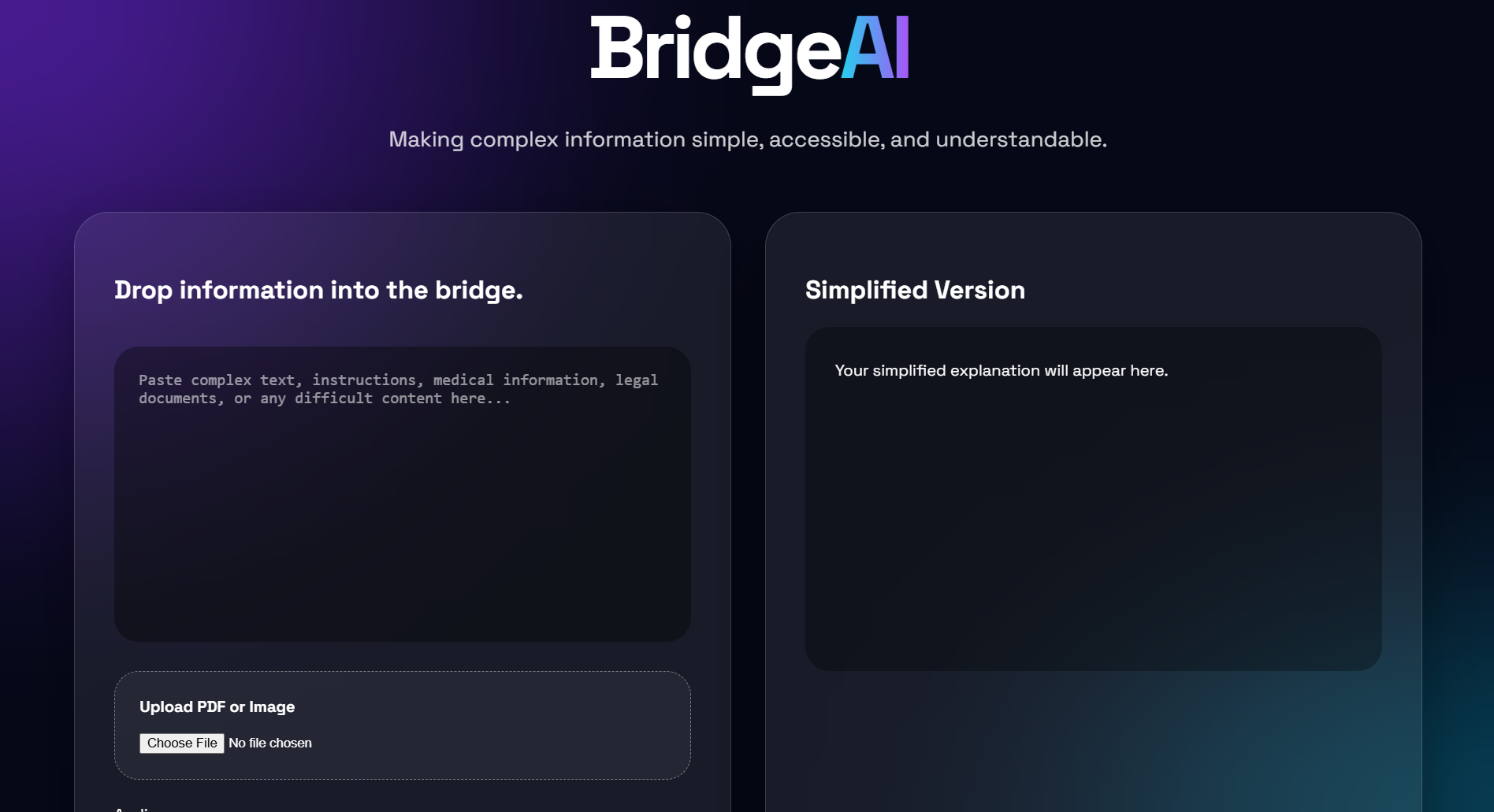
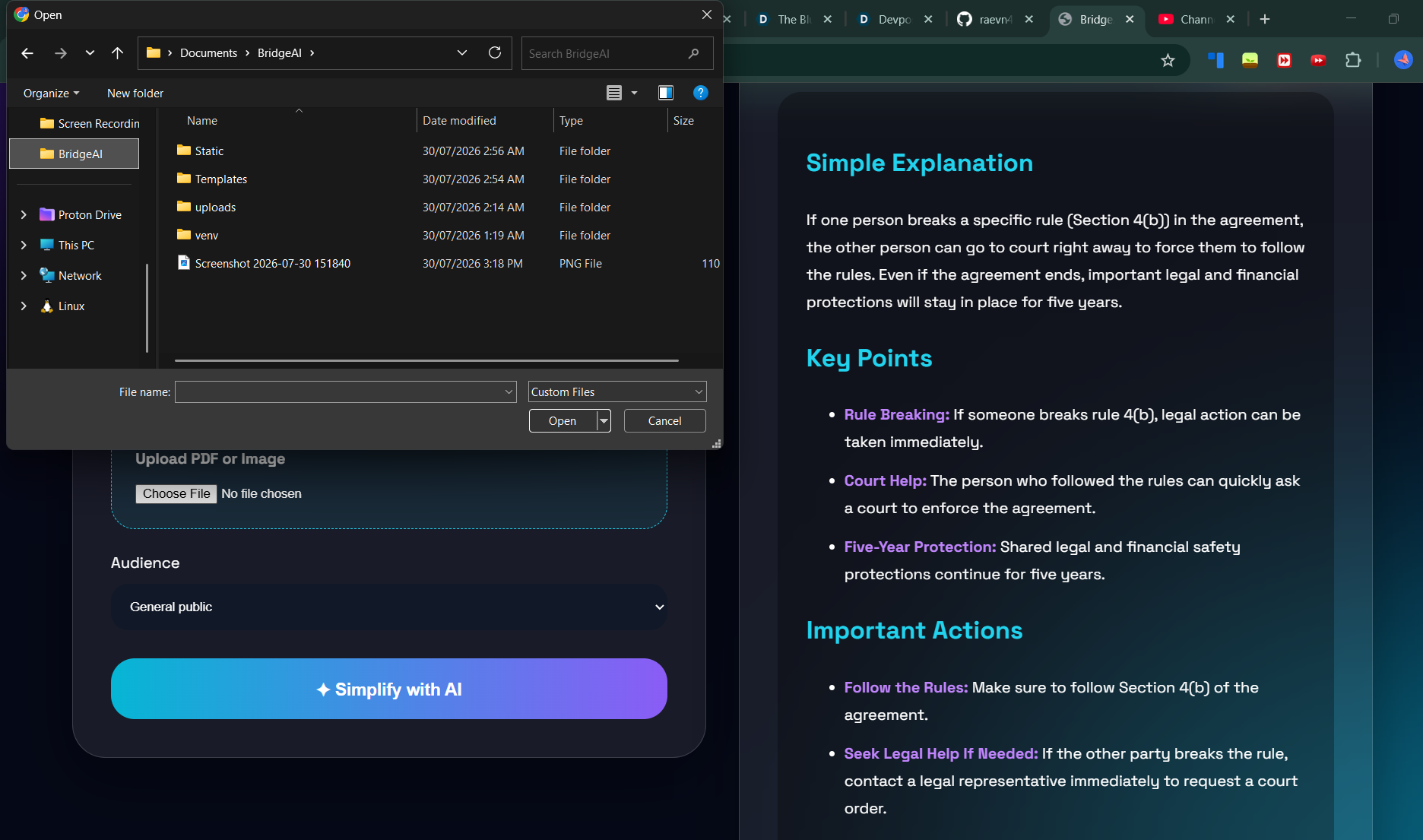
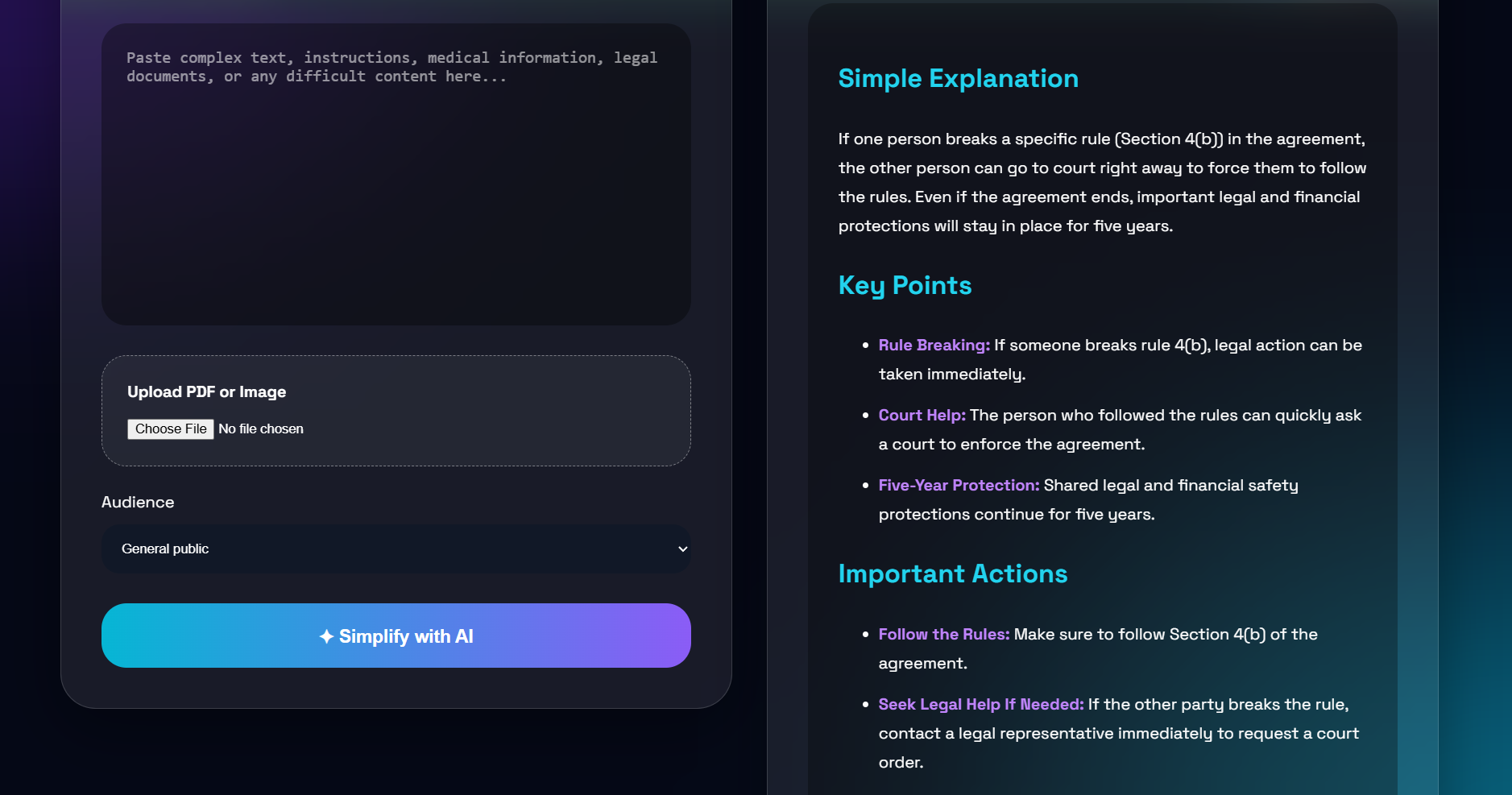
BridgeAI is an AI-powered accessibility assistant that simplifies complex information. Users can paste text or upload PDFs and images, and the system analyzes the content before generating a simplified explanation, key points, and important actions tailored to different audiences.
How we built it
BridgeAI was built using Flask for the backend, Google's Gemini API for AI-powered analysis, Python libraries including Pillow and PyPDF for document processing, and HTML/CSS/JavaScript for the interface.
Challenges we ran into
One challenge was making the system handle different types of information sources. Text, PDFs, and images require different processing methods, so the application was designed to combine multiple input pipelines into one accessibility workflow.
Accomplishments that we're proud of
For BridgeAI We: Built a working AI accessibility assistant. Implemented PDF extraction. Added image understanding. Created a custom animated interface. Designed audience-specific simplification. Integrated Gemini API.
What we learned
We learned how AI systems can be used beyond generating answers. They can help make knowledge more accessible. We also learned about integrating multimodal AI systems and designing user experiences around accessibility.
What's next for BridgeAI
Future improvements include real-time document understanding, voice accessibility features, multilingual support, and a browser extension that simplifies information while users browse.


Log in or sign up for Devpost to join the conversation.