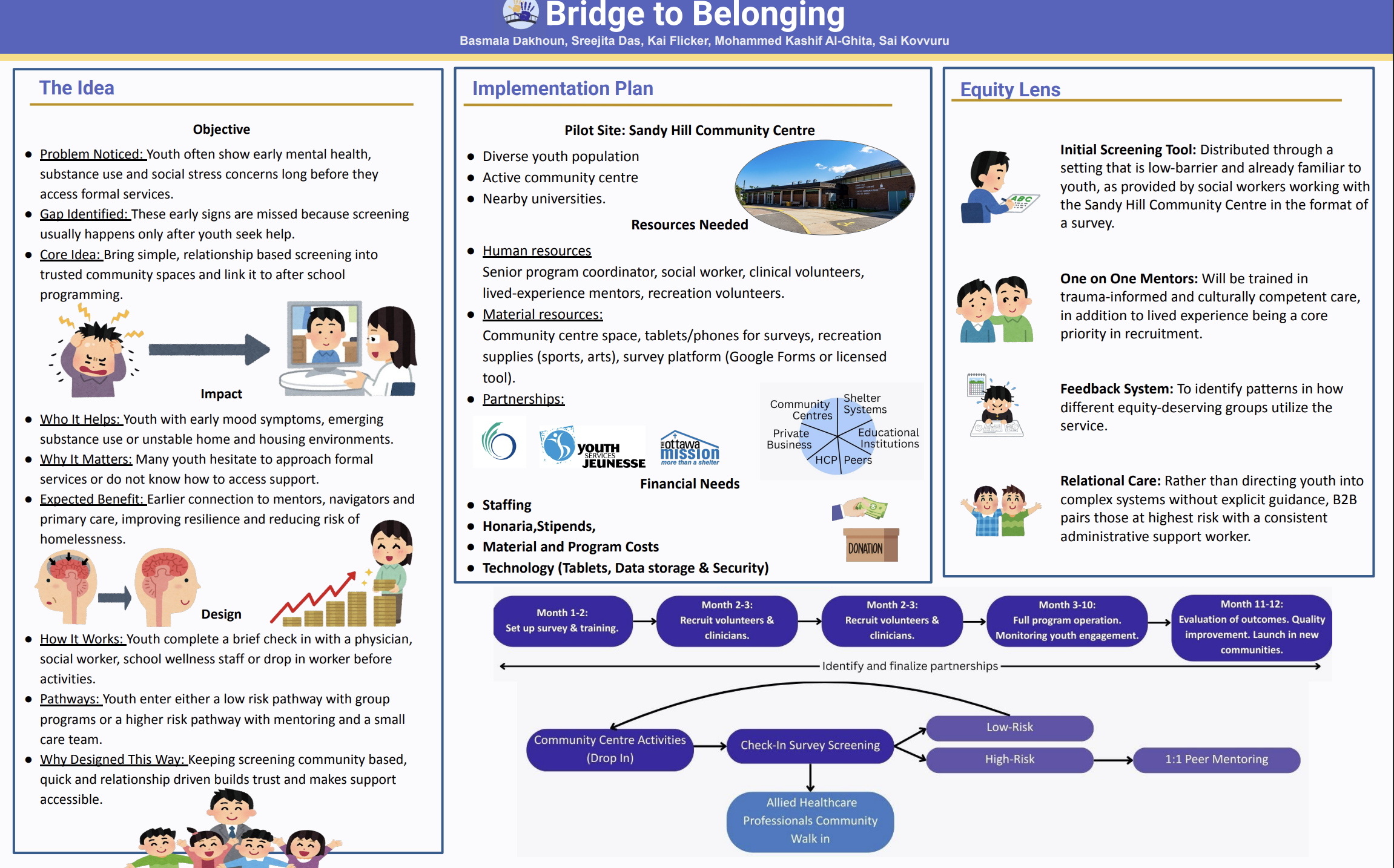
The core plan is to create a simple check-in system for mood symptoms, problematic substance use patterns, social stressors, and family history to screen for risk factors prior to accessing community centre-based recreational activities. Following that, we would categorize youth into either low-risk or high-risk groups. Low-risk profiles would continue with group programs and community activities based out of the Sandy Hill Community Centre. This will help with keeping the low-risk youth connected to the community and build resilience before challenges escalate. For both low or higher risk youth, B2B helps connect them with a one-on-one mentor, as well as a family doctor, social worker and trained peer navigator. They can help with safety planning, medical assistance, harm reduction strategies, and referral to other counselling services. The program will place emphasis on acquiring volunteers with lived experiences in mental health, problematic substance use or homelessness. Furthermore, we will have a similar program to Code 99, where youth who are identified as at-risk can enroll in the program to be paired with a family physician.
The purpose of B2B is to intervene earlier. We want to make intervention easy, fast, and non-intimidating by incorporating a screening component after developing rapport with youth. Our outcomes, not limited to, but will include 1) reducing the number of homeless youths in Sandy Hill, and 2) promoting safer substance use, addressing problematic substance use and addressing mental health.
Built With
- n/a

Log in or sign up for Devpost to join the conversation.