Inspiration
One of our close friends was casually chatting with a neighbor who happened to work as a part-time clerk at a local community center. During their conversation, the neighbor mentioned a specific state-funded program that provided $300 a month in EBT (CalFresh) for students living in independent housing. He was an active student, an immigrant, and someone who kept up with the news, yet he had never once seen this program advertised. He found out about a life-changing financial resource by chance, rather than a clear public channel. When we went off to college, he then told us about how he was able to get these benefits, but more importantly, he told us how he found out about these benefits. We realized that even as tech-literate students, we were blind to these resources. Shortly after, I discovered the Middle Class Scholarship, a state program that significantly reduced his tuition burden, a benefit that was only secured because I spent hours digging through obscure government sub-pages. Growing up in immigrant households, we are taught to work hard and never ask for handouts. The cultural beliefs we share, combined with government websites that look like they haven't been updated since 1998, creates a Social Justice crisis. This is billions of dollars in benefits that are "gifted" by agencies to support hardworking residents, yet they remain unclaimed by the very people who need them most. Bridge was built to ensure that every individual that is deservingly in need of financial assistance, can claim what they have earned without needing a law degree or a stroke of luck to find it.
What it does
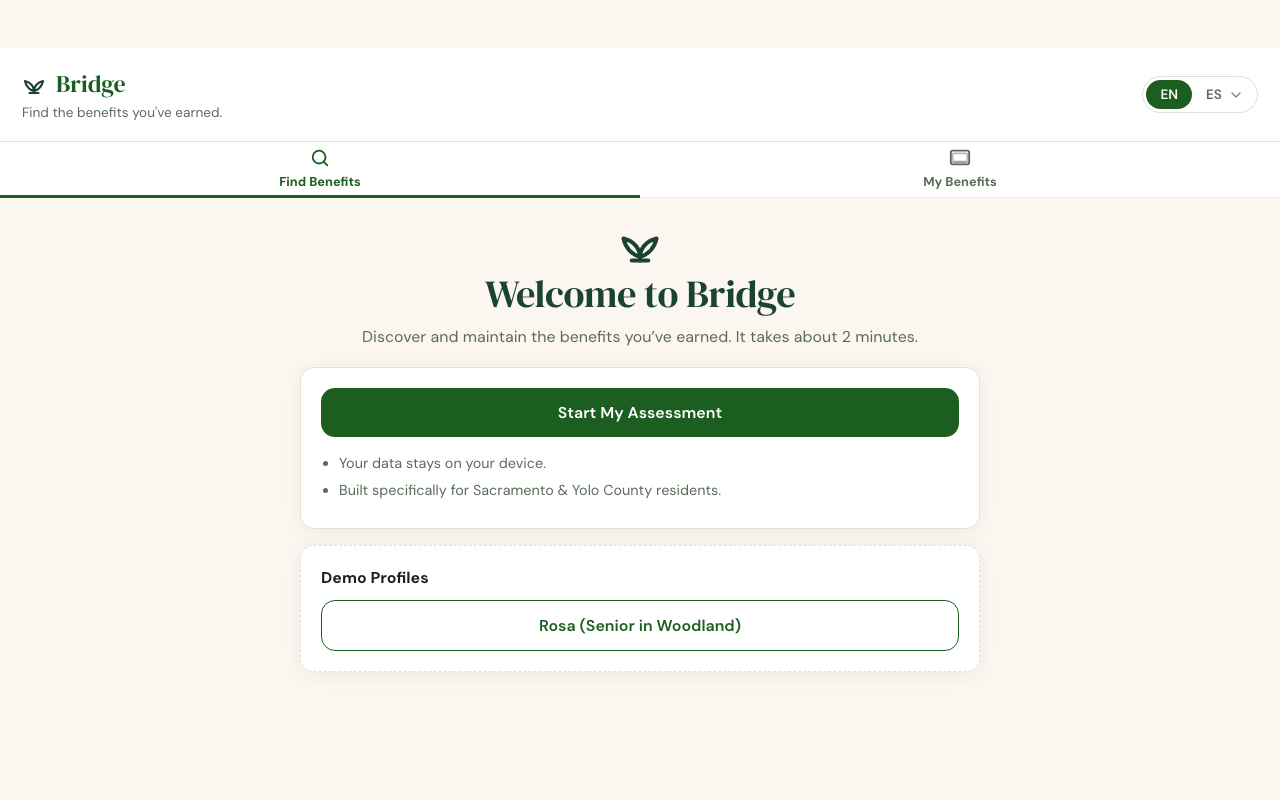
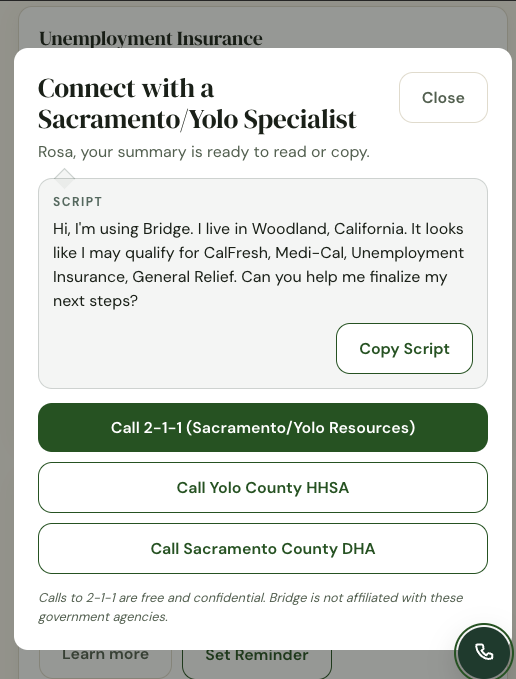
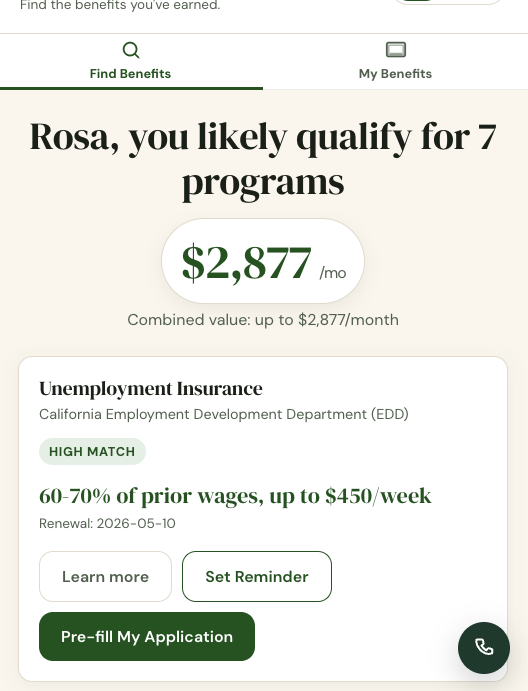
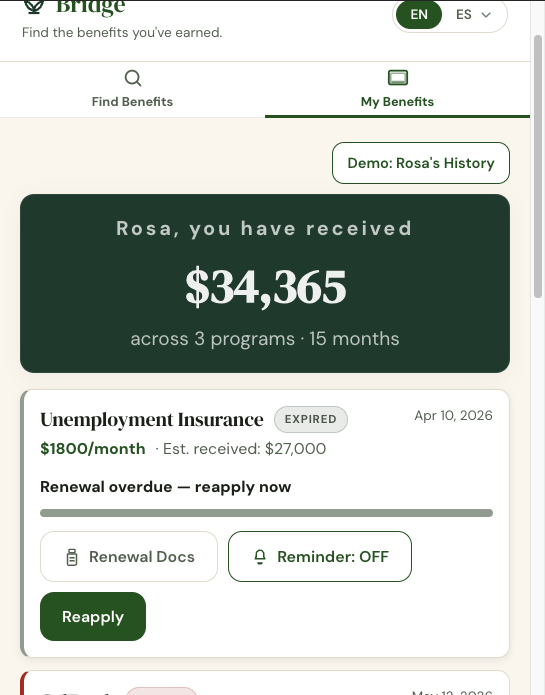
BenefitBridge is a tool designed to dismantle the information barrier. It is a mobile-first, voice-activated gateway that helps low-income and immigrant residents discover and apply for benefits in seconds. The app takes a user through 8 questions and instantly matches them with programs like CalFresh, Medi-Cal, EDD, and WIC. A user provides their personal details once, and our system simultaneously prefills application fields for every single program they qualify for.
How we built it
We built Bridge to be lean, fast, and resilient, ensuring it works on older smartphones with spotty data connections: Gemini 2.5 Flash: We utilized AI not to decide eligibility, but to act as a translator of bureaucracy. Gemini takes cold, intimidating legal jargon and turns it into empathetic, plain-language explanations. Voice-First UI: Recognizing that many users find government forms "tech-hostile," we integrated the Web Speech API so users can simply tell their story.
Challenges we ran into
One of the primary technical hurdles was latency management during the LLM inference phase. Because we generate tailored, plain-language explanations for every matched program, a typical user profile (like Rosa’s) requires four distinct Gemini calls. Initially, these calls took upwards of 16 seconds, which is unacceptable for a modern web experience. We solved this by implementing a ThreadPoolExecutor in the FastAPI backend to fire all Gemini requests in parallel, bringing the total "thinking" time down to under 4 seconds.
Accomplishments that we're proud of
The Zero-Crash Architecture: We implemented a robust fallback system in gemini.py. Even if the API key is missing or the service is down, the app remains fully functional by serving _FALLBACK_EXPLANATIONS.
Built With
- fastapi
- figma
- google-gemini-1.5-flash
- google-maps
- python
- react
- tailwind-css
- vercel
- vite

Log in or sign up for Devpost to join the conversation.