-
-
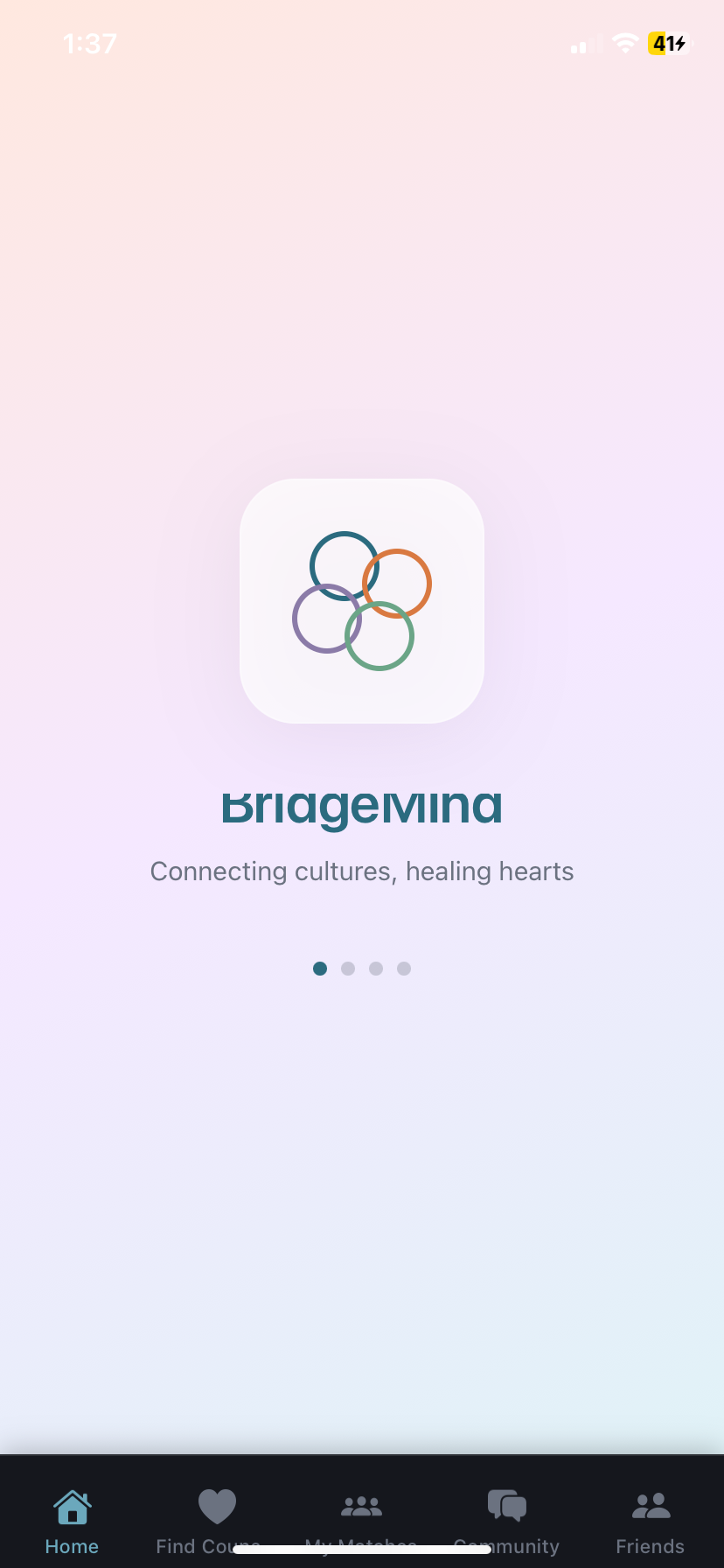
splash page with logo.
-
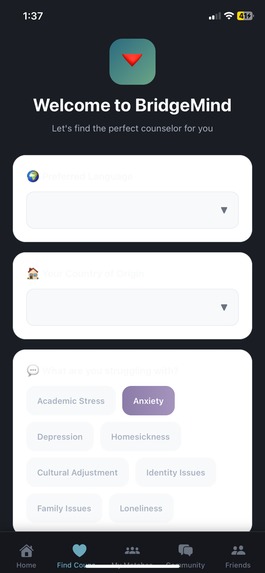
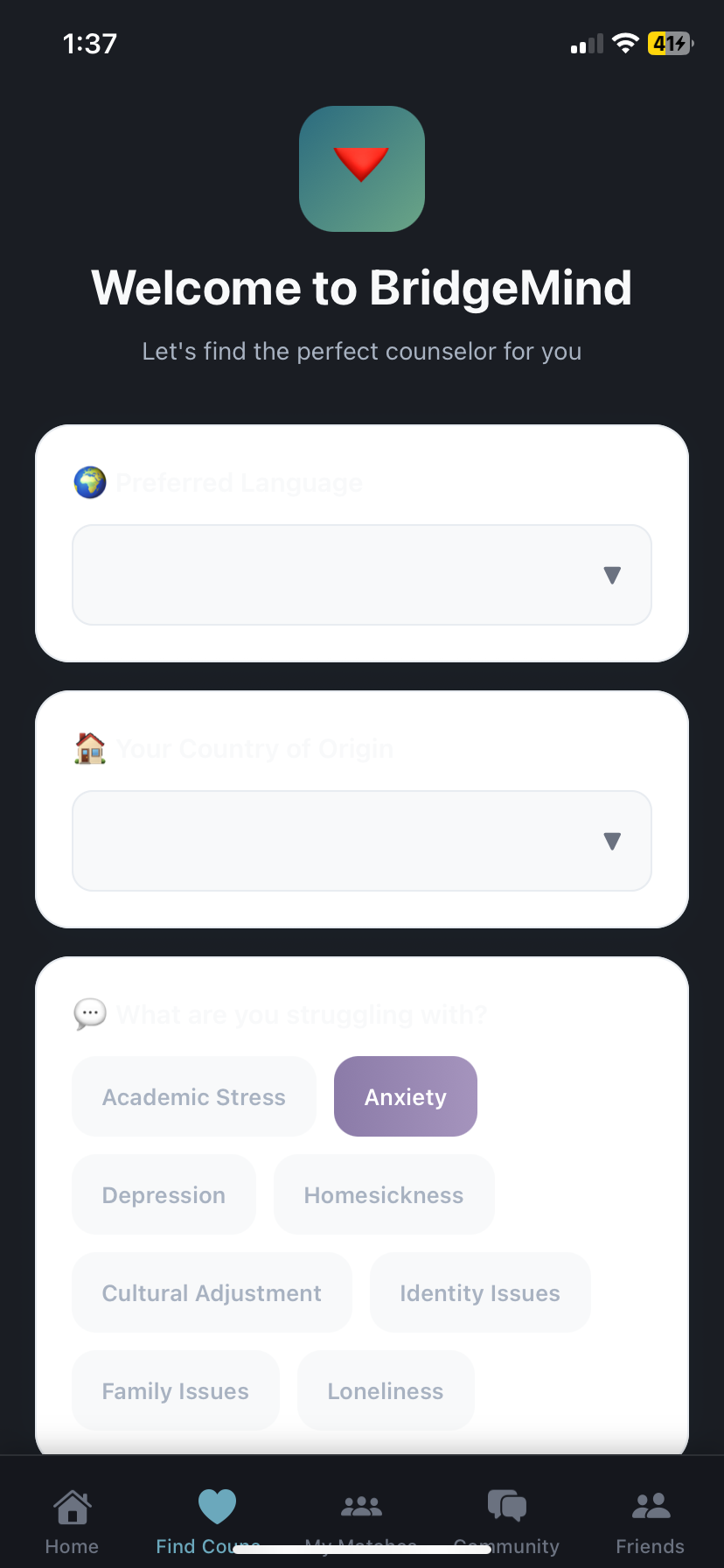
page for user to enter information about themselves and what therapist they would like.
-
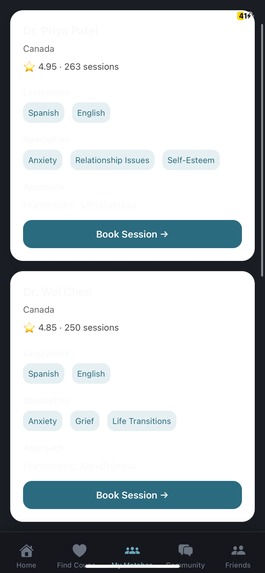
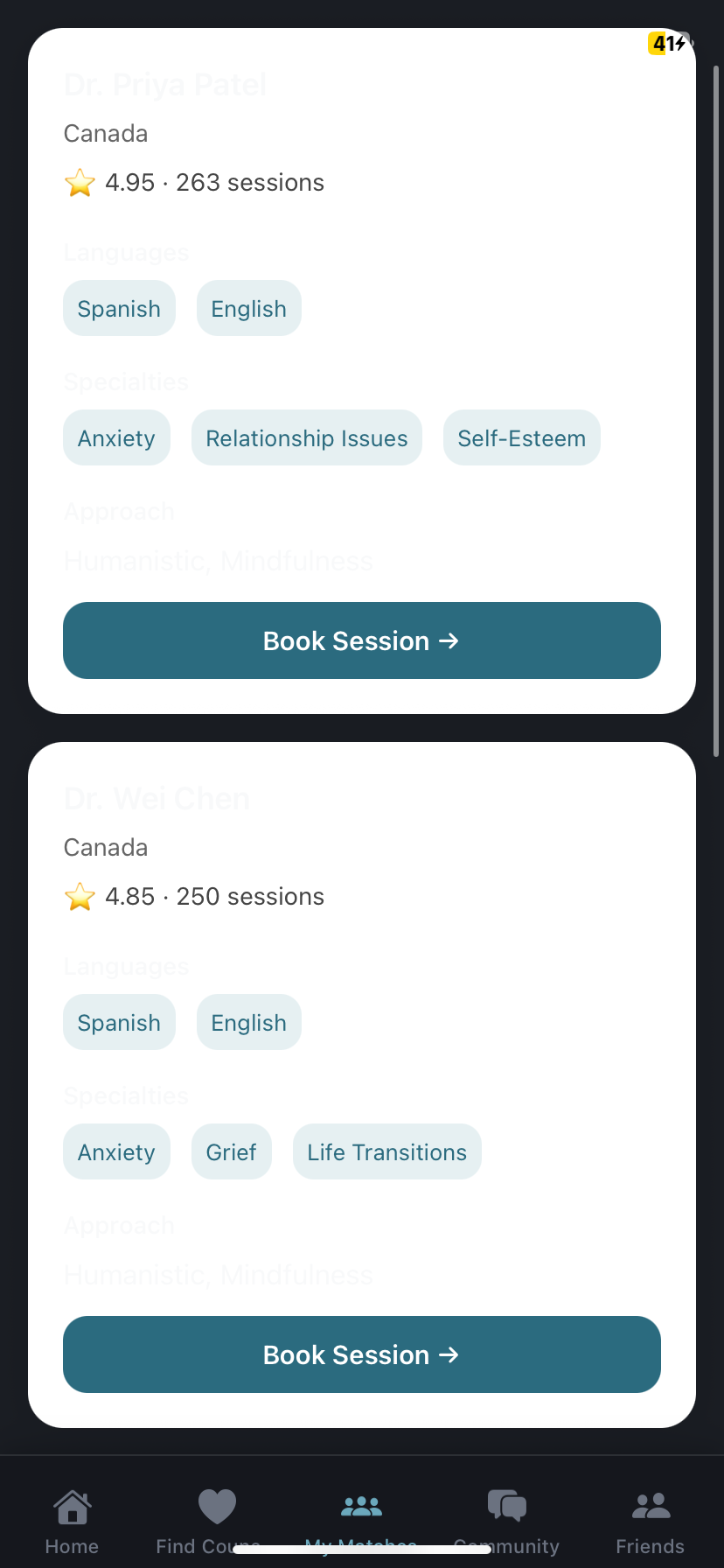
pages showing matched therapist.
-
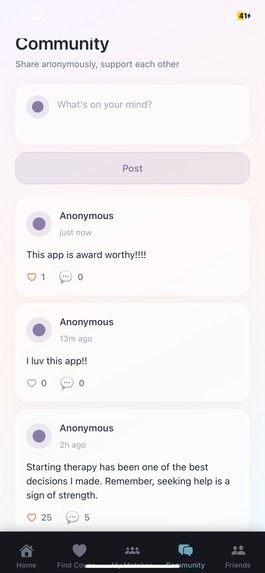
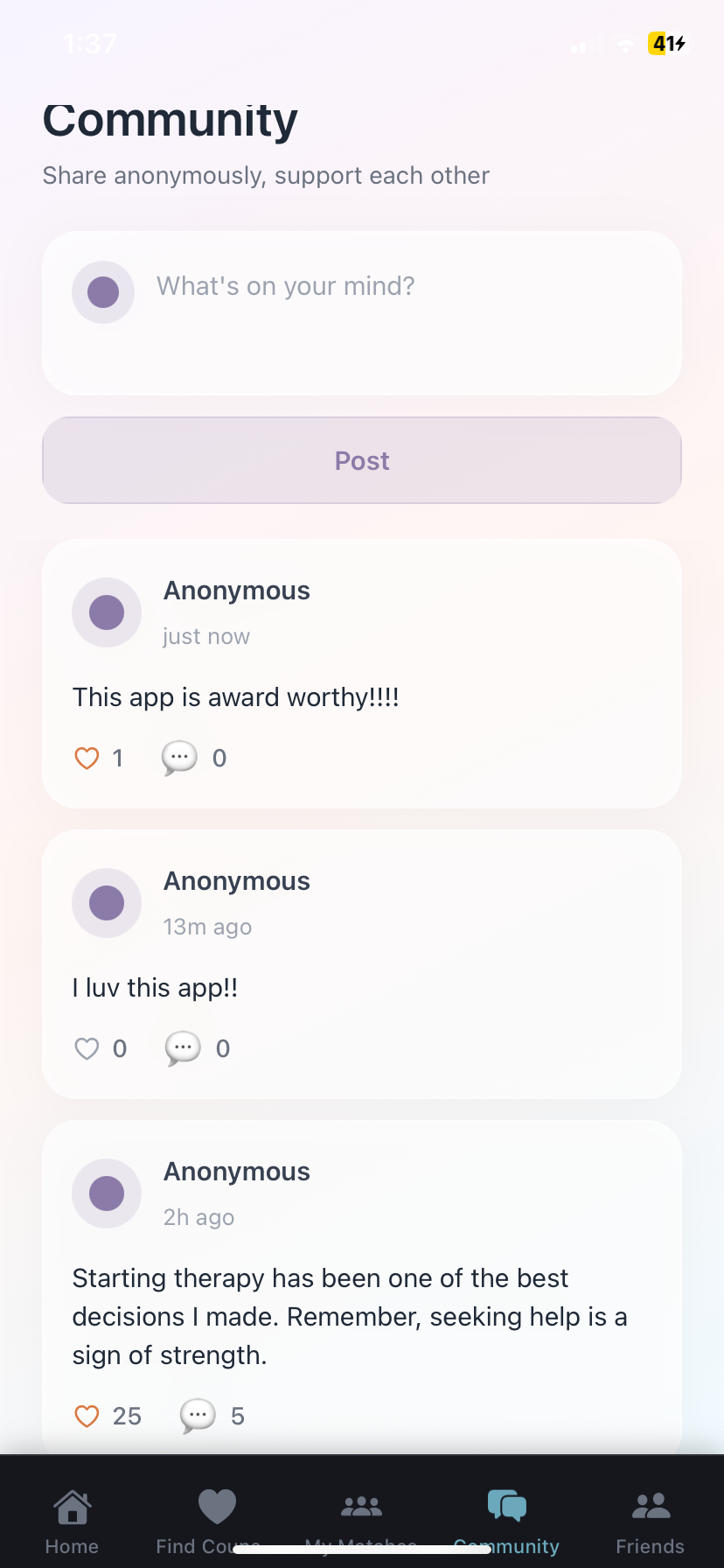
page for users to submit anonymous questions and thoughts.
-
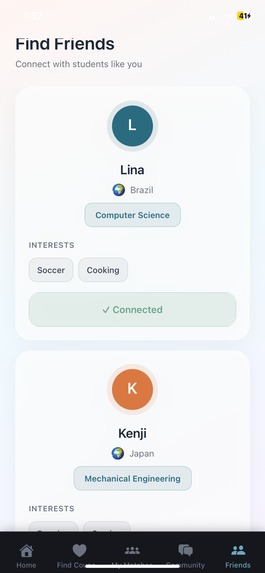
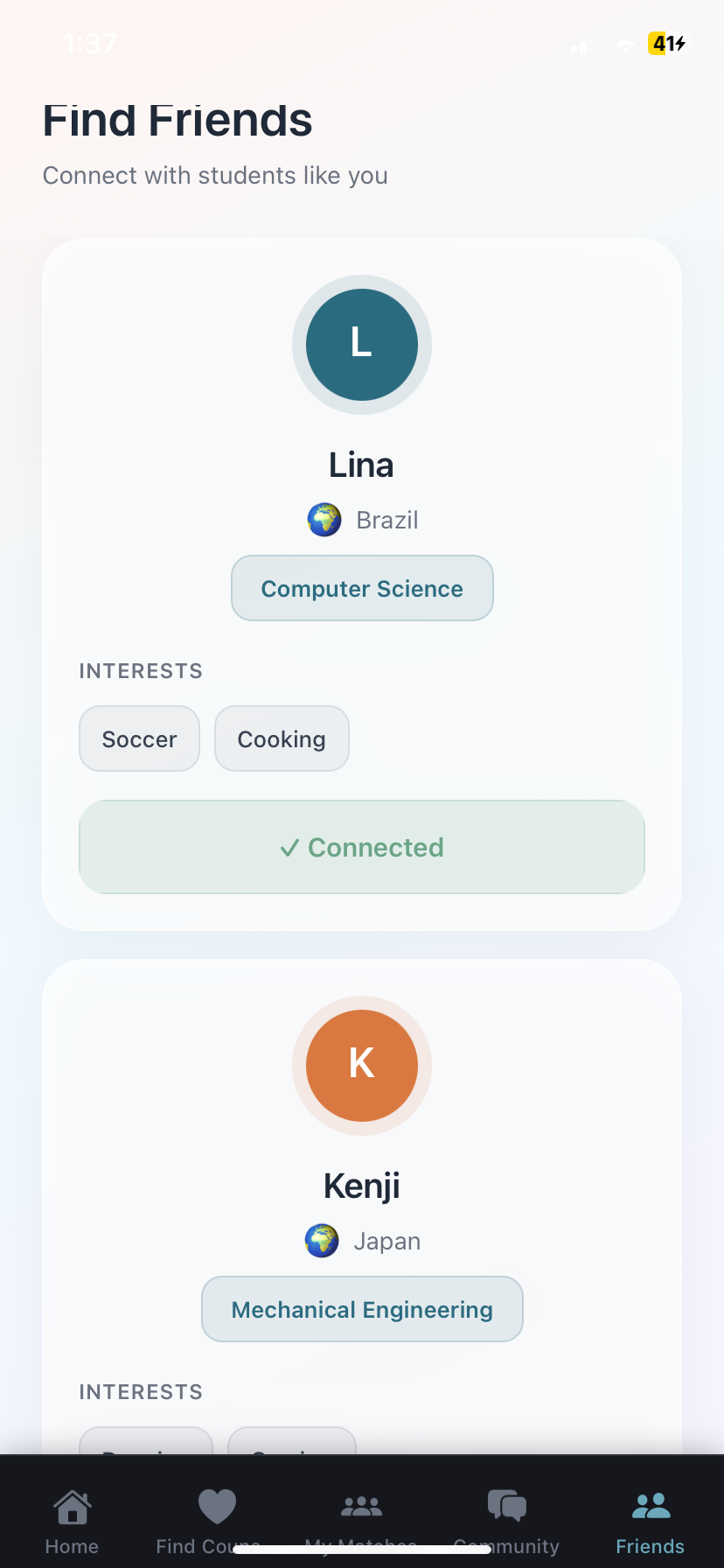
page for user to find new friends and connect with other international students.
Inspiration
As international students ourselves, we noticed how difficult it can be to find mental health support that truly understands cultural backgrounds and emotional challenges. Many students feel isolated, misunderstood, or hesitant to seek help. We wanted to bridge that gap with a platform that makes therapy and peer support accessible, relatable, and safe.
What it does
Bridge Mind is a mobile app that connects international students with licensed therapists and peers who share similar cultural and emotional experiences. Key features include:
- Therapist matching: Connect with mental health professionals who understand your culture.
- Peer support: Find friends who relate to your journey and provide mutual support.
- Anonymous entries: Share thoughts, ask questions, and receive encouragement without fear of judgment.
How we built it
We used React Native and Expo to build a cross-platform mobile app with a clean, responsive UI. Mock data powers therapist and peer listings for the demo. We structured the app with modular components and implemented secure practices for anonymous posts. Navigation is mobile-optimized with bottom tabs, and styling focuses on a calming, inclusive aesthetic.
Challenges we ran into
Ensuring cultural sensitivity was a major challenge, as mental health perceptions vary widely among students. Privacy and trust were also concerns, requiring secure data handling and clear communication. Designing an effective matching system for therapists and peers based on language, culture, and experiences was tricky. Limited technical and financial resources forced us to prioritize essential features creatively.
Accomplishments that we're proud of
We successfully built a functional prototype including therapist booking, peer connections, and anonymous chat. The app demonstrates empathy-driven design, accessibility, and mobile usability. We’re proud of creating a meaningful platform that fosters support and understanding among international students.
What we learned
Through this project, we deepened our knowledge of user-centered design, mobile UI/UX, and mental health accessibility. We learned to balance technology with empathy and how to iterate on ideas under resource constraints. It strengthened our teamwork, problem-solving, and creative thinking skills.
What's next for Bridge Mind
Future plans include AI-assisted therapist matching, in-app wellness tools, and partnerships with universities to expand reach. We aim to make mental health support more accessible for students worldwide, helping them feel seen, understood, and supported.

Log in or sign up for Devpost to join the conversation.