-
-
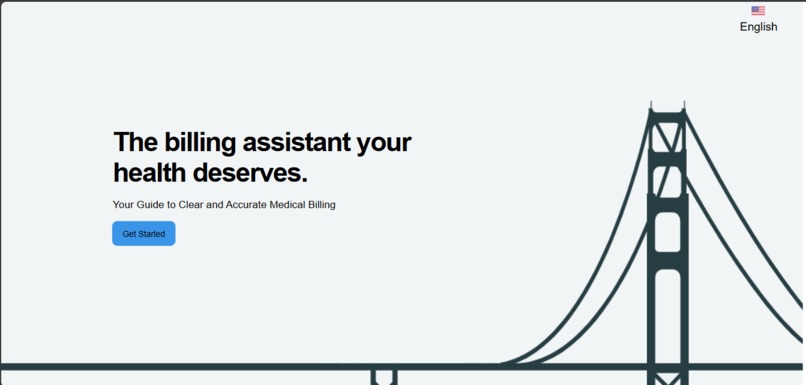
Starting Page
-
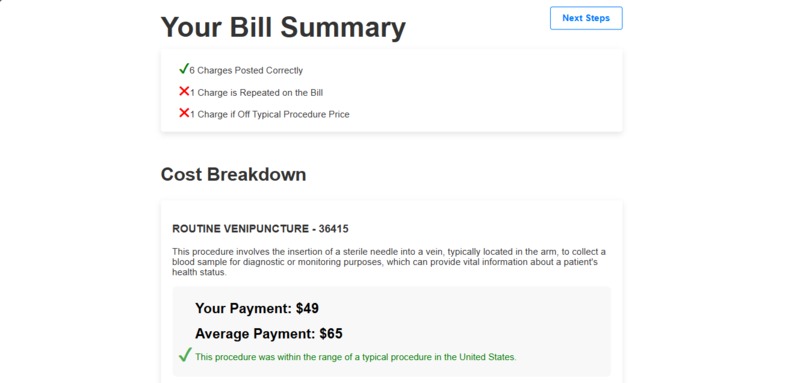
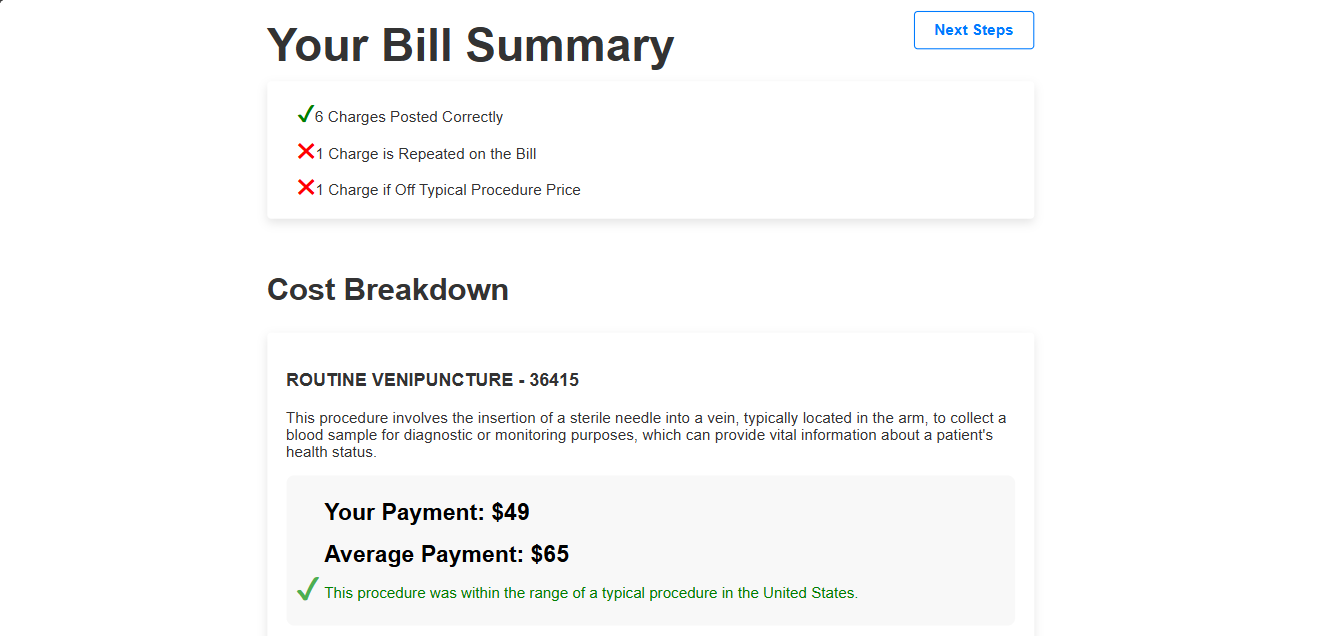
Analysis Page
-
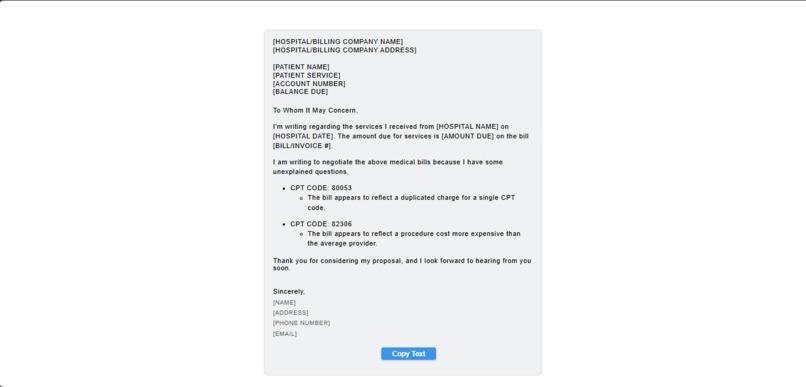
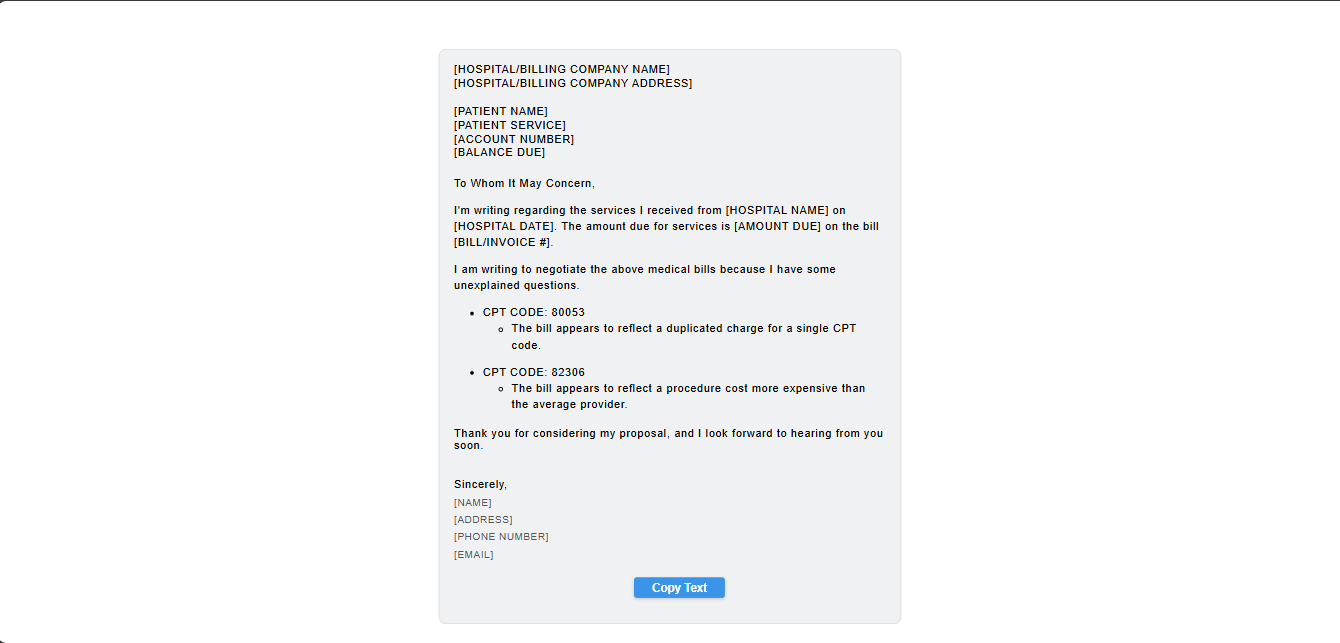
Email Template Page
Inspiration The inspiration for BridgeBill came from personal experiences and stories we heard from friends and family who struggled with understanding medical bills due to language barriers or confusing terminology. My partner and I recognized that navigating medical bills was even more daunting for immigrants and those with limited English proficiency. This sparked a determination to create a tool that empowers everyone, regardless of their background, to understand and manage their medical expenses confidently.
What it does BridgeBill simplifies the process of reviewing medical bills by allowing users to upload a picture of their itemized bill from the doctor. The tool analyzes the bill and identifies discrepancies such as duplicate charges, overcharges, and other common billing errors. It also creates a customizable email template for users to send to their healthcare provider to dispute or clarify these discrepancies, making it easier to communicate effectively and resolve billing issues.
How we built it We built BridgeBill by leveraging the American Medical Association (AMA) API to extract and validate data from uploaded medical bills. This allowed us to cross-check medical billing codes and spot discrepancies efficiently. The user interface was crafted using React for a smooth and intuitive experience, while the backend was powered by Flask to handle data processing and dynamically generate email templates for users. To make BridgeBill accessible to non-English speakers, we incorporated a translation feature, ensuring that users from different backgrounds could easily navigate the platform and understand their bills.
Challenges we ran into One major challenge we faced was designing a user-friendly experience tailored for immigrants and non-tech-savvy users, ensuring a smooth and intuitive flow for uploading bills. We also tackled the difficulty of creating clear translations that preserved meaning while addressing complex medical jargon across multiple languages, making the website easy to understand and accessible to a diverse audience. Another challenge was integrating the AMA API seamlessly with our data processing flow. The complexity of medical billing codes meant that we had to build additional logic to handle exceptions and ensure that each item was validated accurately.
Accomplishments that we're proud of One of the standout moments during the development of BridgeBill was when I uploaded a past medical bill from when I broke my arm. To my surprise, the tool flagged a double charge for a medical consultation that I had never noticed and ended up paying at the time. This personal experience was a powerful reminder of how easy it is to miss billing errors, even for those who are detail-oriented. It highlights the real-world impact BridgeBill could have for countless others. We are proud to know that, in a landscape where 4 out of every 5 medical bills contain discrepancies, our tool can help bring that number down to zero by empowering users to spot errors and take action before they pay.
What we learned Through the development of BridgeBill, we learned the importance of empathy in design. Understanding the end user’s challenges and creating solutions tailored to their needs required thorough research and consistent feedback. We also gained deeper knowledge of medical billing systems and terminology. This project reinforced our belief in the power of technology as a bridge to break down linguistic and technical barriers.
What's next for BridgeBill The next steps for BridgeBill include creating a dedicated page for hospitals, where providers can run bills through BridgeBill before sending them to patients. This feature would automatically detect errors, preventing issues from reaching patients and fostering loyalty, trust, and a strong relationship between patients and hospitals. We also plan to enhance translation capabilities to cover more languages, making the platform accessible for immigrants by providing clear explanations in their native languages and addressing complex medical jargon, empowering them to understand their bills with confidence.

Log in or sign up for Devpost to join the conversation.