-
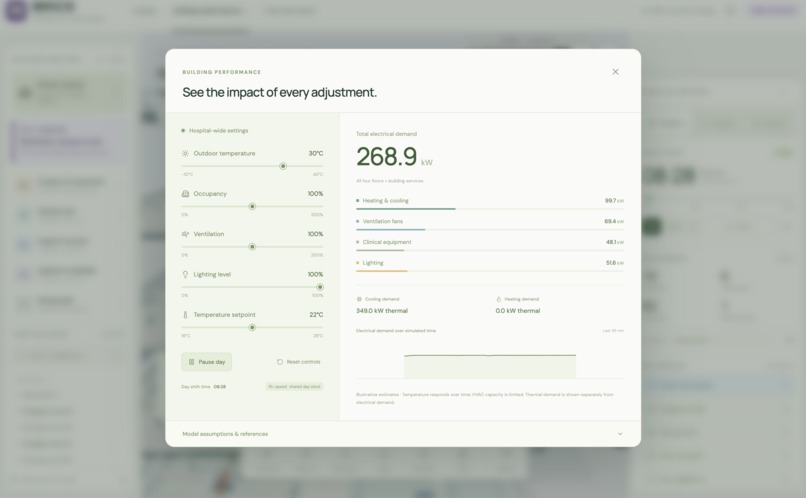
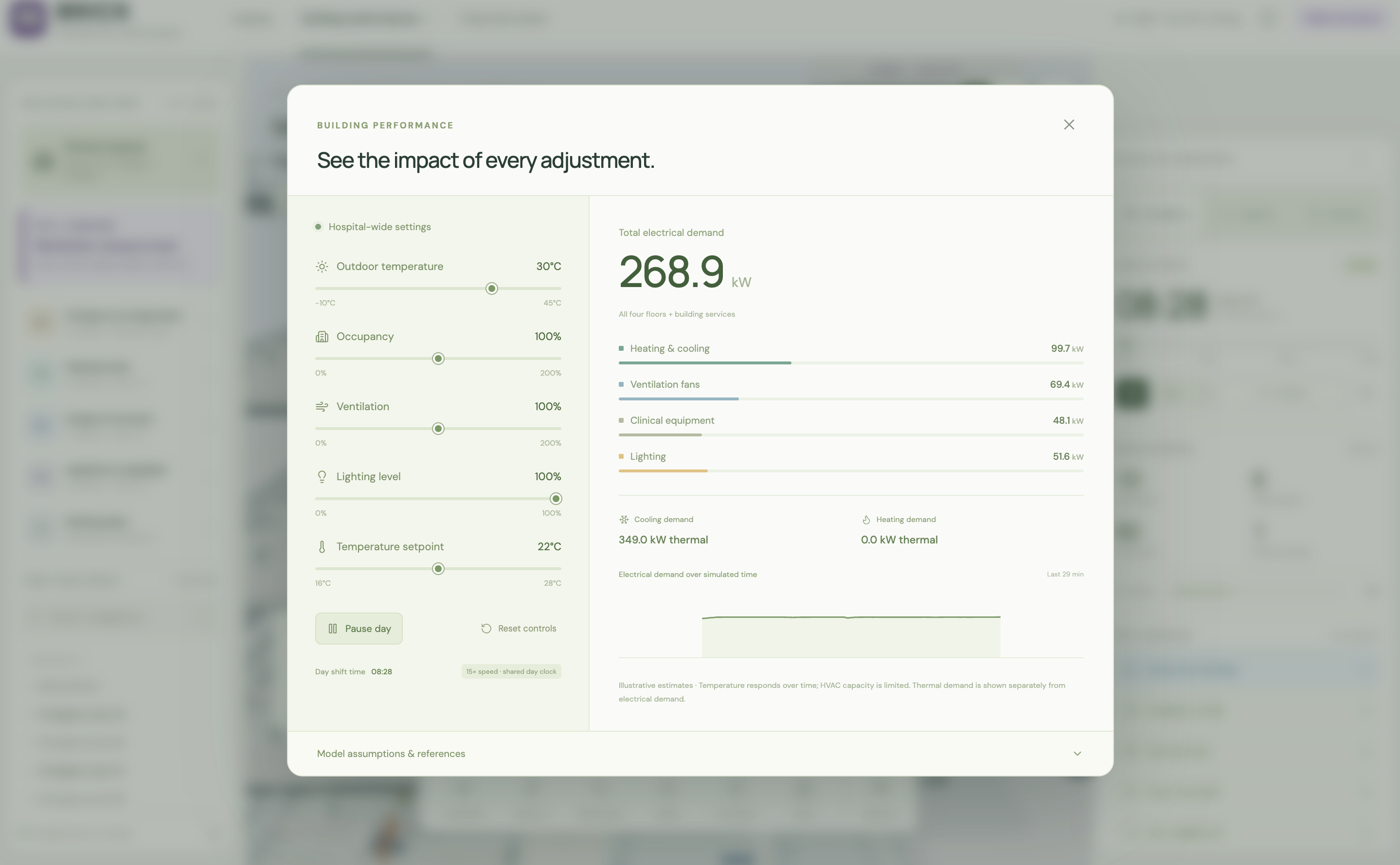
Simulate how changing different variables can impact energy consumption
-
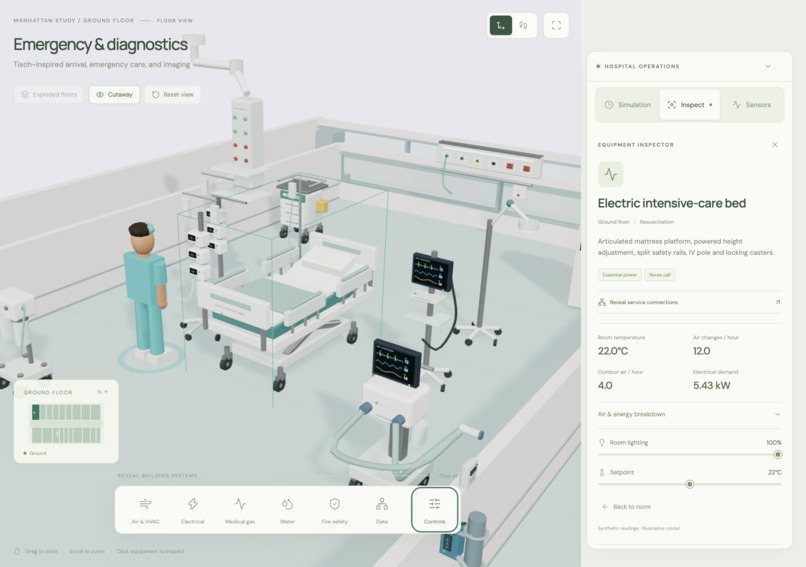
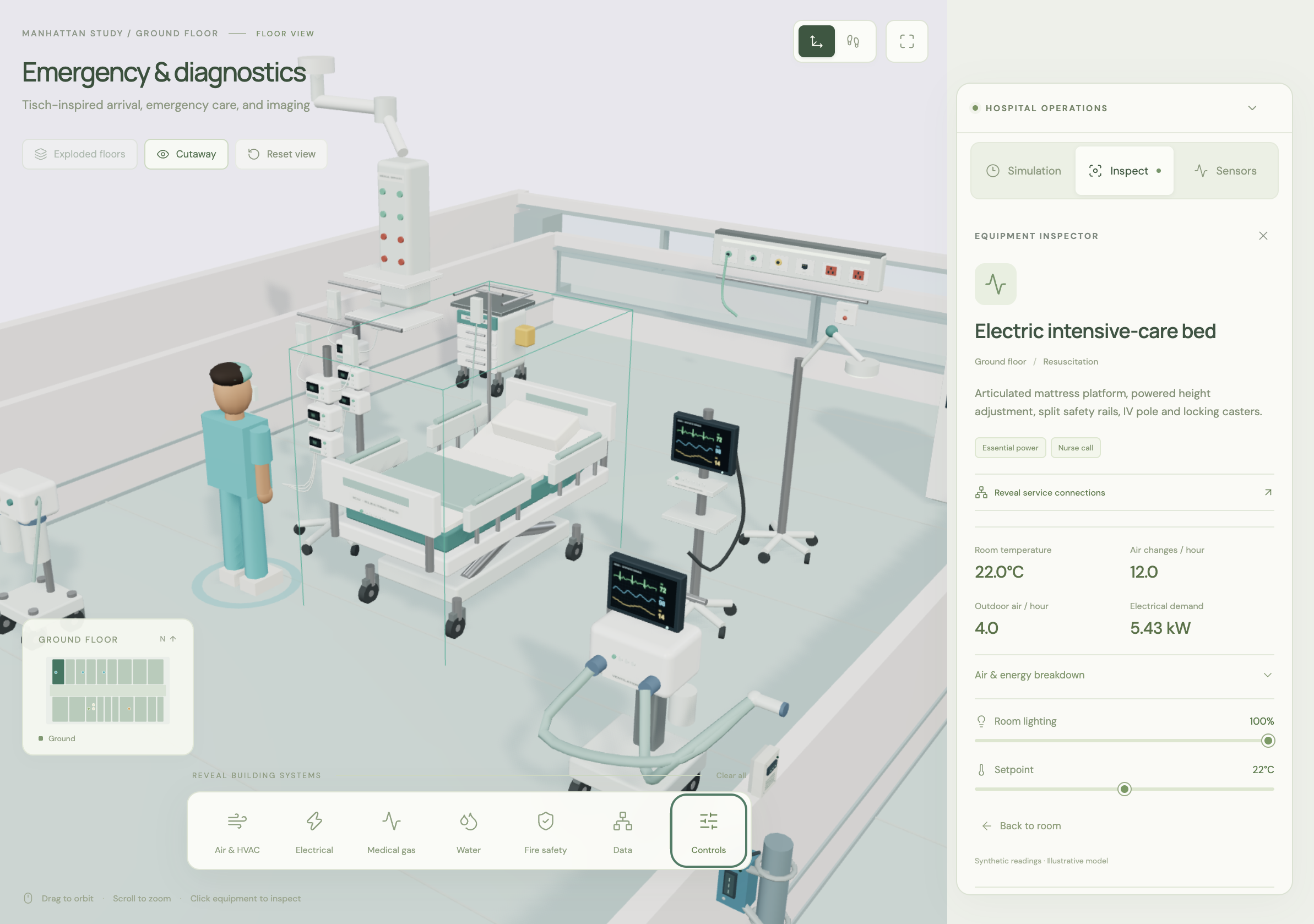
Take a closer look into the energy use of the Resuscitation room
-
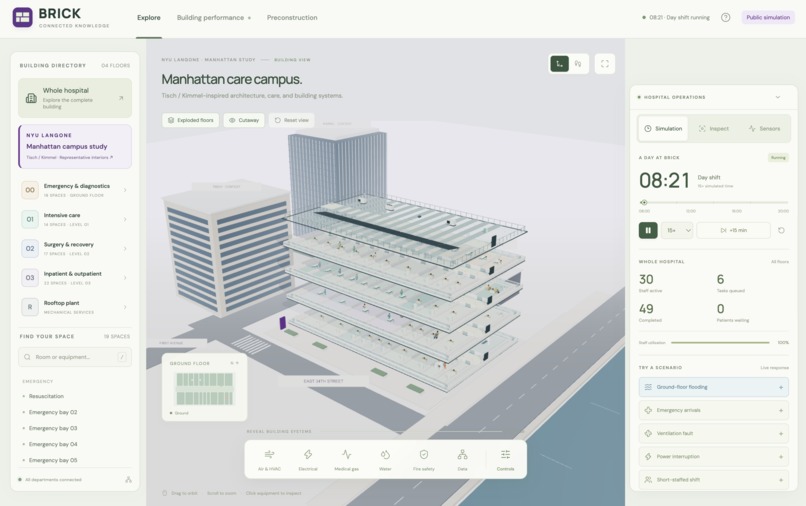
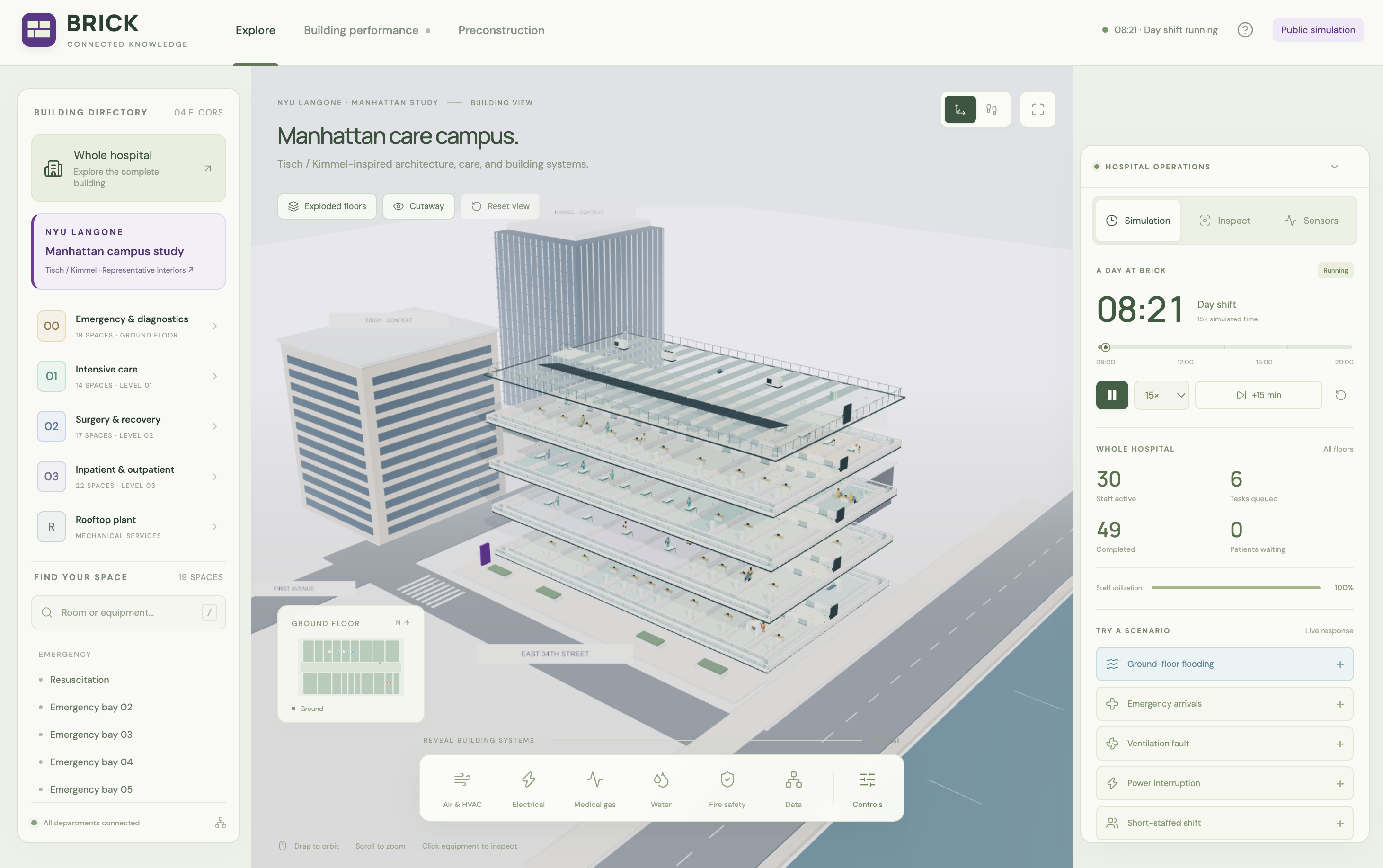
Interact with the entire hospital!
-
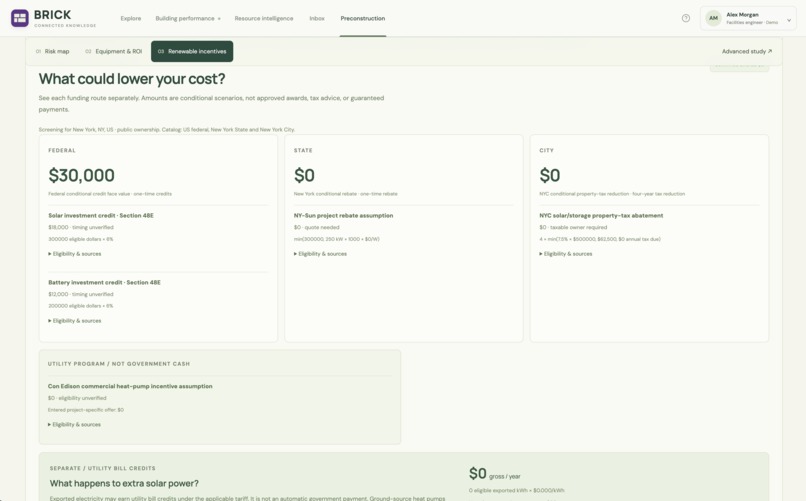
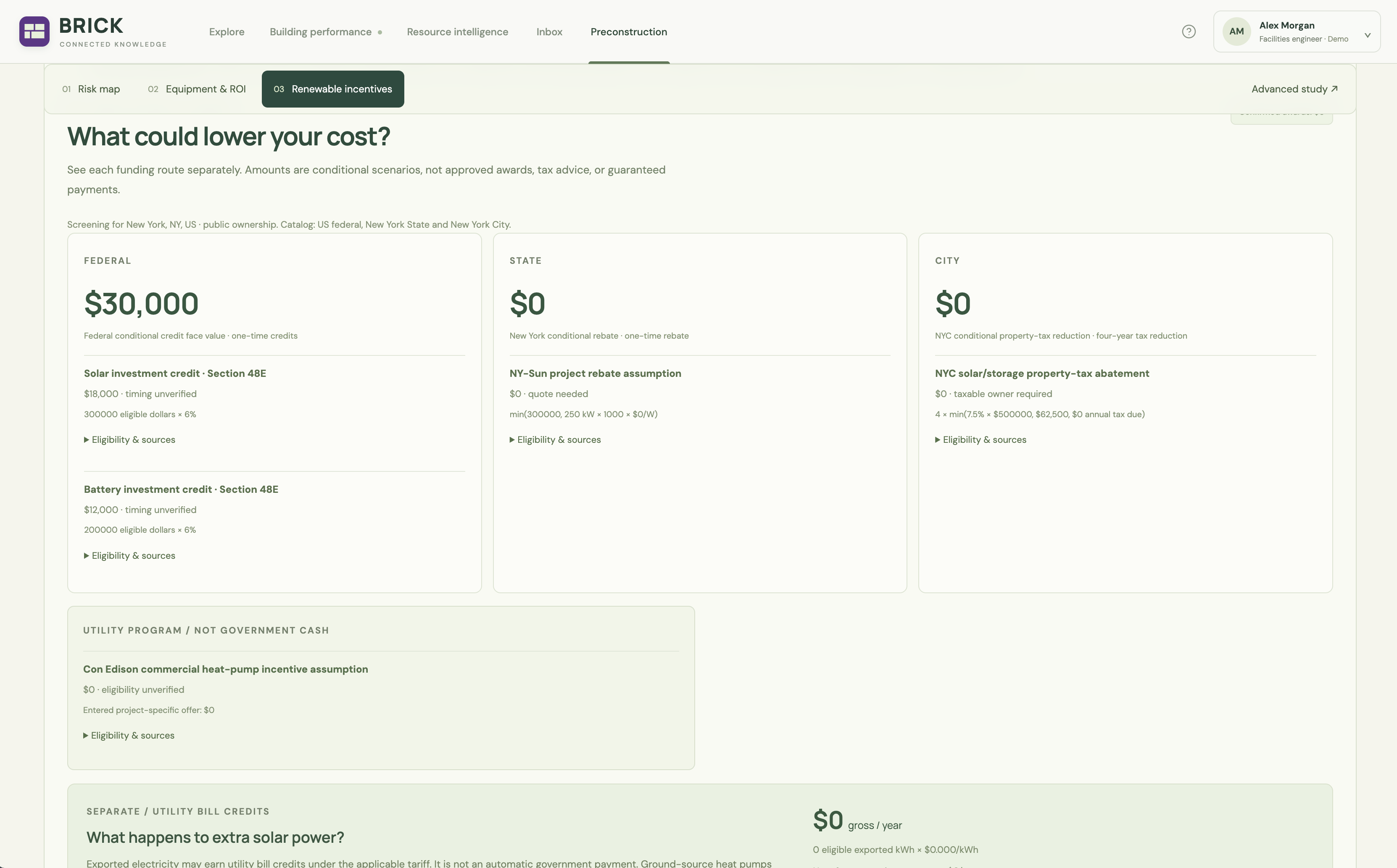
Renewable energy incentives prior to building
-
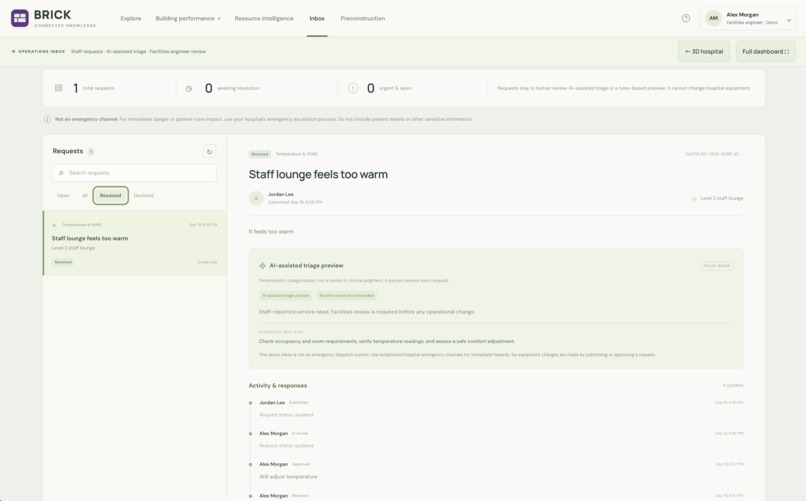
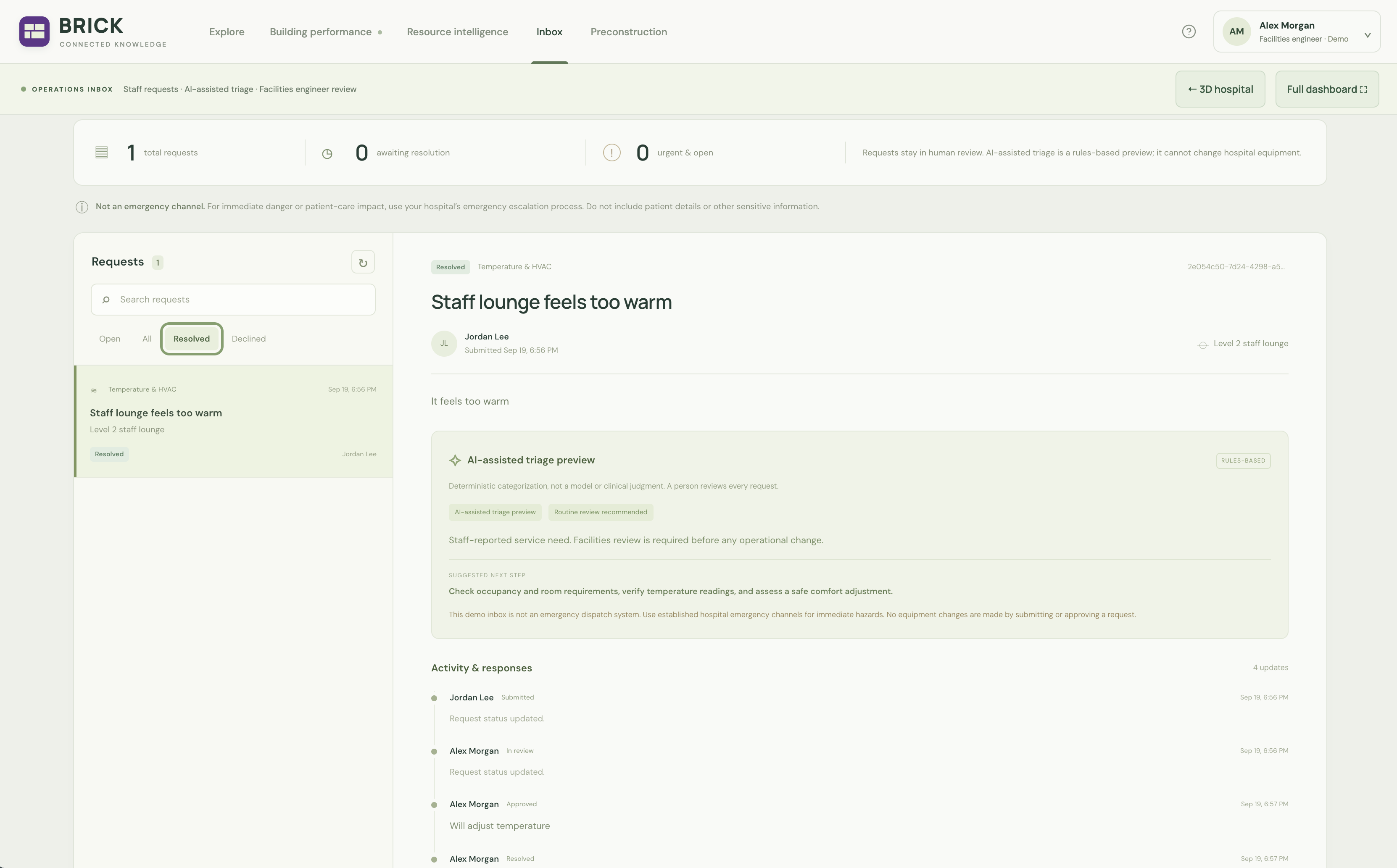
Inbox for hospital staff to give feedback from the floor
-
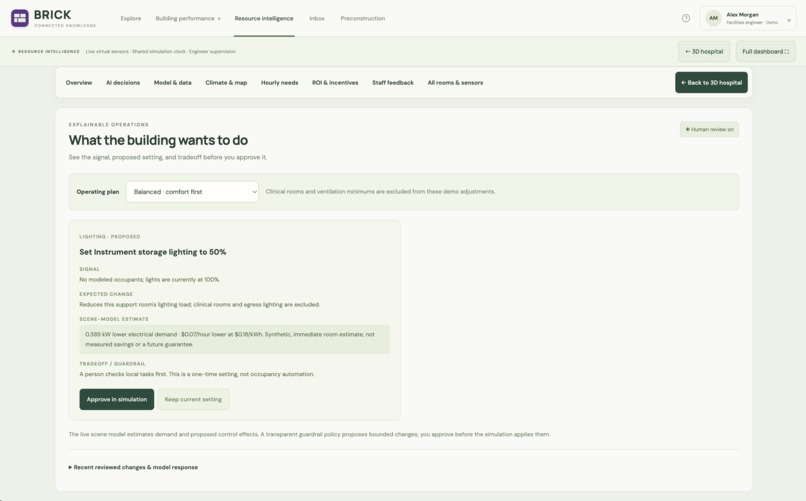
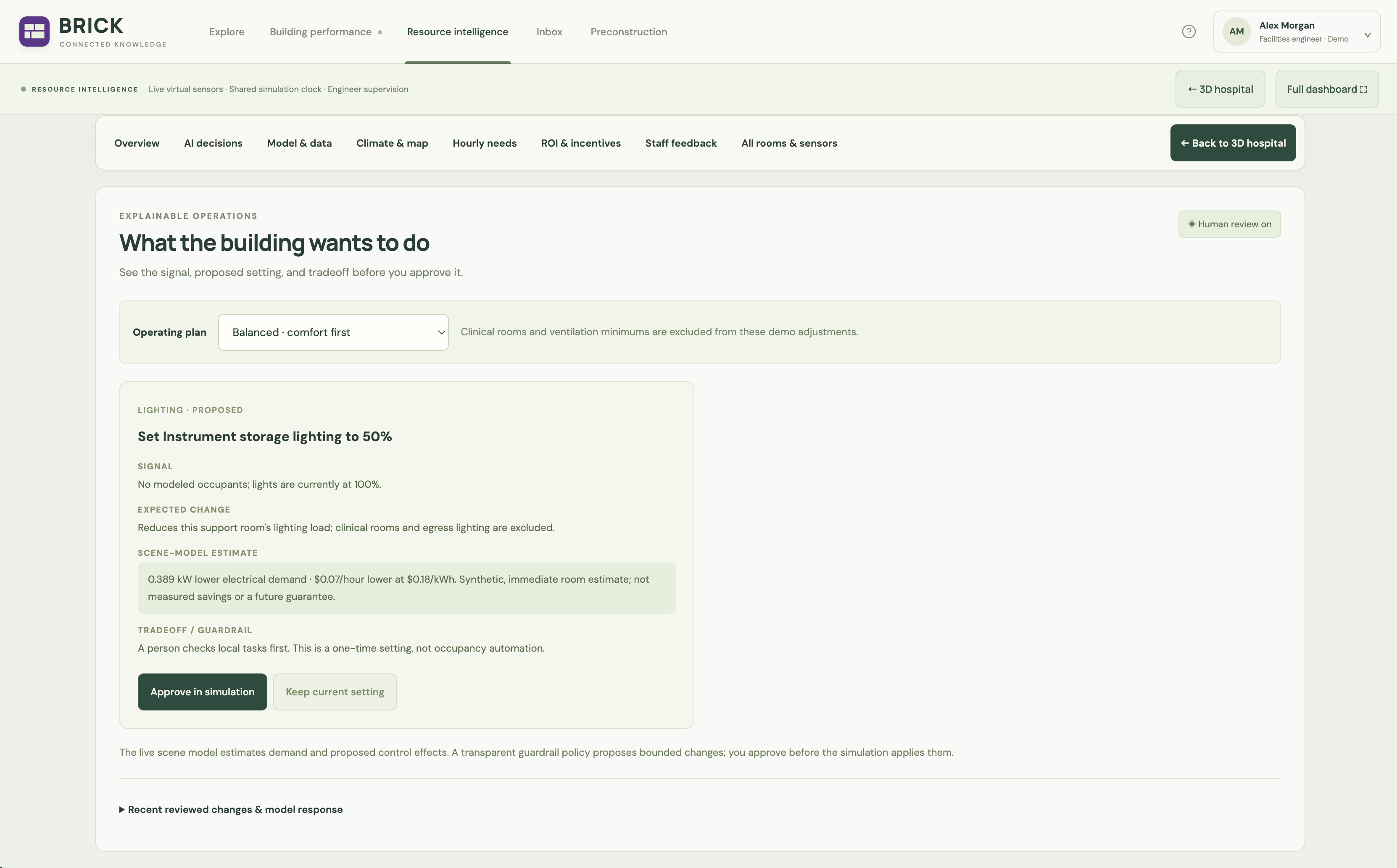
AI decisions combined with human expertise to make approvals
-
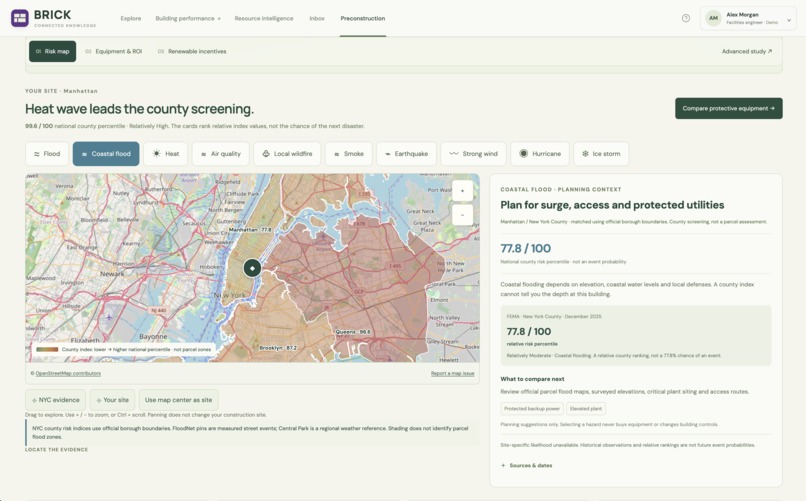
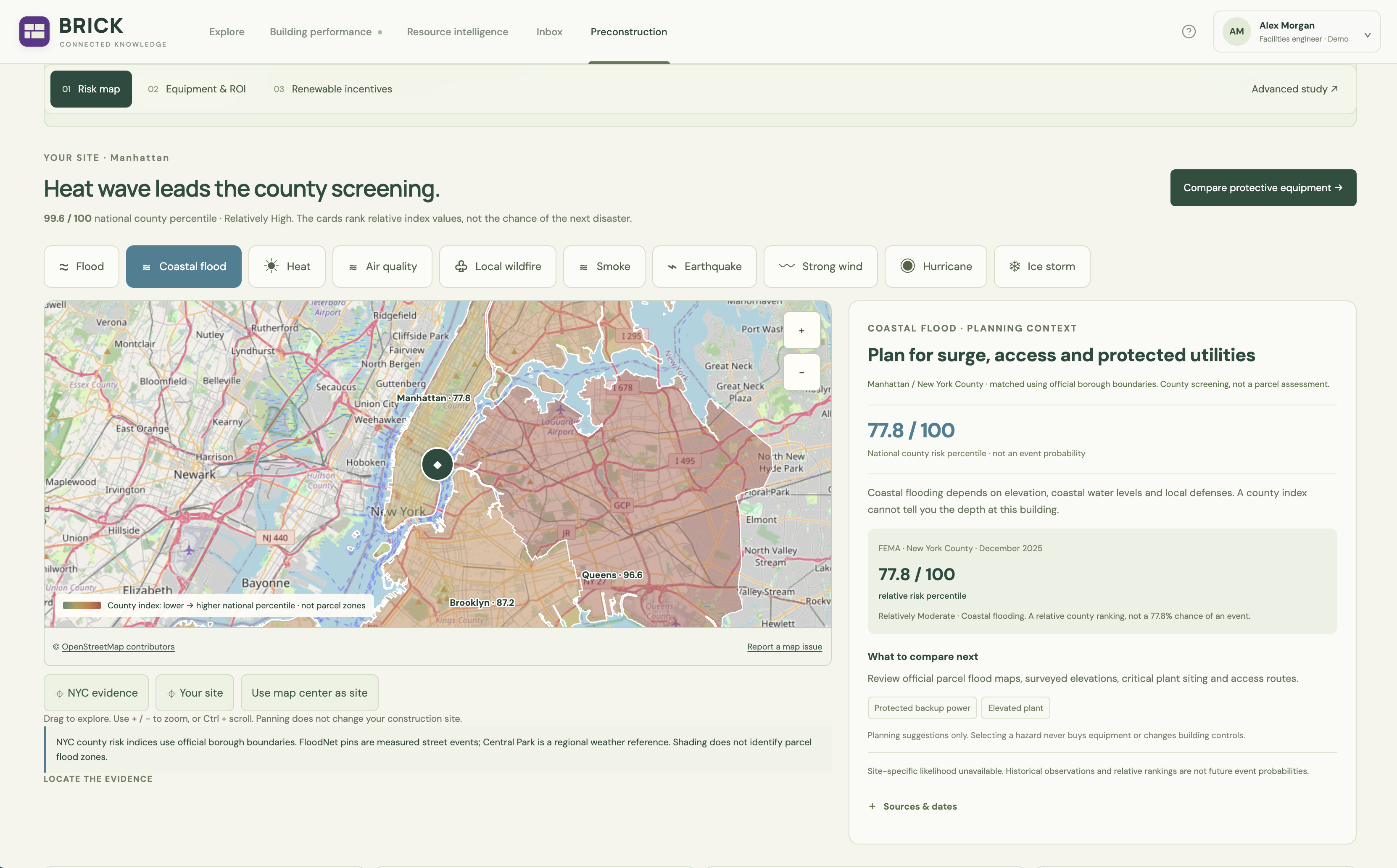
Preconstruction risk assessment of natural disasters
Inspiration
Hospitals need to stay operational when the environment around them changes. Flooding, poor air quality, and rising energy demands can strain both infrastructure and the people relying on it. We built Brick (Building Resilient Infrastructure through Connected Knowledge) to make building conditions easier to understand and act on.
What it does
Brick turns a hospital into an interactive 3D operations workspace. Users (facility managers) can explore rooms and infrastructure, inspect sensor readings, and simulate disruptions such as flooding, smoke, and power outages. A resource-intelligence tab predicts electricity, HVAC, and water demand, compares proposed adjustments, and helps facilities engineers review decisions. We also connected a Raspberry Pi over WiFi to demonstrate live humidity data flowing into a sensor in the interface.
How we built it
We built the interface with JavaScript, HTML, CSS, and Vite, using Three.js for the hospital visualization. Python powers the operations API and resource controller. Our NumPy-based ridge regression model learns from synthetic operating examples informed by NOAA weather records. FloodNet records provide additional flood-scenario context. A Node.js bridge receives humidity values from the Raspberry Pi over TCP and makes them available to the browser.
Challenges we ran into
When we connected a physical device to a browser, we had to handle fragmented messages, dropped connections, stale readings, and consistent units. We also had to keep sensor sampling understandable while the hospital simulation ran on an accelerated clock. Another challenge was separating predictions from evidence. We needed to clearly distinguish live demo inputs, simulated conditions, and modeled savings, and avoid presenting reduced power during a shutdown as an efficiency improvement.
Accomplishments that we're proud of
We brought together an interactive 3D hospital, infrastructure simulations, live sensor integration, resource predictions, and human review in one prototype. We’re really proud of this feature where users can click and track agents, see where readings come from, explore proposed actions, and give feedback on decisions.
What we learned
A useful tool for facility managers needs more than a prediction like clear context, reliable data, and a way for people to understand and challenge its recommendations. We also learned that humidity, floor wetness, and flood depth are different measurements. Connecting a sensor is only the first step, but interpreting it correctly determines whether the resulting decisions are useful.
What's next for Brick
We plan to collect labeled consumption data and connect the 3D simulation more closely to the resource controller. Our goal is to show measurable benefits while accounting for response costs, including the energy used by pumps and other equipment.


Log in or sign up for Devpost to join the conversation.