-

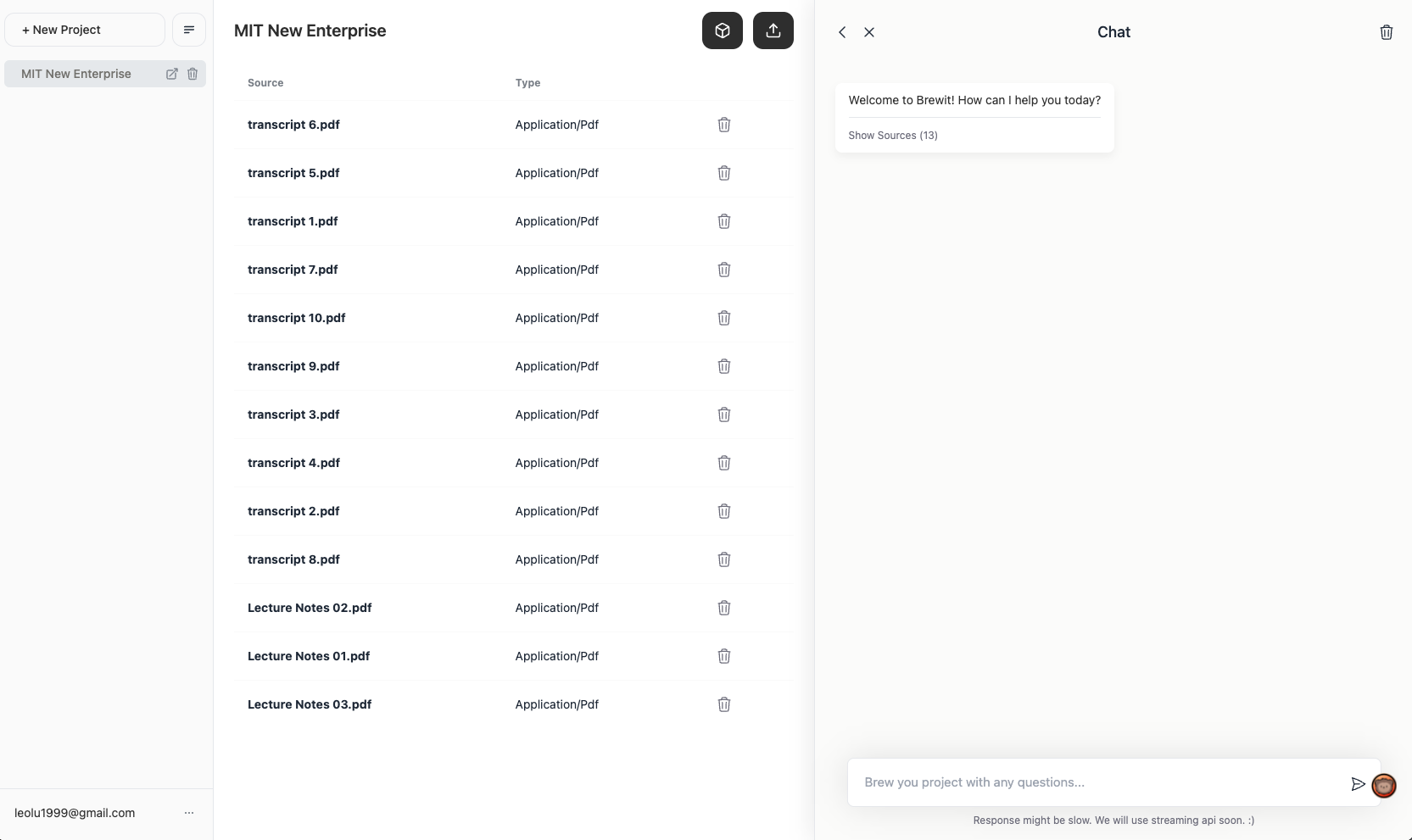
Dashboard & Chat
-
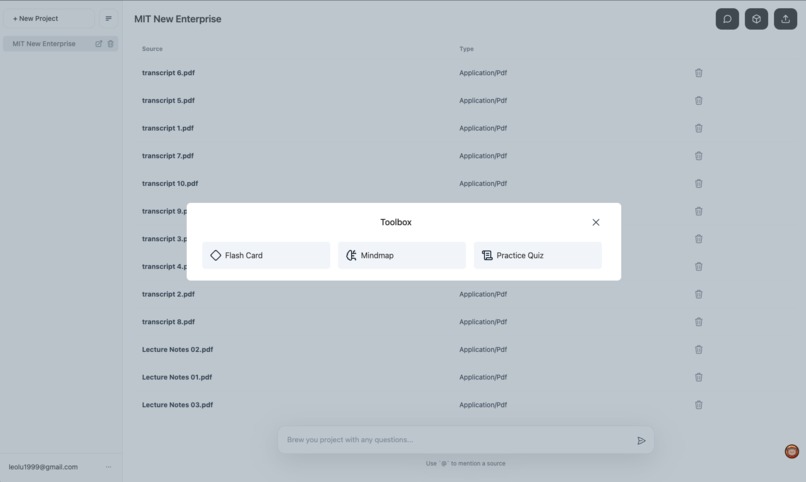
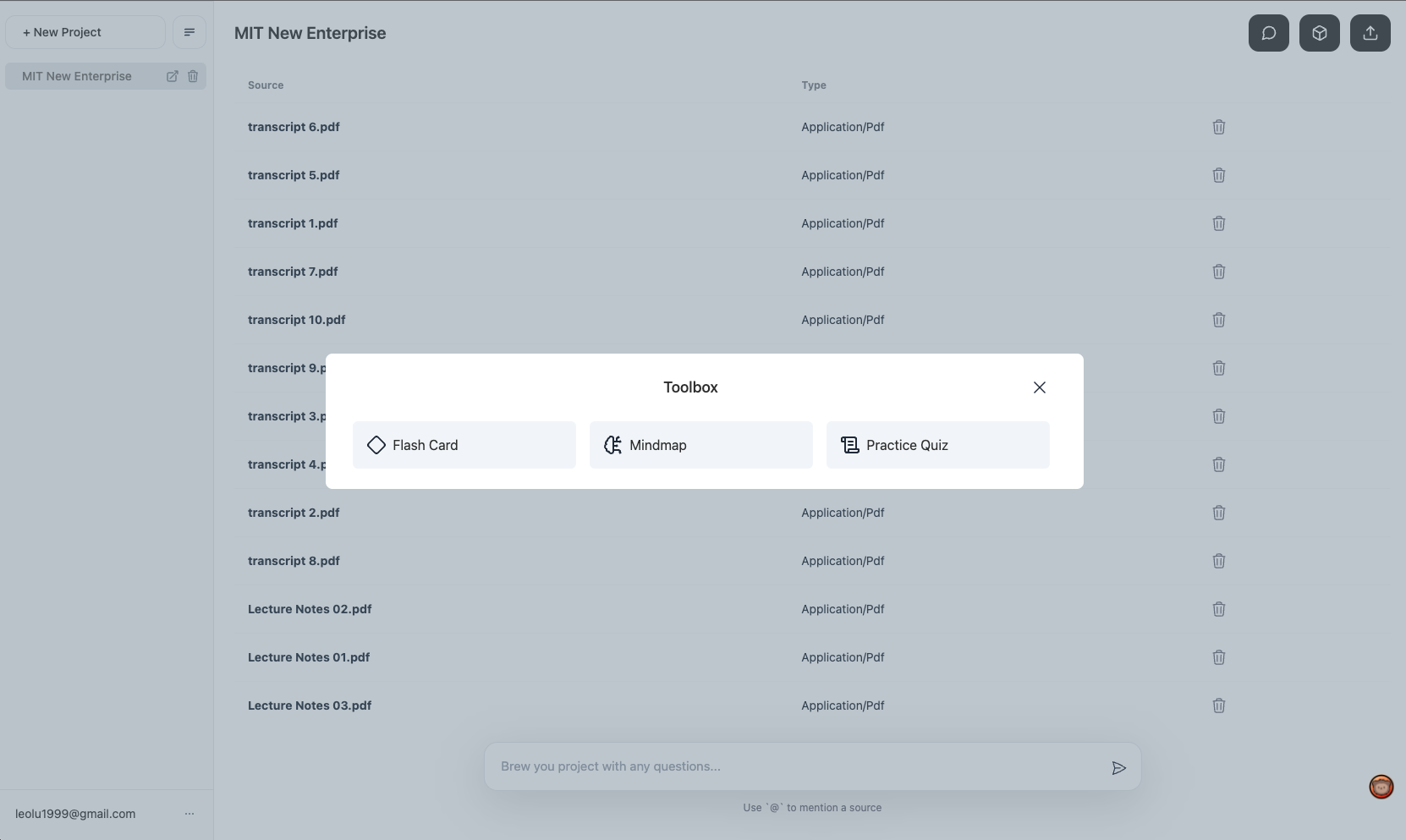
Tools
-
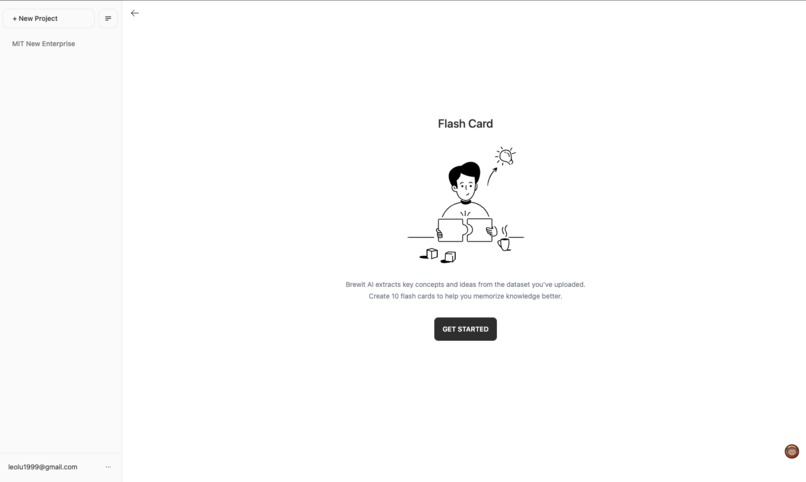
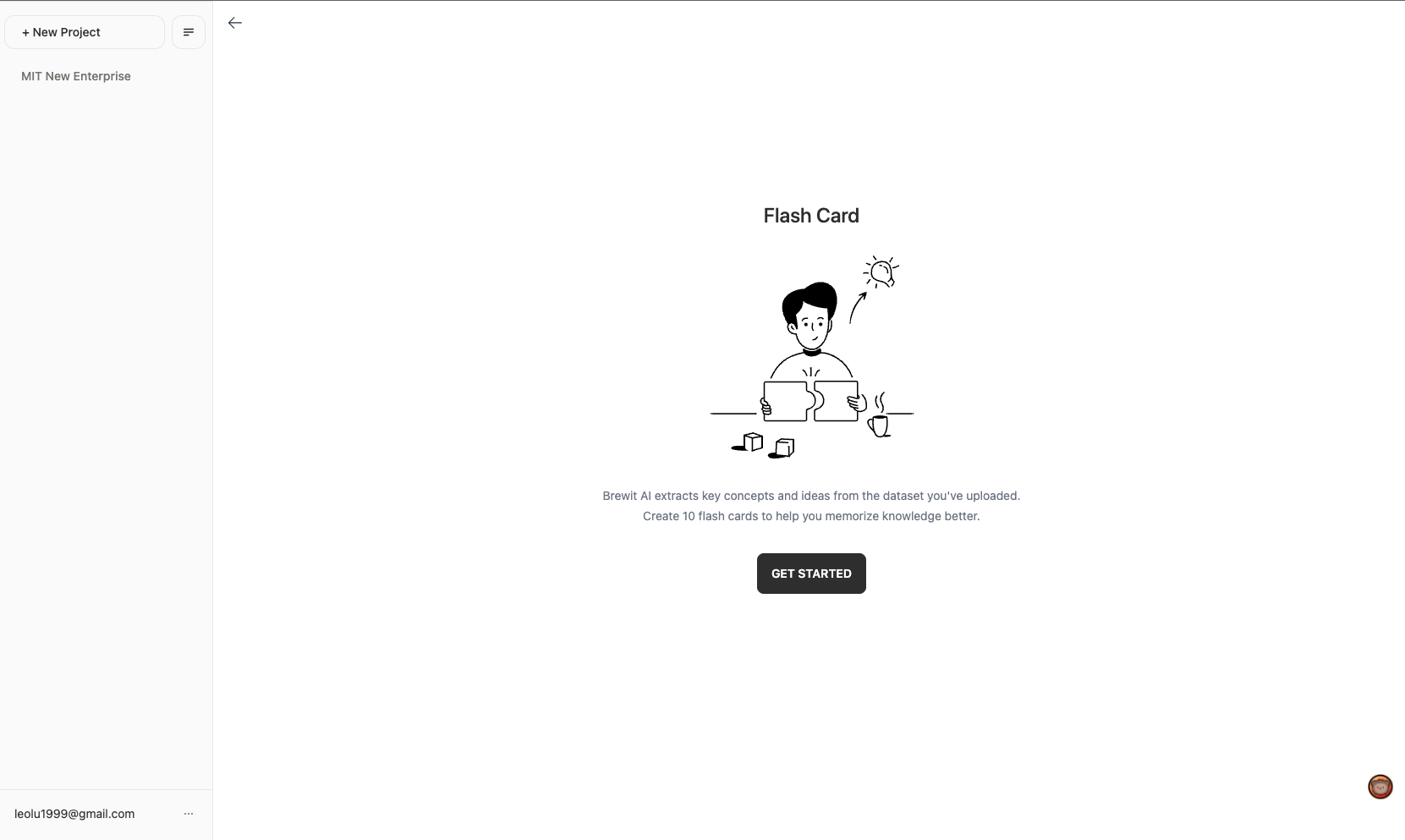
Flashcard
-
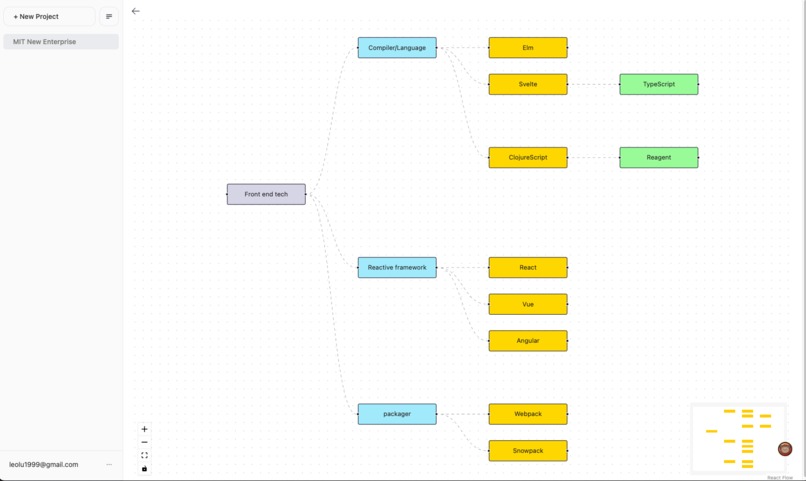
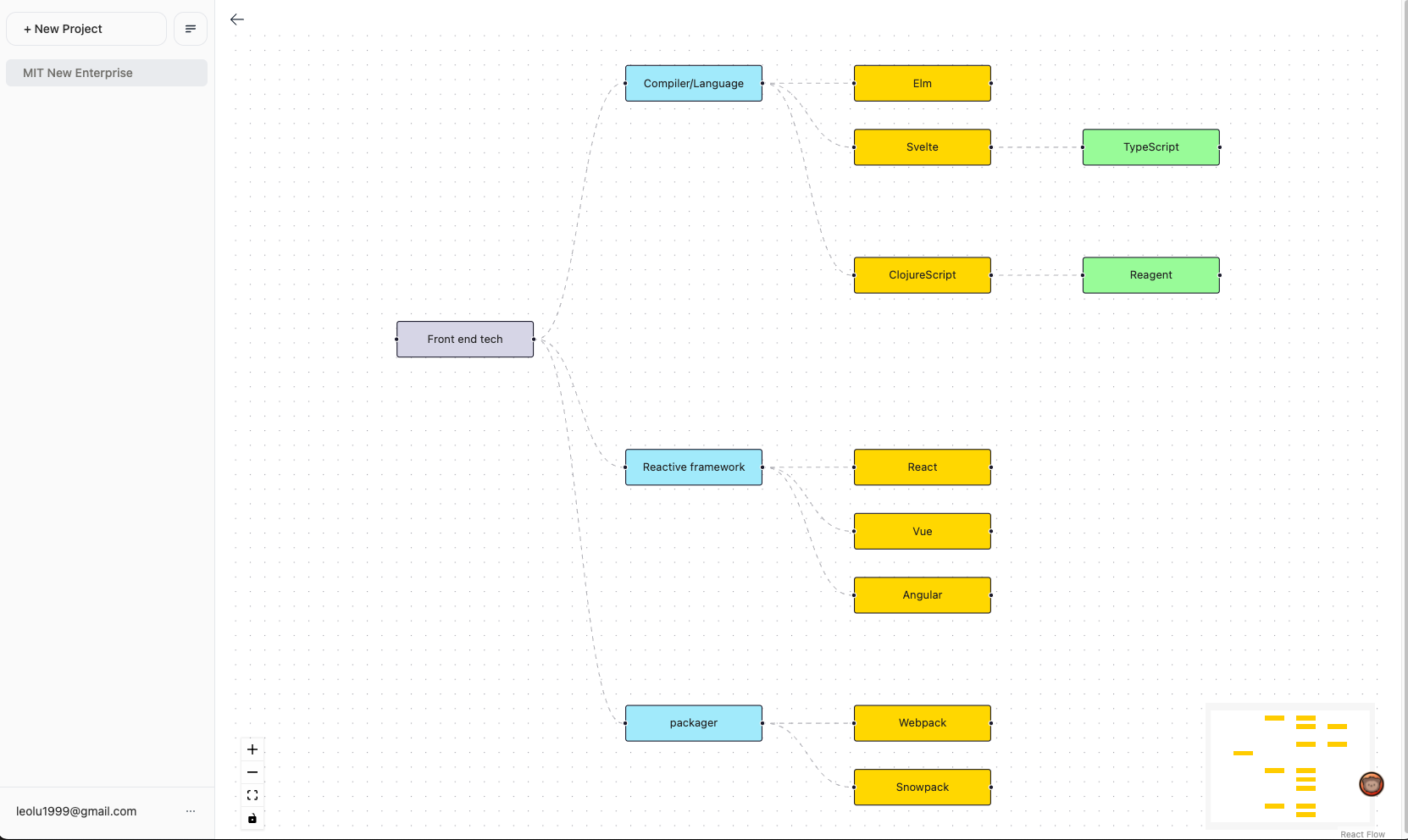
Mindmap
-
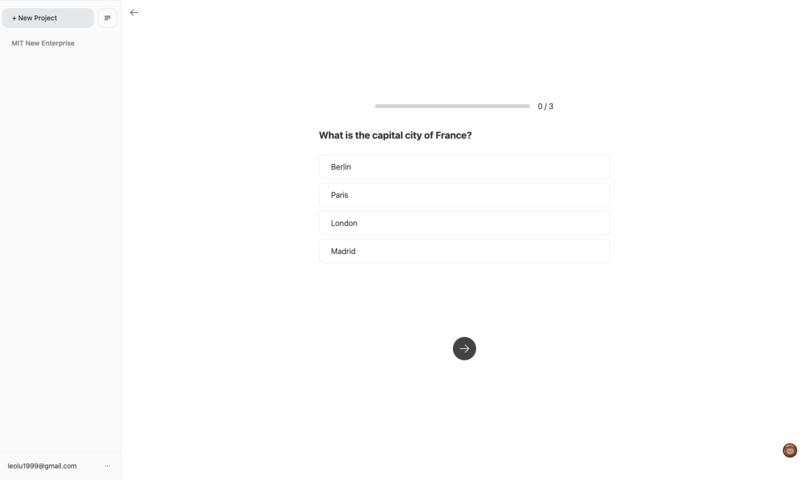
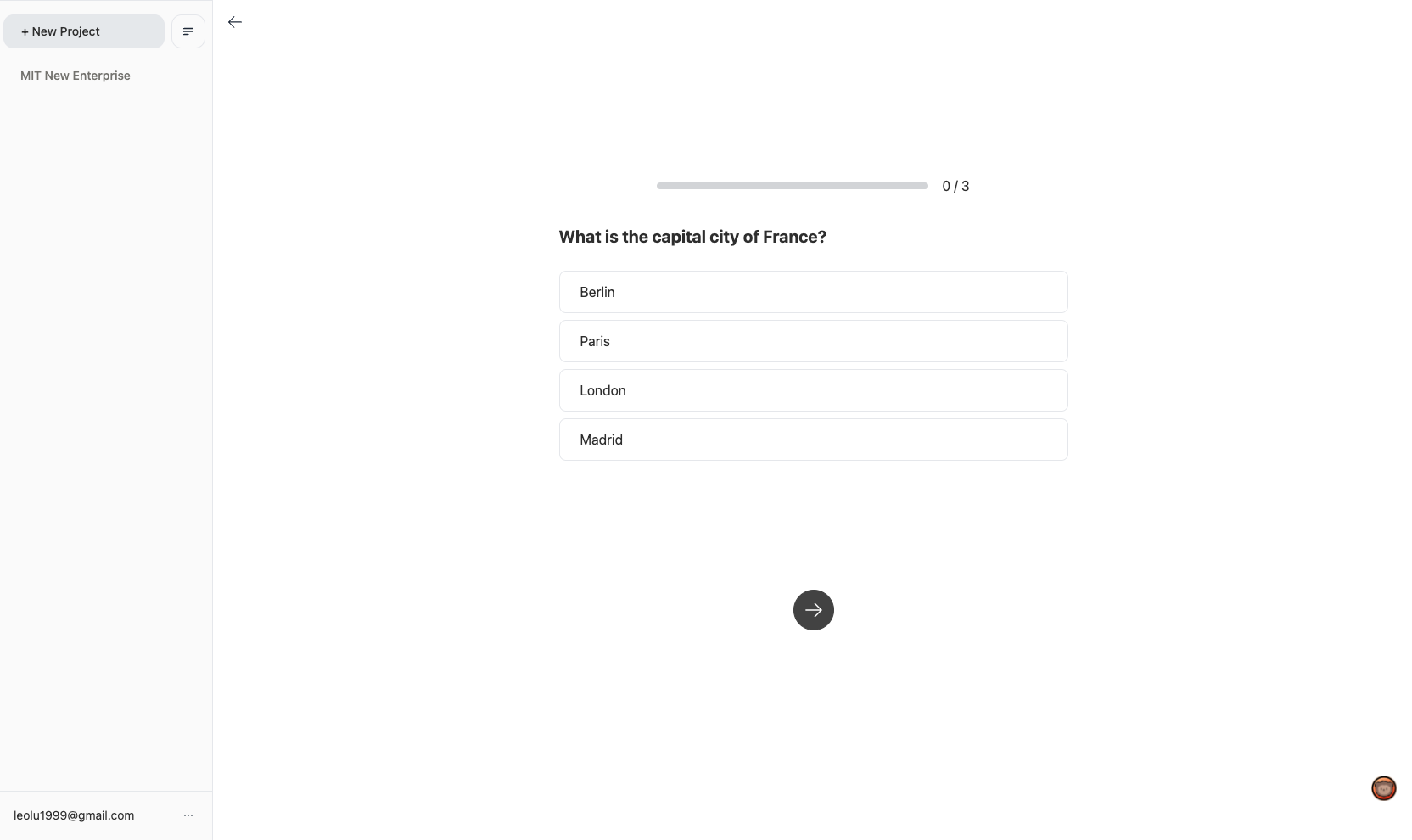
Practice Questions
Inspiration
From our experience as graduates, we saw AI tools like ChatGPT struggling with course-specific content. This sparked the idea of Brewit, a precision-focused AI co-pilot that can answer student queries just like a TA or professor. Moreover, we saw how AI could automate study techniques such as flashcards and mind maps, enhancing learning substantially. As the new academic year approaches, we aim for Brewit to be the disruptor in conventional learning, revolutionizing the way students interact and learn.
What it does
Demonstrated through these 3 steps:
- Create a class-specific project folder and upload all relevant course materials - syllabus, lecture slides, notes, recordings, and more.
- Engage with the AI chatbot that interacts directly with your course data, answering complex questions in the depth and style of your professor or TA
- Utilize the AI-enhanced study tools - flashcards, mind maps, and tailored practice questions, all uniquely generated in the context of your specific class.
How we built it
- Framework
- Frontend: Next.js, Vercel, Tailwind CSS, React
- Backend: Supabase for database and CRUD API, Vercel Edge Function for embedding & LLM API calls
- Prompt Engineering: Claude Chat UI, Jupyter Notebook
Challenges we ran into
- The first challenge we encountered was our initial intent to use Supabase Edge Function for LLM API calls. However, it seemed that @anthropic-ai/sdk (TypeScript) was not properly hosted on esm.sh, which made resolving the issue time-consuming. Nonetheless, we promptly switched to Vercel as they have their own AI stack.
- The second challenge we faced involved extracting PDFs that contain both printed text and handwritten text. This required both a PDF loader and OCR to read the handwritten text or images. We didn't have ample time to implement this aspect, but it would be a significant enhancement for students.
Accomplishments that we're proud of
We are proud of our achievement in coding non-stop for 24 hours, writing over 5,000 lines of code, and building a domain-specific chatbot that displays sources for each question. We also implemented three AI toolboxes to enhance students' learning experiences. We tested the product ourselves using the class data we had from college, and it worked extremely well. We estimate it could save at least 50% of the time we previously spent on those courses.
What we learned
- Firstly, we really appreciate that Claude can take a 100k context as input, allowing our knowledge copilot to understand more context within a single API call.
- Secondly, we learned that fine-tuning prompts was actually one of the most time-consuming parts of this hackathon. In order to ensure the output was formatted, concise, and valuable, we had to experiment with various prompt engineering methods and techniques.
- Thirdly, we discovered that information retrieval for a QA bot and search is not trivial. Different text-splitting methods and similarity search methods can greatly impact the QA bot’s answer "accuracy". We experimented with various methods on this topic as well.
What's next for Brewit
Students are just one type of user persona that we aimed to target in the very beginning. The framework of this app can indeed be useful for a larger audience - any knowledge workers in general. We plan to build more domain-specific AI tools for various use cases, such as for research, user-interviews, and personal learning. With approximately 200 million college students and 600 million knowledge workers worldwide, if 5% of the population is willing to pay $180 per year for the app, that equates to a total market opportunity of $7.2 billion.
Built With
- claude
- edge
- jupyter
- next.js
- react
- supabase
- tailwind
- typescript
- vercel


Log in or sign up for Devpost to join the conversation.