-
-
Brew2Basket
-
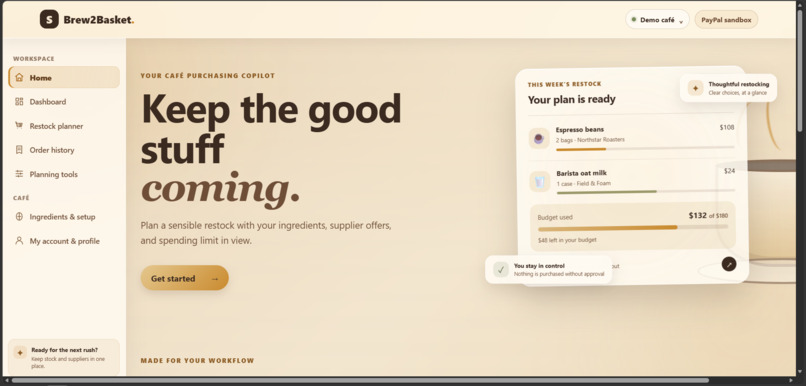
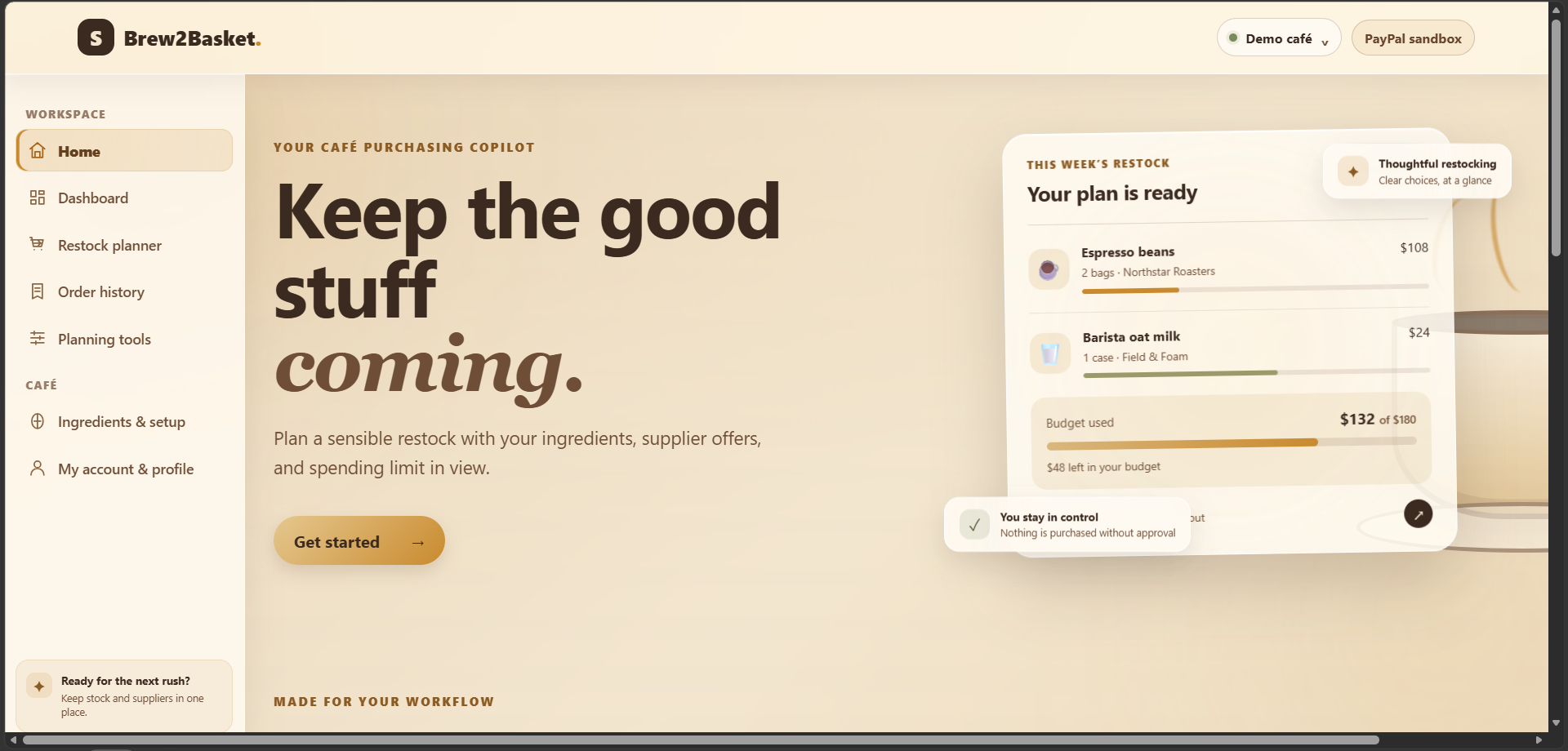
Meet Brew2Basket — a smarter way for independent cafés to plan their restocks.
-
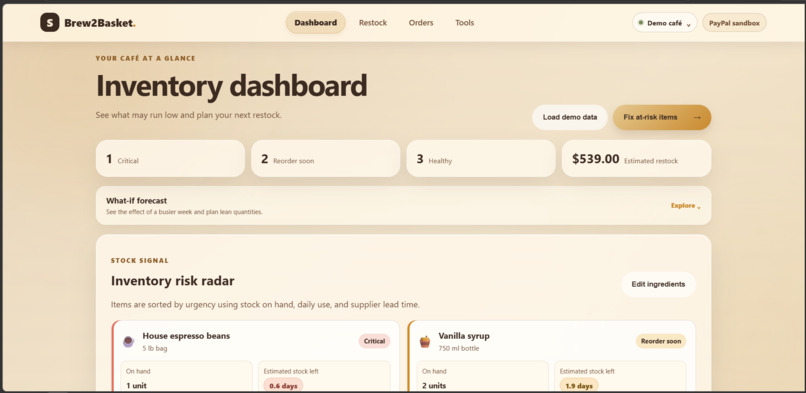
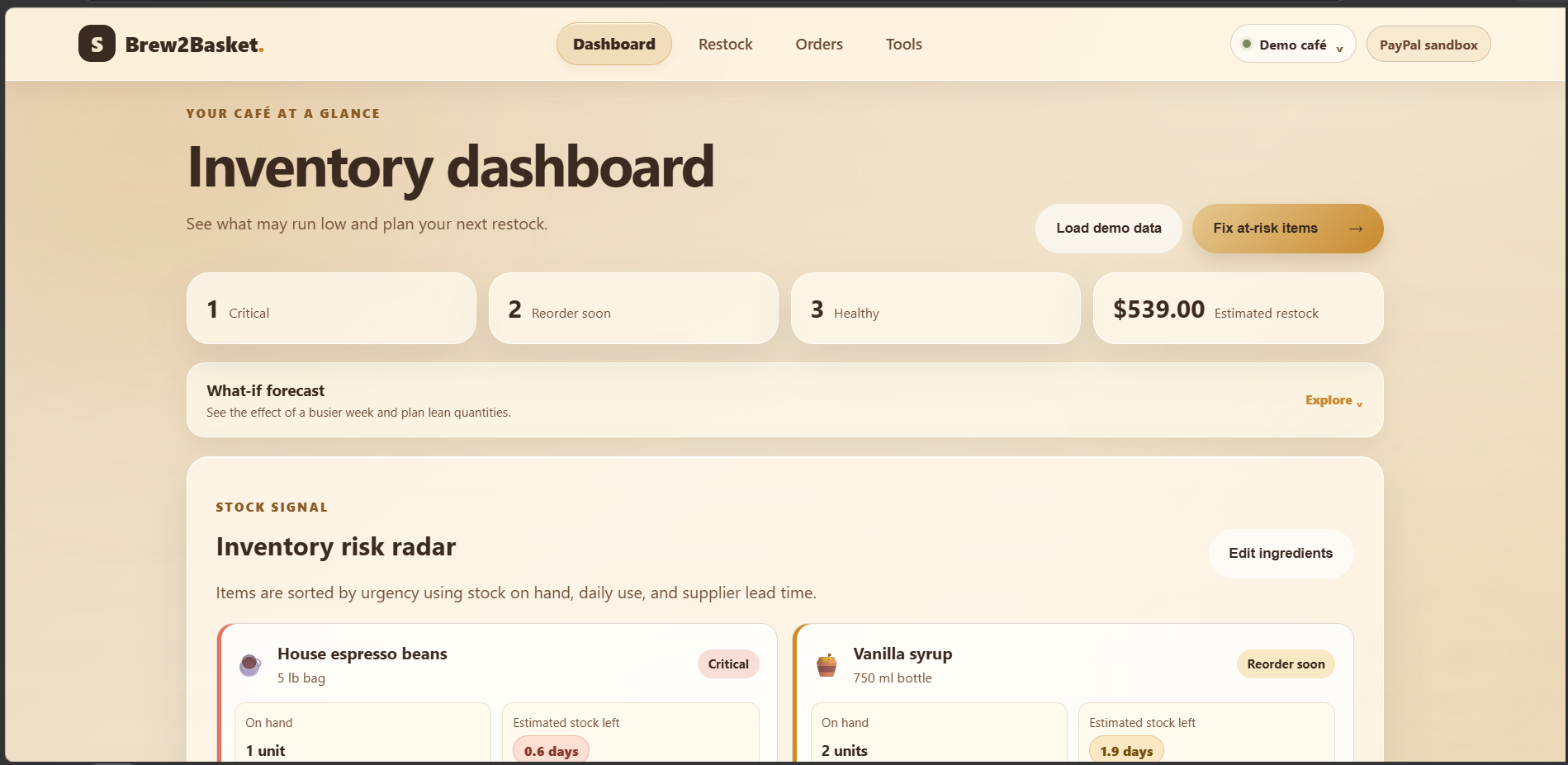
Dashboard / Inventory
-
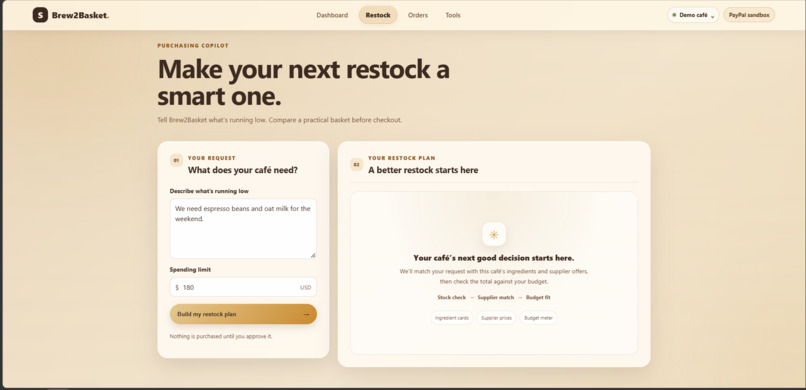
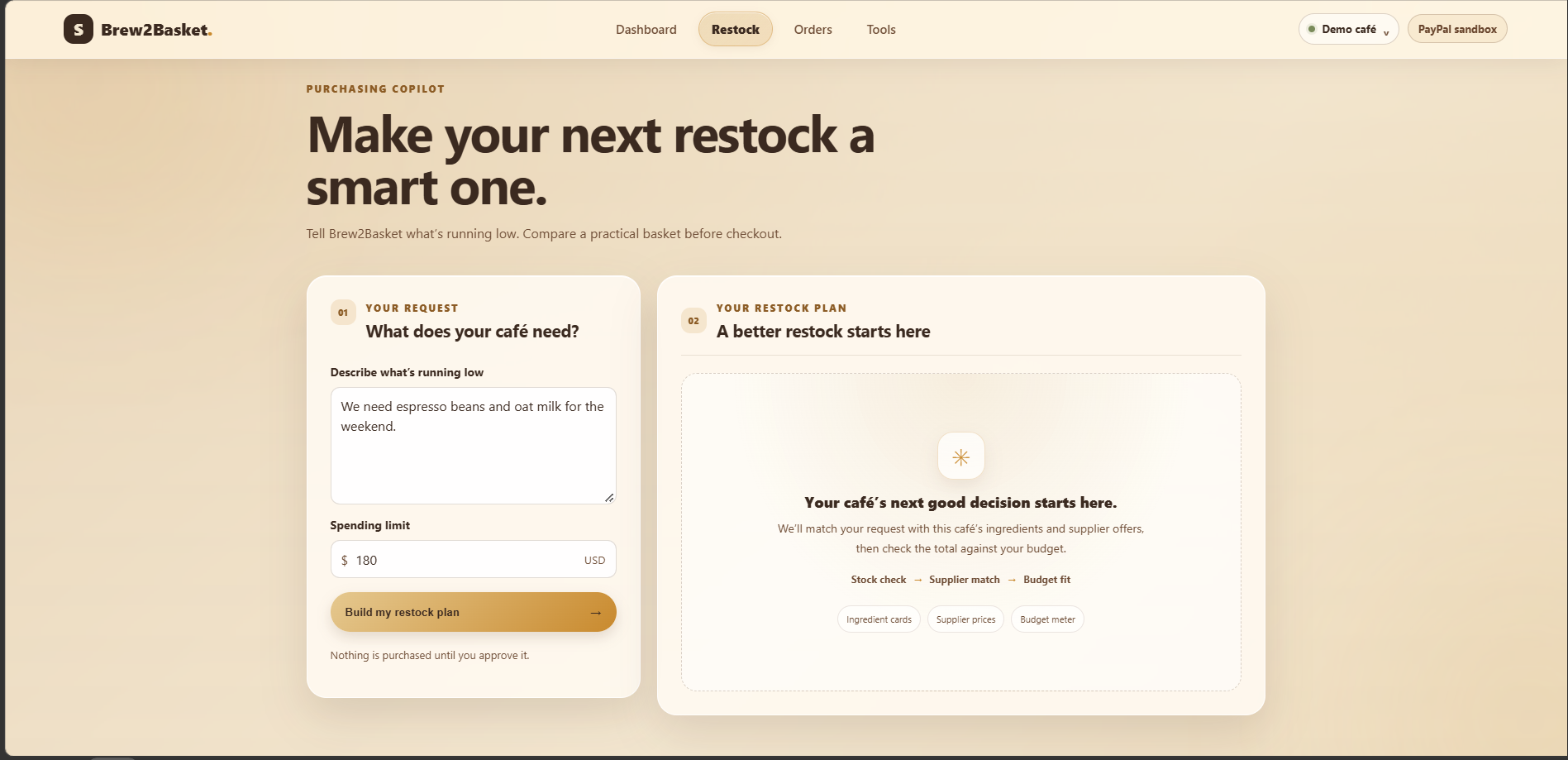
Restock: Describe what your café needs, set a budget, and review a suggested restock plan.
-
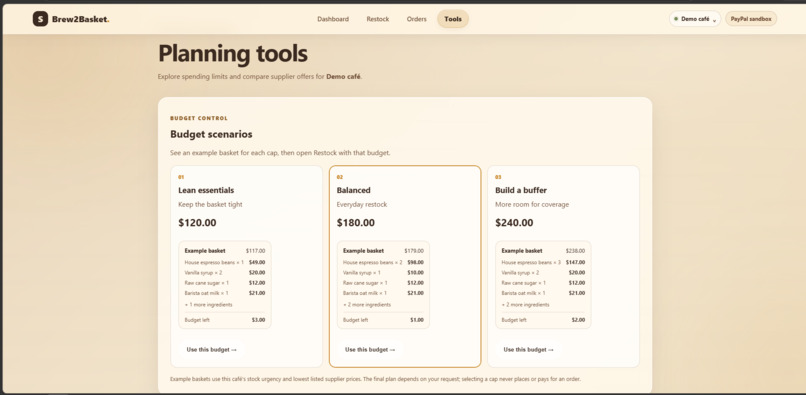
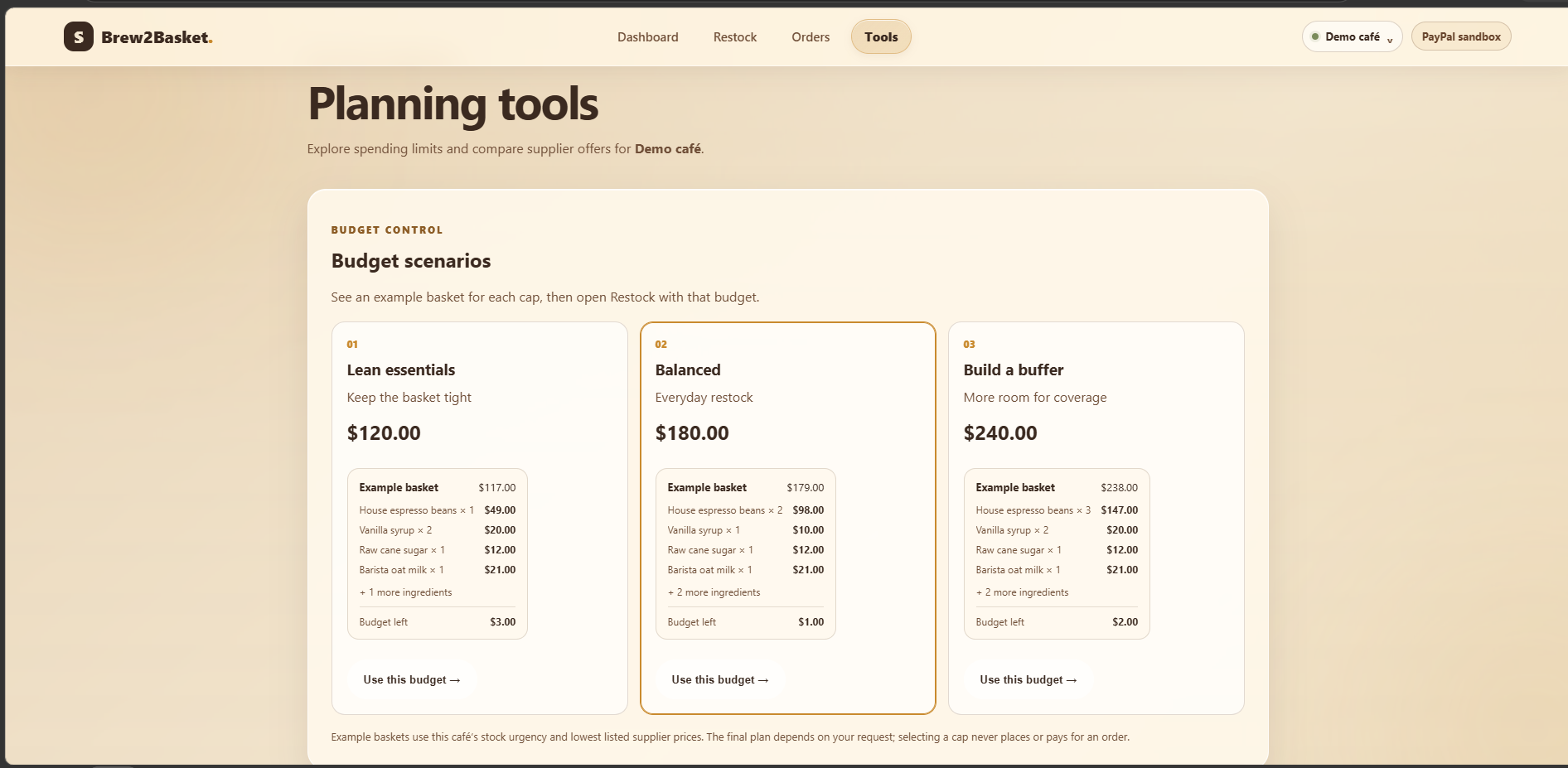
Compare supplier prices and delivery estimates, and explore different budget scenarios.
-
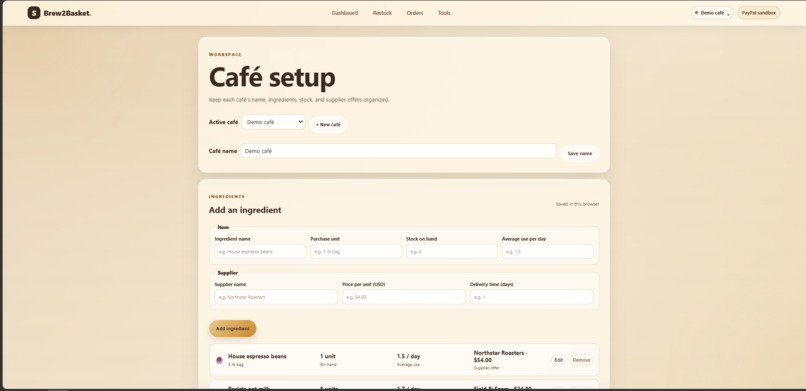
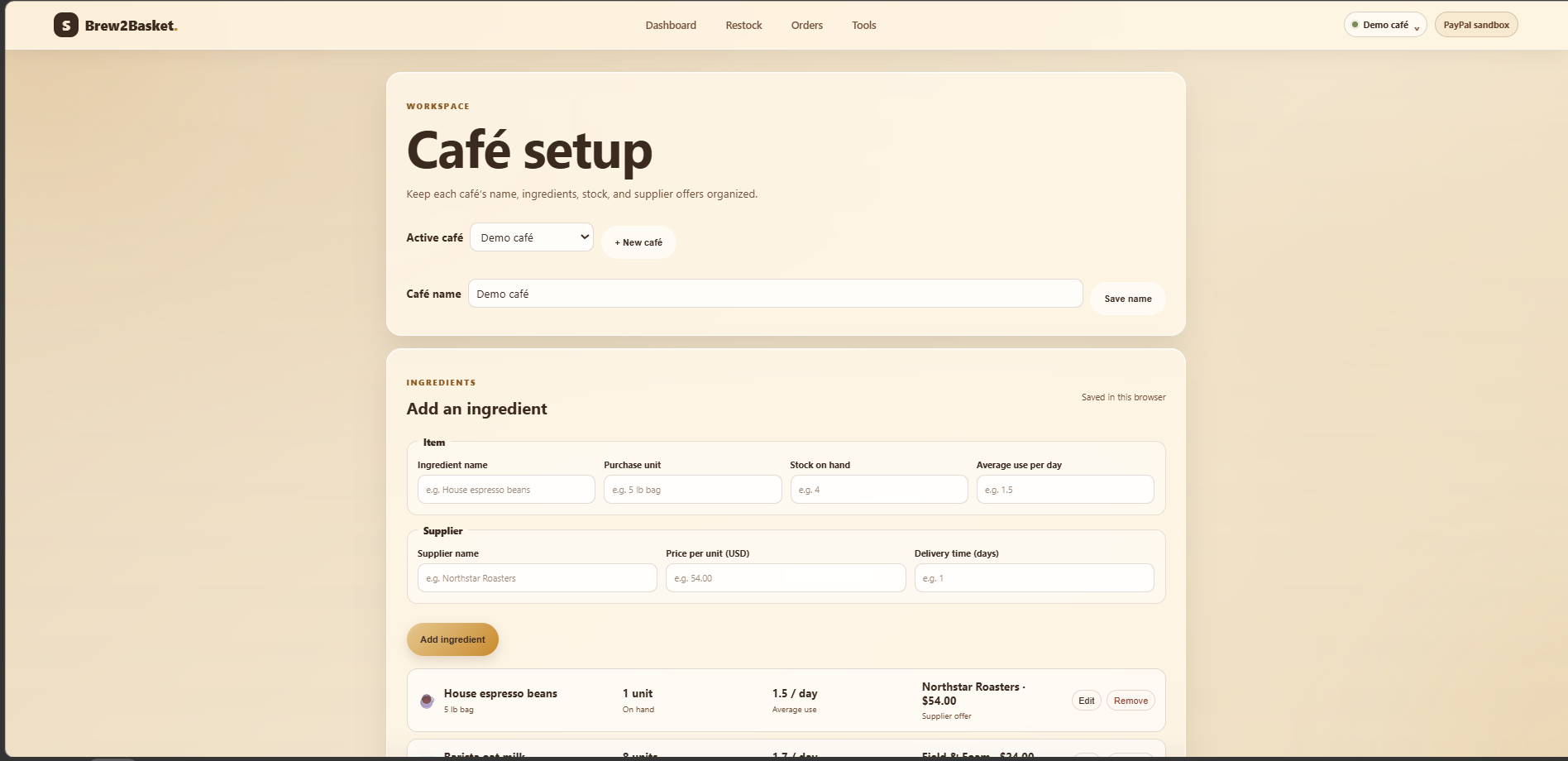
Café Setup: Customize your café’s ingredients, stock levels, and supplier offers.
Inspiration
Independent cafés make inventory decisions every day. They need enough ingredients to keep serving customers, but ordering too much can tie up cash and leave them with stock they may not use in time. Owners may also need to compare suppliers, delivery estimates, and prices while trying to stay within a budget. I wanted to explore how AI could make that process easier without taking control away from the café owner. Instead of making someone search through inventory lists and supplier options manually, Brew2Basket lets them describe what they need in everyday language, review a proposed restock, and decide whether to proceed. The idea became a café restocking copilot: one place to understand stock levels, plan a purchase, compare supplier offers, and move through a PayPal checkout flow.
What it does
Brew2Basket helps café owners move from “What are we running low on?” to a restock basket they can review and approve. The dashboard displays inventory and estimated demand. It uses recent sales data to calculate a weighted daily usage estimate and help identify ingredients that may need attention. This gives the owner a useful starting point for planning, rather than relying only on a static stock count. On the Restock page, the owner can describe a request in plain language, such as prioritizing particular ingredients and staying under a specified budget. Brew2Basket uses the request and available catalog information to suggest a basket with quantities and supplier recommendations. The owner can review the items and estimated total before moving forward. The Planning Tools page helps compare supplier offers by listed price, delivery estimate, and rating. It also provides budget scenarios so an owner can explore different spending limits and see example baskets. When the owner is ready, the Checkout page presents an order summary and offers a PayPal Sandbox payment flow. The order is not approved just because a recommendation was generated: the owner reviews the basket and explicitly approves the test payment. Brew2Basket also supports multiple café profiles. Each profile can have its own ingredients, stock levels, and supplier information, so the app can be explored with different café setups.
How I built it
Brew2Basket is a full-stack web application. The frontend is built with React and Vite, while a Node.js server provides the application’s API and serves the production frontend. The server provides endpoints for the product catalog, inventory snapshot, restock planning, and PayPal order creation and capture. The frontend uses those endpoints to display the café’s inventory, generate a plan, and proceed through checkout. For inventory estimates, the app calculates a weighted average from the previous seven days of sales, giving more importance to recent days. It uses that estimate along with stock on hand, supplier lead time, and safety stock to calculate indicators such as estimated days remaining and a suggested reorder quantity.
For planning, Brew2Basket can use an OpenAI-compatible AI service when configured. The AI is instructed to make recommendations using the café’s supplied catalog and budget. The project also includes a built-in planner, so a basic restock plan can still be generated if an AI provider is not configured or available.
Café profiles and their data are stored in the browser using local Storage, so the demo can be used without setting up a separate database. The checkout integration uses PayPal Sandbox, allowing the payment experience to be demonstrated without processing a real payment. The application is deployed on Railway, and the source code is available in the linked public repository.
Challenges I ran into
One challenge was making recommendations useful without making them feel like a black box. A café owner needs more than a list of products: they need to understand the quantities, suppliers, delivery estimates, and expected total well enough to make their own decision. Another challenge was balancing the different inputs to a restock plan. The user’s request, budget, stock situation, supplier prices, and delivery times can point in different directions. I aimed to make the plan practical while keeping the basket within the stated budget and leaving the owner in control. I also wanted the demo to remain useful if the external AI service was unavailable. That led us to include a built-in planning fallback rather than making the entire restock experience depend on a third-party AI provider.
Finally, payment needed to be clear and safe to demonstrate. I have used PayPal Sandbox so the app can show a checkout and approval flow without claiming that a real purchase has been made.
Accomplishments that I am proud of
I am proud to have brought several parts of the café restocking process together in a working application: inventory monitoring, natural-language planning, supplier comparison, budget scenarios, and PayPal Sandbox checkout. I am also proud that the owner remains part of every important decision. Brew2Basket can suggest a basket, but the owner can inspect it before checkout and must approve the Sandbox payment. That makes the app feel like a copilot rather than an autonomous purchasing system. The project is deployed on Railway, which makes it possible to experience the application through a live demo instead of only viewing screenshots or a mockup.
What I learned
I learned that an AI feature is most useful when it is connected to a clear workflow. A recommendation becomes more actionable when it takes the user’s budget and catalog into account and leads naturally to a basket the user can review. I also learned that user trust depends on showing the boundaries of automation. Recommendations should be reviewable, payment should require explicit approval, and a Sandbox transaction should be clearly distinguished from a real purchase.
Building the project also gave me experience connecting a React interface to a Node.js API, keeping café data available across visits with browser storage, creating an optional AI integration with a fallback, and demonstrating a PayPal checkout flow in a deployed application.
What's next for Brew2Basket- AI Cafe Restock Copilot
The current project is a functional prototype, and there are several ways we’d like to develop it further. I’d like to connect the inventory system to real point-of-sale or sales data so demand estimates can reflect actual café activity rather than manually entered or illustrative data. With richer history, the forecasting could account for weekday patterns, seasonal changes, promotions, and unusual demand.
I’d also like to add more complete order tracking, so café owners can follow a purchase from approval through supplier confirmation and delivery. More detailed supplier information—such as minimum order quantities, shipping fees, and product availability—could make comparisons and recommendations more realistic. Ultimately, I want Brew2Basket to help café owners spend less time piecing together inventory and supplier information, and more time making confident purchasing decisions—with AI assisting the process and the owner staying in control.
