Inspiration
So I kept having multiple apps that I always have to check for updates, like my email, GitHub notifications, google calendar events etc. And I didn't check my mail for some days, because of low priority emails being at the top, I didn't notice that there was a potential job offer email... Which made me lose the opportunity. That's when the idea of Brevpulse came to my head
What it does
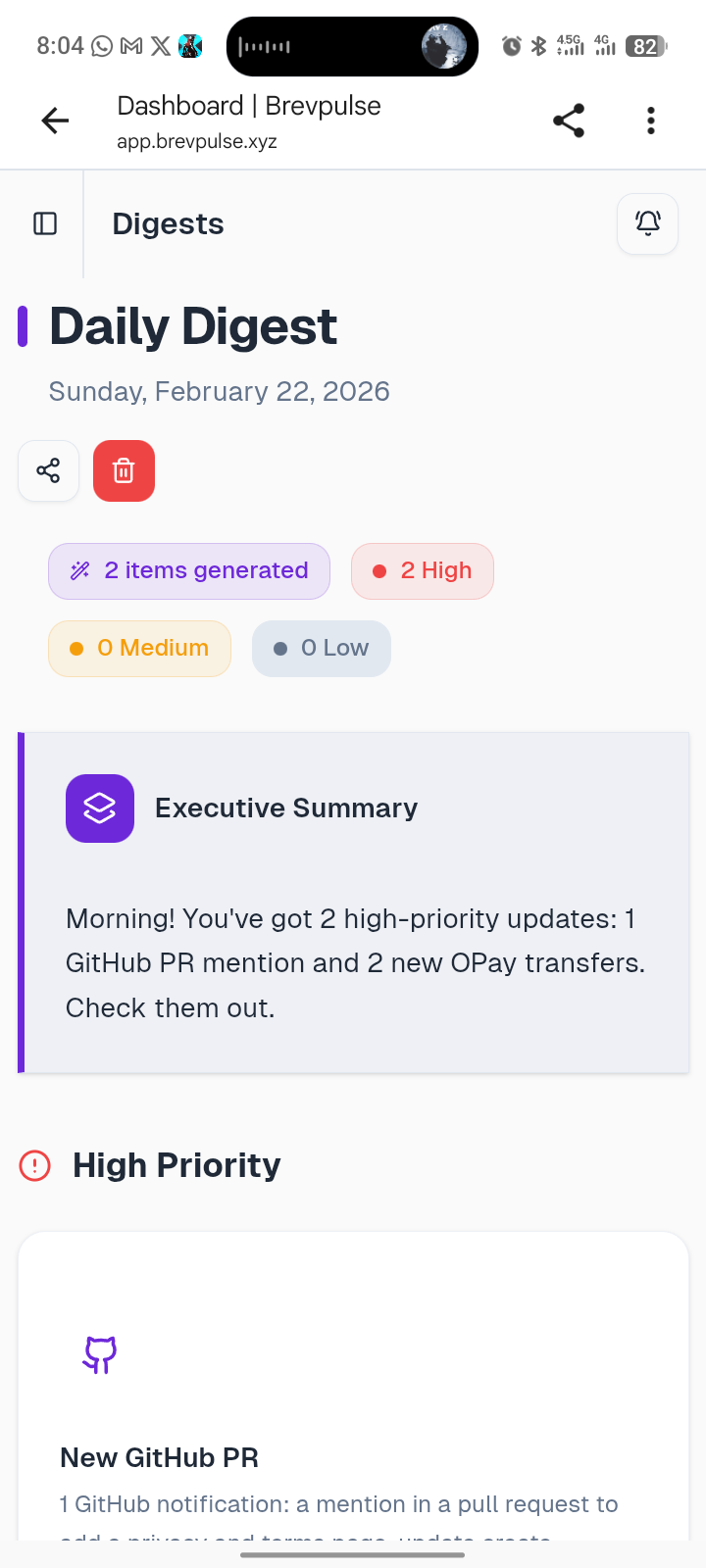
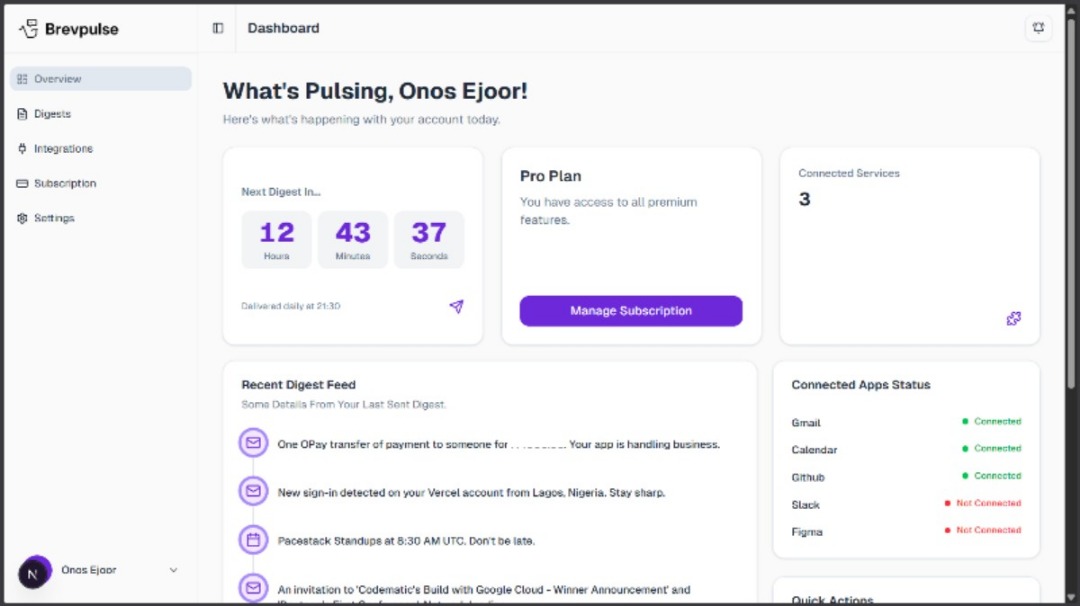
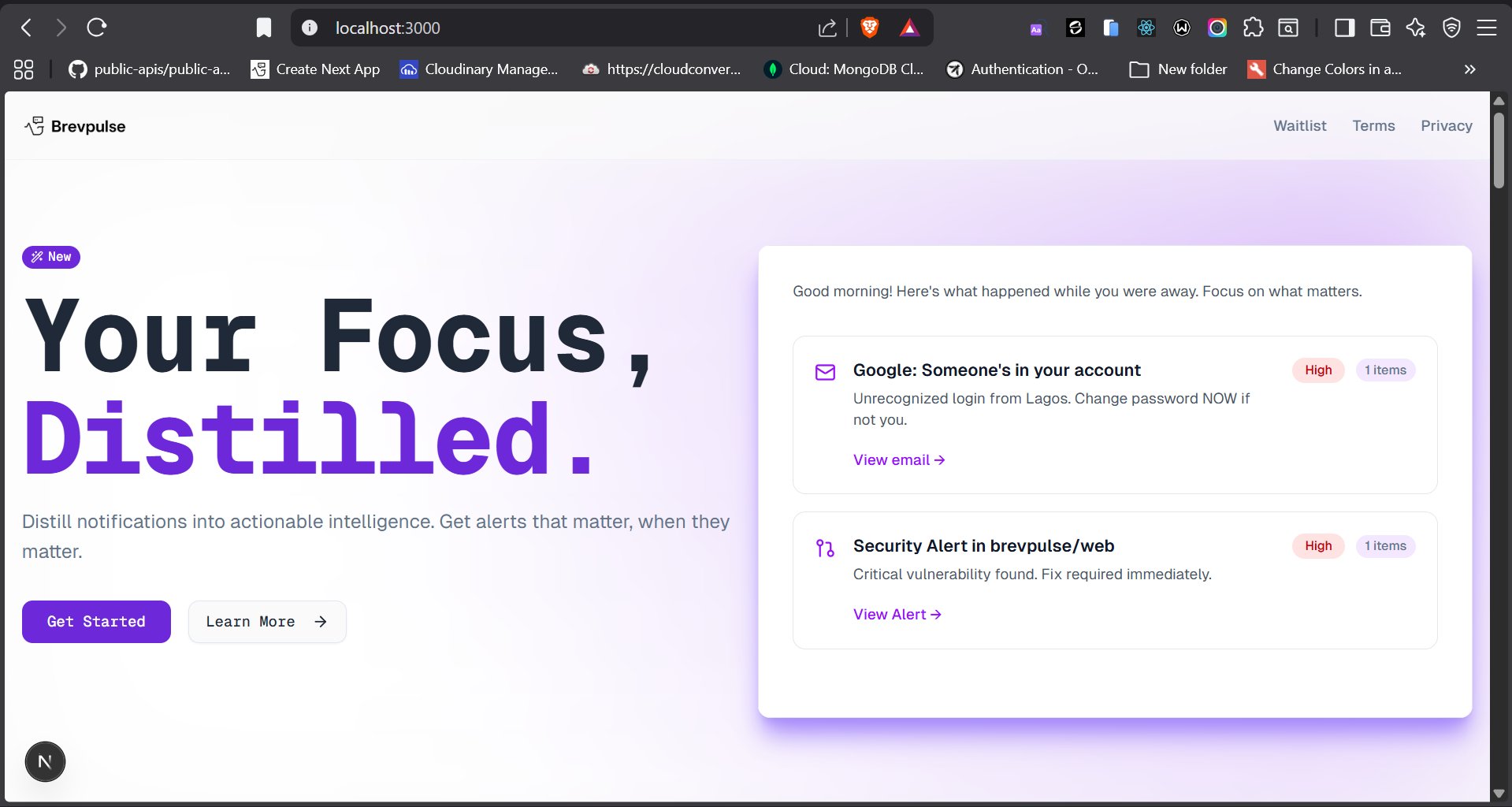
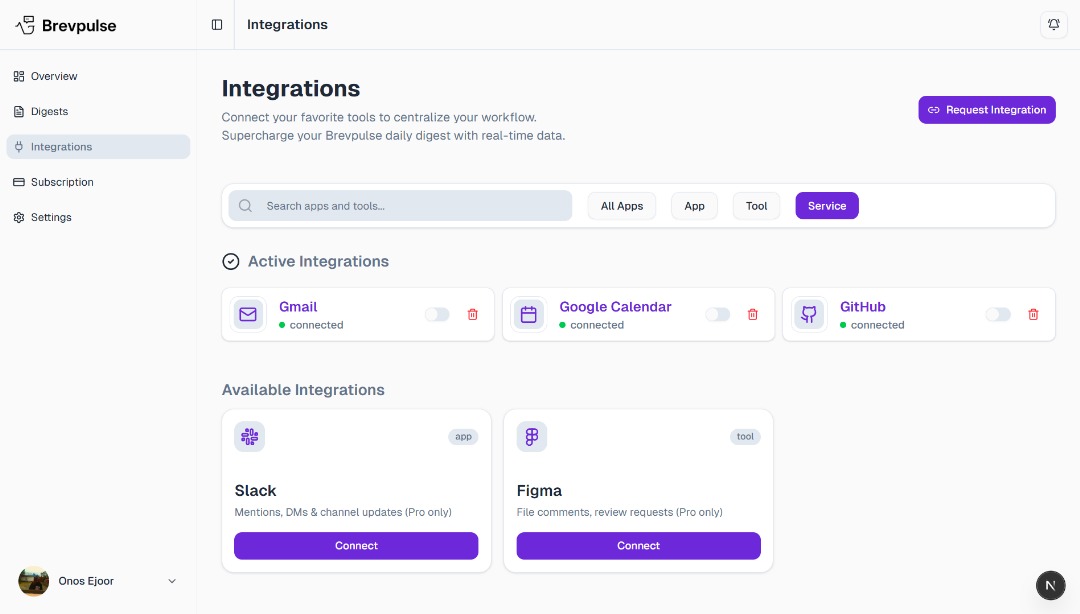
Brevpulse is an AI-powered daily digest that connects to your key productivity tools (Gmail, Google Calendar, Slack, GitHub, Figma, Notion, Jira, and more ) and delivers one prioritized, beautifully formatted summary every morning via email, WhatsApp and telegram It intelligently groups and ranks updates:
High Priority: payments received, PRs merged, urgent mentions, today’s meetings Medium Priority: calendar invites, comments, Slack DMs Low Priority (Pro): newsletters, social updates etc
How we built it
Backend: NestJS (TypeScript) with MongoDB for users/subscriptions, Redis for caching, and a custom cron-based digest engine.
AI: Google Gemini (with Groq fallback for rate limits) to summarize, prioritize, and apply custom user prompts. Built a sophisticated system prompt with strict grouping, redaction, priority rules, and plan-based output differences.
Integrations: OAuth2 flows for Google (Gmail/Calendar), Slack, GitHub, Notion, Jira, Figma. tokens stored securely. Payments: Paystack (shifted from recurring subscriptions to one-time ₦4,000/30-day access to support bank transfer & USSD for no-card users).
Delivery: Email via custom SMTP + WhatsApp and telegran.
Frontend: Next.js dashboard with Tailwind (Brevpulse purple #6d28d9 primary), real-time preview of digests, settings for custom prompts & channels. Infra: Deployed on Render/Vercel, with webhooks (Paystack), cron jobs for daily digests, and Redis queues for reliability.
Challenges we ran into
Google OAuth verification for sensitive scopes (gmail.readonly, calendar.readonly) was slow and required multiple privacy policy revisions + demo video.
Groq rate limits (429 errors) forced a fallback model system (llama → mixtral) and later BullMQ queuing with DLQ for failed digests. Paystack subscriptions didn’t support bank transfer/USSD recurring → pivoted to one-time payments + manual renewal flow.
Balancing aggressive grouping/prioritization rules in the Gemini prompt without over-filtering important items required many prompt iterations.
Accomplishments that we're proud of
Went from idea to 50+ users and 100+ digests sent in the first week post-launch (currently at 60+ users with over 700 digests generated in it's first month).
Successfully shipped WhatsApp delivery. huge for mobile-first users.
Built a powerful custom prompt system that lets users truly personalize their digest (e.g., “Ignore Medium”, “Prioritize payments”).
Shifted payment model to one-time + bank transfer/USSD support — made Pro accessible to users without cards.
Maintained clean code, strong security (token encryption, redaction), and fast iteration — all solo while building in public.
What we learned
Users crave control: custom prompts became one of the most loved features because they make the AI feel like their assistant.
Accessibility matters. Enabling bank transfer/USSD and WhatsApp massively lowers friction in emerging markets.
Rate limiting & reliability are non-negotiable for AI products. Fallbacks, queues, and DLQs saved many digests.
Shipping fast and gathering real feedback beats over-planning. Every new integration and feature was shaped by early users
What's next for Brevpulse
So far I'm focusing on optimization, and we're working on other integrations like Sentry, Bitbucket, and LinkedIn


Log in or sign up for Devpost to join the conversation.