-
-
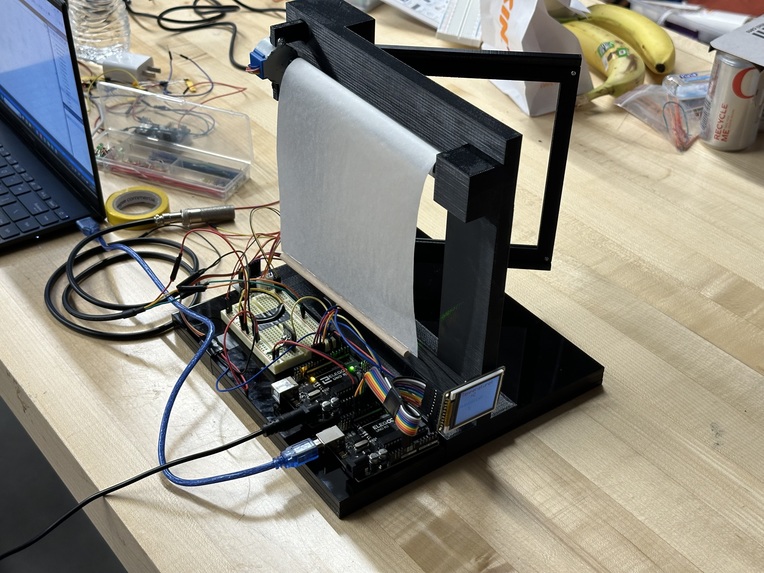
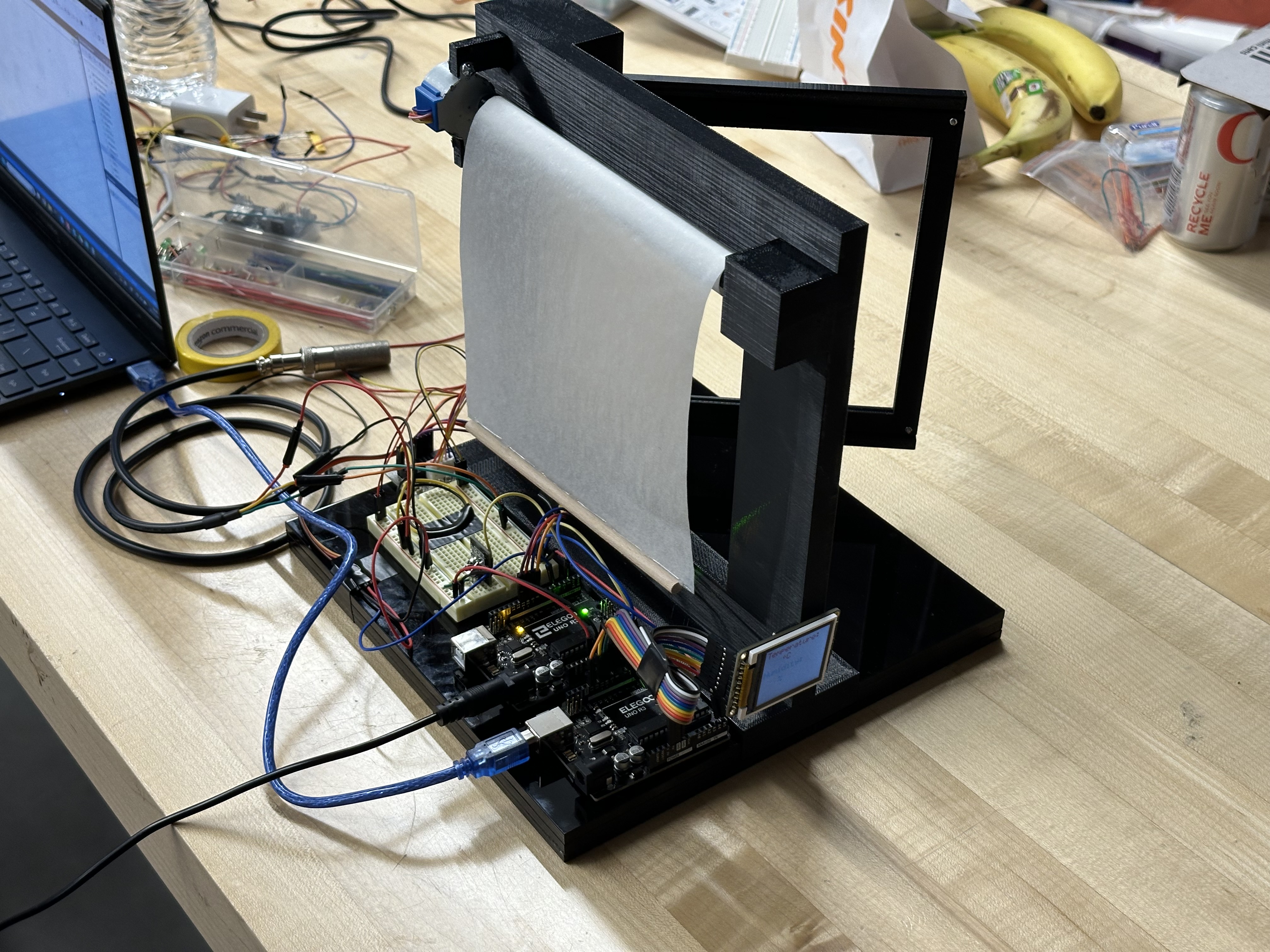
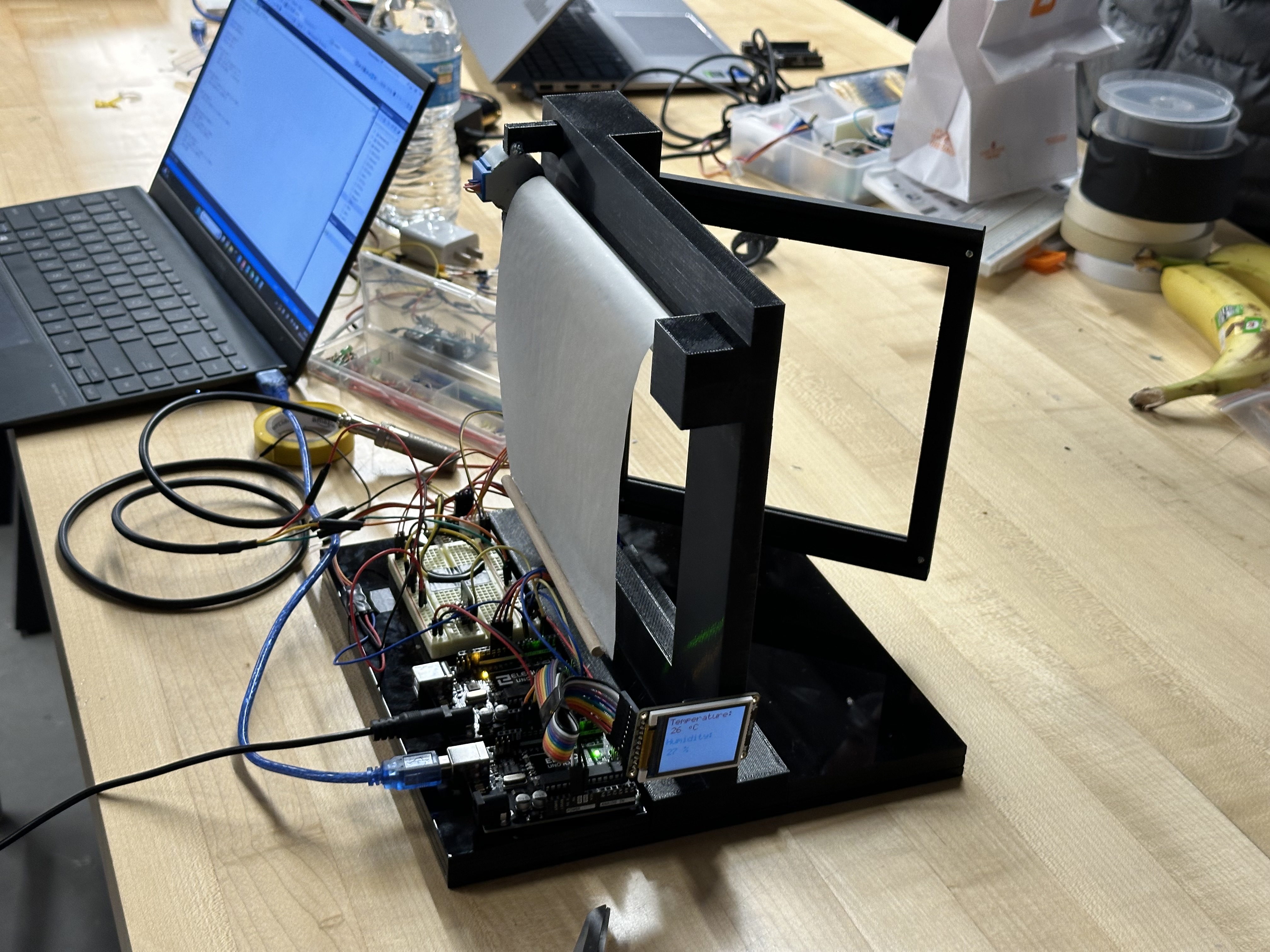
Final Prototype
-
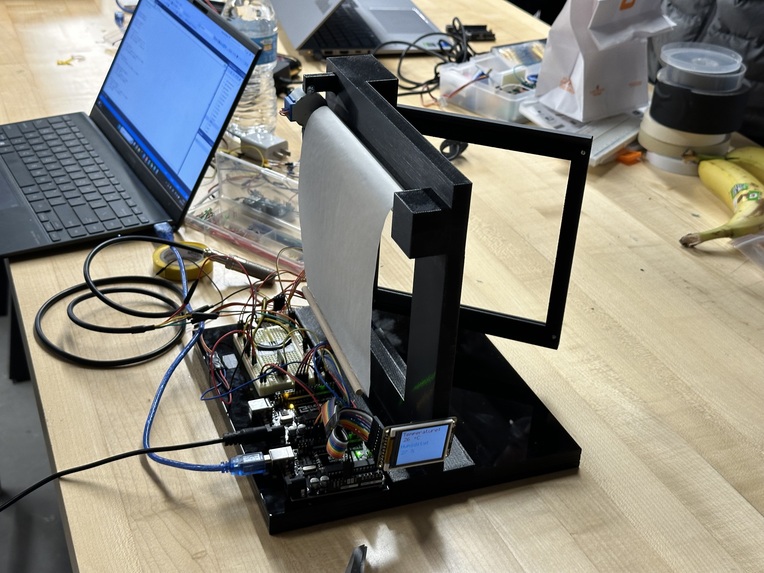
Final Prototype testing with code
-
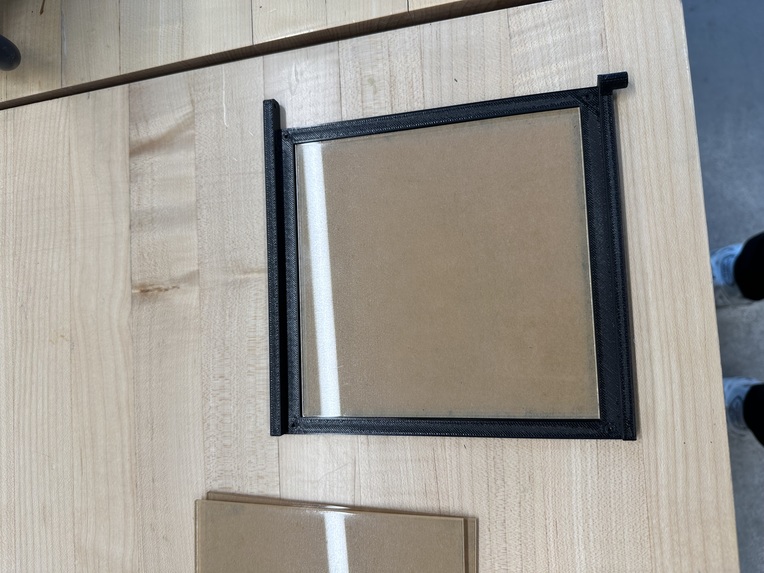
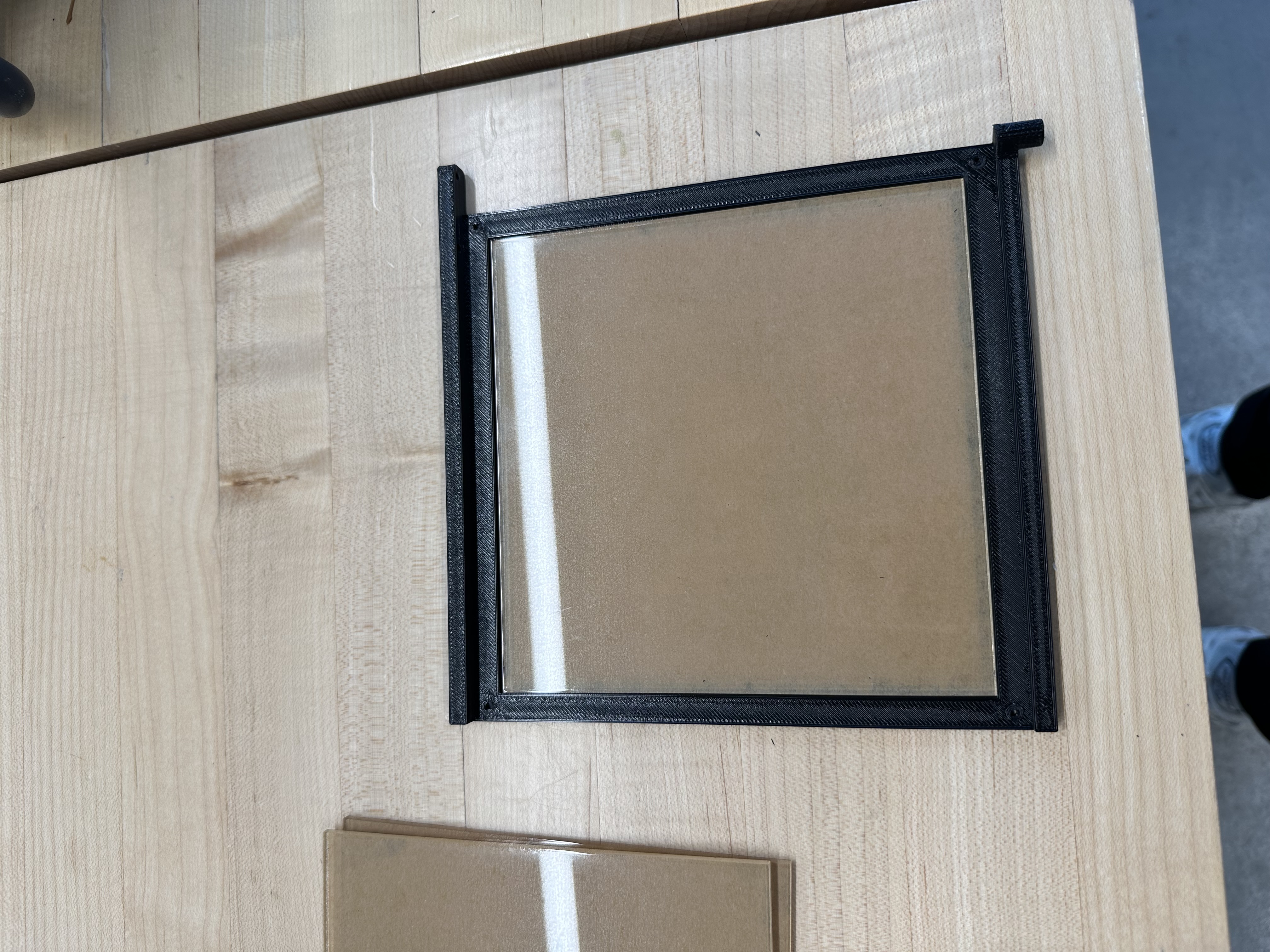
Laser Cut Acrylic fitting into 3D Printing Piece
Inspiration
Population aging is a global trend. According to WHO, 1 in 6 people worldwide will be 60 years or over by 2030. Many seniors have limited physical capacities, making everyday tasks like opening windows or adjusting curtains challenging. We want to design an intelligent window to remove the physical barriers to window control, making it easier for people to age in their homes comfortably. We name it Breezy Window, envisioning it helping people to control their windows and curtains as easily as a breeze. The automatic control with environment sensors requires minimal input in controlling windows and curtains. We also integrate a manual control mode to ensure the users’ agency through the experience.
What it does
Mode selection
We can use our remote control to select from 2 different working modes.
Automatic mode
- Automatically perceives illumination, temperature and humidity in the environment.
- Setting thresholds to perform automatic window/curtain opening/closing.
- Close the window when it is about to rain & Open the window when it is dry.
- Close the curtain when it falls dark & Open the curtain when it turns bright again.
Manual mode
- Users can use the remote control to directly operate the window and curtain.
Could easily operate your window and curtain from your bed!
Displaying environmental status
- Printing current temperature and humidity value on our monitor (LCD).
How we built it
Overall structure
- We use a master Arduino board to collect data from sensors, operate the motors, and send data to the slave Arduino board.
- We use a stepper motor to control the rolling of curtain.
- We use a servo motor to control the angle of window.
- We use a illumination sensor and a temperature & humidity sensor to collect environmental data.
- We use a slave Arduino board to collect data from the master Arduino board, and display them on the LCD screen.
Code libraries
- We developed multiple libraries and interfaces for different peripherals (sensors and actuators). We built libraries for:
- Infrared receiver
- TWI protocol communication
- Servo motor
- Stepper motor
- SHT30 temperature & humidity sensor
- BH1750 illumination sensor
- LED Segment Displays (did not use in the final demo)
- And we also used libraries in previous labs to help debugging and constructing features:
- Serial communication(UART)
- LCD display
Challenges we ran into
- We meet challenge on the fabrication of our product design. For 3D-printing, we have strict size and time limitation.
- The assembly process faced setbacks as the stepper motor did not perform as expected, leading to considerable time spent in debugging, with uncertainties about whether the issue was hardware or software-related.
- Implementing and coding the I2C communication proved challenging, requiring significant time to understand its principles and to debug effectively.
- The signal pulse sent to infrared receiver is short (around than 10 ms), which makes debugging job challenging.
- Bugs usually appeared when we tried to integrate different parts of the system, such as conflicts in libraries for separate parts.
- Conflicts that appears when we integrate separate parts together.
Accomplishments that we're proud of
- We achieved precision in designing and modeling our project's window frame, ensuring it meets specific functional and aesthetic criteria.
- Our project is practically applicable, especially beneficial for elderly or mobility-impaired individuals, aiding in window and curtain control.
- Successfully integrating various technical components – motors, sensors, LCD screens, and remote control systems – into a cohesive and functional system.
- Went through all the challenges we had and finally presenting a satisfying project!
What we learned
- Embedded system debugging techniques.
- Emphasizing strategies and tools for efficiently managing project time lines over extended periods.
- Focusing on techniques for accurate and responsive control of crucial mechanical components.
- Discussing the integration of I2C protocols for wired communication and the incorporation of wireless communication via infrared receivers.
- Addressing the challenges and best practices for combining various elements into a cohesive and functional system.
What's next for Breezy Window
- Add controllable thresholds for automatic control.
- Use mobile device to control and set configurations.
- Gathering information from Internet, like the local weather forecasts for proactive adjustments, to make more precise prediction of rains.
- Show more information on our monitor, such as detailed weather information and the system's mode etc.
- Improve the motor's durability for better performance.
Built With
- 3dprinting
- avr
- c
- lasercutting


Log in or sign up for Devpost to join the conversation.