-
-
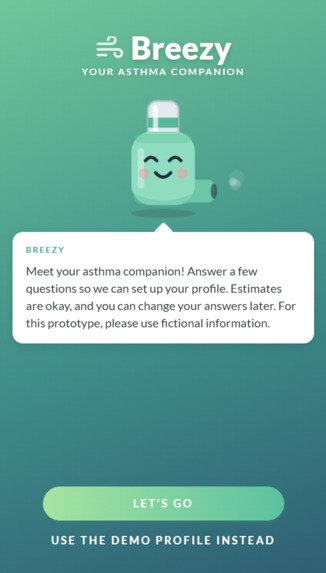
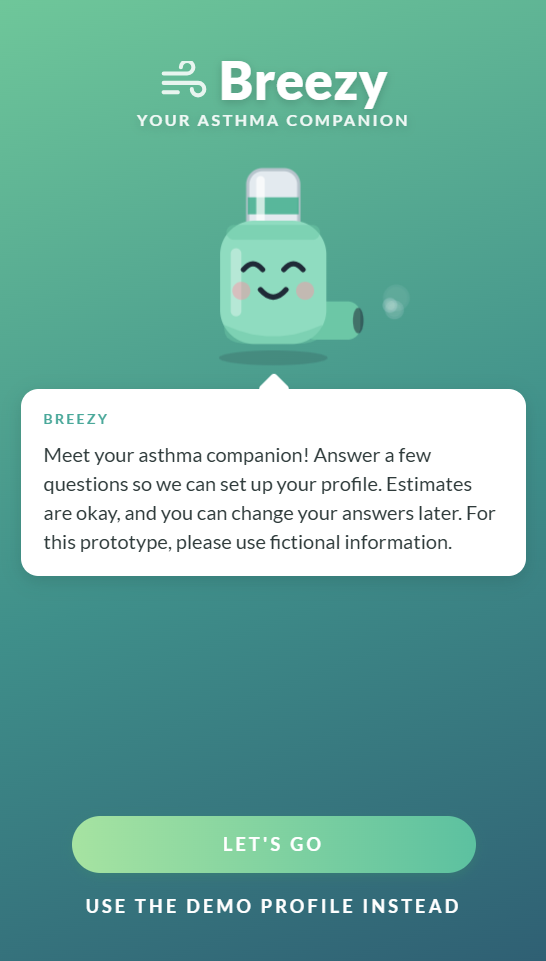
Introduction page that provides the option of seeing the demo or creating your own page
-
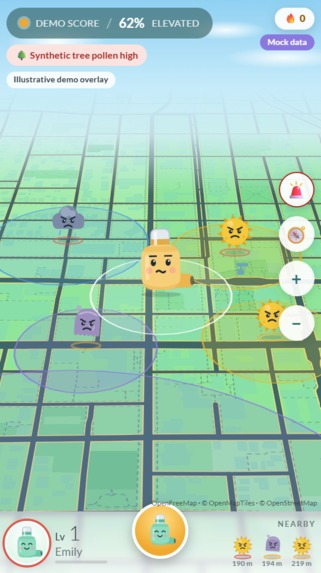
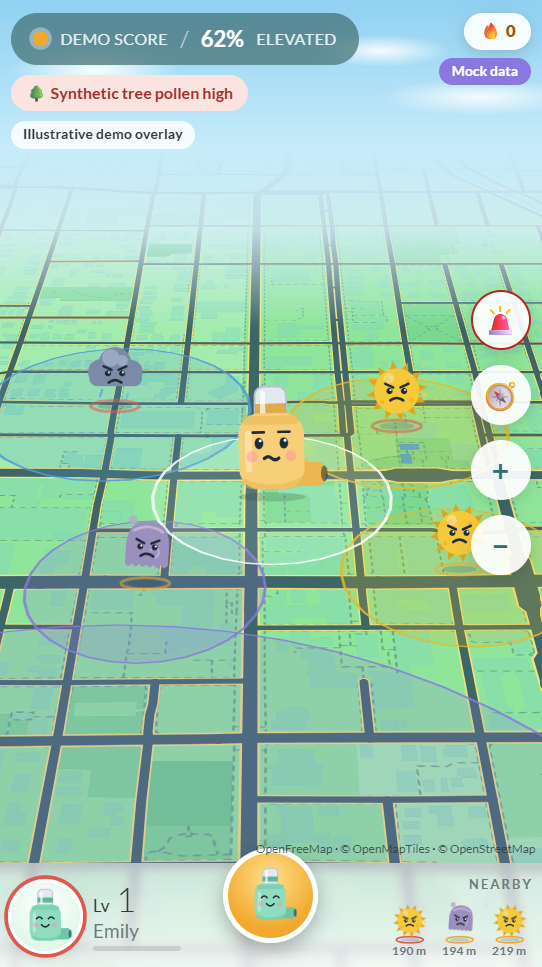
UI/UX resembling Pokemon go to reveal nearby envrionmental stimulants of asthma
-
-
Inspiration
Our inspiration for Breezy came directly from our teammate Alexis, who lives with asthma. Managing asthma daily isn't just about carrying an inhaler, it's a constant effort to anticipate unpredictable environmental triggers like pollen spikes, sudden weather changes, and air quality drops. Watching Alexis navigate these daily challenges made us realize how few tools exist that proactively predict asthma risks before an attack occurs. We wanted to build a smart, accessible solution that empowers individuals with asthma to plan their days safely and breathe easier.
What it does
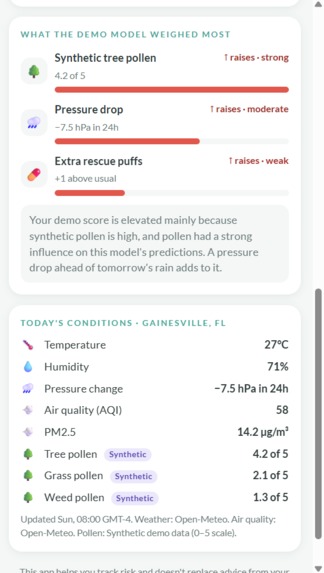
Breezy is an AI-powered asthma risk detector that analyzes environmental factors, real-time weather metrics, and user-reported personal health indicators to predict potential asthma flare-ups. By synthesizing environmental data with predictive modeling, Breezy alerts users to high-risk conditions before they become critical, offering actionable insights and personalized safety tips.
How we built it
- Frontend: Built with a responsive interface designed to provide quick, intuitive risk assessments at a glance.
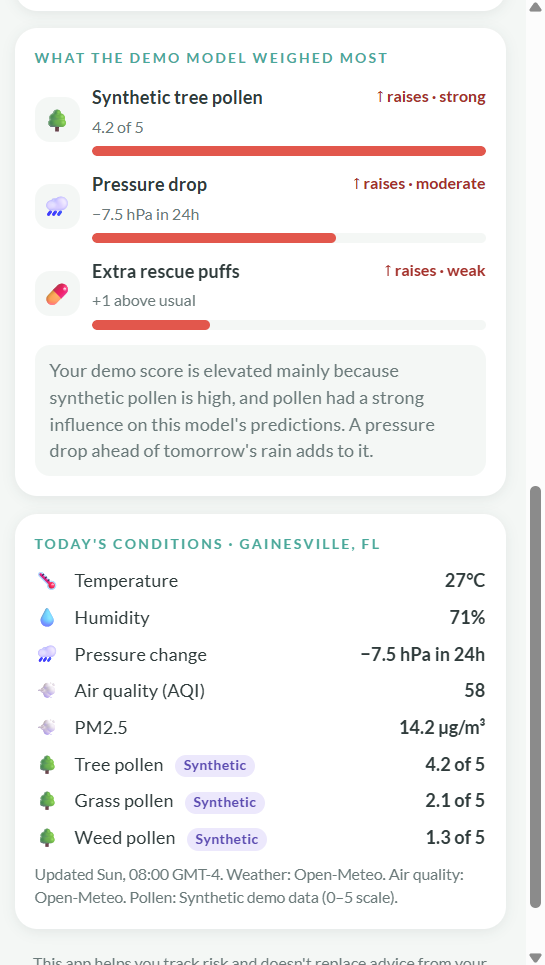
- Backend & AI/ML: Developed using custom logic and machine learning models trained on environmental data (air quality index, humidity, temperature, and allergen counts) to evaluate individual risk scores.
- Integrations: Embedded real-time data feeds to continually track local climate conditions.
Challenges we faced
- Data Integration: Aggregating and normalizing real-time environmental data alongside personal health factors required precise calibration to prevent false alarms.
- Balancing Accuracy and UX: Fine-tuning the predictive model so that risk factors are communicated clearly and calmly without overwhelming the user.
Accomplishments that we're proud of
- Transforming a personal experience into a fully functional, real-world application that directly addresses a major health challenge.
- Building a reliable predictive pipeline that converts complex environmental data into clear, actionable risk levels.
What we learned
- The critical importance of user-centered design in healthcare and accessibility tools.
- How to effectively process environmental data inputs for real-time predictive analytics.
What's next for Breezy
- Integrating real-time wearable device telemetry (heart rate, respiration rate) for higher precision.
- Expanding push notifications for dynamic geo-fenced safety alerts when entering areas with elevated environmental risk factors.


Log in or sign up for Devpost to join the conversation.