# Inspiration
Climate change is having a detrimental impact on the planet, however the speed at which renewable energy is being deployed is too slow to tackle climate change. Hence we have developed software to find suitable locations for wind turbine farms in order to speed up the deployment of renewable energy.
# What it does
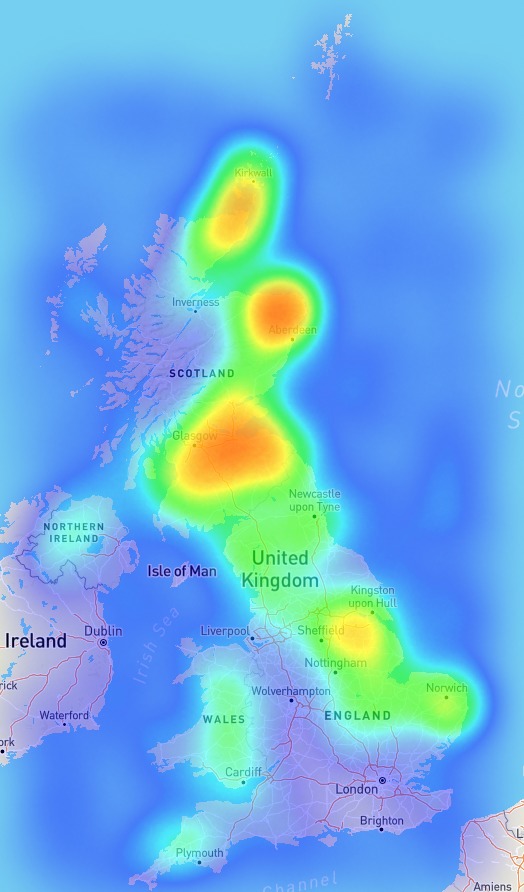
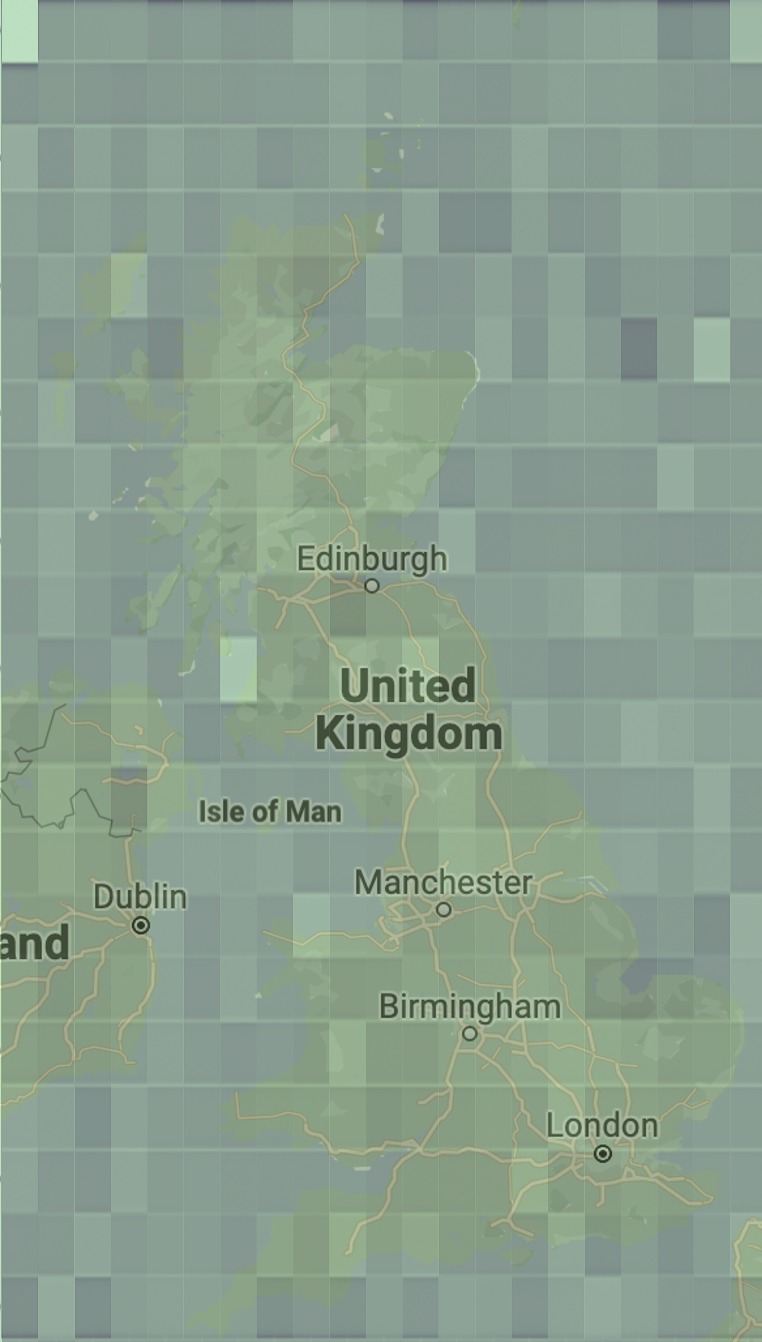
Uses real world historical geodata to train a deep neural network to predict the suitability of building wind turbines in different areas of the UK, using Foundry to create a heatmap to easily visualise which places are best and to display additional weather information on the areas.
#How we built it
We used TensorFlow for building a regression based deep neural network, OpenWeatherMap API to get historical weather data, Foundry to visualise the data.
# Challenges we ran into
We had to wait for API calls as we were limited by the number of API requests per day.n To find accurate geodata with corresponding latitude and longitude coordinates, we had to convert British National Grid Reference coordinates to latitude and longitude before fetching from the OpenWeatherMap API. Furthermore, converting postcode information to coordinates proved to be a challenge as each postcode did not correspond to one exact coordinate. We had to do data engineering to remove the uncorrelated variables from the dataset and convert the JSON into a normalised Pandas dataframe for use in the neural network.
# Accomplishments that we’re proud of
We worked as a team, picking out each of our strengths so that we would be most productive. We’re proud that we’ve been able to contribute to solving the energy crisis by using real world data.
# What we learned
Learned how to use APIs, how to process data for machine learning from scratch, gain more experience with TensorFlow.
# What's next
Expand the software to be able to predict wind turbine suitability globally. Add ability to predict location suitability of other renewable energy sources such as solar or hydro. We collected, organised mapped pricing data to latitude and longitude coordinates however we were unable to implement this into the model in time. With more API calls we could have made the prediction locations more fine tuned.
Built With
- foundry
- python
- tensorflow


Log in or sign up for Devpost to join the conversation.