Inspiration
As someone who struggled with work stress and sleepless nights, I saw a gap in accessible, science-backed breathwork tools—most felt generic or hard to follow. I wanted to create something that combined clinical breathing techniques (like 4-7-8 and Wim Hof) with intuitive visual guidance, so anyone could fit meaningful breathwork into their busy North American/European lifestyle, whether it’s a 1-minute work break or pre-sleep wind-down.
What it does
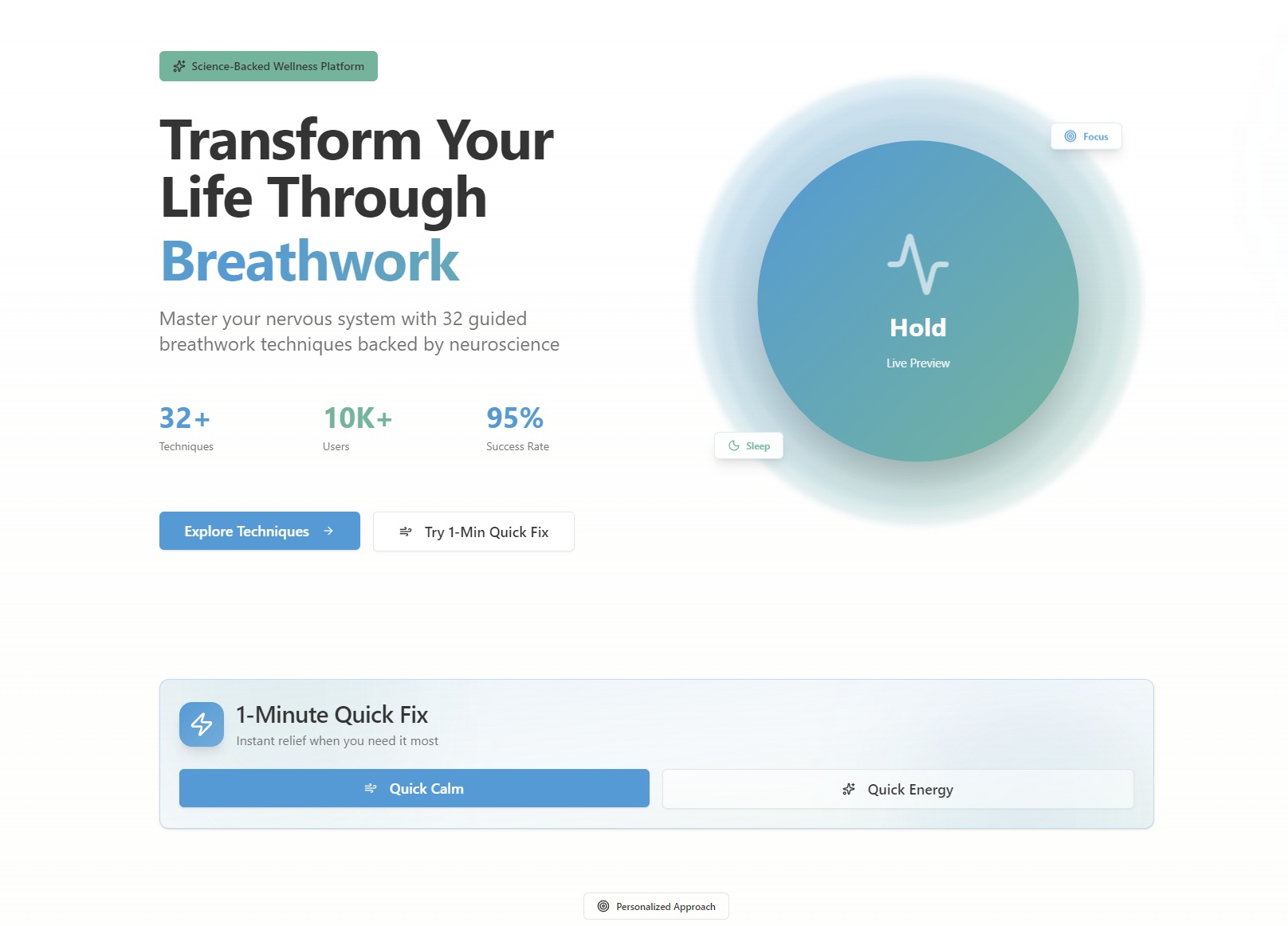
Breathwork Coach delivers structured, goal-focused breathwork sessions (anxiety relief, focus, energy, sleep) with full-screen synced animations that guide inhale/hold/exhale phases. It tracks breath patterns over time, integrates wearable biometric data, and offers tailored technique recommendations to make wellness actionable and measurable.
How we built it
I started by mapping core user flows (home → goal selection → practice session) in Figma, prioritizing mobile-first responsiveness. For development, I used React Native for cross-platform compatibility, Swift/Kotlin for native device integration, and Chart.js to build the analytics dashboard. I coded custom Core Animation sequences for the breathing guidance, ensuring 60fps smoothness, and integrated HealthKit to connect wearable data for real-time feedback.
Challenges we ran into
The biggest hurdle was syncing animation timing with different breathing techniques—each has unique inhale/hold/exhale ratios, and adjusting speed for beginner/advanced users required precise math to avoid lag. I also struggled to balance data visualization clarity with simplicity; early analytics dashboards were too complex, so I iterated to focus on actionable insights (e.g., "Your resting breath rate dropped 3bpm").
Accomplishments that we're proud of
I’m most proud of the seamless visual guidance—users report the animations make it easy to stay consistent with practice. The analytics dashboard also turned out to be a standout: it translates breath data into simple, motivating insights that make progress tangible, rather than just showing raw numbers.
What we learned
I learned how to bridge wellness science with tech—translating clinical breathing research into user-friendly design. I also mastered balancing feature depth with usability; cutting overly complex metrics from the dashboard made the app more accessible, without losing value. Most importantly, I saw how small, consistent design choices (like clear phase indicators) make wellness tools feel approachable.
What's next for this project
Next, I want to add audio guidance (voice prompts synced with animations) for hands-free use, expand the technique library to include culturally relevant practices, and refine the recommendation engine to adapt to user practice habits over time. I also plan to test integrations with more wearable brands to make biometric tracking even more accessible.
Built With
- chart.js
- figma
- firebase
- kotlin
- react-native
- swift

Log in or sign up for Devpost to join the conversation.