-
-
BreatheEasy
-
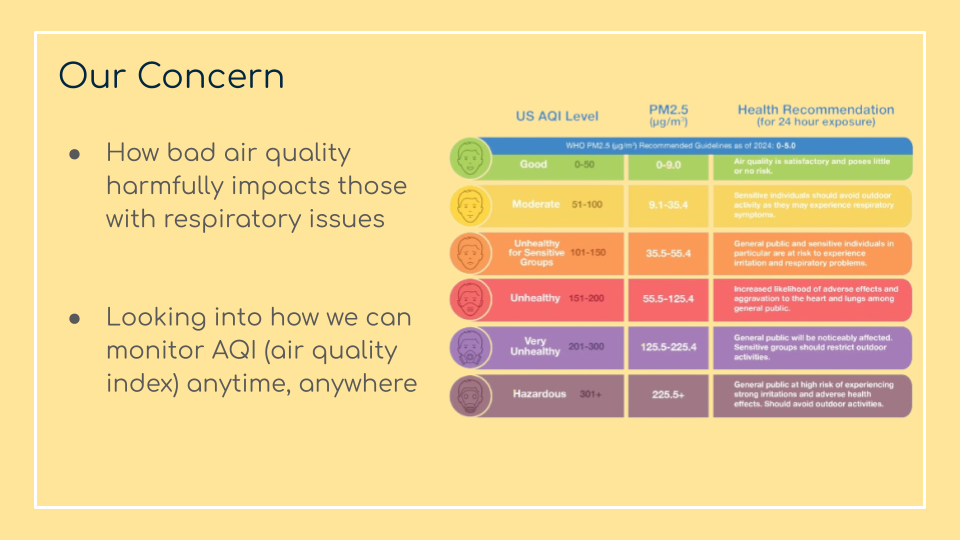
Our Concern
-
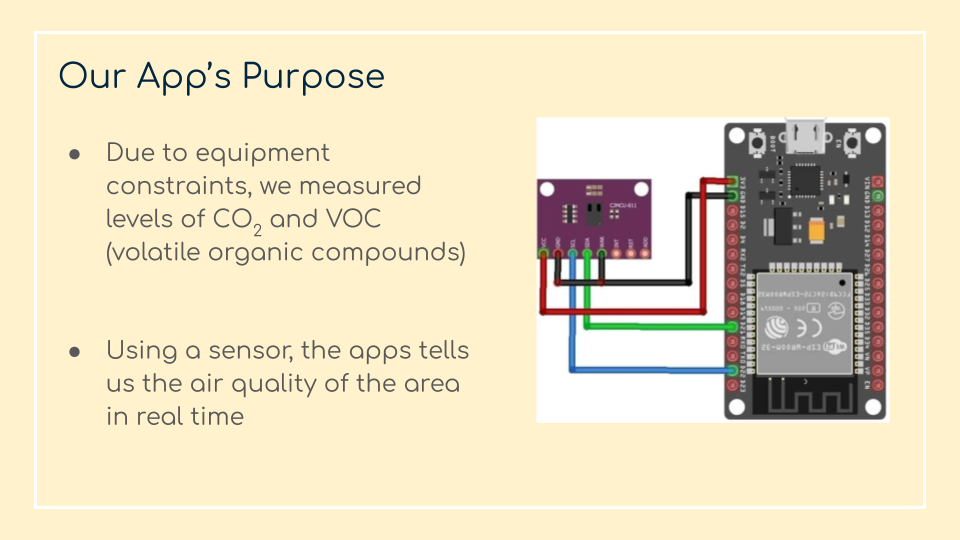
Purpose
-
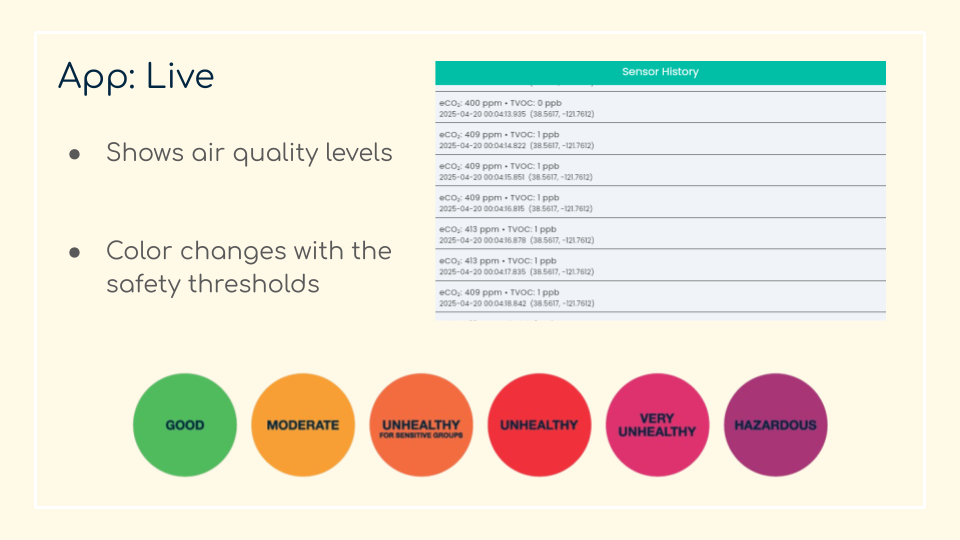
Live Data
-
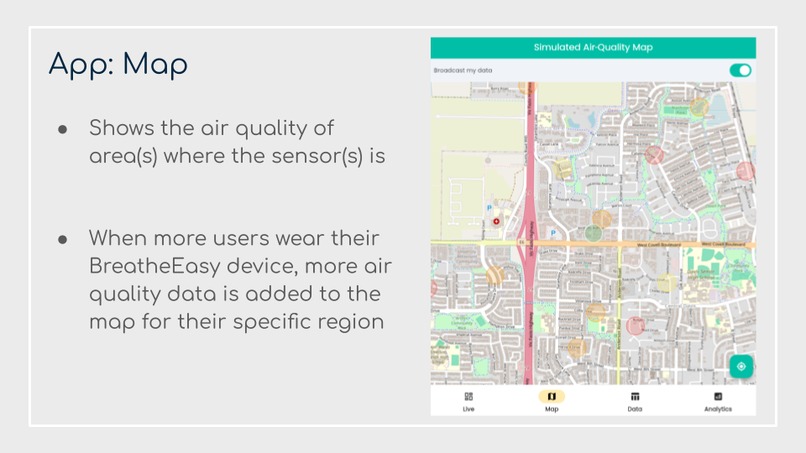
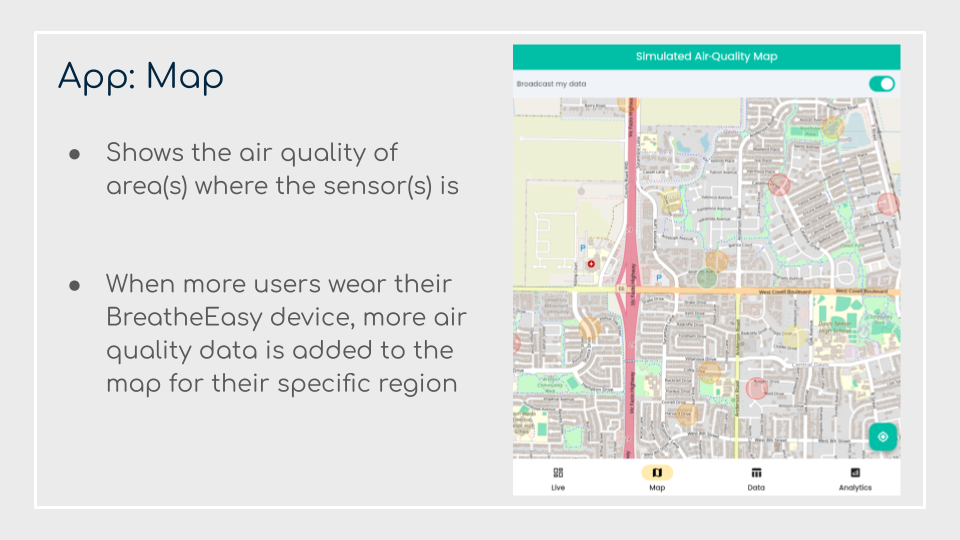
Map
-
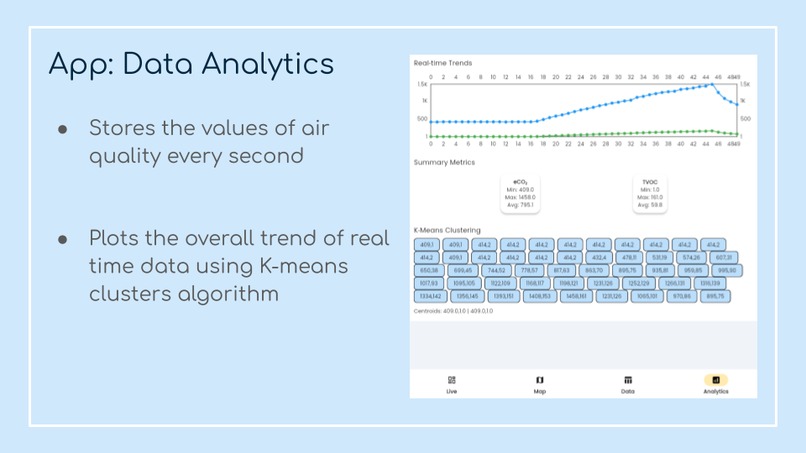
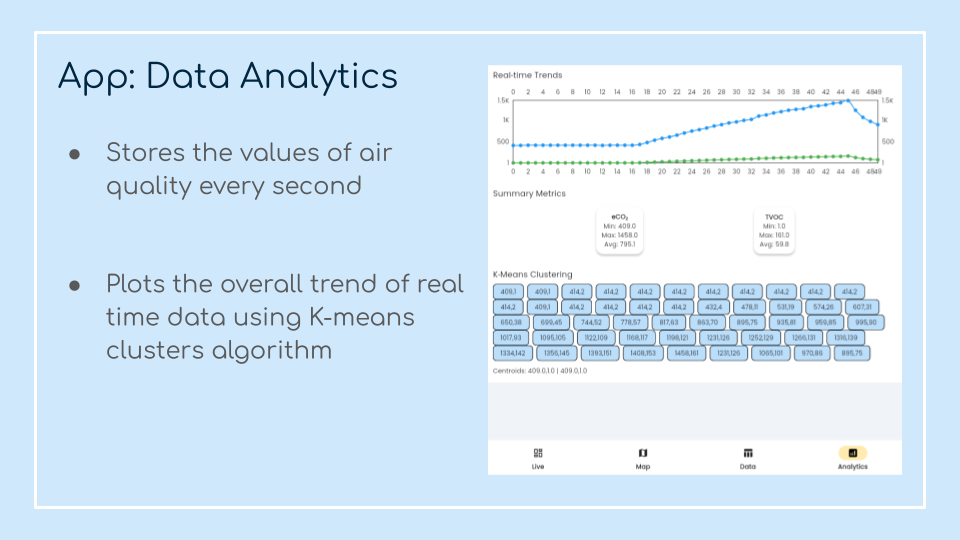
Data Analytics
-
Potential Add-Ons
Inspiration
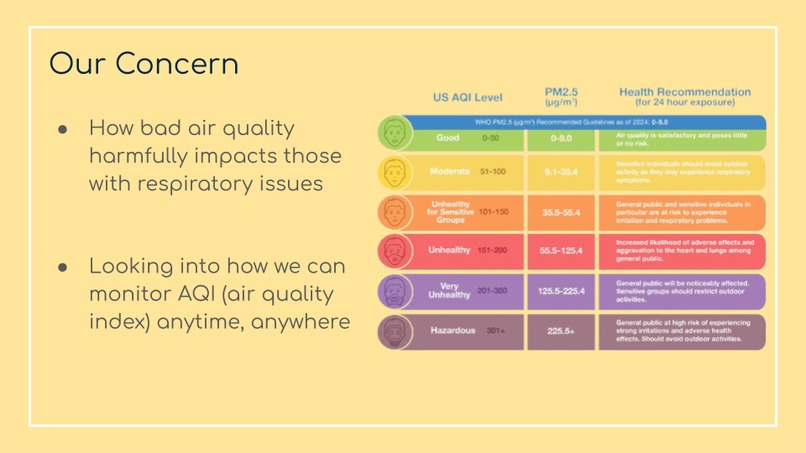
The BreatheEasy project was inspired by my 11-year-old cousin William, who has lived with asthma for most of his life. For individuals like William, managing asthma means being extra cautious of their surroundings - especially the quality of the air they breathe. BreatheEasy aims to provide a reliable, real-time tool to help make life easier for those living with asthma or other respiratory conditions.
What it does
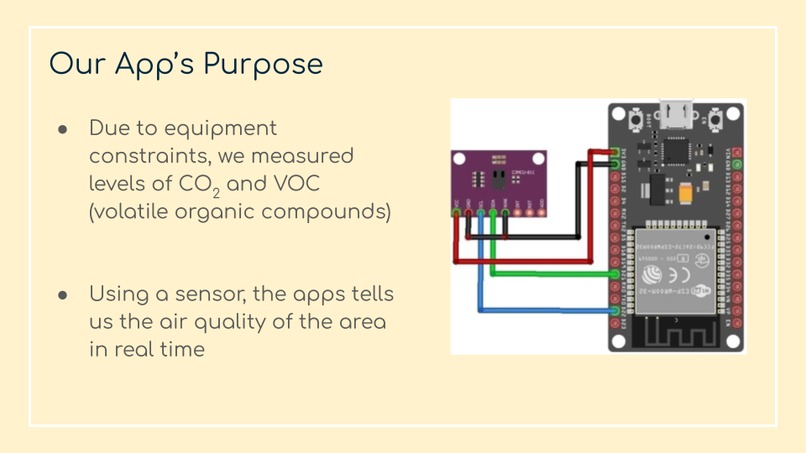
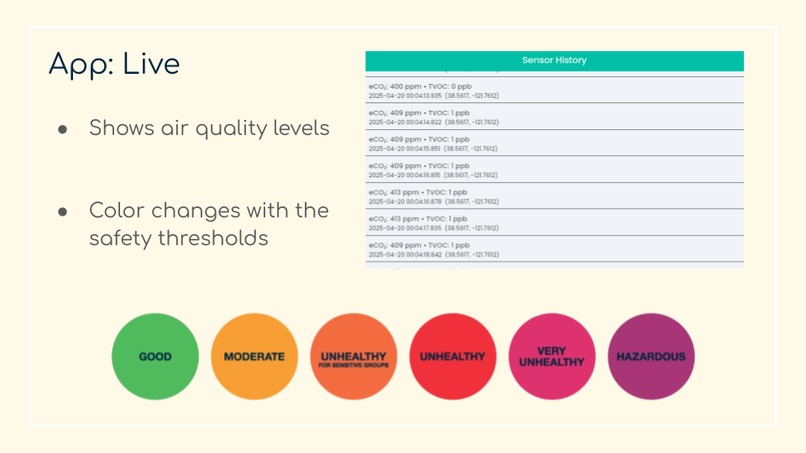
Traditional air quality maps often use data from widely spaced monitoring stations, which may not reflect real conditions at street level or in specific neighborhoods. BreatheEasy improves on this by using the user’s GPS location, accessed via Bluetooth from their mobile device, to create a more accurate, location-based air quality map. Real-time outdoor air quality data is collected using an ESP32 microcontroller paired with a CCS811 air quality sensor. This user-generated data provides a more detailed and hyperlocal view of air quality conditions.
How we built it
BreatheEasy was built by wiring a CCS811 air quality sensor to an ESP32 microcontroller, allowing communication via I2C protocol. The ESP32 was then programmed via PlatformIO to send the collected air quality data to the user's mobile device via Bluetooth, which is then uploaded to display on the map via a Flutter web application.
Challenges we ran into
One of the main challenges we faced was ensuring consistent communication between the ESP32 and the mobile device, especially with Bluetooth connections dropping intermittently. We also had to fine-tune the sensor calibration to ensure the air quality readings were accurate in various environments. Additionally, optimizing the real-time map display in the Flutter application required handling latency and ensuring data updates were seamless.
Accomplishments that we're proud of
We are proud of the fact that we created a functional prototype that not only tracks air quality but also integrates location-based data in real-time. The seamless communication between the hardware and the mobile application, as well as the smooth user interface in Flutter, were significant milestones. Most importantly, we are proud that our project can directly benefit individuals with asthma like William, providing them with a tool that can help improve their daily lives.
What we learned
Throughout the process, we learned a lot about sensor integration and real-time data transmission. We also gained hands-on experience with the ESP32 microcontroller, the CCS811 air quality sensor, and Bluetooth communication protocols. In addition, developing the Flutter app taught us how to build user-friendly interfaces and connect them with live data. Finally, we learned how crucial it is to test for edge cases in data communication, especially with live environmental data.
What's next for BreatheEasy
Next, we plan to refine the system to improve battery efficiency and sensor accuracy. We also aim to expand the project by adding support for multiple users, allowing for the aggregation of air quality data from various locations to create a more comprehensive community-based air quality map. Additionally, we would like to integrate weather data to provide users with a more complete picture of environmental conditions that may affect respiratory health. Ultimately, we envision expanding BreatheEasy to include more sensors for different pollutants and allergens.


Log in or sign up for Devpost to join the conversation.