Inspiration
The inspiration came both from an article about an emergency ventilator paper from MIT and the reported feedback from local hospitals that a shortage was coming. This triggered the creation of a Slack that was joined by a lot of volunteers of all profiles from the UCLouvain eco-system and around Louvain-la-Neuve (Belgium). (enginneers, searchers, doctors, legals, logistics,...)
The promise
An open-source ventilator easy to reproduce in a fablab
What it does
As it stands, this ventilator can operate on "active ventilation" mode, with possibility to control:
- volume of air delivered
- frequency
- Inspiration/Expiration ratio Just like any ventilator
How I built it
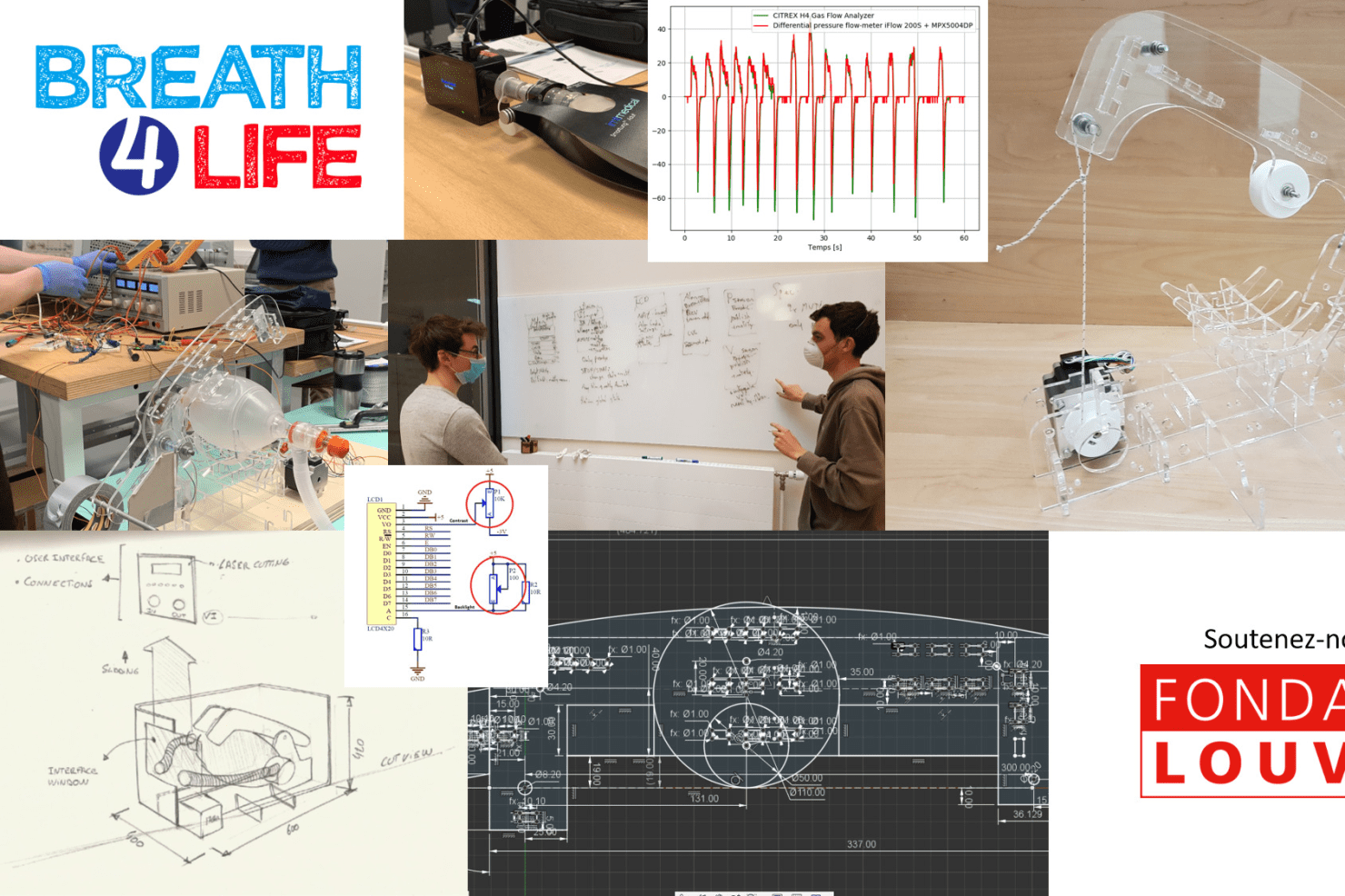
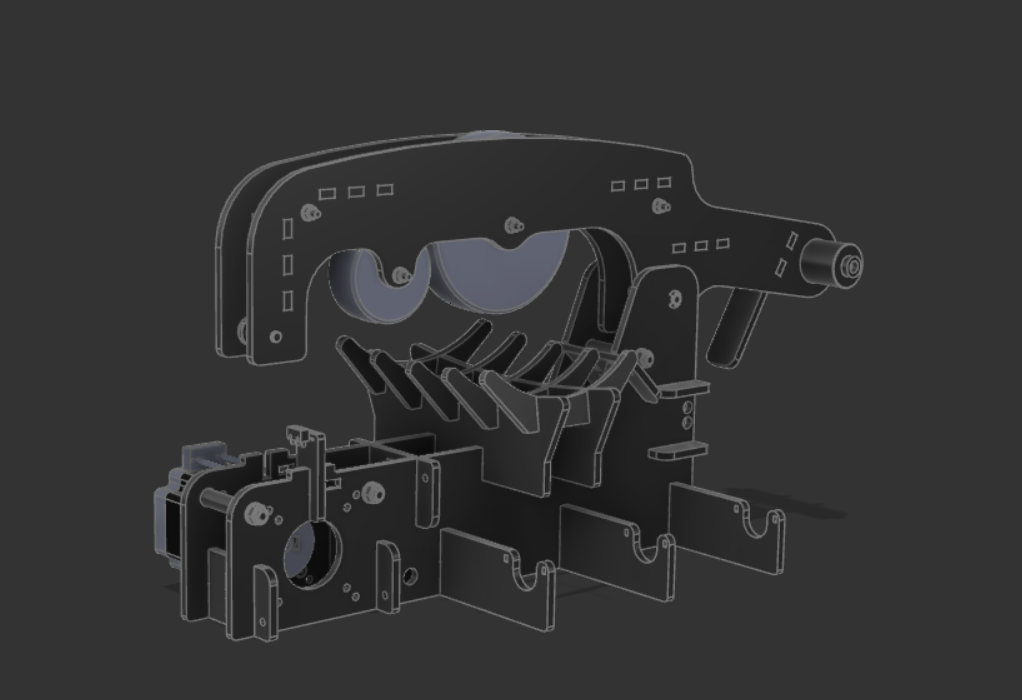
The design is based on a standard manual emergency device: the AMBU bag. Where we replace the medical staff by our actuating system with additional sensors to ensure safety.
In parallel, a team of requirements engineers went through the different guidance documents (e.g. FDA, MHRA) and standards (e.g. ISO 80601-2-12, IEC 60601) as well as compiled user requirements from doctors to make sure that we went into the right directions. On the plus side, this solution ensure that the respiratory gaz only goes through validated medical device.
This led to some design iterations and intensive testing to match these requirements (e.g. mechanical design reviews to avoid tearing the AMBU bag, more powerful driver, louder speaker)
Challenges I ran into
The main challenge is a regulatory one: to understand how our system can be handed over to the field to accomplish its mission. Medical devices regulation is a national issue and is different from one country to the other; Notified bodies for technical certification like SGS, TÜV, ... are expansive and slow, so not adequate for an emergency response.
The second challenge was to be able to manage all volunteers properly so they could be useful, at some point we had to organize spin-off projects
- syringe driver
- protective respirator (mask)
Accomplishments that I'm proud of
Our system is 100% reproducible in a regular fablab, the first version of our prototype is only constituted of laser cut/3D printed parts and standards component from the industry. Even the electronic boards are protoboard hand welded
What's next for Breath4Life
From a practical point of view, the next steps for Breath4Life are to produce a limited series of devices and send them to international partners interested in developing the project with us, as well as evaluating how the device could be used on the field.
From a development point of view, we expect our partners to raise development needs related to their local context O2 supply, O2 rate management, battery, passive respiration mode, ...
Pitch
A silent video speaks more than a speach... more prototype, less powerpoint !
Internet
https://breath4life.odoo.com/ https://viralresponse.io/+makilab/breathoflife-in-belgium
Built With
- arduino
- autodesk-fusion-360
- ceedling
- eagle
- freertos


Log in or sign up for Devpost to join the conversation.