Inspiration
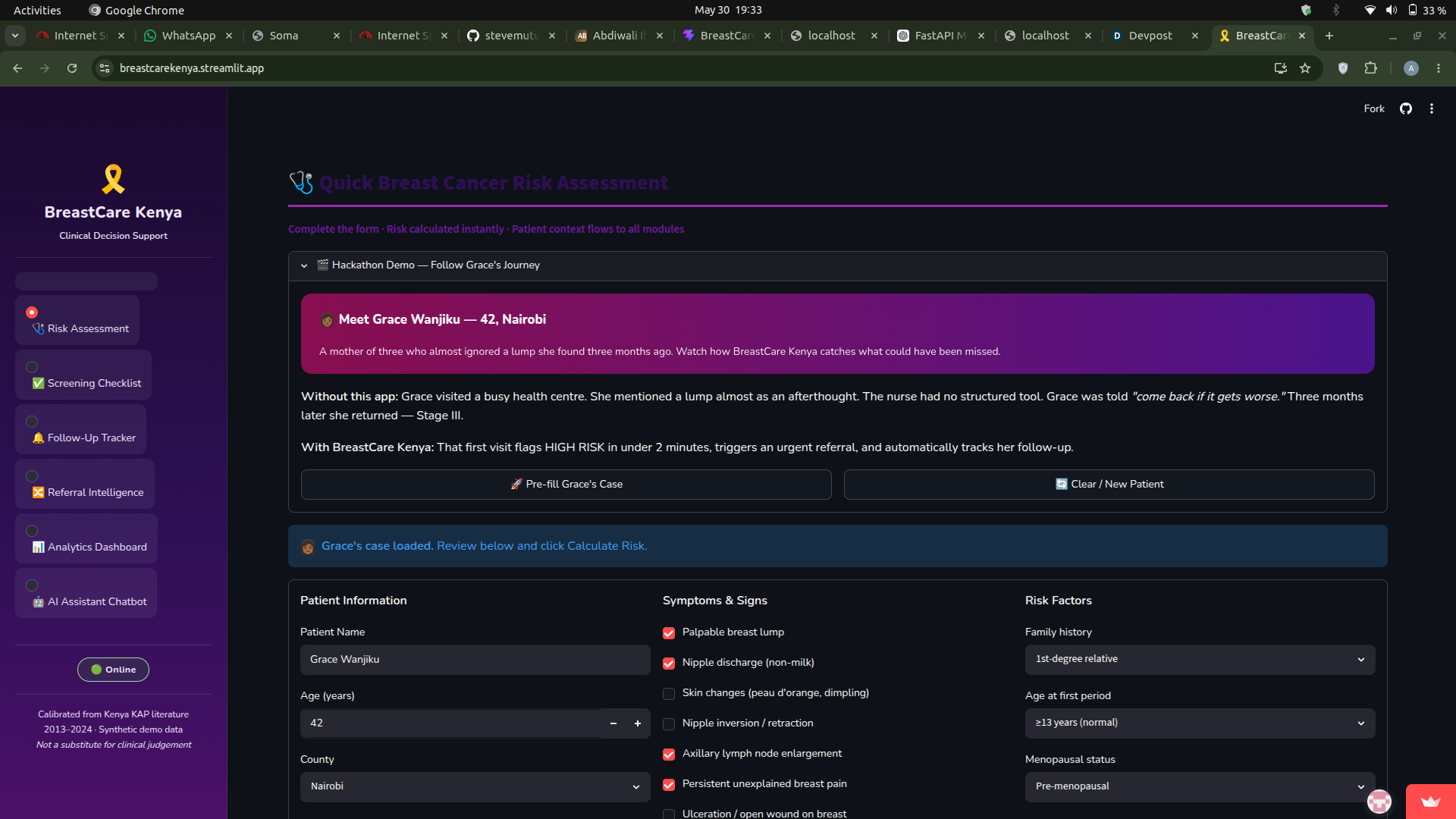
Improve early breast-care decision-making in low-resource settings by unifying data, assessments, and actionable analytics. Users: Clinicians, program managers, and community health workers needing offline-friendly tools and simple workflows.
What it does
Intake, scoring, analytics, and visualization across backend and frontend. Interfaces: Web dashboard, USSD/phone mock (see frontend/tiers/UssdMock.tsx), and exportable reports.
How we built it
Python backend with Alembic migrations, a modular app/ (score_engine, llm, routers), and a Vite + React TypeScript frontend.
Challenges we ran into
Data: Incomplete and inconsistent instrument data requiring mapping and calibration. Ops: Balancing model/LLM costs, privacy, and offline-first UX for low-bandwidth contexts.
Accomplishments that we're proud of
Scoring engine: Reusable score_engine with unit tests in tests. End-to-end: Working web dashboard, USSD prototype, and seeded datasets under seeds/data.
What we learned
Design: Simple, explainable scoring improves adoption. Engineering: Modular backend + clear seeds/tests speeds iteration in constrained environments.


Log in or sign up for Devpost to join the conversation.