-
-
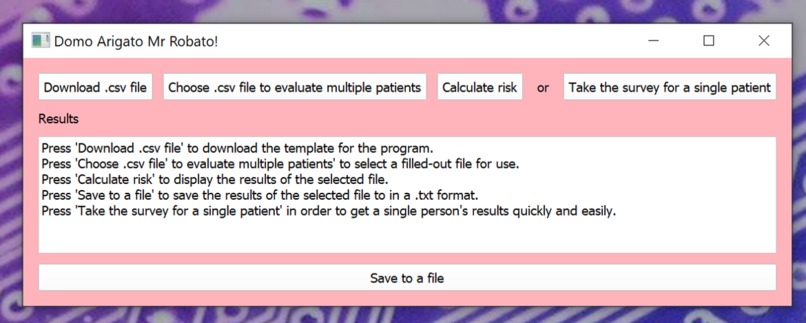
Main Menu
-
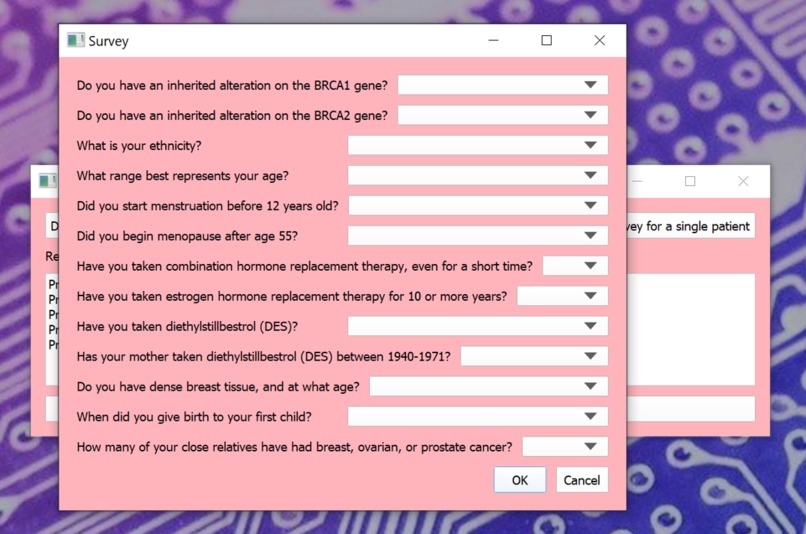
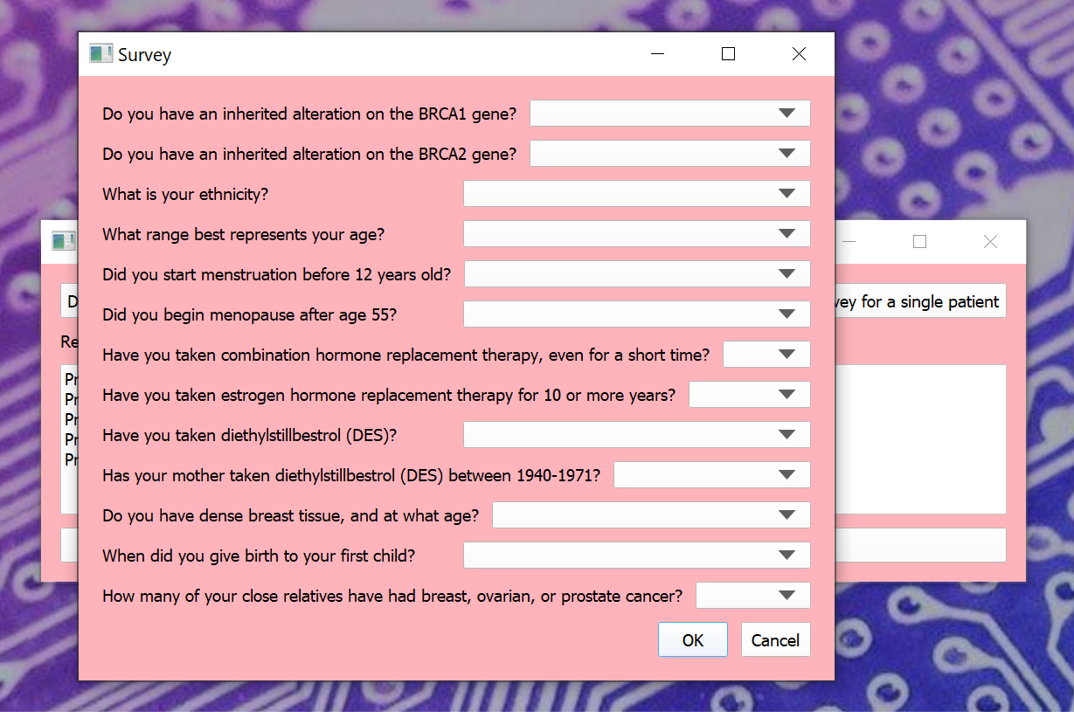
Survey Screen
-
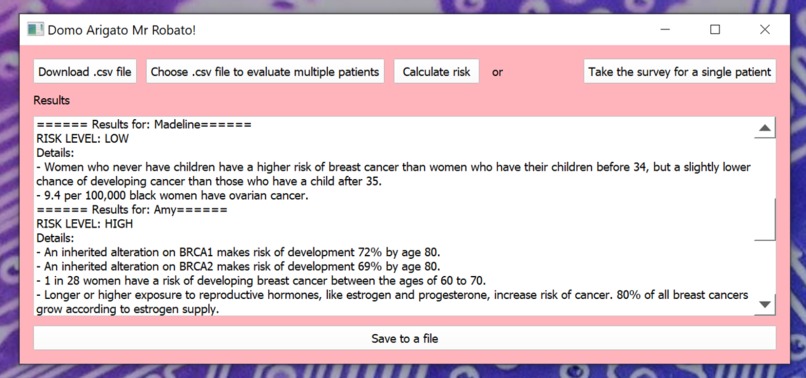
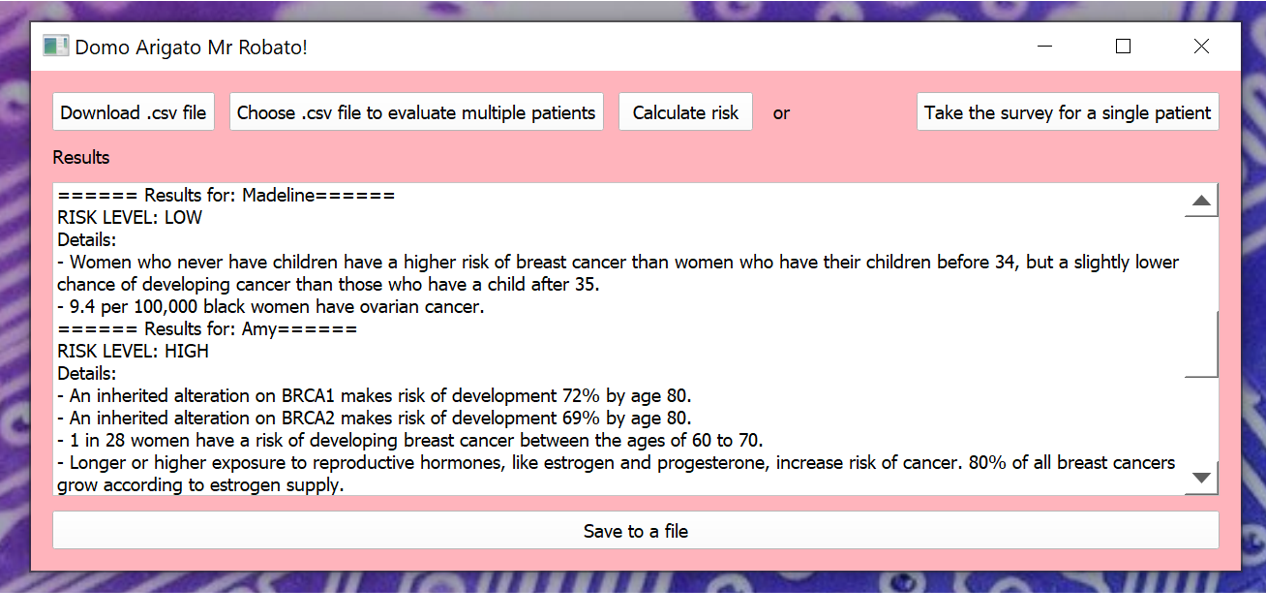
Sample Results
Inspiration
We can't imagine the difficulty and detail it takes to delve through data and decide who gets priority when it comes to cancer treatment. Since we are all females, this project is personal to us. We wanted to create a program that handles the tedious sorting of data for the doctor or nurse and place the patient in a risk category to determine treatment.
What it does
Our program uses .csv files to organize and manage data. The user has the ability to download a template file to fill out and upload a filled out file (we even put a sample file in the repository). From there, you can calculate your results and display them on the page, or even save them to a .txt file. If you are not a doctor and want to evaluate your own risk, there is even an option to take a survey instead that gives the user the ability to fill out their information and get results immediately.
How we built it
The program is written entirely in Python 3 and uses the pandas and PyQt5 libraries. Pandas was used to manage, sort, and evaluate the data, and PyQt5 was used to create a user-friendly graphical interface.
Challenges we ran into
The most difficult part of this project was determining what data to use, how to evaluate it, and how to teach the program to learn. In the end, our research was thorough enough to create a working model in the week provided.
Accomplishments that we're proud of
We are proud of the graphical interface that was created and the resulting usability of the program.
What we learned
We learned a lot about causes of breast and ovarian cancer, although we know that there are many more nuanced cues that could determine risk that we have not even uncovered. We also had to learn PyQt5 entirely from scratch to create the interface, and we are very pleased with the results.
What's next for Breast and Ovarian Cancer Analysis (BOA)
With proper funding, this program could be placed on a secure website and from there learn as it is run. When placed on a server, it will be able to continuously run and easily reevaluate when the users alert the program that the results are skewed. The numbers that are used to determine the risk category will be shifted with ease until the program reaches optimal accuracy.

Log in or sign up for Devpost to join the conversation.