Inspiration
I was inspired by the potential of machine learning to solve real-world problems, especially in healthcare. Breast cancer is a serious health concern, and I wanted to explore how machine learning can analyze tumor measurements and generate useful predictions. This project gave me an opportunity to apply my AI/ML knowledge to a meaningful problem.
What it does
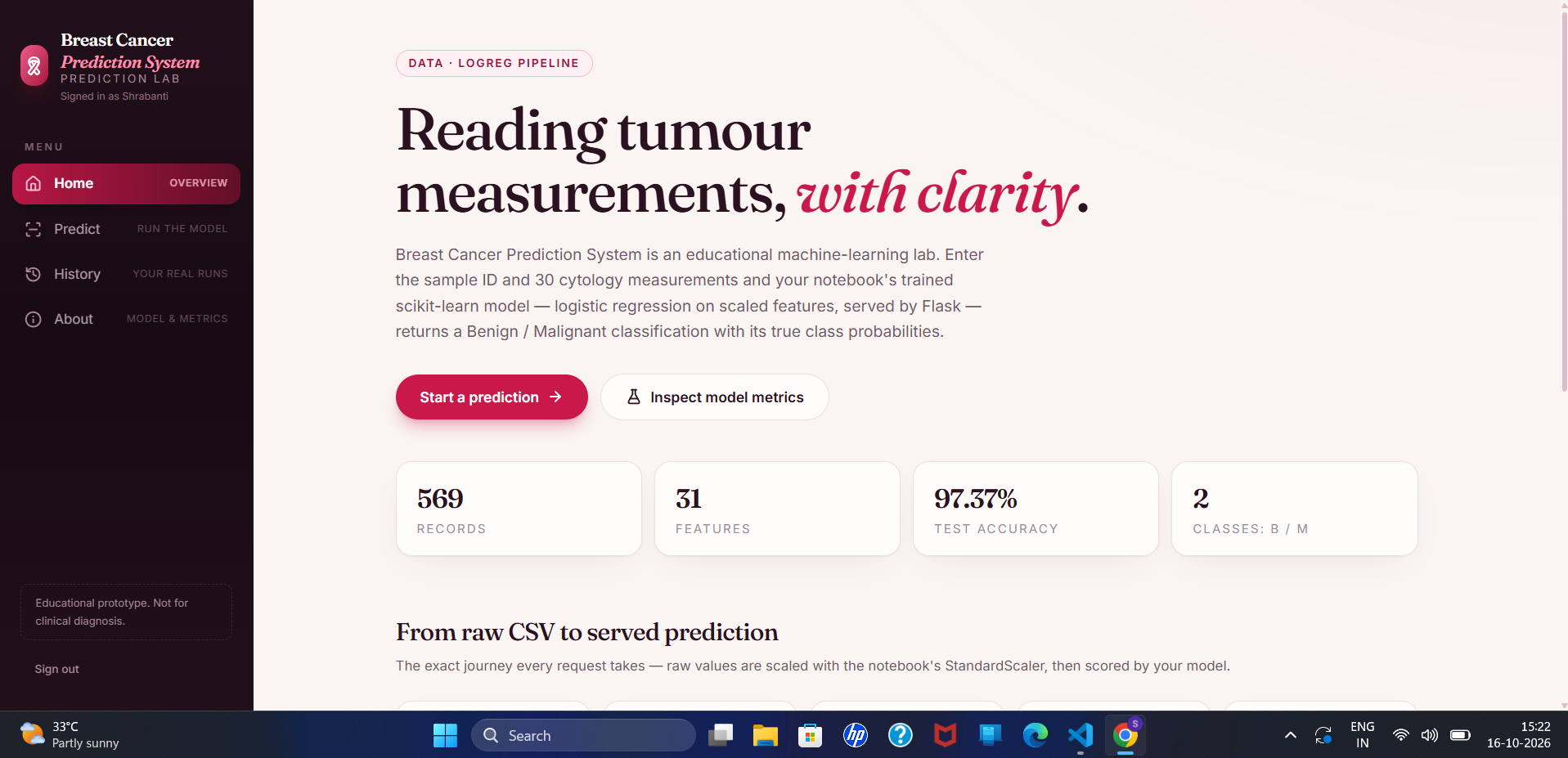
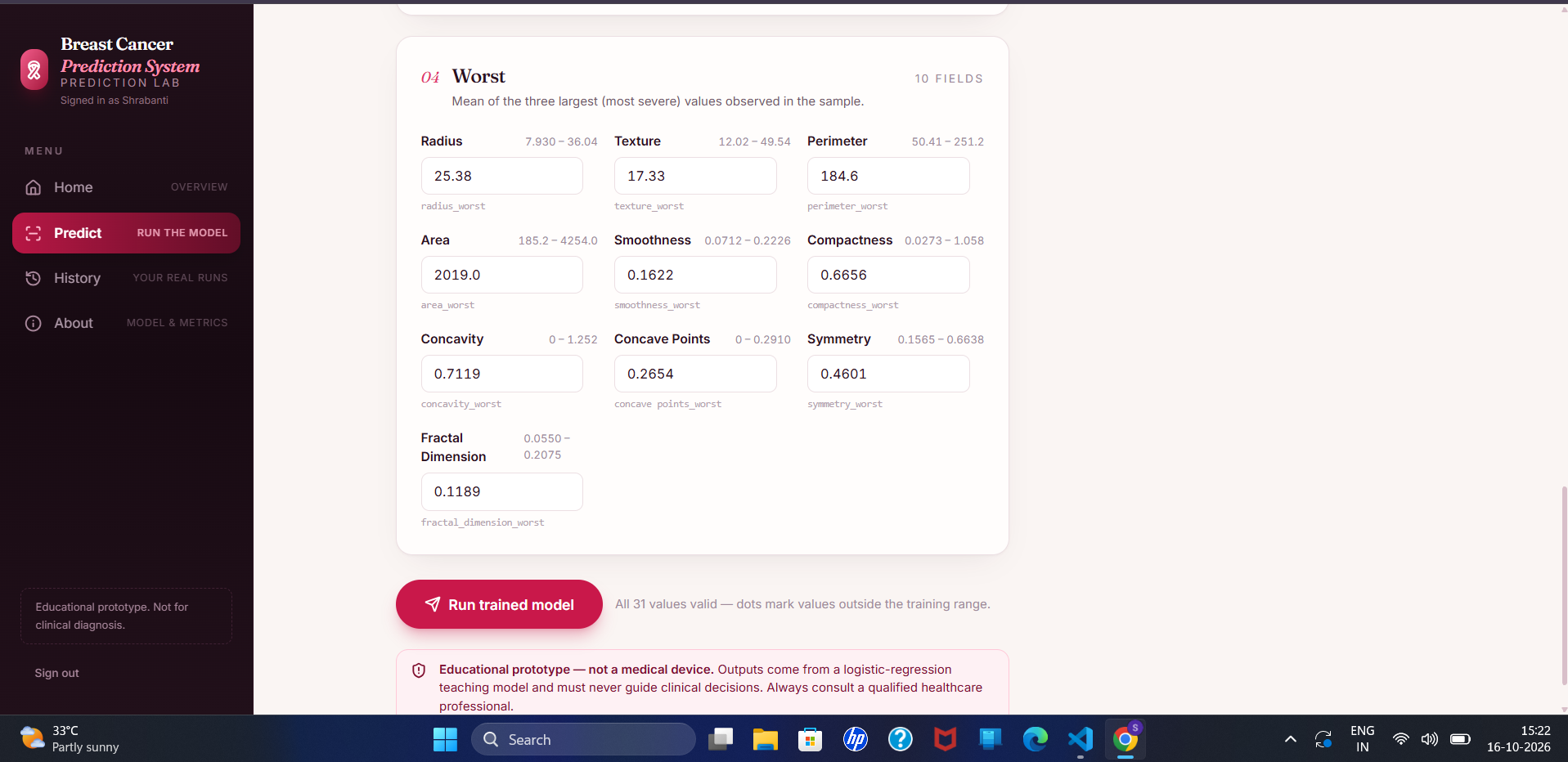
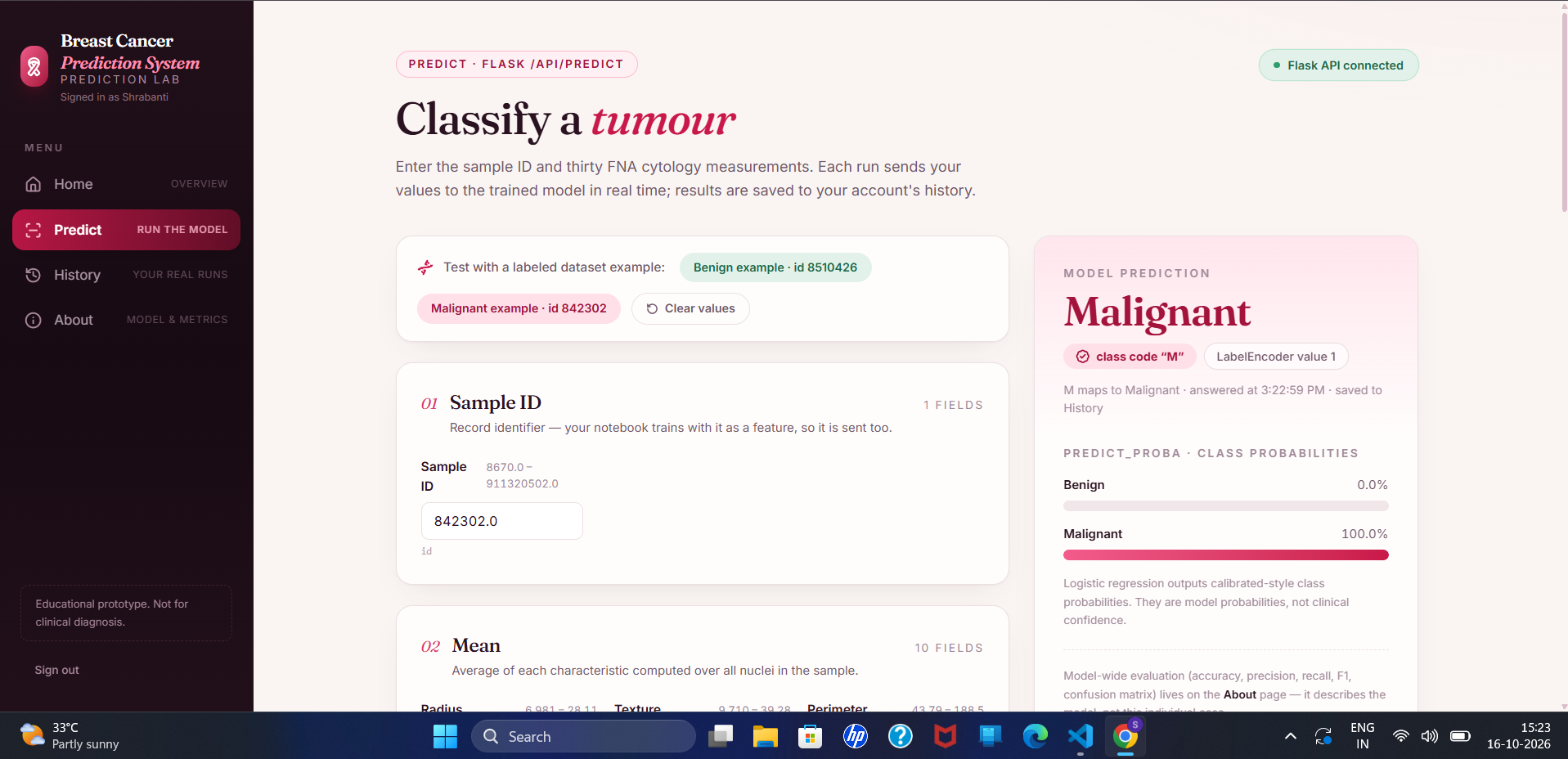
The Breast Cancer Prediction System uses a trained machine learning model to classify breast tumor samples as benign (non-cancerous) or malignant (cancerous) based on 30 numerical features.
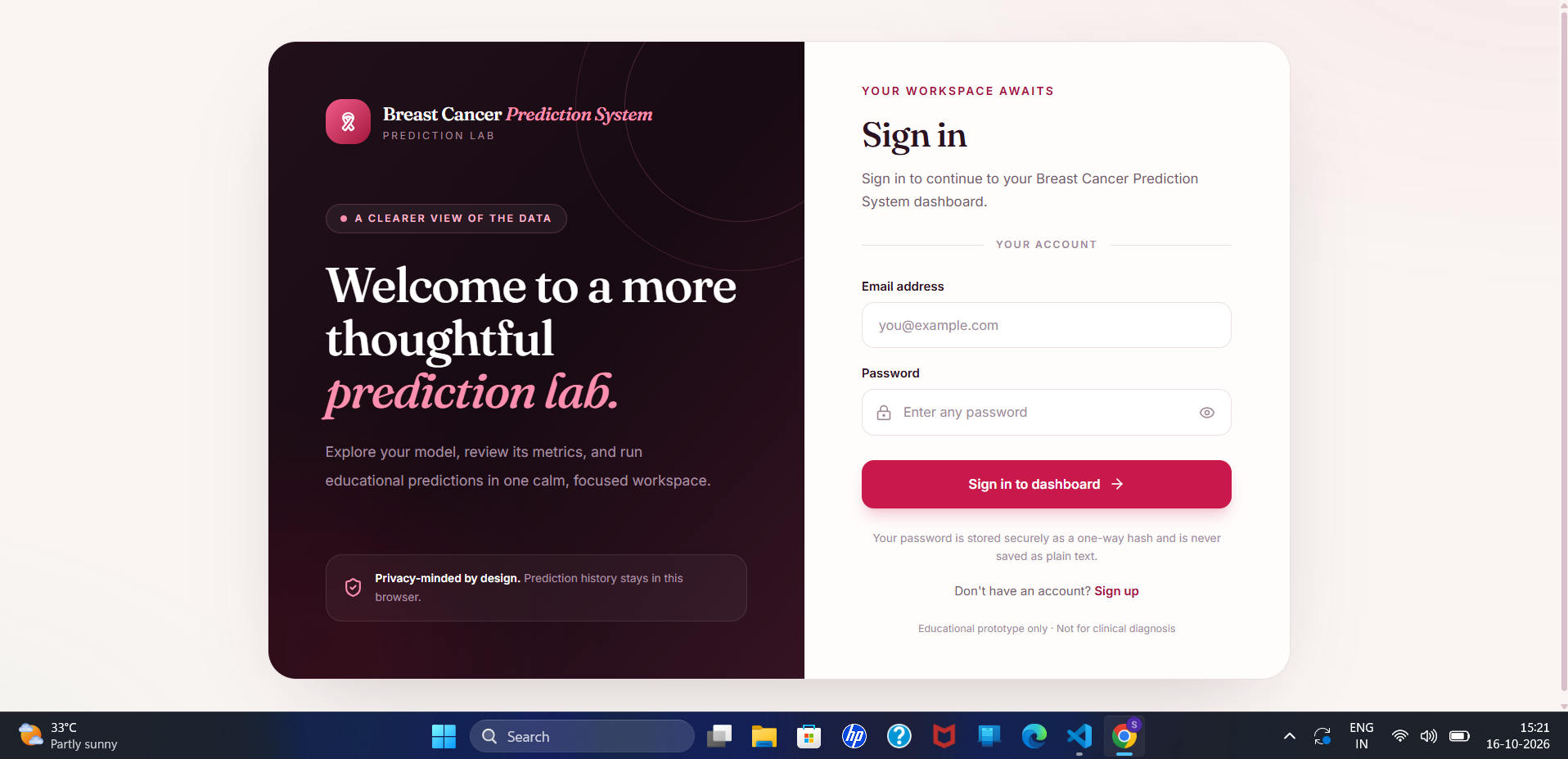
Users can enter tumor measurements through a web interface and receive a prediction from the model. The project demonstrates how machine learning can be integrated into a web application to make data-driven analysis more accessible.
This project is intended for educational and research purposes and is not a substitute for professional medical diagnosis.
How we built it
- Python: For the machine learning component.
- Machine Learning: Trained a classification model using a breast cancer dataset.
- Flask: Connected the trained model to the web application through a backend.
- Pickle (
model.pkl): Saved and loaded the trained model for predictions. - Web Interface: Created a user interface for entering tumor measurements and viewing prediction results.
- PostgreSQL: Used for the planned online storage of user account information.
Challenges we ran into
One of the main challenges was ensuring that all 30 input features were passed to the model in the correct order. Incorrect inputs or inconsistent preprocessing could affect predictions.
Another challenge was integrating the trained model with Flask and configuring the application for online deployment. I worked on organizing the input features, connecting the model to the backend, and addressing database configuration requirements.
Accomplishments that we're proud of
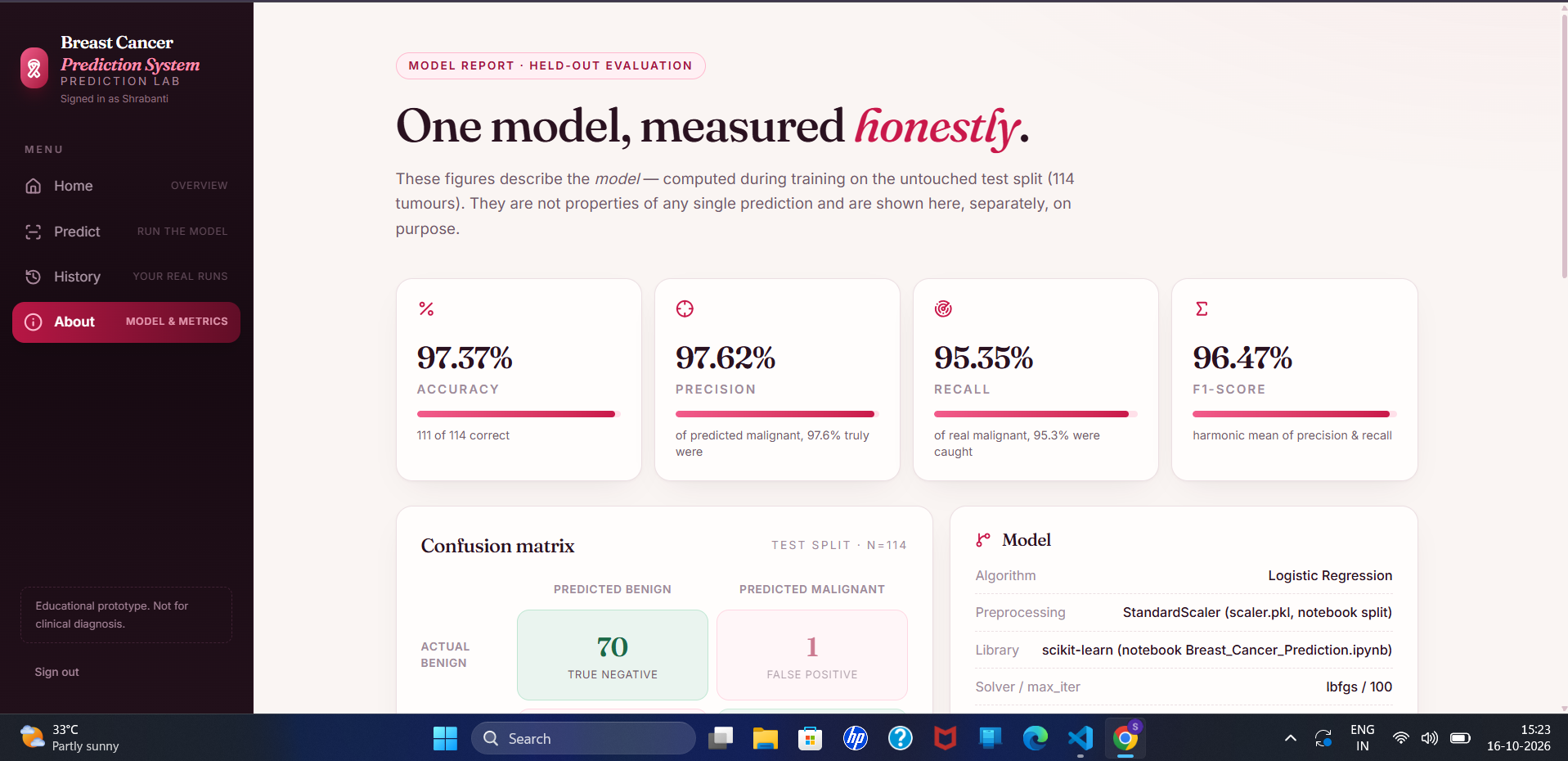
I am proud to have built an end-to-end machine learning project that connects a trained model with a web application. The model achieved approximately 97.36% accuracy during evaluation, and the project helped me apply my theoretical knowledge to a practical healthcare-related use case.
I am also proud of the experience I gained in integrating machine learning, backend development, and database technologies into one project.
What we learned
Through this project, I improved my understanding of machine learning classification, dataset features, model evaluation, Python, Flask, and full-stack integration. I also learned the importance of consistent input preprocessing, validating user inputs, and configuring databases and deployment environments correctly.
What's next for Breast Cancer Prediction System
- Improve the user interface and make entering tumor measurements easier.
- Add prediction history so users can review previous results.
- Complete and test PostgreSQL integration for persistent user account storage.
- Strengthen input validation, error handling, and application security.
- Evaluate the model on appropriate test data and explore ways to improve its reliability.
- Explore responsible deployment practices for healthcare-related machine learning applications.
The long-term goal is to make the project more user-friendly, reliable, and useful as an educational demonstration of machine learning in healthcare.

Log in or sign up for Devpost to join the conversation.