-
-
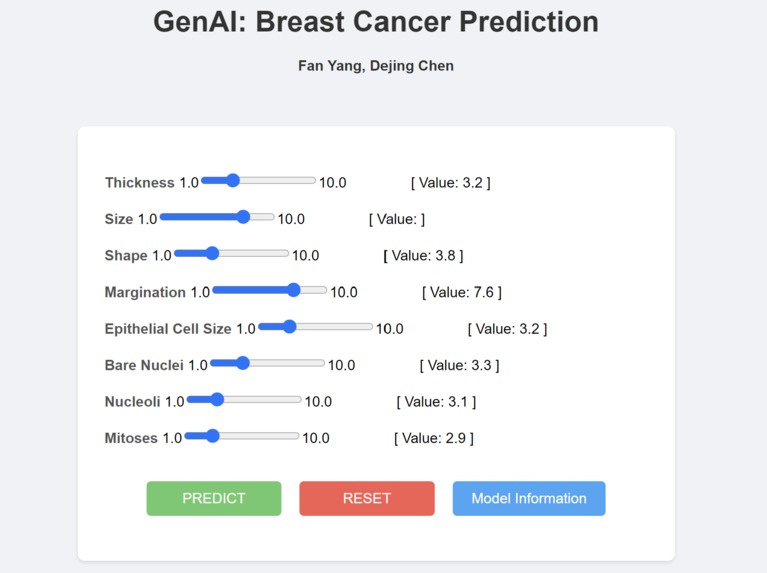
Homepage: Customize parameters for diverse patient profiles.
-
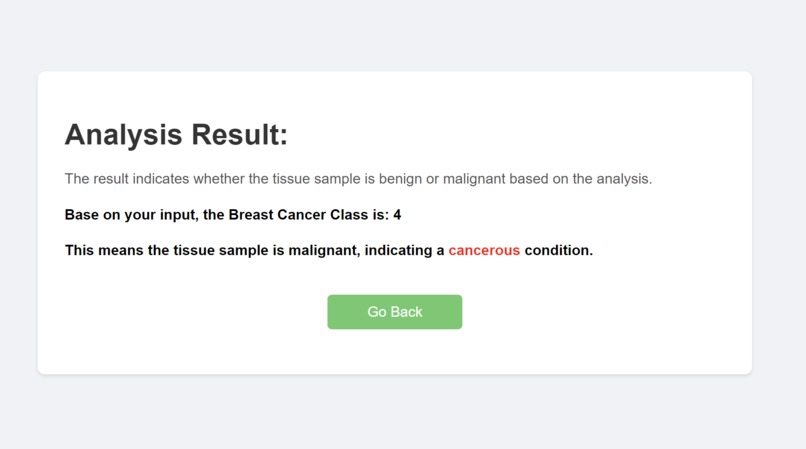
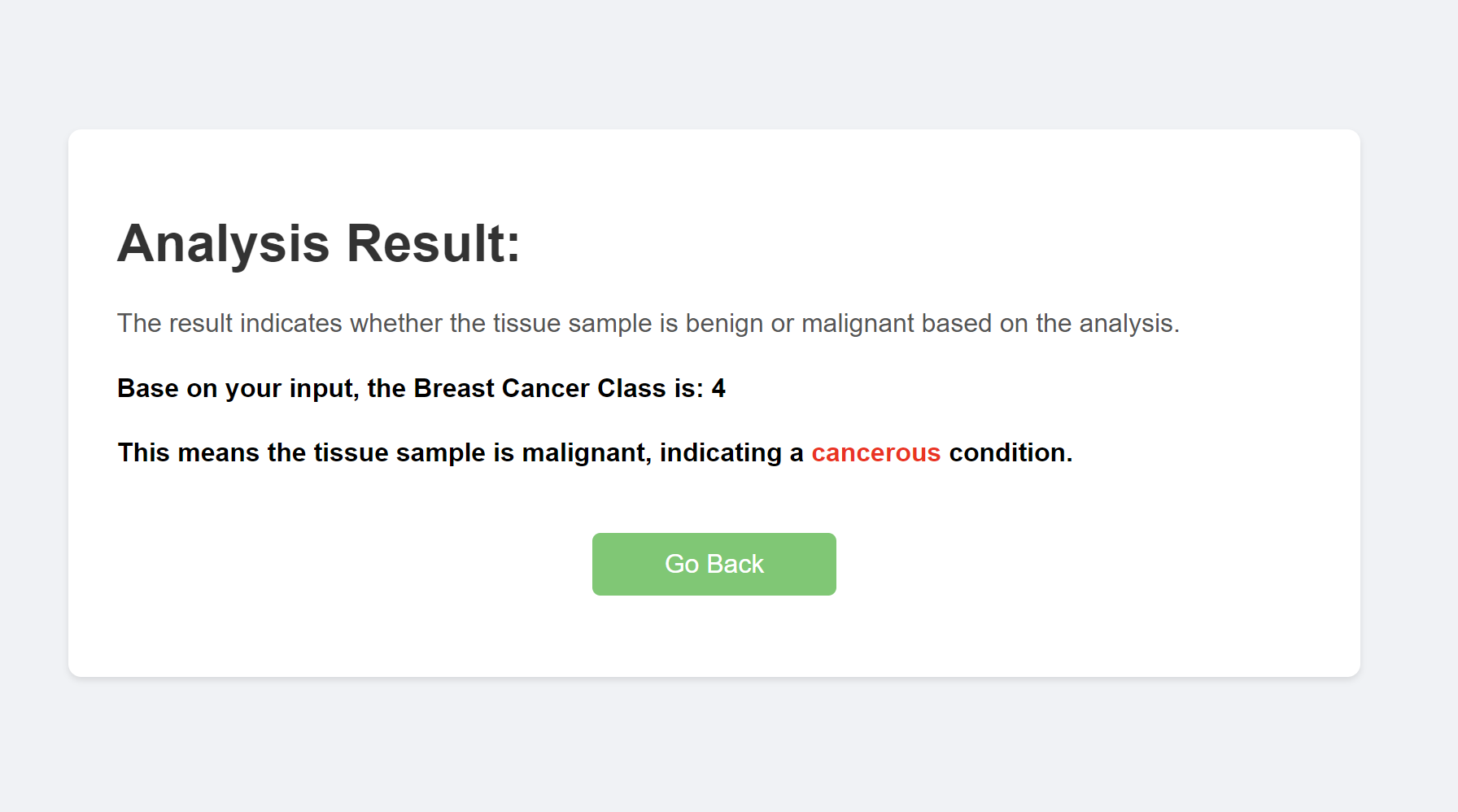
Analysis Outcome: Displays results tailored to the specified parameters.
-
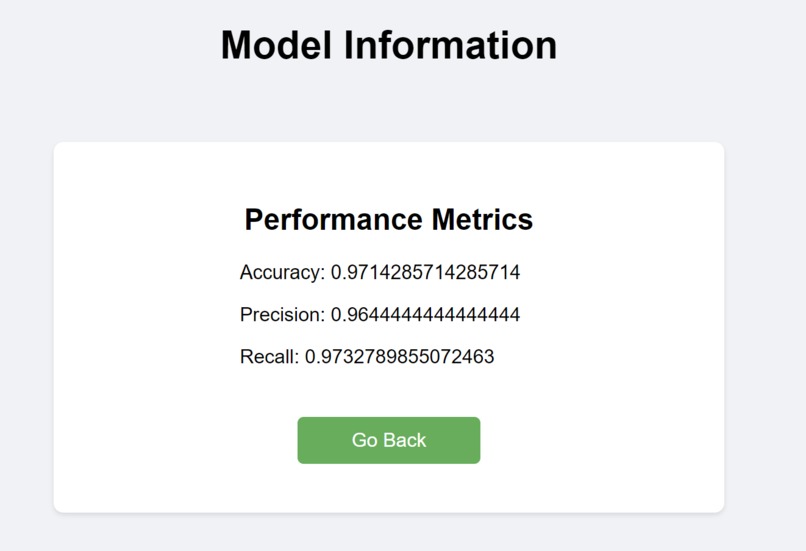
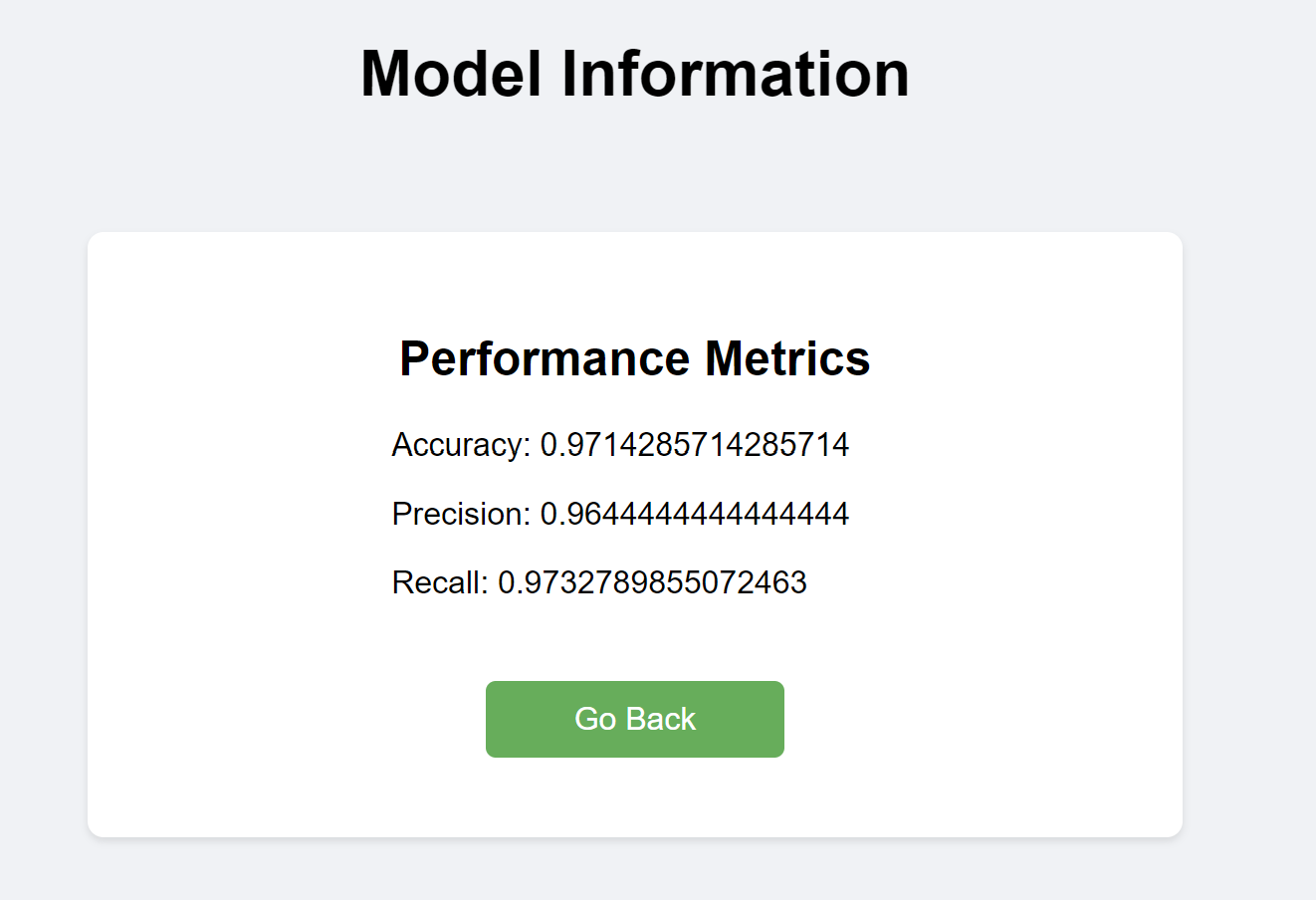
Model Insights: Reveals performance metrics of our top-performing model.
Inspiration
Our journey began with a simple yet powerful realization: early detection is crucial in the fight against breast cancer, yet access to early diagnosis tools is limited for many. Inspired by stories of individuals affected by late diagnoses, we envisioned an AI-powered solution that could bridge this gap, making early detection more accessible and reliable.
It's not just an app; it's a testament to our belief in leveraging technology for social good, aimed at empowering both doctors and patients with early diagnosis tools. Our journey is far from over, but every step forward is a step closer to changing the landscape of breast cancer detection.
What it does
Our model for breast cancer prediction leverages eight specific features as predictors: 'Clump Thickness', 'Uniformity of cell size', 'Uniformity of cell shape ', 'Marg' (Marginal adhesion), 'Epith' (single epithelial cell size), 'b1'(bare nuclei), 'nucleoli'(normal nucleoli), and 'Mitoses'. These features were selected based on their potential to indicate abnormal cell growth and characteristics associated with breast cancer. By analyzing these predictors, the model provides an assessment of the likelihood of breast cancer presence in patients.
How we built it
The development process was anchored on a dataset available on Kaggle (https://www.kaggle.com/datasets/marshuu/breast-cancer), which provided a rich source of labeled data for training and testing. The dataset included detailed records with the selected features, enabling a focused approach to model training. Each feature contributes unique insights into cell behaviors and characteristics that are crucial for breast cancer diagnosis. We have also used the Support Vector Machine(SVM) to build the model because SVM's is very effective in handling high-dimensional data and its capability for implementing complex decision boundaries. SVM is also particularly adept at classifying complex datasets where the relationship between the features and the outcome is not linear. After the training stage, we have used the cross validation to verify the effectiveness of our model.
Challenges we ran into
One of the challenge is to determine the most predictive features and how to best preprocess them for the SVM model required rigorous analysis and experimentation. Another challenge is tuning the SVM hyperparameters, such as the kernel type, regularization parameter (C), and the kernel coefficient (gamma), to achieve the best model performance based on the prediction score.
Accomplishments that we're proud of
We have successfully applied an SVM model to the breast cancer prediction task, which is both sophisticated and highly relevant for clinical applications. We have also achieved notable accuracy and precision in our model's predictions.
What we learned
The critical role of feature selection in building effective machine learning models, especially in healthcare applications where interpretability and precision are paramount. The strengths and limitations of SVM in healthcare predictive analytics, including its sensitivity to feature scaling and the importance of parameter tuning.
What's next for Breast Cancer Prediction
Working closely with doctors to came up with better solution to reduce the paper work of doctors. Exploring ensemble methods that combine SVM with other machine learning algorithms to improve prediction accuracy and reliability. Enhancing the model with patient feedback and clinical trial results to refine its predictive capabilities and ensure it aligns with real-world healthcare outcomes.



Log in or sign up for Devpost to join the conversation.