-
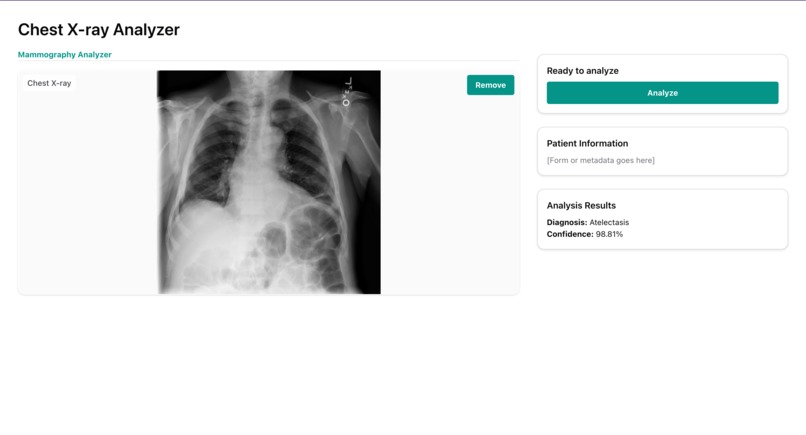
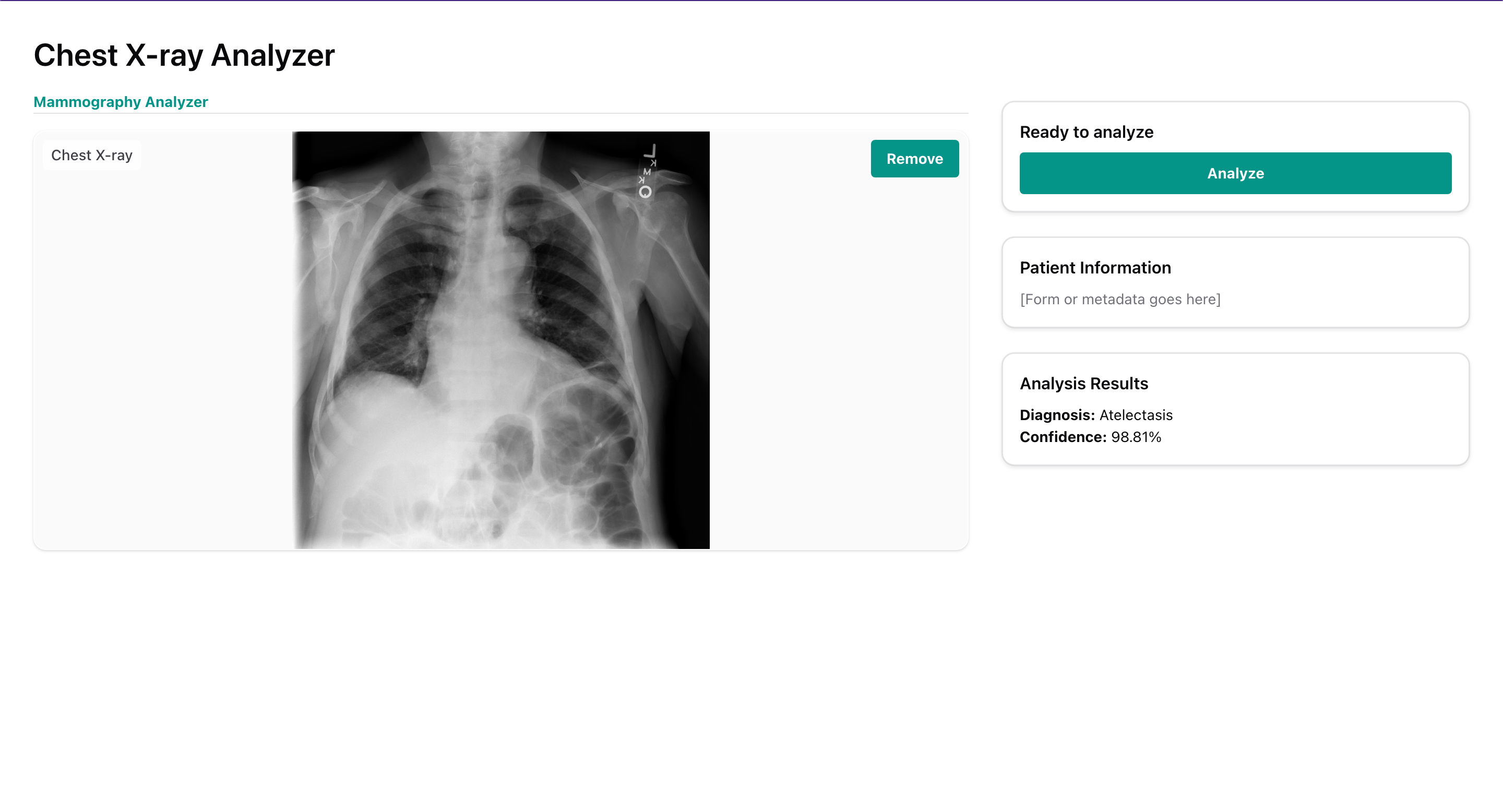
Example input and output for chest X Ray
-
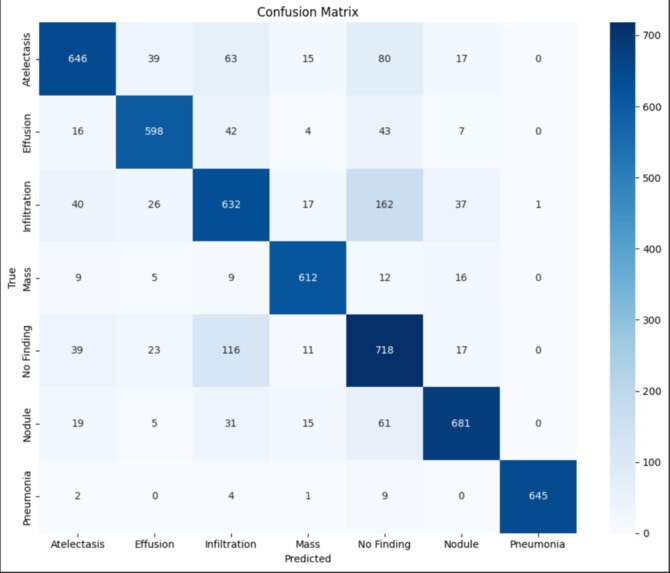
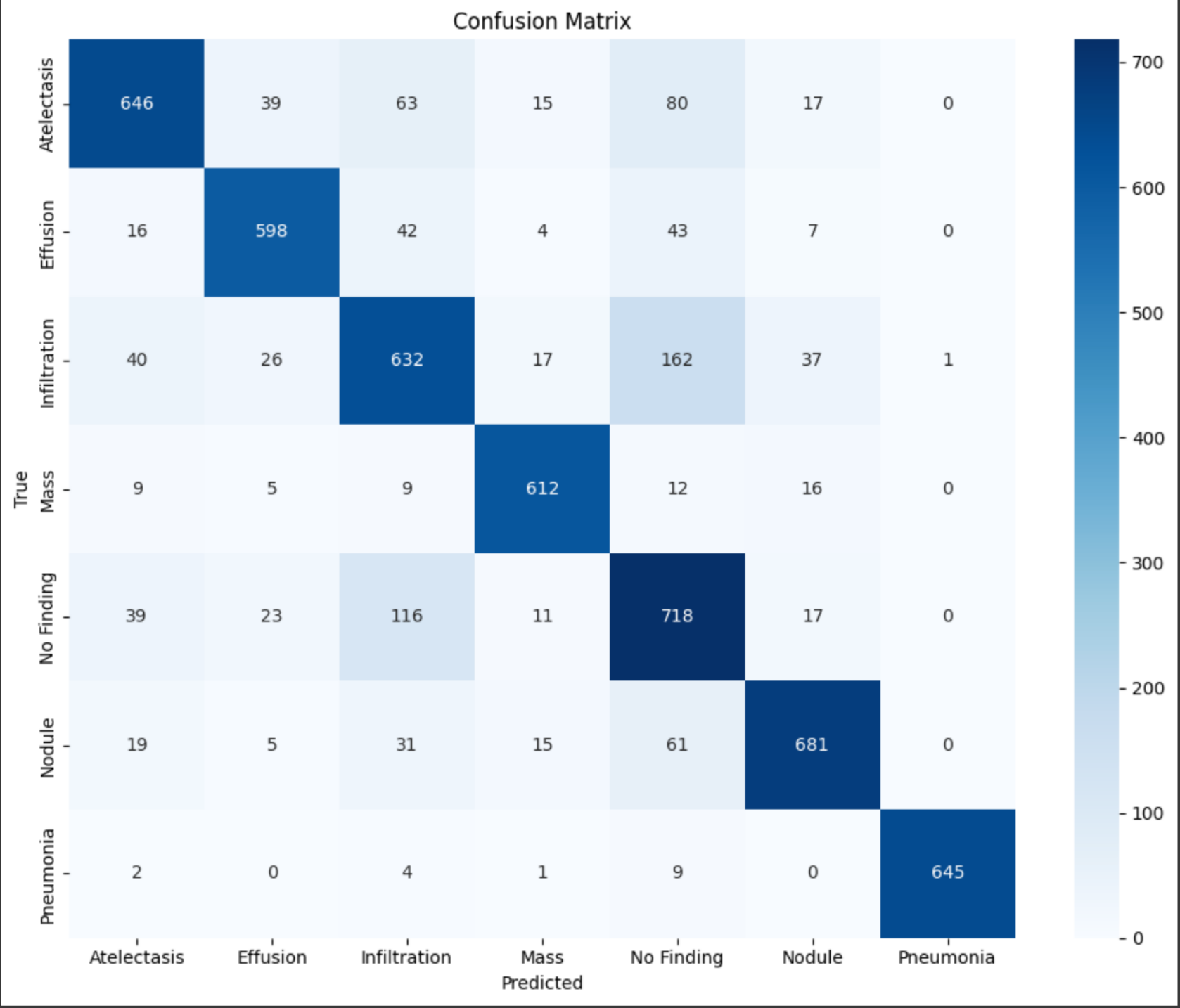
X Ray Model Confusion Matrix
-
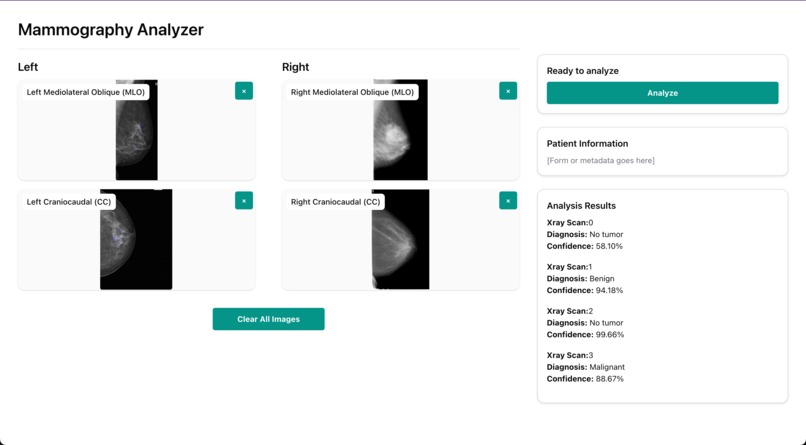
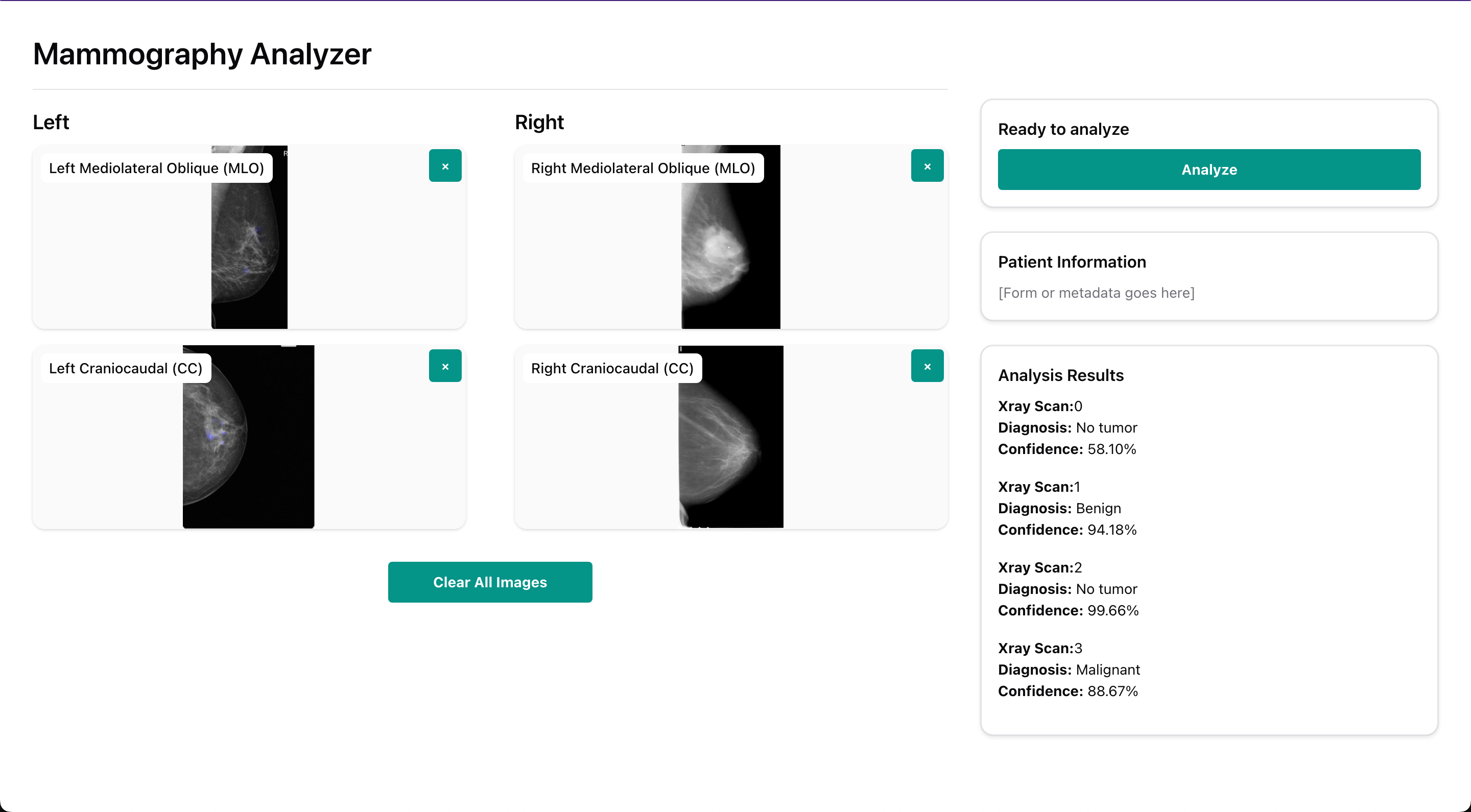
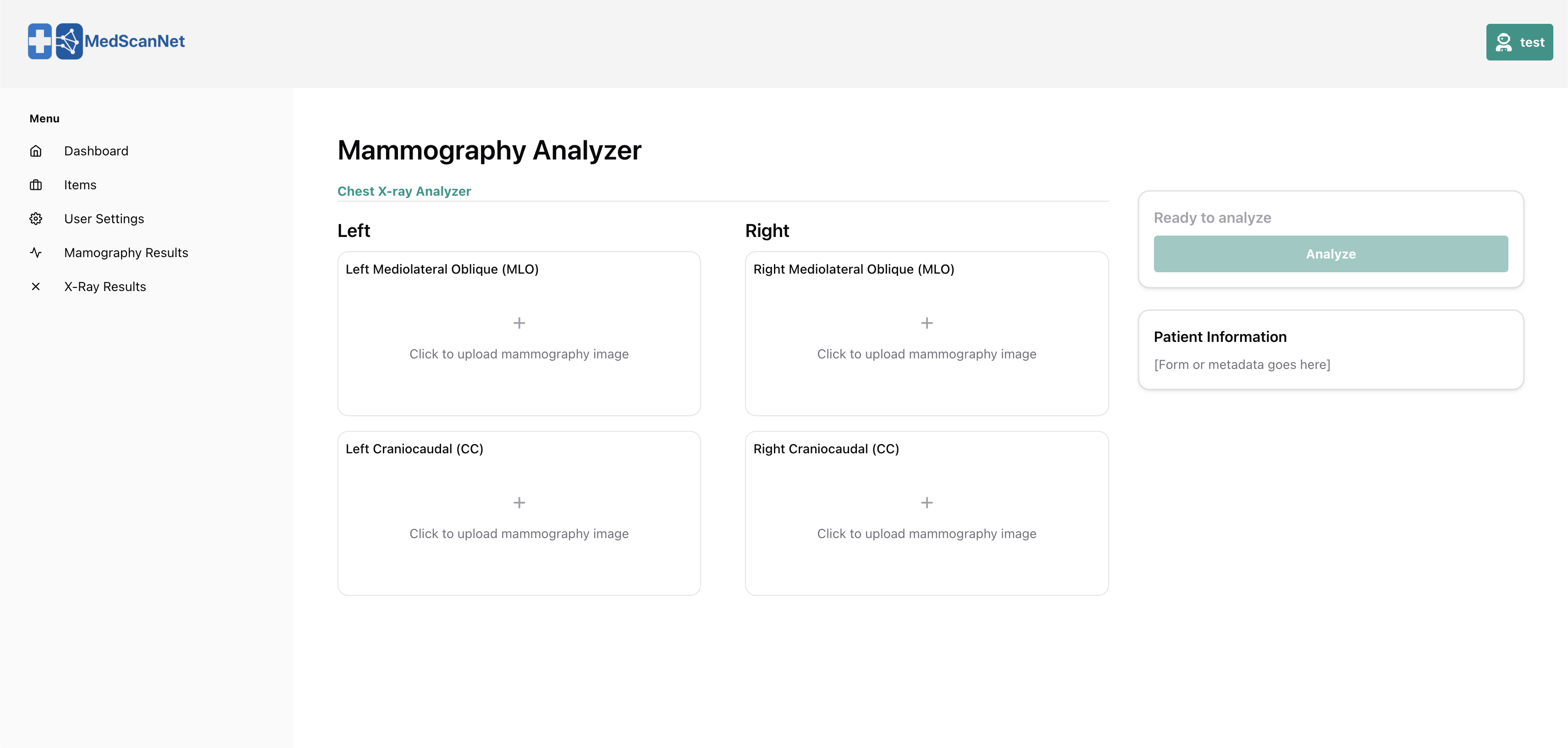
Example input and output for mammogram analysis
-
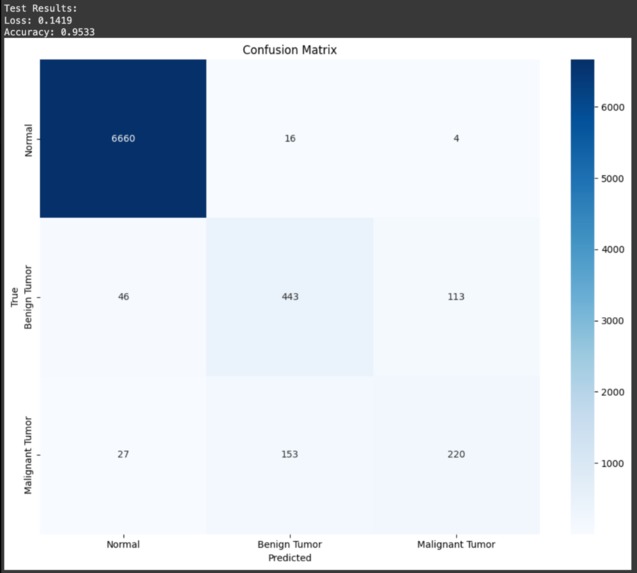
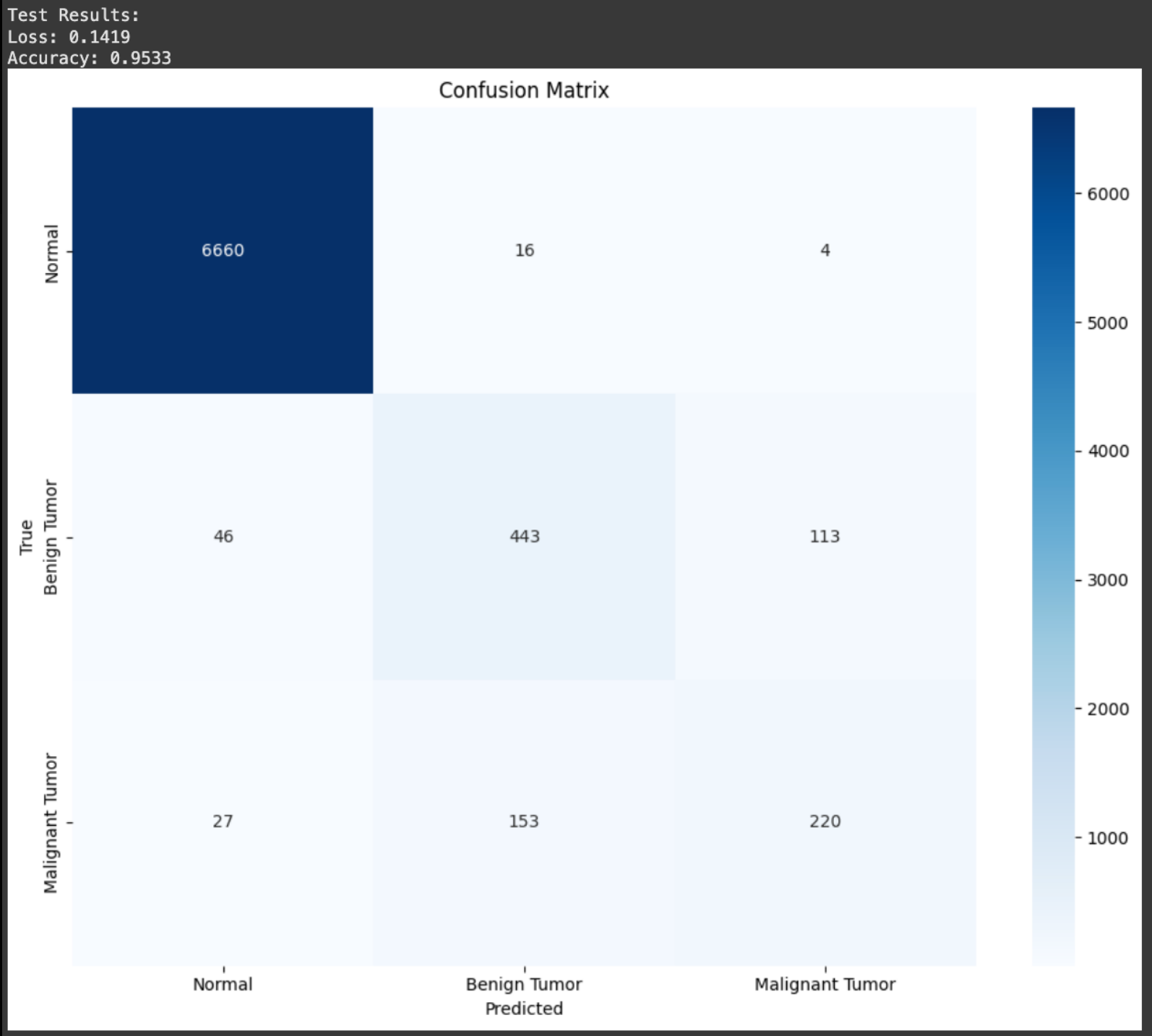
Breast Cancer Confusion Matrix
-
Background
Our inspiration stemmed from a personal journey—one of our team members had a parent diagnosed with breast cancer, igniting a passionate drive to advance Computer-Aided Diagnosis (CAD). Initially focusing on mammography scans for tumor detection, our project evolved to classify tumors as benign or malignant. Expanding further, we integrated chest X-ray analysis to diagnose conditions like Atelectasis, Effusion, and Pneumonia.
What it does
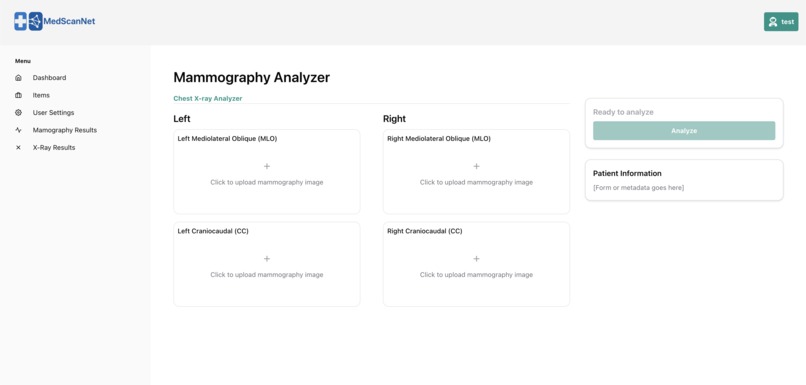
Our web application features two distinct functionalities: one for uploading mammography scans and another for chest X-rays. The mammography page detects tumors and classifies them as benign or malignant. Similarly, the chest X-ray page diagnoses conditions from a set of seven possibilities, including Atelectasis and Mass.
How we built it
We leveraged PyTorch on Google Colab with A100 GPUs for training our models. Mammography data from CBIS-DDMS and chest X-ray data from NIH and pneumonia-specific datasets were used. Addressing data imbalance, we employed image augmentation techniques such as flipping, rotation, and contrast adjustment.
Challenges we ran into
Managing data imbalance posed significant challenges, initially biasing our models towards the majority class. Overcoming this, we learned and implemented image augmentation strategies on the fly during the hackathon.
Accomplishments that we're proud of
Achieving a 95% accuracy in classifying mammography scans for tumor presence and expanding to a robust seven-class classification for chest X-rays within the hackathon timeframe showcases our team's efficiency and adaptability.
What we learned
Time management emerged as a critical lesson in the hackathon environment, where training ML models under time constraints demanded strategic prioritization and compromise on precision.
What's next for Breast Cancer Image Analysis
Future plans involve expanding chest X-ray datasets, exploring advanced loss functions for enhanced accuracy and recall, and integrating more modern techniques to further refine our models.

Log in or sign up for Devpost to join the conversation.