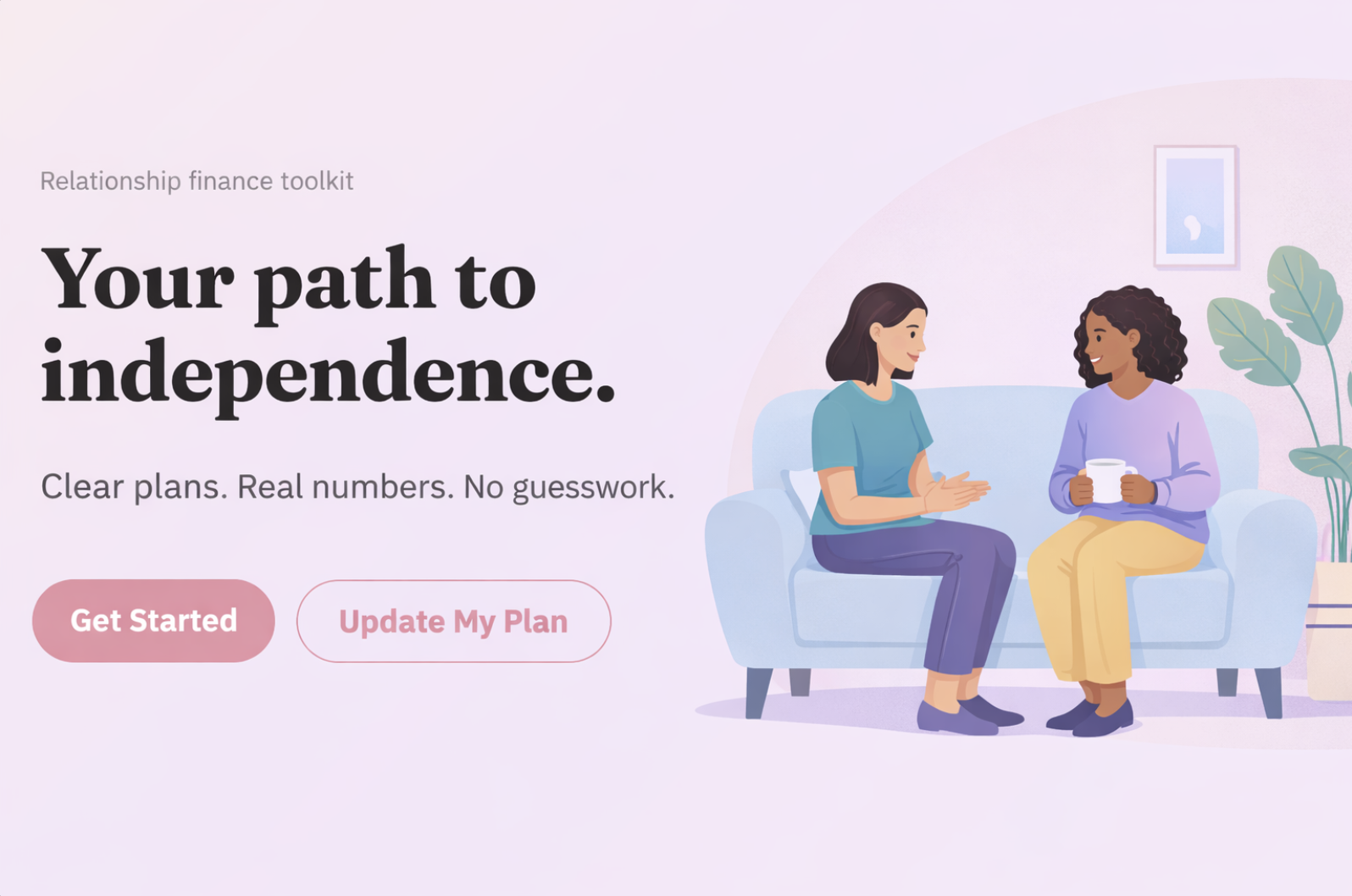
BreakEven: Relationship Finance Toolkit
Product Overview
One-liner: A relationship finance toolkit that helps women split fairly, separate safely, and plan an exit with clear steps—powered by simulated banking data (Nessie) and AI explanations.
Technologies Used
Languages: TypeScript, JavaScript (ES6+), HTML5, CSS3
Frameworks: Next.js (App Router), React, Node.js (Express)
Styling: Tailwind CSS
Database: MongoDB (Atlas)
APIs: Nessie (Capital One Simulated Banking API), OpenRouter (AI/LLM Integration)
Cloud & Platforms: Vercel (Frontend Hosting), Render (Backend Hosting), MongoDB Cloud
Design & Workflow: Lucide React (Icons), Zod (Schema Validation), Postman
Inspiration
The inspiration for BreakEven came from a sobering reality: financial dependence is one of the leading reasons women stay in unsafe or unhappy relationships. While many fintech apps focus on "wealth building" for couples, very few address the need for financial autonomy and safety planning.
We wanted to create a tool that recognizes that a "fair split" isn't always 50/50, and that having a personal "buffer" isn't about secrecy—it’s about security. We were inspired by the idea of transforming complex banking data into a simple, non-judgmental roadmap for independence.
What it does
BreakEven is a financial "GPS" for women in three specific modes:
Balance: Analyzes shared spending to recommend a split that is actually fair based on individual income levels.
Separate: Helps users carve out a "mine/yours/ours" structure while building a private savings buffer.
Exit: For users who need to leave, it calculates the exact cost of a "breakup" (security deposit + moving costs + emergency buffer) and provides two distinct timelines to reach that goal.
How we built it
We built the platform using a modern full-stack architecture. The Next.js frontend provides a calm, accessible user interface, while the Node.js backend handles the heavy lifting of data normalization. By integrating the Nessie API, we were able to work with realistic transaction data without requiring users to link sensitive personal bank accounts. We used OpenRouter to bridge the gap between raw numbers and human support, generating personalized checklists.
Challenges we ran into
One of our biggest hurdles was the Plan Generation Logic. We had to ensure the math was deterministic rather than relying on AI. Calculating the timelines required specific formulas:
Savings_Rate=∑(Income)−∑(Essential_Expenses)−(Joy_Budget) Months_to_Goal=⌈ Savings_Rate Target_Goal−Current_Buffer ⌉ Balancing the Joy_Budget in the Steady Plan was tricky—we had to write an algorithm that identified "non-essential but high-happiness" categories to ensure the user wouldn't burn out.
Accomplishments that we're proud of
The "Two-Plan" System: Successfully creating logic that offers both an aggressive "Fast" path and a sustainable "Steady" path.
Privacy-First Design: Implementing a "Quick Exit" button and ensuring the app functions without needing a partner's data.
AI Integration: Using LLMs for the explanation of the math, making the app feel like a supportive coach rather than just a calculator.
What we learned
We learned that financial data is deeply emotional. Building this project taught us that financial agency is a fundamental human right. Technically, we leveled up our skills in TypeScript type-safety across a full-stack monorepo and learned how to handle complex data streams from banking APIs while maintaining a responsive UI.
What's next for BreakEven
Legal Integration: Adding localized resources for legal aid and domestic violence support.
Predictive Analysis: Using machine learning to predict upcoming "bill spikes" so the exit timeline stays accurate.
Live Integration: Moving from simulated Nessie data to real-world Plaid integration.
Built With
- ai
- api
- backend
- css
- express.js
- figma
- frontend
- github
- javascript
- nessie
- next.js
- node.js
- npm
- openrouter
- package
- pnpm
- postman
- react
- render/railway
- tailwind
- typescript
- ui/ux)
- vercel

Log in or sign up for Devpost to join the conversation.