-
-
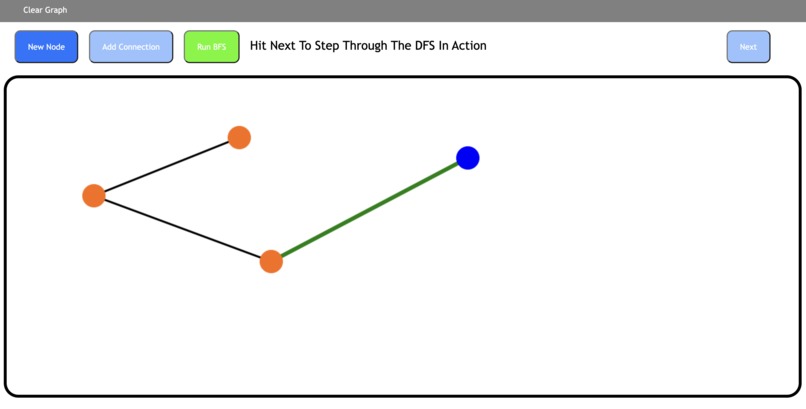
Breadth First Learn in action on a user created node graph!

Inspiration
Having Stanford CS teachers like Chris Piech has truly changed the way we learn about CS and AI. Yet, with new interests in AI due to innovation like Chat GPT, comes with a lack of technical infrastructure and visualization to help beginner coder understands algorithm. Rohan and I both personally struggled with understanding a specific algorithm: Breadth-First-Search at Stanford and seeked to find a way to explain it better to ourselves and others.
What it does
Breadth-First-Learn is a simple visual interface for beginning coders of all ages to learn specifically about the Breadth First Search algorithm through creating their own personal node structures and visual graphs.
How we built it
Using a combination of front head CSS and HTML code and javascript on the backend, we built a visual system to execute a Breadth first search algorithm.
Challenges we ran into
As we brainstormed this challenge, we struggled to figure out the best way to implement this project. Would users best benefit from a mobile application, a chrome extension? We ultimately decided that an easy to use website that teachers could use as a demo or students could bookmark could be the most useful.
Accomplishments that we're proud of
We are very proud of not only the process we took to gear our website to beginner user ease but also our end product. We incorporated a series of colorful visuals and took the time to learn new CSS stylings so that the algorithm would be clearly shown.
What we learned
We learned not only a lot about our partnership as a team but the higher complexity of building simple systems and visuals. It would have been easy to create a janky platform to "show" the algorithm yet instead we
What's next for Breadth-First-Learn!
Breadth-First-Learn is our first step in learning how to best visualize CS algorithms to create engaging experiences for beginner coders. We hope to incorporate similar codes and systems to visualize new and different algorithms in the future.

Log in or sign up for Devpost to join the conversation.