-
Brainstorming 1/4
-
Brainstorming 2/4
-
Brainstorming 3/4
-
Brainstorming 4/4
-
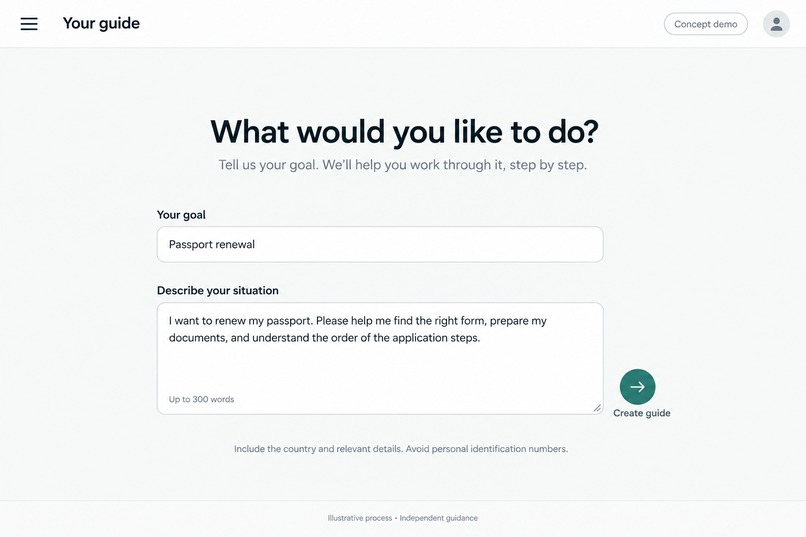
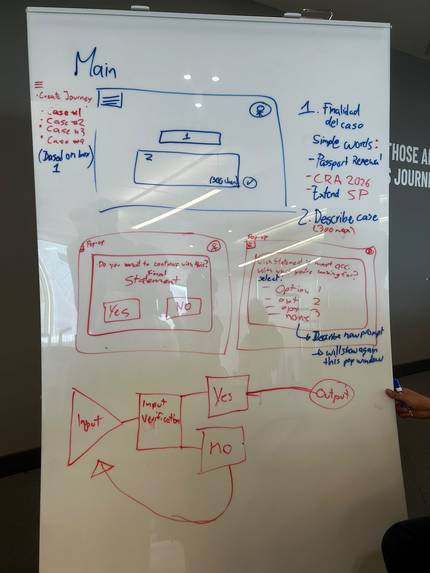
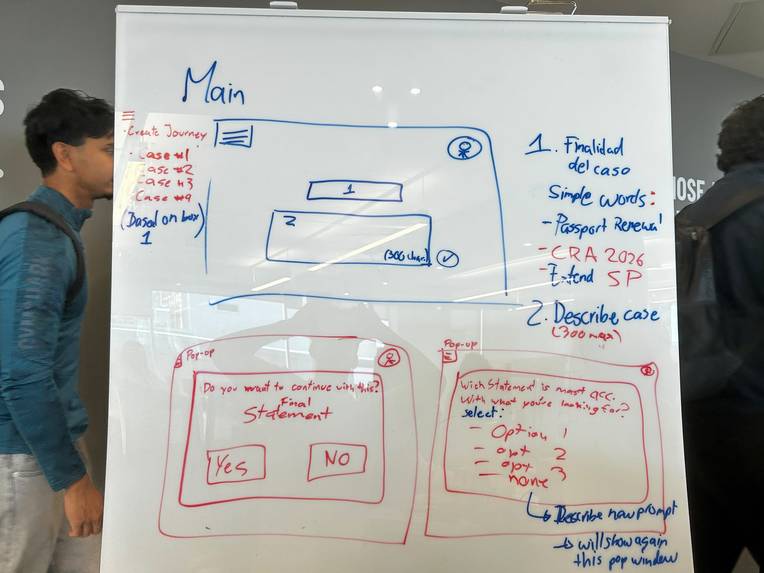
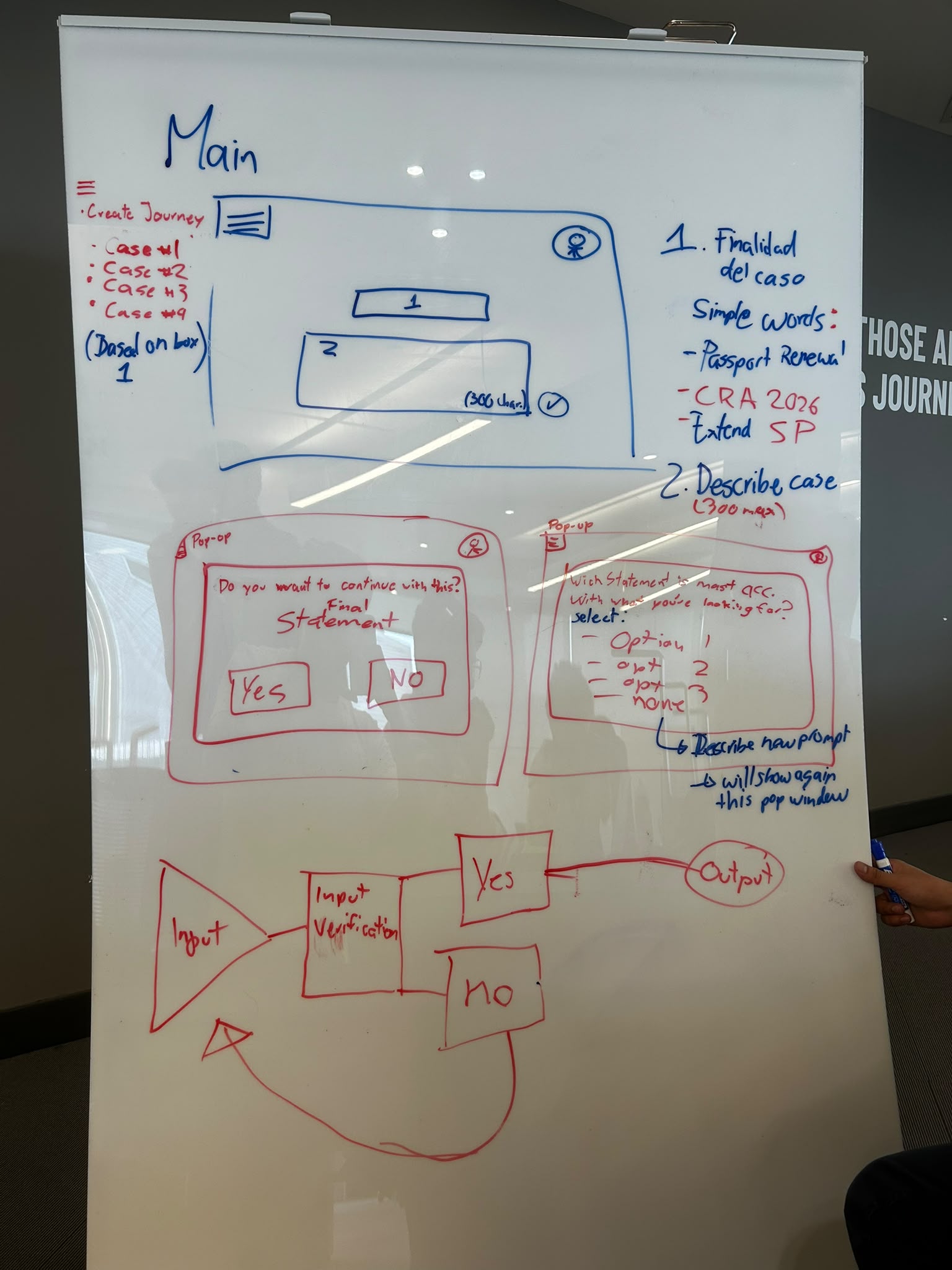
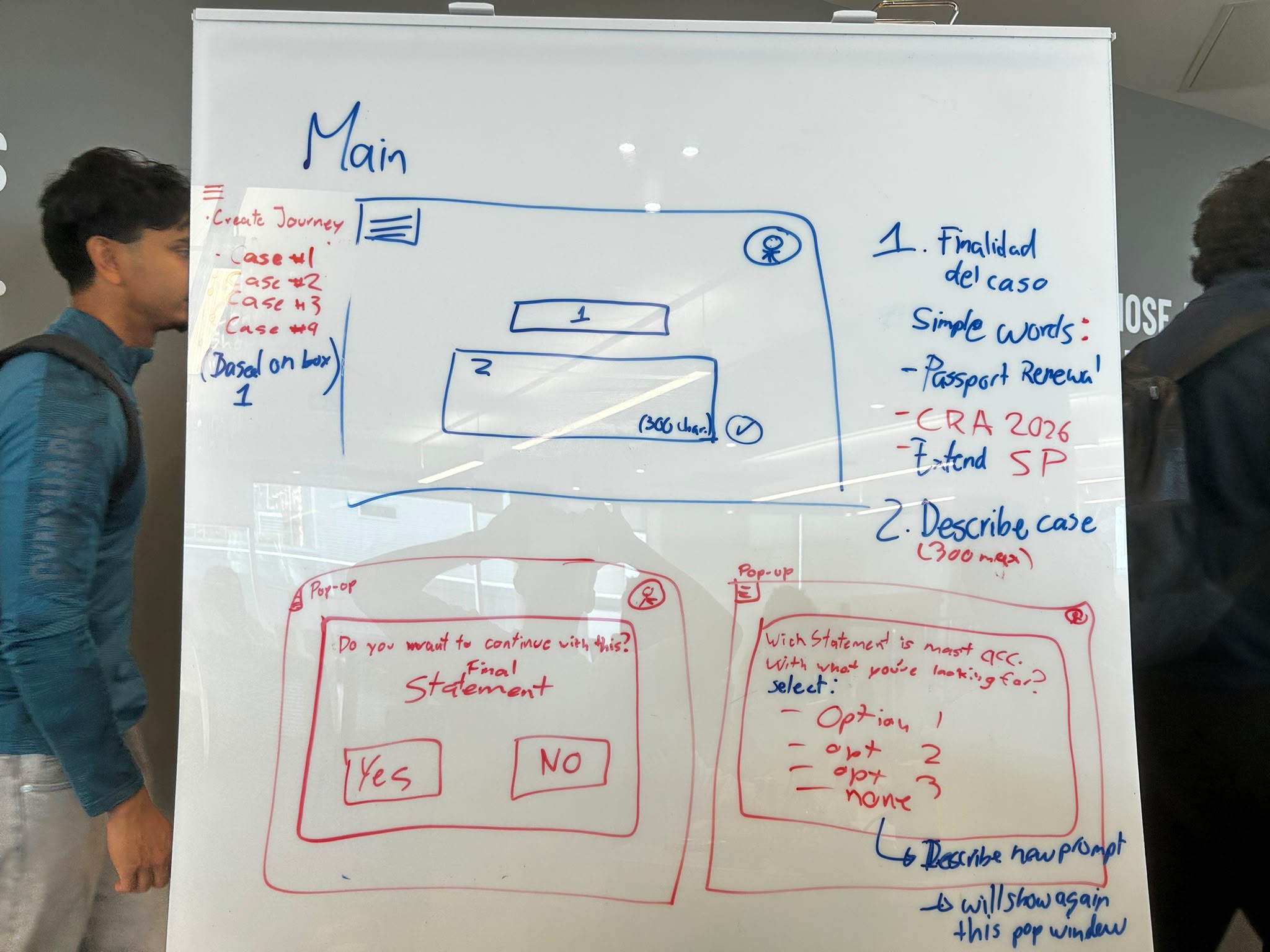
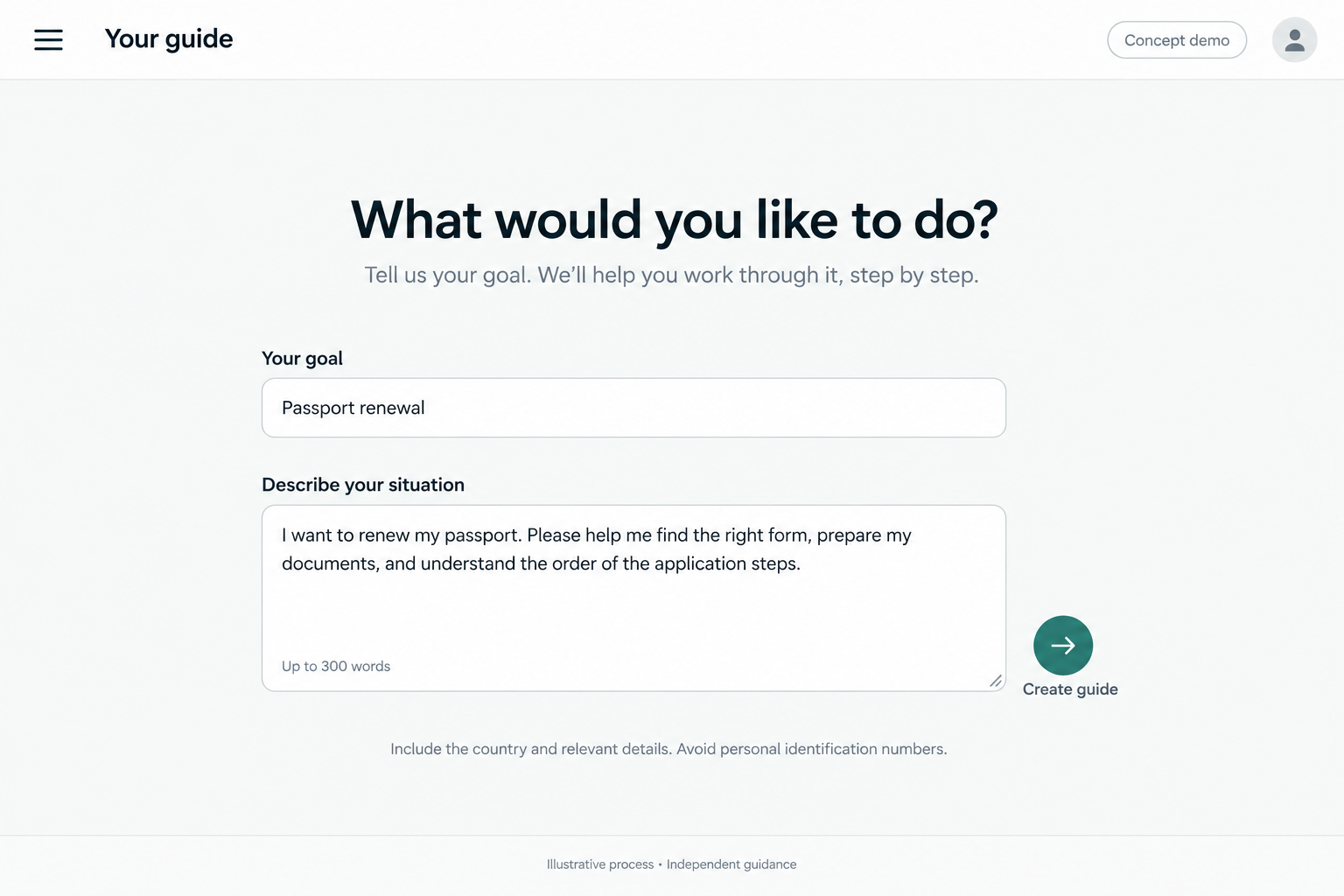
Users enter their goal and describe their situation to request a personalized procedural guide.
-
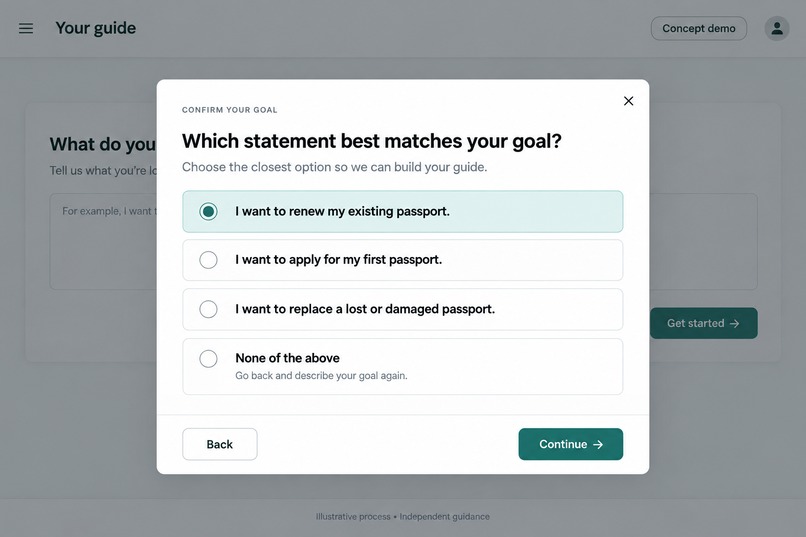
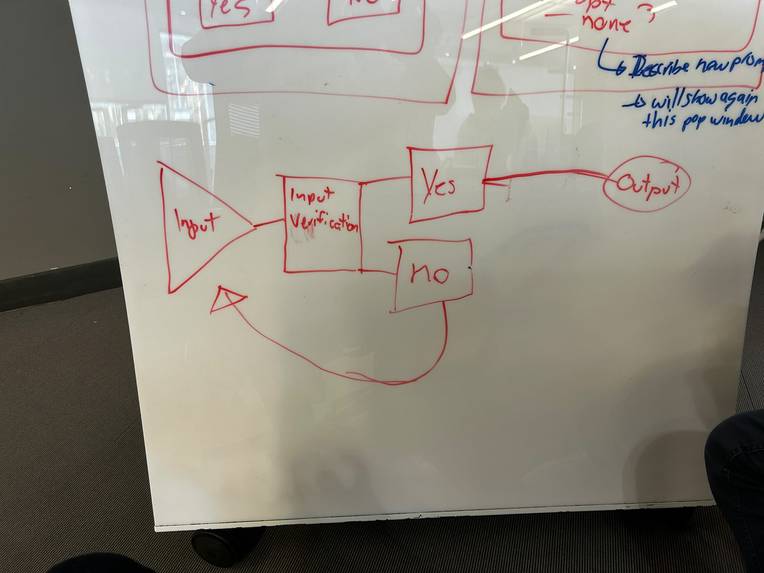
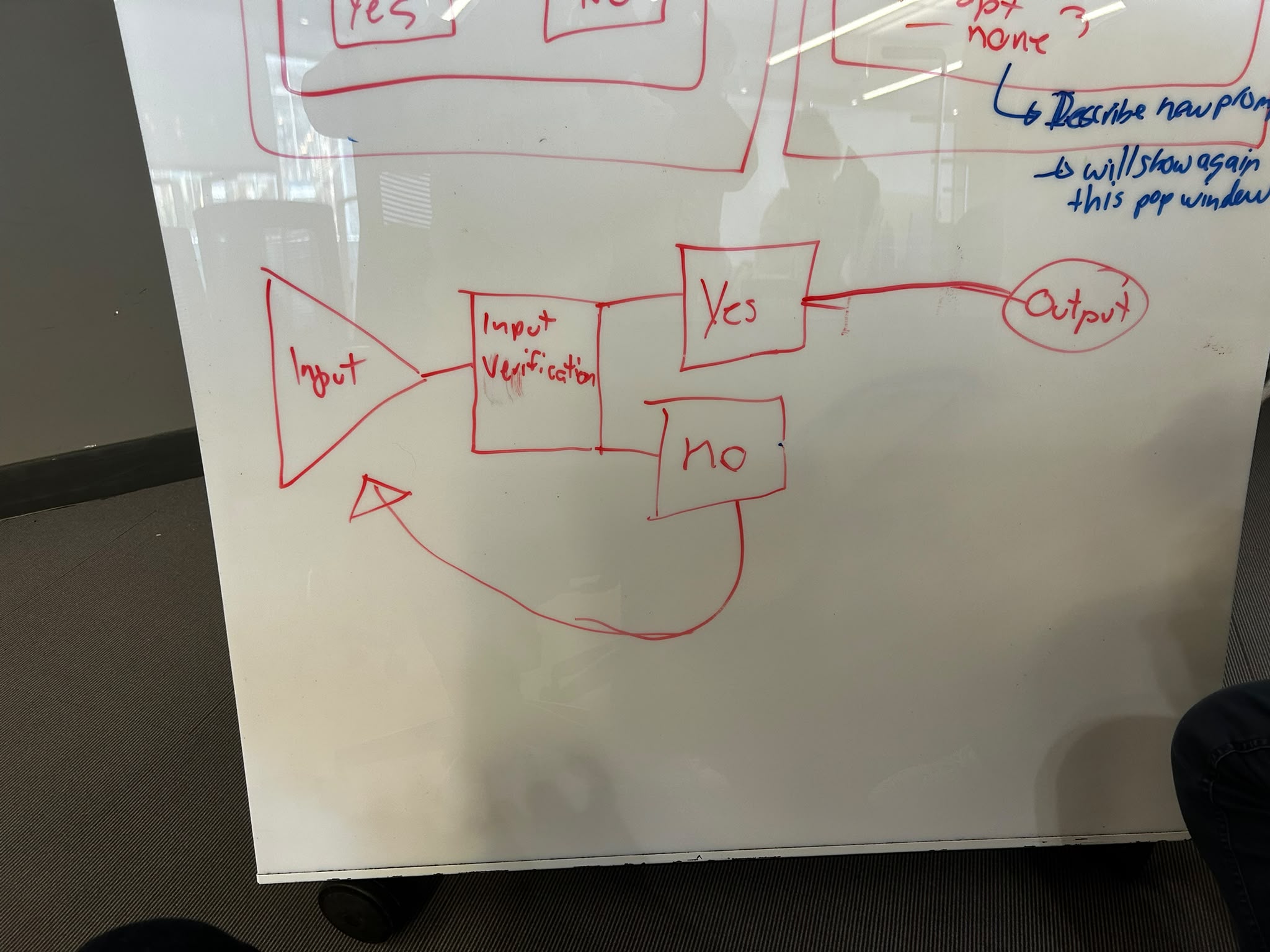
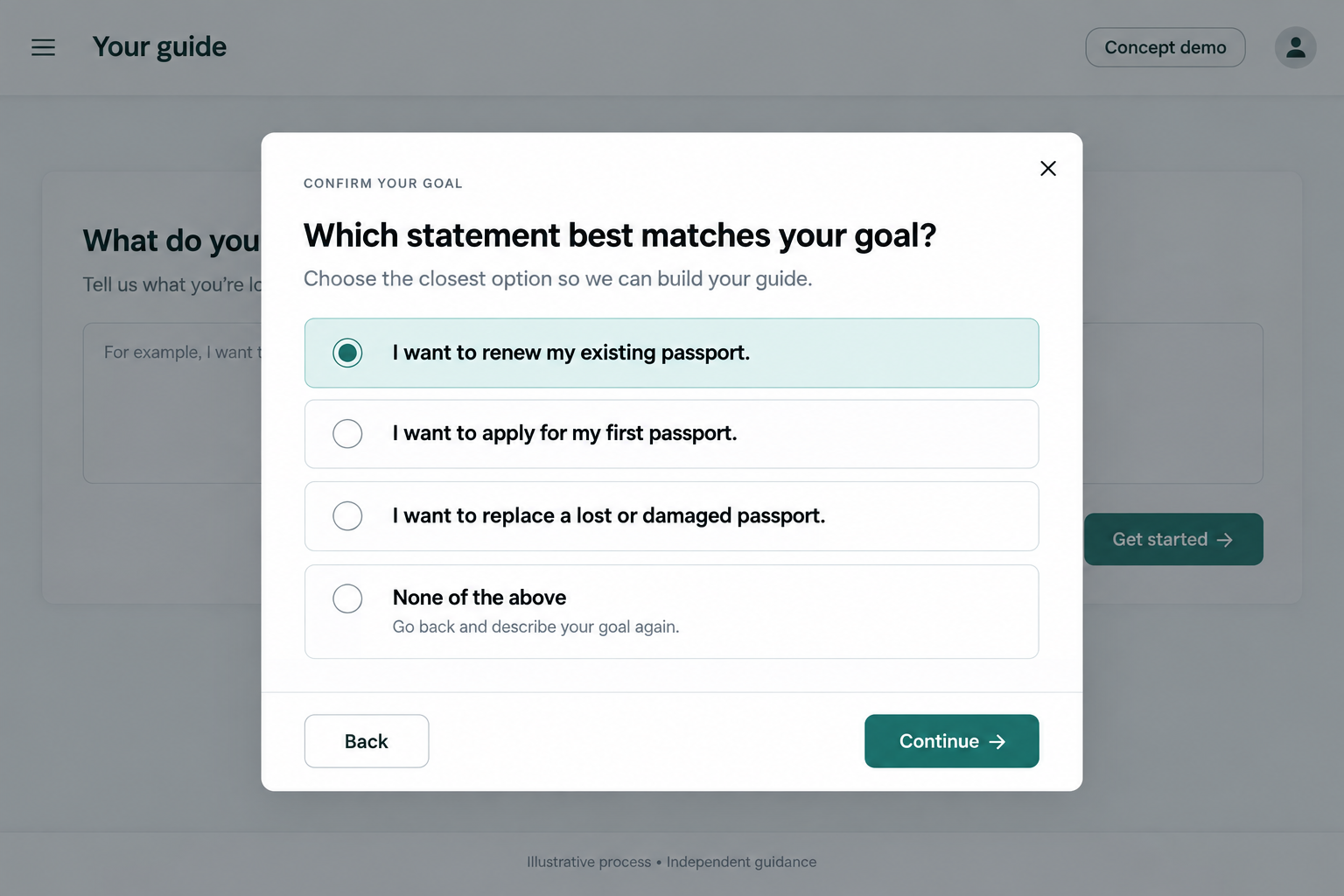
Users confirm the AI’s interpretation of their goal or return to revise their description.
-
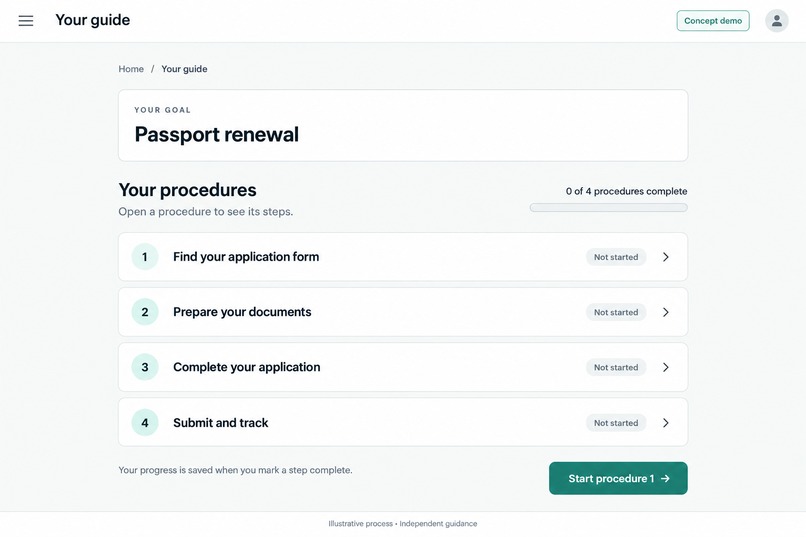
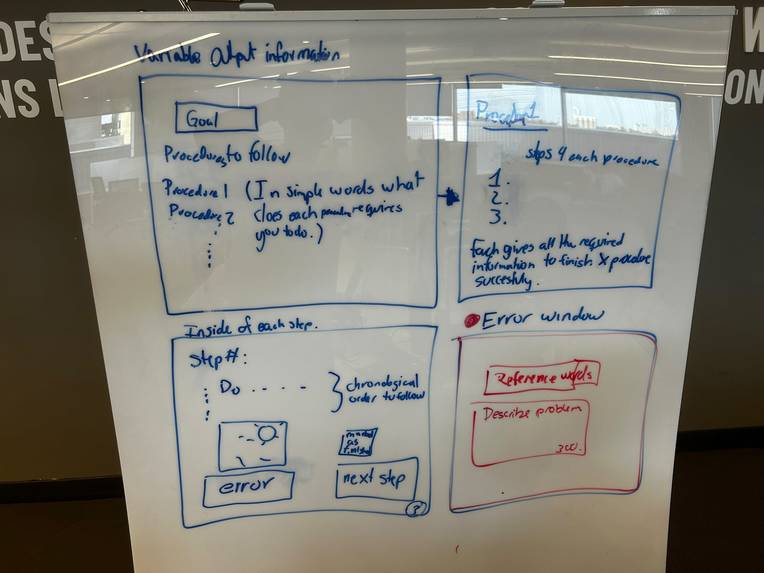
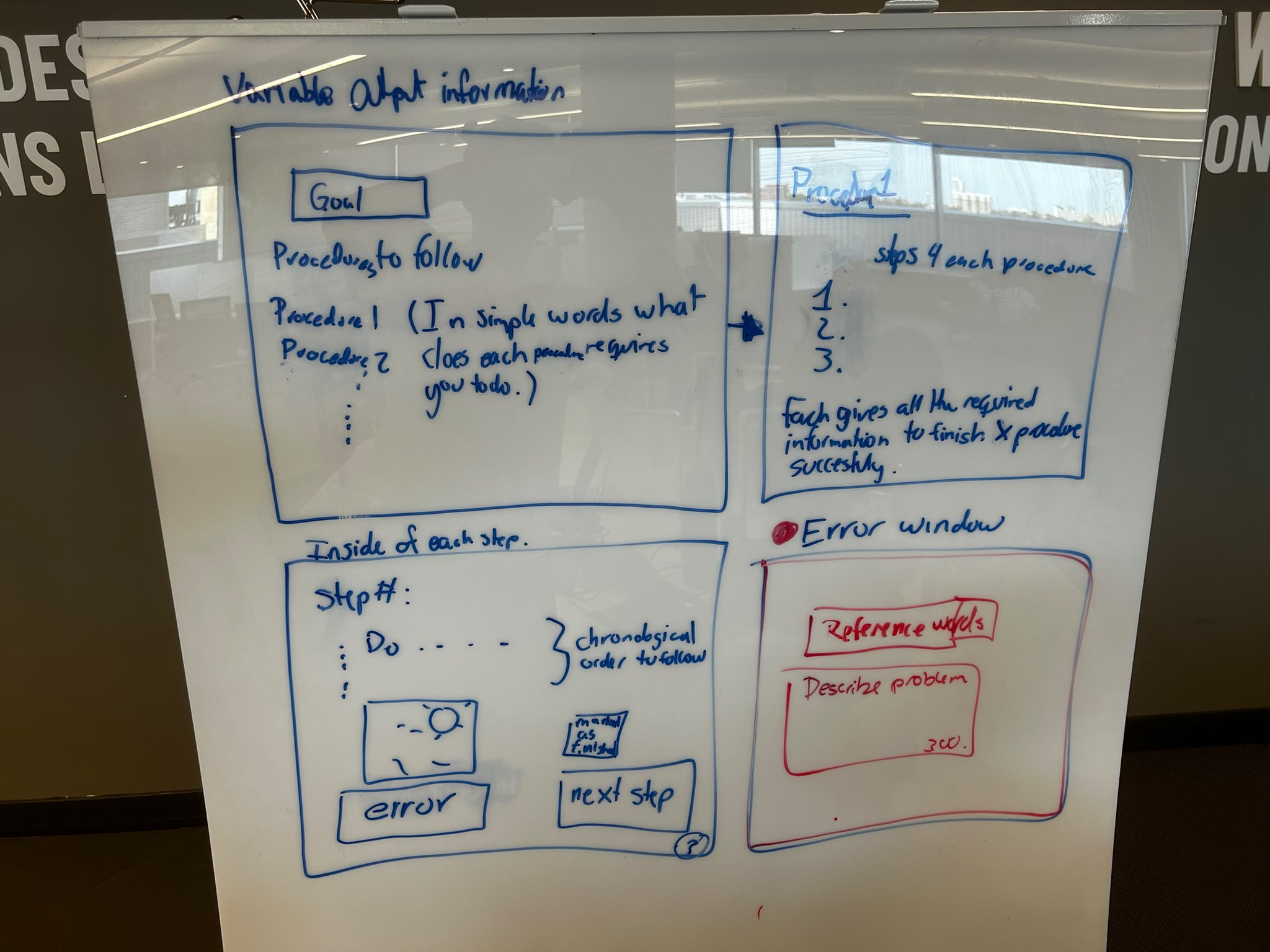
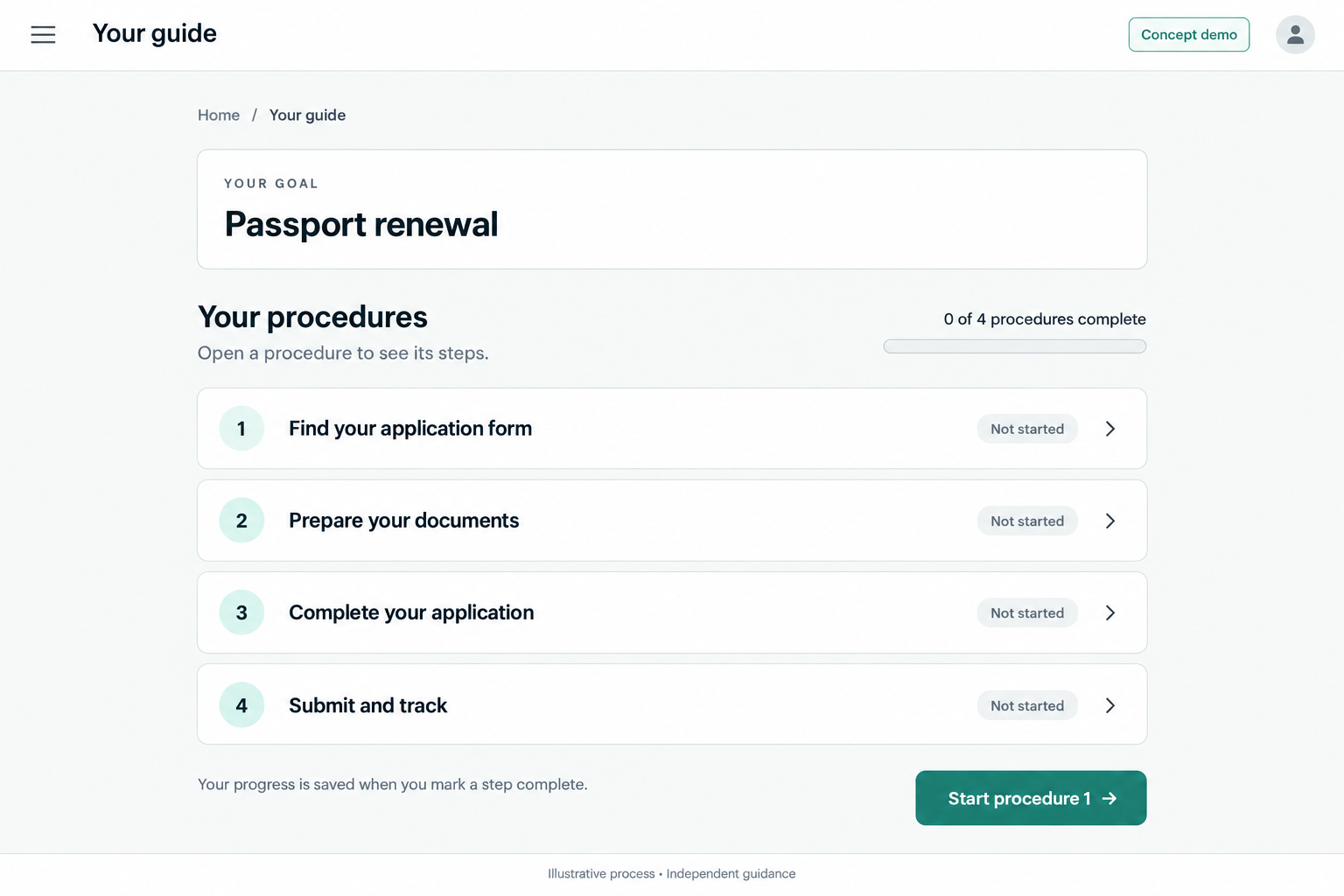
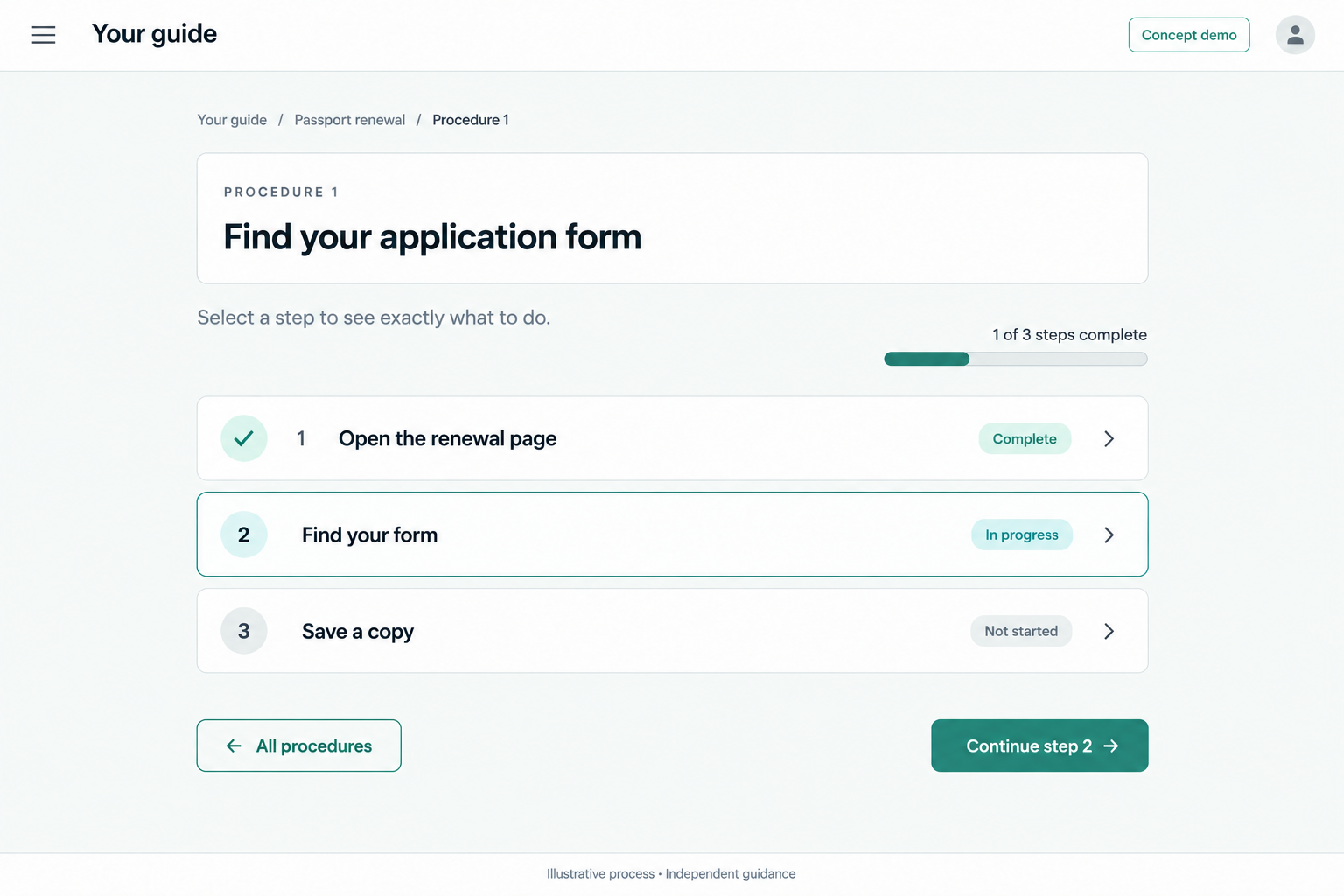
An ordered overview presents the main procedures and tracks progress toward the user’s goal.
-
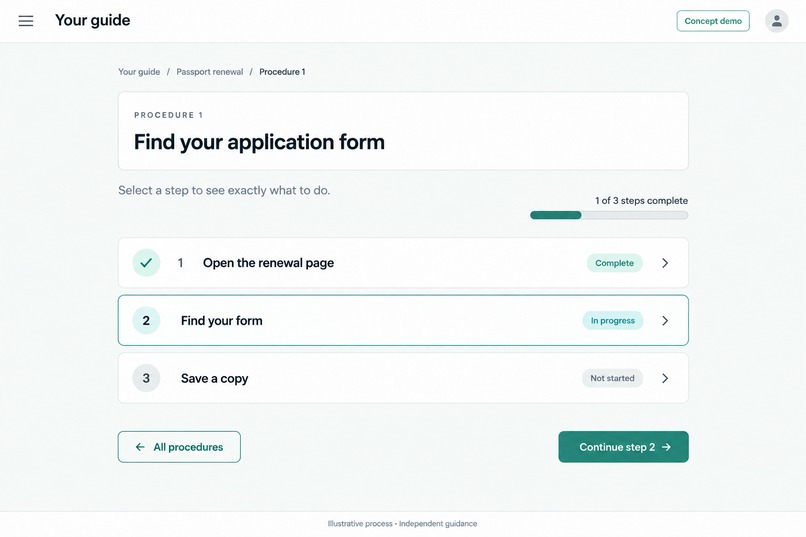
Each procedure contains selectable steps with indicators showing their completion status.
-
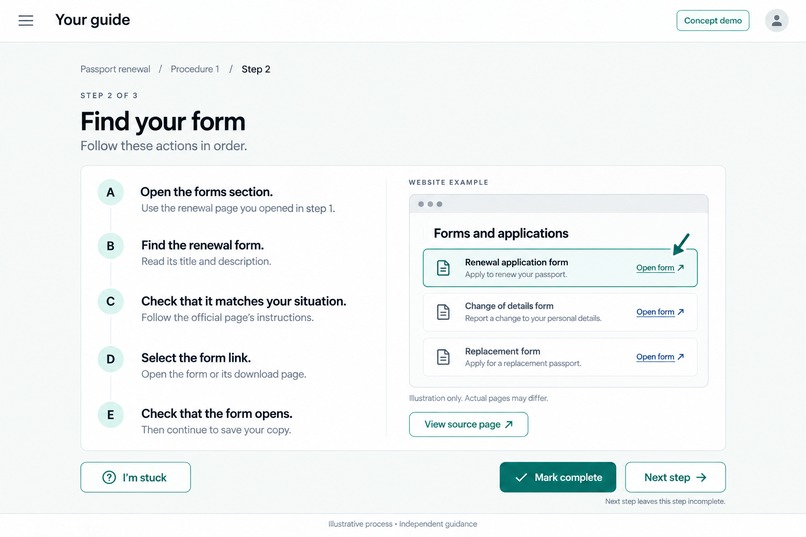
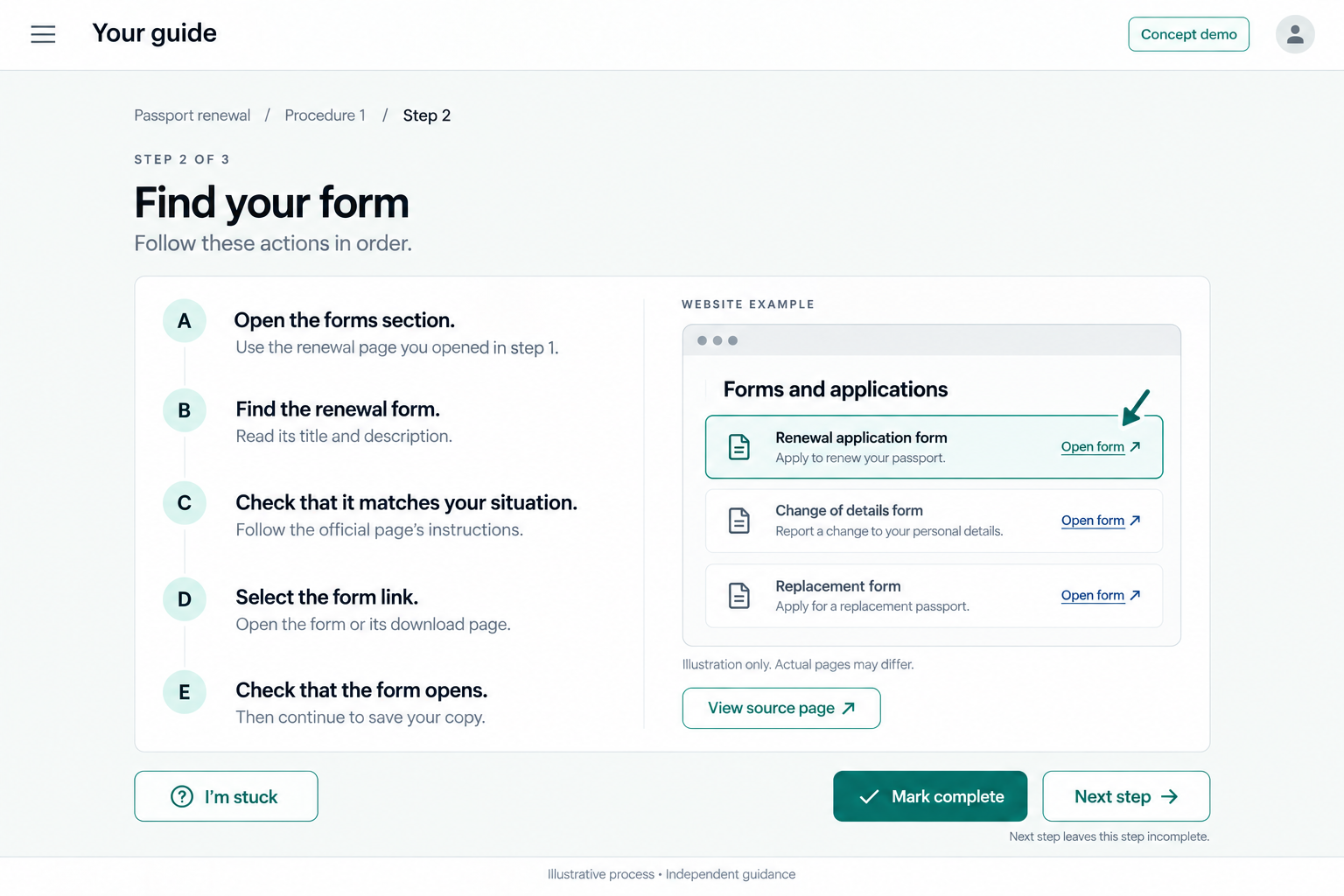
Detailed actions and a visual example guide users, with options to mark completion, continue, or request help.
-
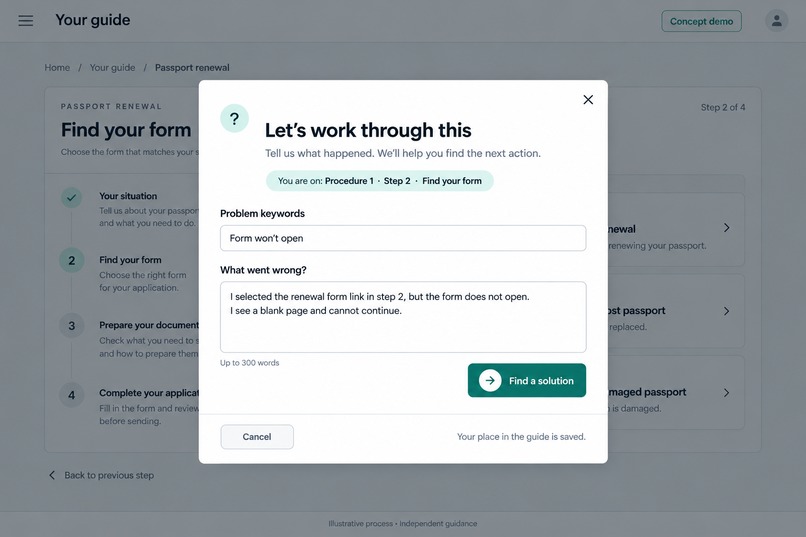
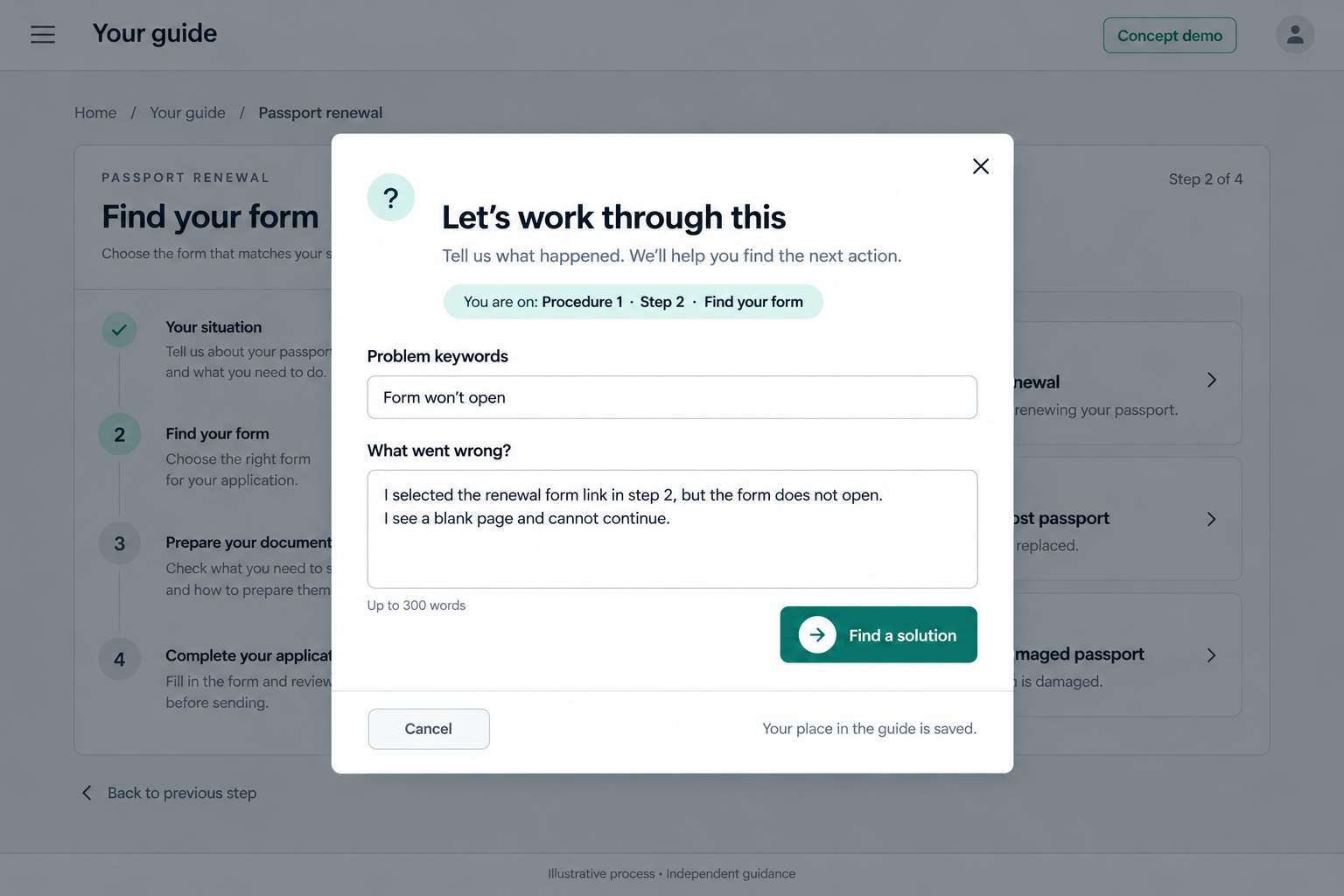
Users describe a problem while the interface preserves their current position in the guide.
-
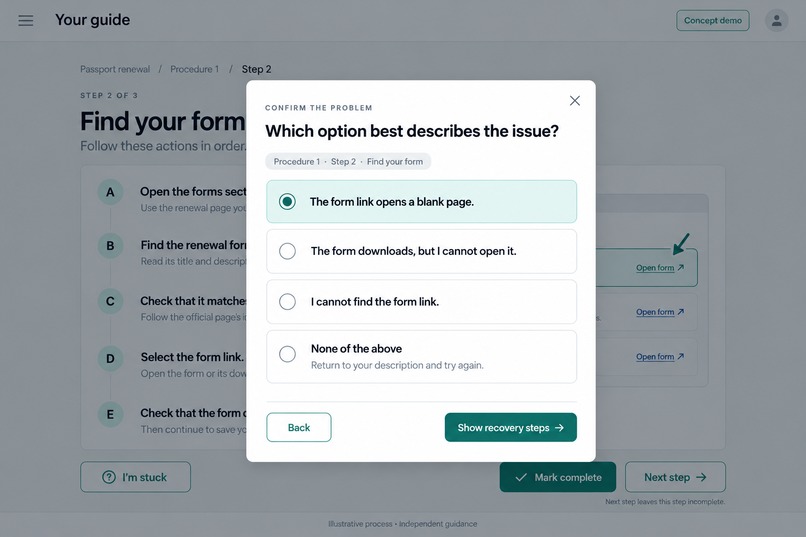
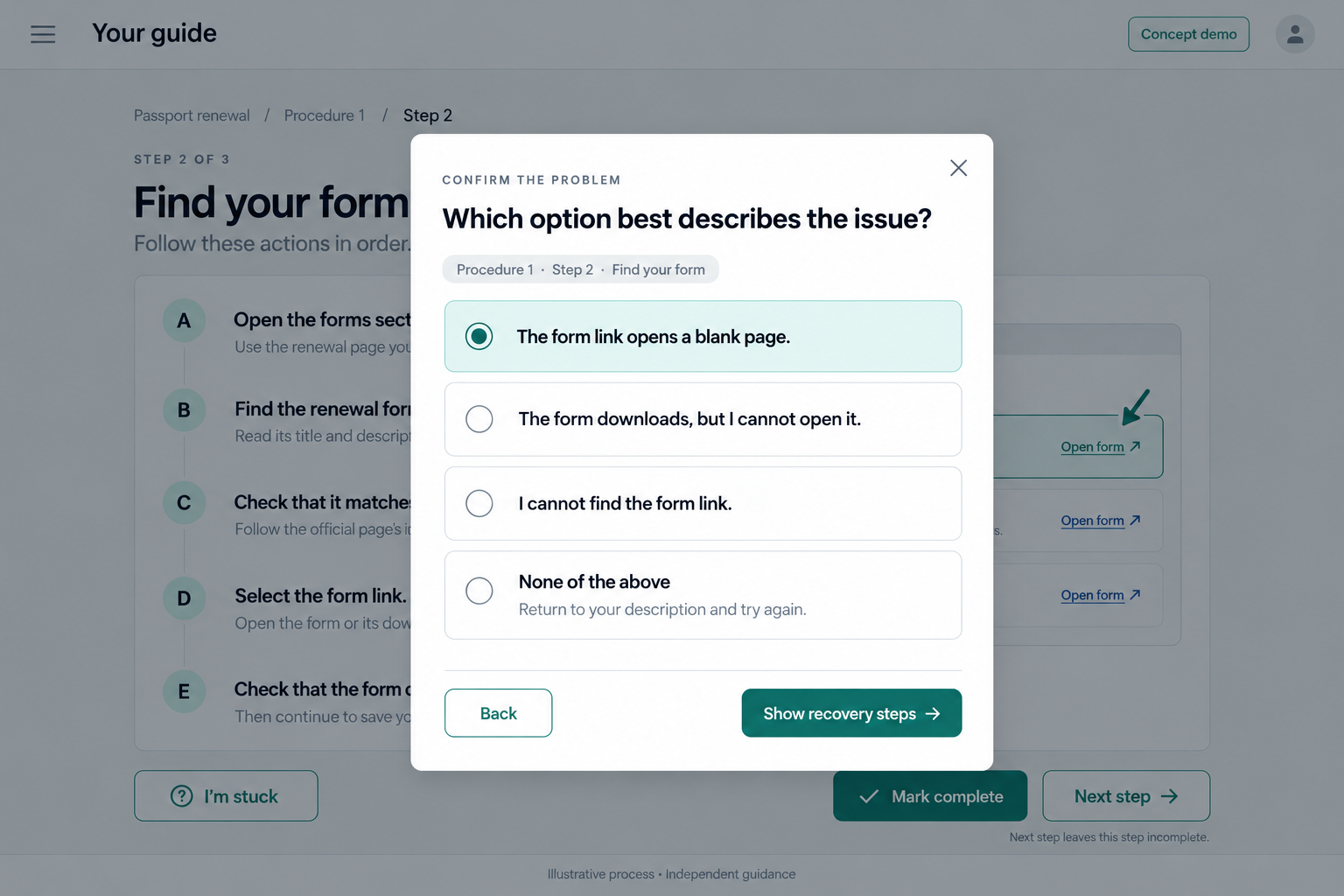
Users confirm the identified problem or revise their description before receiving recovery instructions.
-
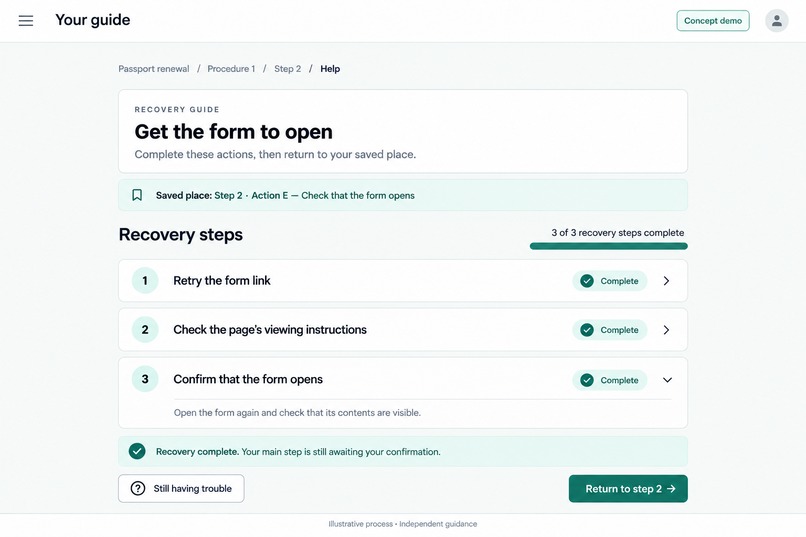
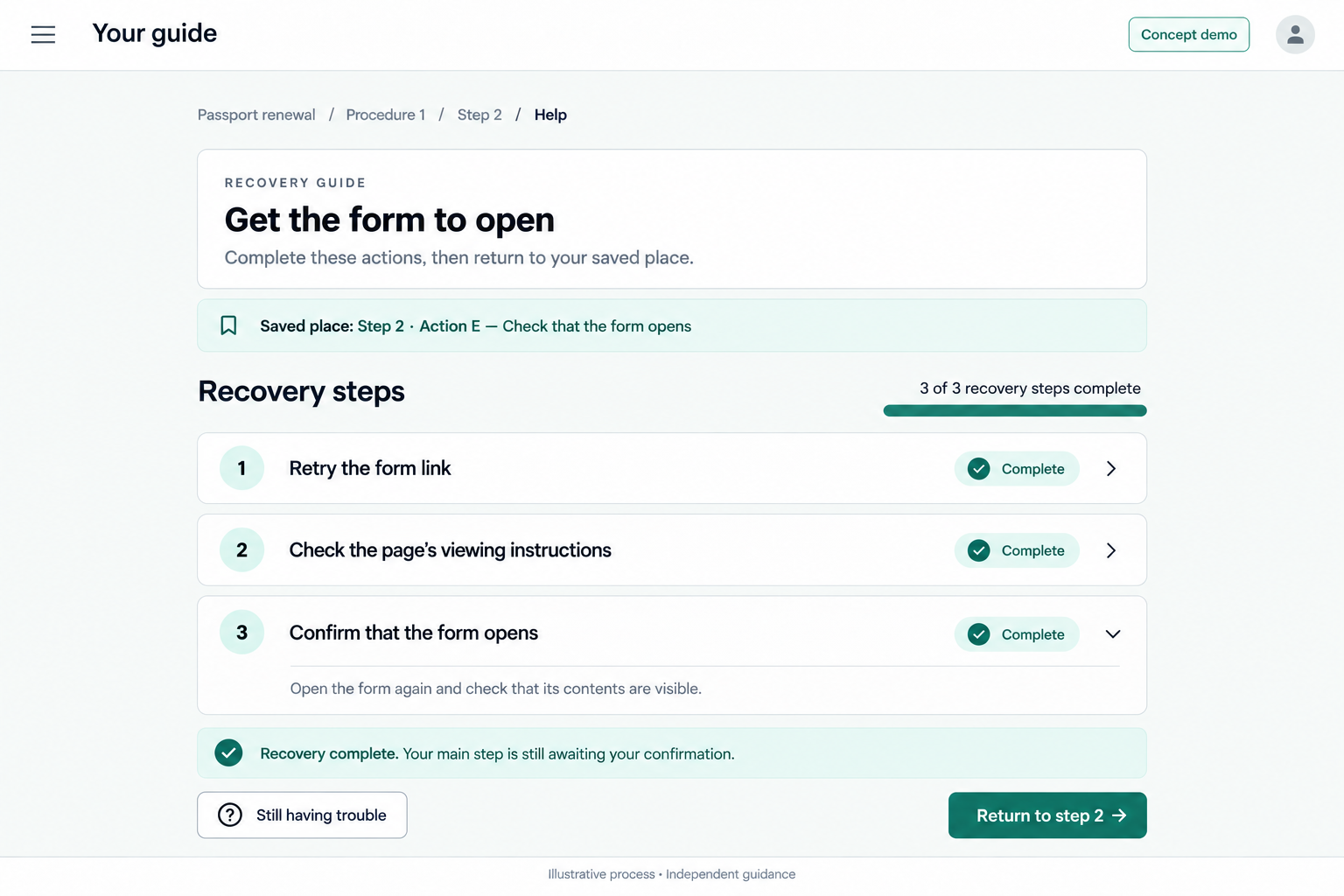
Recovery steps help resolve the issue and return users to their saved position in the main guide.
-
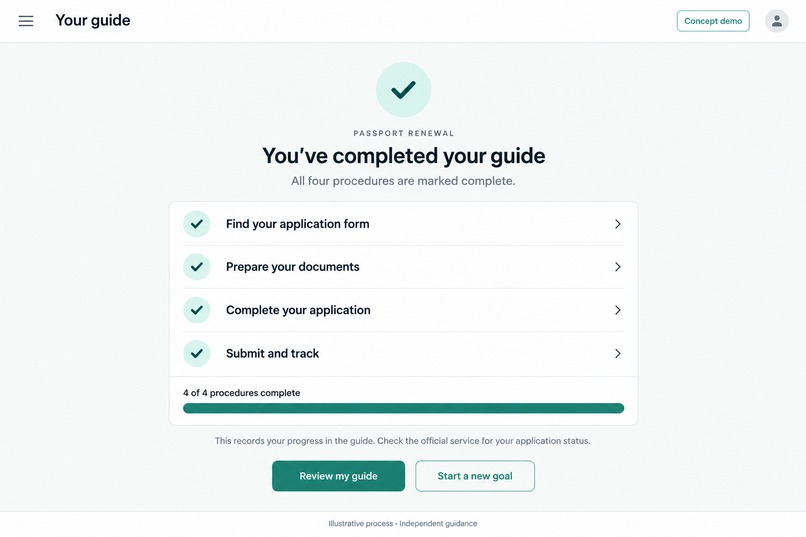
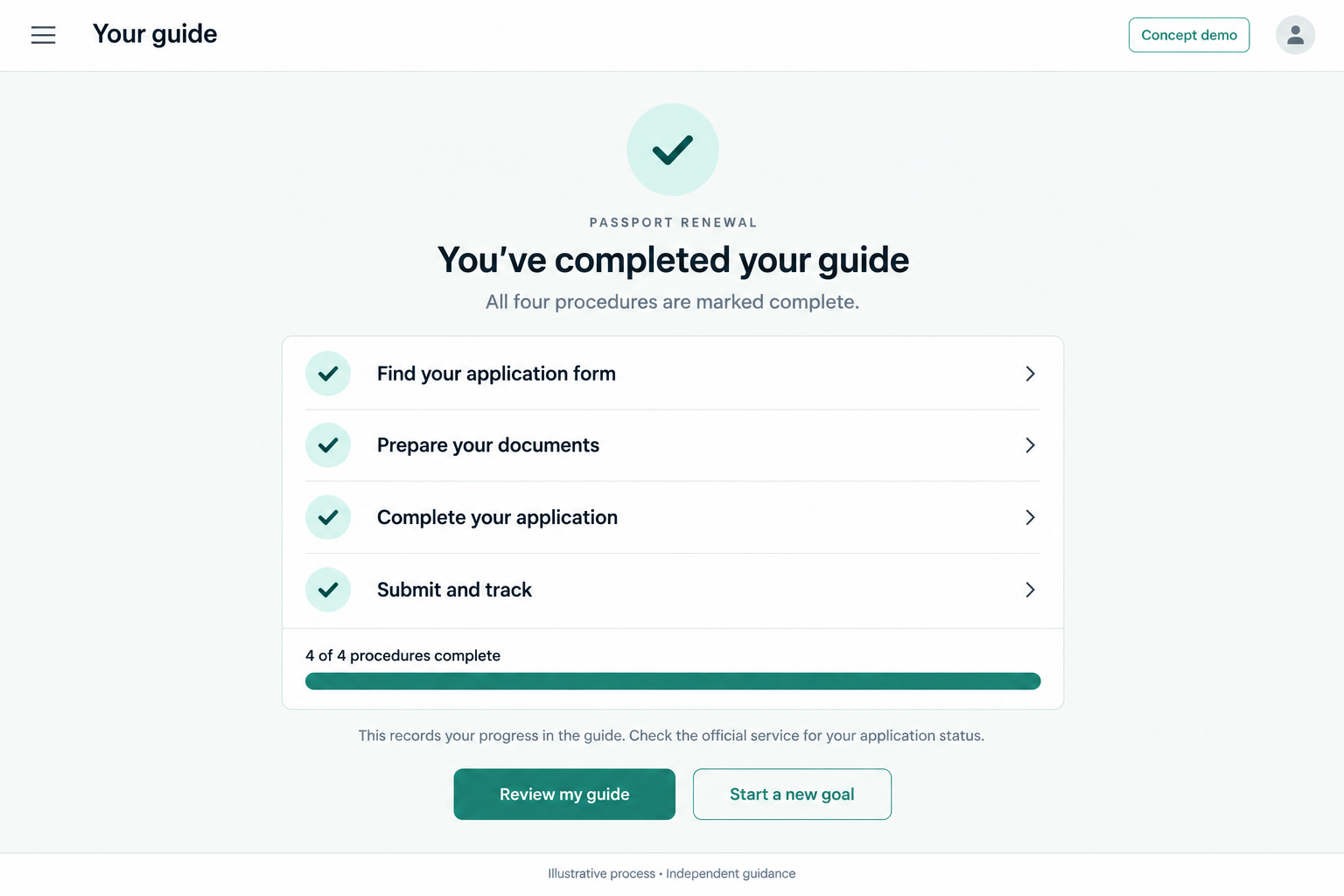
The summary confirms guide completion, not government approval, and offers review or a new goal.
Inspiration
Our team is made up of international students in Canada. We have experienced the uncertainty of navigating unfamiliar government procedures: not knowing where to find the right information, which instructions apply to our situation, or what to do first.
While participating in Hack the Hill III in Ottawa, we decided to tackle a problem we had experienced ourselves—and that many others face when completing applications and paperwork.
That idea became Breadcrumbs: an AI-assisted guide that helps people navigate government procedures, one step at a time.
We wanted to build a tool we would have appreciated during our own experiences. Our central principle is simple: guidance should rely exclusively on official government information, with clear links to its sources. When those sources do not provide an answer, the tool should acknowledge the gap and direct users to the appropriate official resource instead of guessing.
What it does
Breadcrumbs helps users turn an unfamiliar government procedure into a manageable sequence of tasks.
The journey begins with a short goal, such as “Passport renewal,” and a description of the user’s situation. The AI interprets the request and asks the user to confirm which statement best matches their intention.
The guide then organizes the process into four levels:
Goal → Procedures → Steps → Detailed actions
Users can explore the overall plan, open individual procedures, and follow detailed instructions with supporting official links and relevant website visuals.
They can mark a step complete, move ahead without marking completion, or request help. If a problem occurs, the help flow captures the issue, confirms the system’s understanding, and guides the user through recovery while preserving their place in the original process.
Breadcrumbs is designed to explain and organize published instructions. It does not replace government authorities, provide legal advice, or interpret missing rules. Completing the guide records the user’s progress; it does not mean an application has been approved.
How we built it
We started with hand-drawn sketches to map the user journey, from describing a goal to following instructions and resolving problems. We developed these into nine interface mockups and an illustrated walkthrough explaining how the screens connect.
Our development stack includes:
- React for the user interface.
- Python and Django for the backend and application logic.
- The Gemini API for AI-assisted functionality.
- PostgreSQL for database storage.
- GitHub for version control and team collaboration.
- ChatGPT (Codex) to support coding, iteration, and development.
The mockups helped us define the experience while building the application’s technical foundation. Throughout development, we kept the interface focused on clear instructions, visible progress, and an accessible way to ask for help.
Challenges we ran into
One challenge was balancing detailed guidance with a simple interface. Presenting an entire government process at once could overwhelm users, so we divided the information into smaller tasks that users can open as needed.
Another challenge was designing the recovery flow. Someone who encounters a problem should not have to restart the entire guide. We addressed this by keeping the help sequence connected to the interrupted procedure, step, and action.
We also needed to distinguish between moving forward and completing a task. A user may want to preview the next step without recording unfinished work as complete.
A central technical challenge is grounding guidance in official information. Using an AI model alone does not ensure that every instruction is supported by a source. Breadcrumbs needs to handle missing context, ambiguous instructions, and changes to government websites without filling gaps with assumptions.
Accomplishments that we're proud of
We are proud of turning a shared personal difficulty into a concrete project with a clear user journey and a technical foundation.
Our nine-screen interface covers both the main process and what happens when users get stuck. The confirmation screens give users opportunities to correct the system’s understanding, while the recovery flow helps them continue without losing their place.
We are also proud of making official-source-only guidance a core project requirement from the beginning. For us, helping users understand where an instruction comes from is just as important as making that instruction easy to follow.
What we learned
We learned that access to information does not automatically make a process easy to complete. People also need to understand what applies to them, what comes next, and what to do when something goes wrong.
Designing Breadcrumbs reinforced the value of breaking complex tasks into smaller actions and confirming the user’s intention before presenting a guide.
We also learned that helpful AI needs clear boundaries. When official information is insufficient, acknowledging that limitation and directing users to official support is more useful than generating a confident but unsupported answer.
What's next for Breadcrumbs
Our next priority is to complete and validate a working journey for a narrowly defined government procedure before expanding to more services.
We plan to focus on:
- Source traceability: linking each instruction to the official information that supports it.
- Context clarification: asking for missing details before selecting a procedural path.
- Progress tracking: preserving the user’s position across steps and recovery tasks.
- Information reliability: handling incomplete, conflicting, or updated official instructions.
- User testing: checking whether people can understand the guide, navigate it comfortably, and recover from problems.
Our goal is to make Breadcrumbs the tool we wished we had: a clear, approachable path through unfamiliar government procedures, grounded in official information.


Log in or sign up for Devpost to join the conversation.