-
-
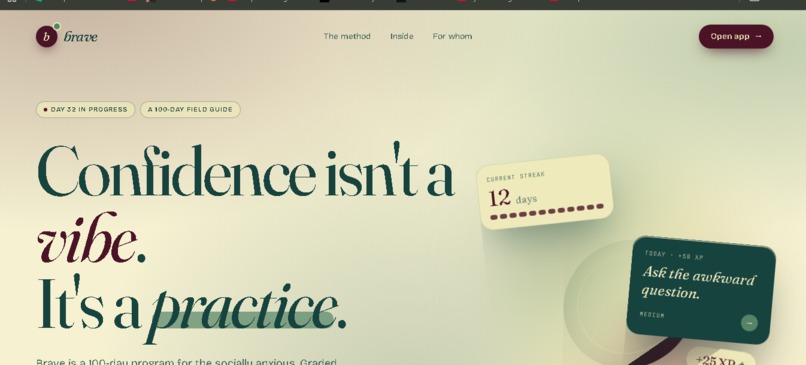
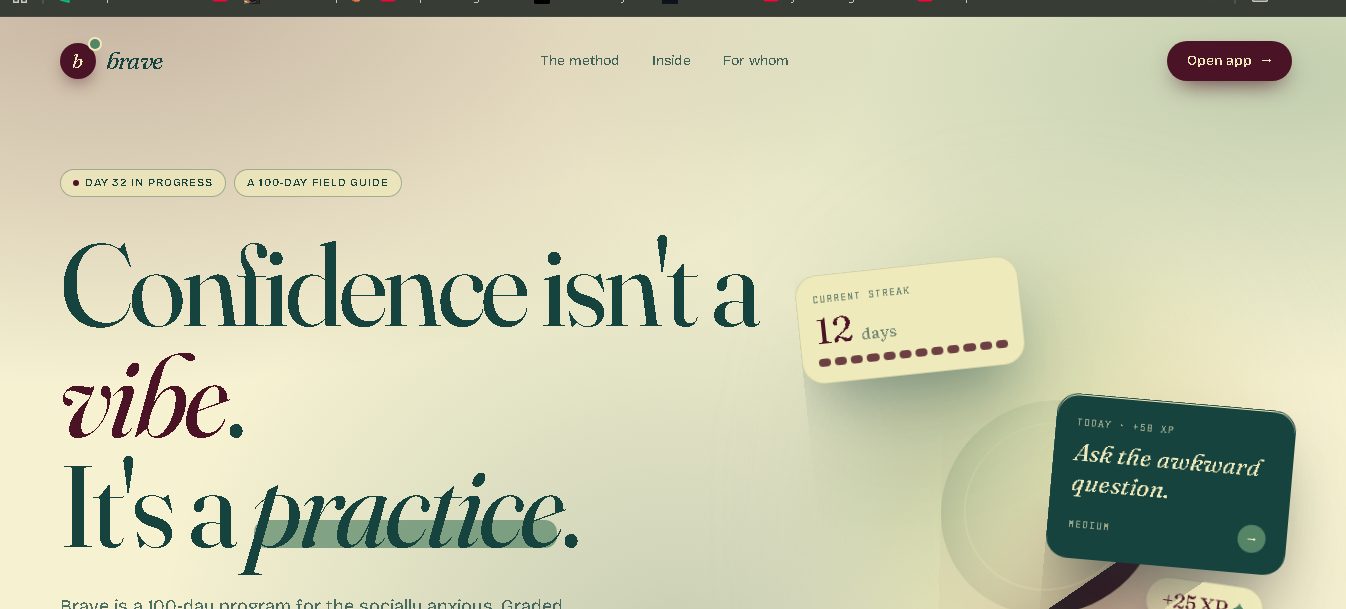
Landing Page
-
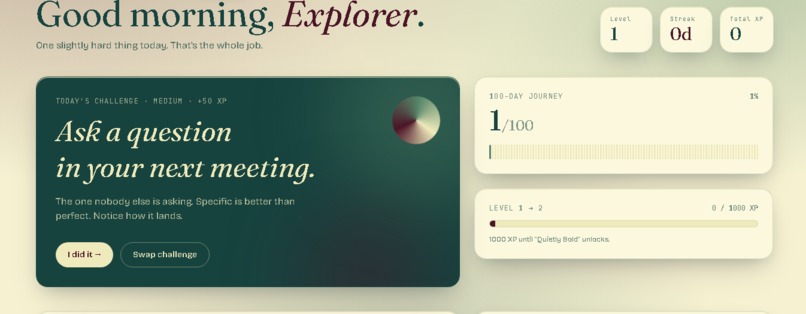
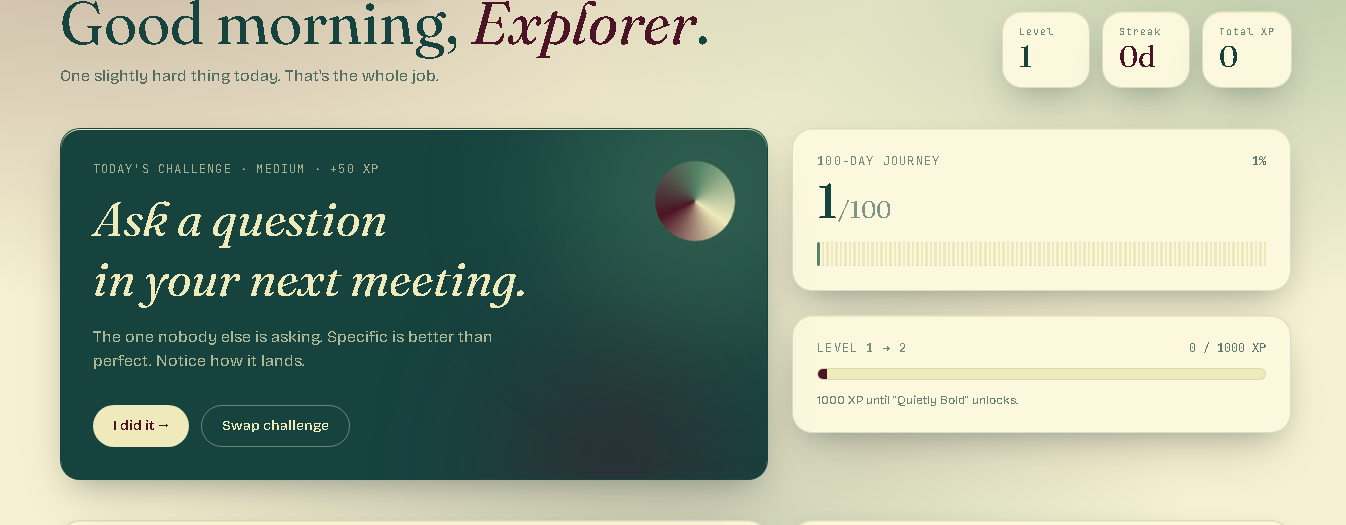
Dashboard
-
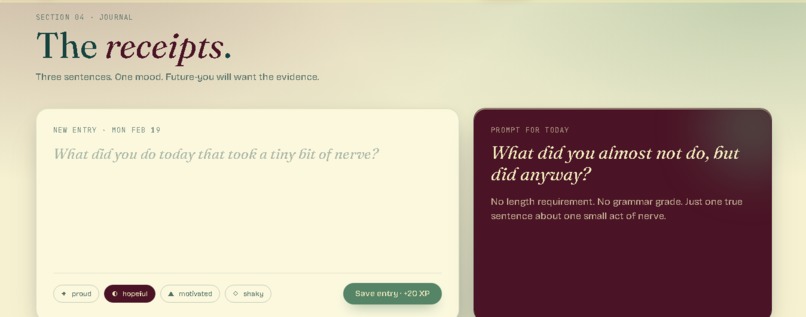
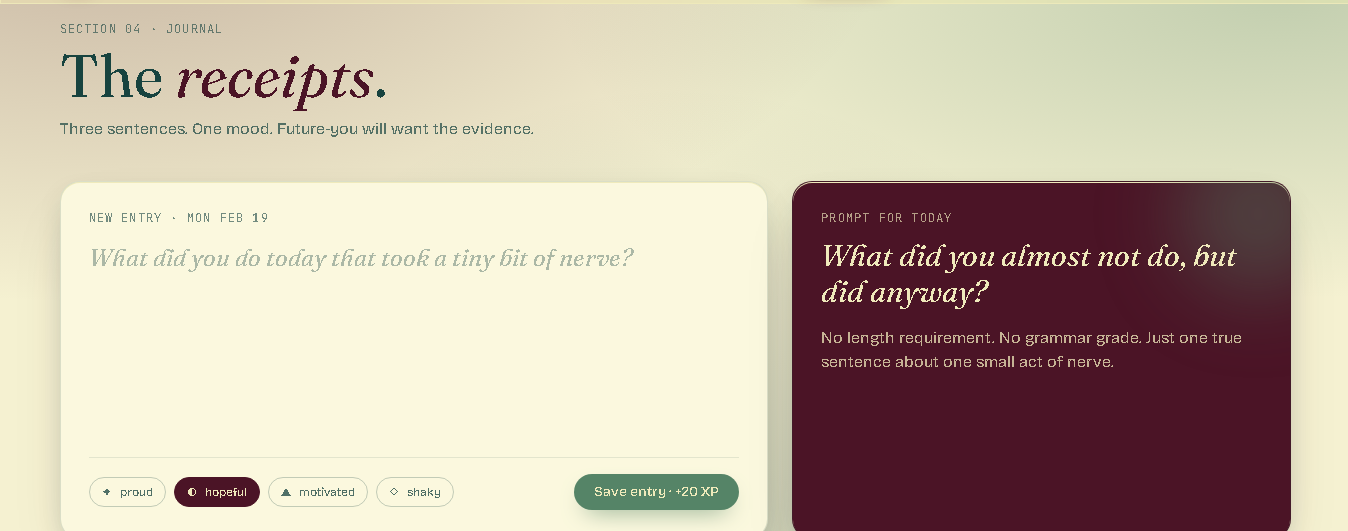
Journal
-
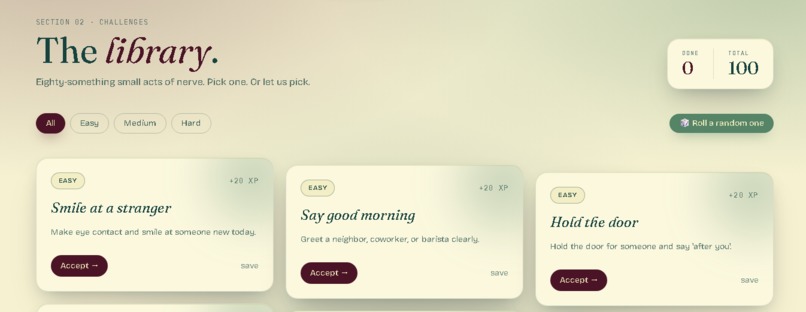
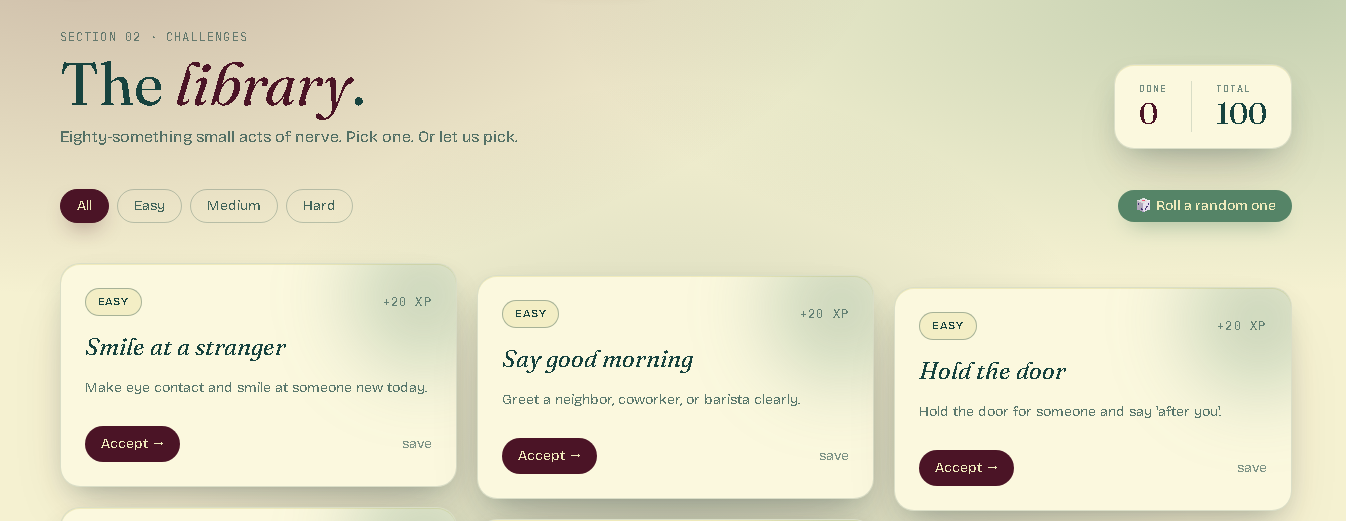
Challenges
-
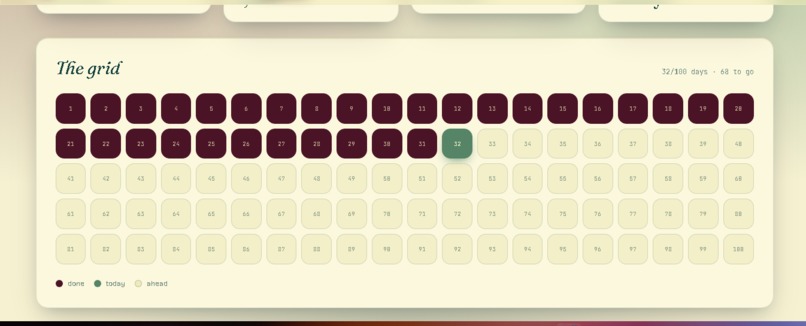
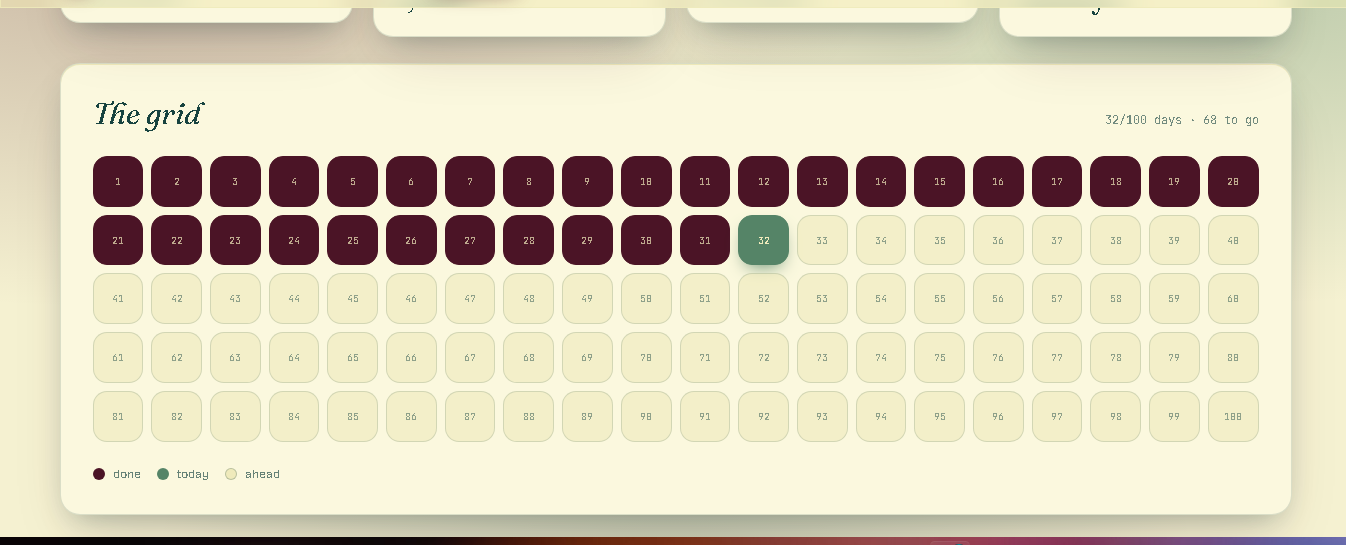
100 Day
Inspiration
Confidence is not something everyone is naturally born with. Millions of people struggle with social anxiety, fear of judgment, low self-esteem, and hesitation when interacting with others.
These challenges can prevent people from making friends, speaking up in class, attending interviews, networking, participating in social situations, or pursuing opportunities that could positively change their lives.
We wanted to build something that goes beyond motivational quotes and generic self-help advice. Our vision was to create a platform that helps users build confidence through small, consistent, and achievable actions.
That is how BraveQuest was born—a gamified self-improvement platform that transforms personal growth into a manageable daily journey.
What It Does
BraveQuest helps users gradually overcome social anxiety and build confidence through personalized daily challenges.
The platform provides:
- Personalized confidence-building challenges
- Daily quests that gradually increase in difficulty
- Guided meditation and breathing exercises to reduce anxiety
- A reflection journal for recording thoughts, emotions, and experiences
- Progress tracking through streaks, achievements, and milestones
- Gamification elements that reward consistency and personal growth
- A structured journey that encourages users to step outside their comfort zones
Instead of expecting users to make drastic changes overnight, BraveQuest focuses on small and manageable steps.
For example, a user might begin with a simple challenge such as maintaining eye contact during a conversation. Over time, they may progress to introducing themselves to someone new, speaking in front of a group, attending a social event, or participating in an interview.
These small actions gradually compound into stronger communication skills, improved self-esteem, and lasting confidence.
How We Built It
We designed BraveQuest using a mobile-first approach, with a strong focus on simplicity, accessibility, and an engaging user experience.
The frontend was built using:
- TypeScript
- Tailwind CSS
These technologies allowed us to create a fast, responsive, and maintainable interface with smooth interactions across different screen sizes.
We developed reusable UI components to maintain visual and functional consistency throughout the application. Modern frontend design principles were used to create an interface that feels polished while remaining simple and easy to understand.
The user experience was carefully designed with:
- Calming and welcoming colours
- Clean layouts
- Intuitive navigation
- Readable typography
- Consistent spacing
- Subtle animations
- Gamified progress indicators
Since BraveQuest is designed for users who may already feel anxious or overwhelmed, we intentionally avoided cluttered screens and complicated interactions.
Gamification elements such as streaks, progress levels, milestones, and achievements were added to make completing challenges feel rewarding and enjoyable.
The project was developed collaboratively using Git and GitHub, deployed using Netlify, and continuously improved through multiple design and development iterations.
Challenges We Ran Into
Designing the Challenge Progression
One of our biggest challenges was creating a progression system that motivates users without overwhelming them.
If the challenges were too easy, users might not feel that they were improving. However, if the challenges became difficult too quickly, users could feel discouraged and stop using the platform.
We addressed this by introducing a gradual difficulty curve. Users begin with simple and low-pressure activities before progressing toward more challenging social interactions.
This approach allows users to build confidence at their own pace while still experiencing meaningful growth.
Balancing Design and Accessibility
Another major challenge was balancing a modern visual design with accessibility and emotional comfort.
Because the platform is intended for users who may experience anxiety, every screen needed to feel calm, uncluttered, and easy to navigate.
We spent considerable time refining:
- Colours
- Typography
- Layouts
- Button placement
- Navigation
- Spacing
- Visual hierarchy
Our goal was to ensure that the interface feels welcoming rather than intimidating.
Maintaining Responsiveness and Smooth Interactions
Ensuring that BraveQuest worked smoothly across mobile devices, tablets, and desktop screens required multiple rounds of testing and refinement.
We had to carefully adjust responsive layouts, animations, navigation components, and content spacing to maintain a consistent user experience across different screen sizes.
What's Next for BraveQuest
Our vision for BraveQuest extends far beyond the current prototype.
Future plans include:
- AI-powered confidence coaching that provides personalized guidance
- Adaptive challenge generation based on user progress and comfort levels
- Community support groups where users can share experiences safely
- Accountability partners for encouragement and progress tracking
- AI-powered voice and conversation practice
- Simulated interview and public-speaking exercises
- Professional therapist and counsellor integration
- Mood analysis and personalized wellness insights
- Wearable device integration for stress and anxiety monitoring
- Expanded accessibility features
- Multilingual support
- Anonymous peer stories to inspire and motivate users
- Advanced progress analytics that highlight long-term improvement
Our ultimate goal is to make BraveQuest a trusted personal companion that helps people overcome fear, embrace new opportunities, and become more confident—one small quest at a time.
Built With
- css
- html
- javascript
- react.js
- supabase
- tailwindcss


Log in or sign up for Devpost to join the conversation.