-
-
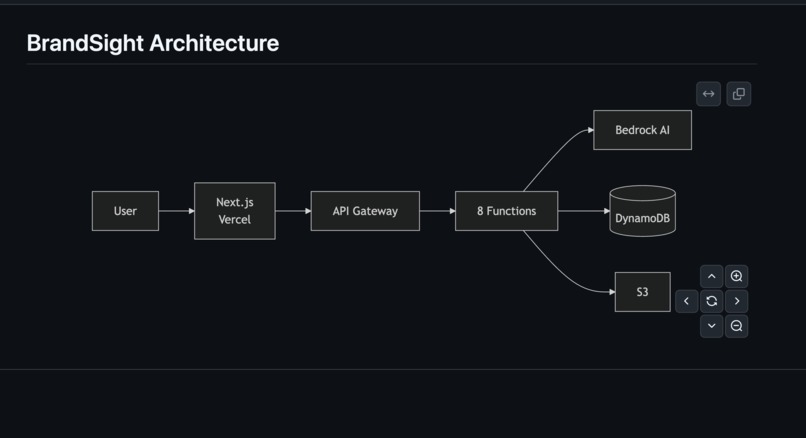
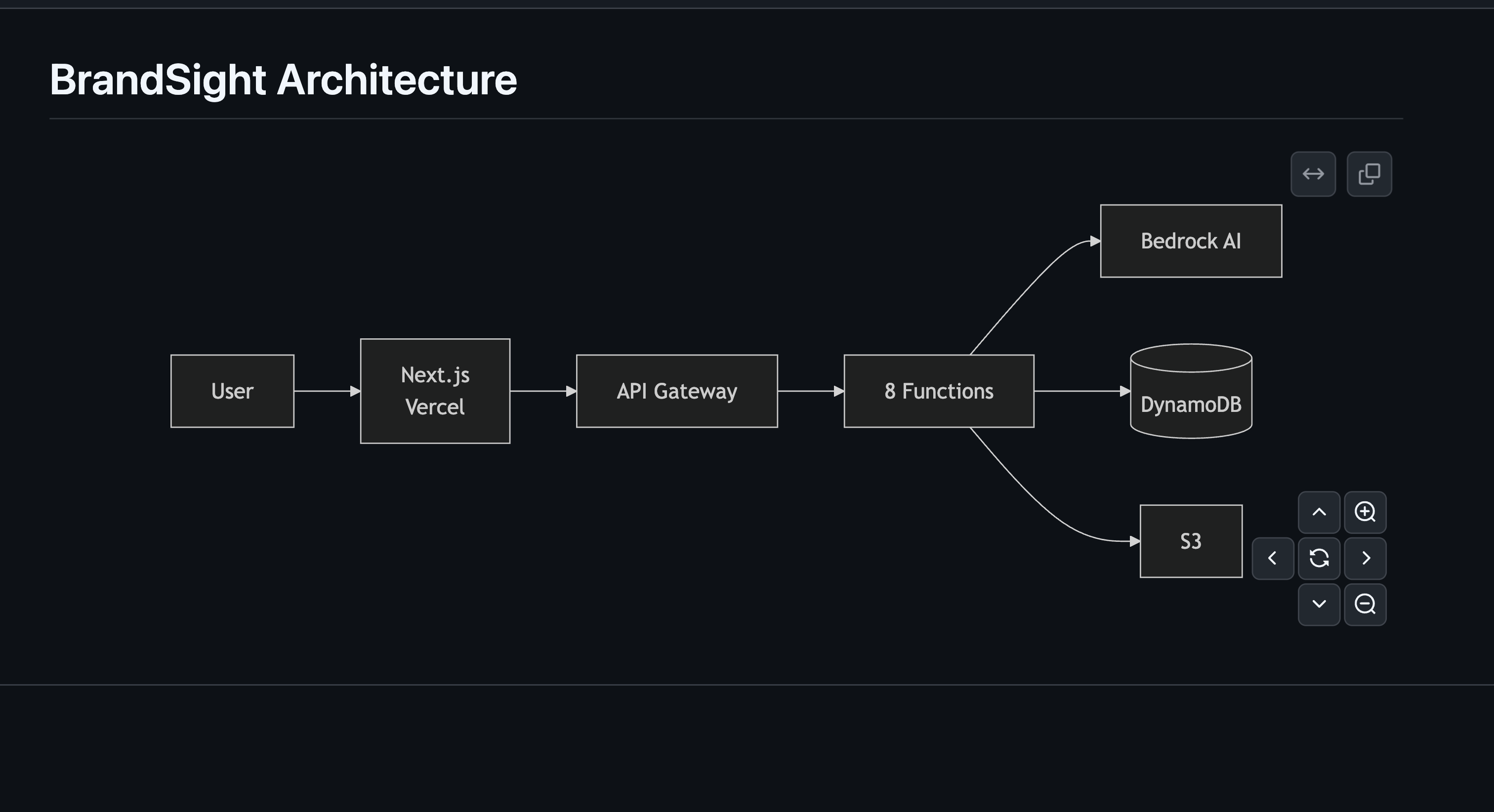
BrandSight Architecture Diagram
BrandSight: A Project Write-up
About the Project
Hi, I'm Eric, a recent CS graduate from UW who just loves to build products from the ground up. My idea for BrandSight started after playing around with ChatGPT and Perplexity. I realized that search is just not the same anymore. Instead of hunting for links, people get instant answers from AI. This shift created a new, manual problem for businesses: how do you become the source that AI chooses to cite? That's what inspired me to build a productivity tool to solve it.
To validate my ideas, I started by reaching out to brands like Boba After Hours (a boba liquor company), Aligno.ai (an AI SaaS), and Emerald City Boxing Gym to see if BrandSight could solve a real problem for them. You can also check out my journey on our Instagram channel, @brandsight.ai, where I grew it to over 1000 views and 100+ followers in a short amount of time.
Live at: brandsight.site
(use test account down in Youtube description or Github repo to log in)
Test Account - try it out for free!
brandsight-2025
How I Built It
Our dev process got a huge productivity boost from Kiro, an AI development platform that helped us build the core features. For each of the main features—Brand Analysis, Dashboard, and the Admin Console—Kiro's spec to code broke everything down into requirements, design, and tasks. We’d go back and forth a few times, refining each step until it was perfect.
The app's built on a Next.js frontend with TypeScript and Tailwind CSS. On the backend, we used a serverless architecture with AWS Lambda and DynamoDB. We integrated Claude from Bedrock for the brand analysis and Clerk for user authentication. The whole thing is deployed on Vercel and AWS Lambda.
To save even more time, I used Kiro’s agent hooks to automatically run tests, generate git messages, and update our documentation whenever I changed a file.
Challenges I Faced
Working with LLMs can be a pain. Debugging and cleaning up their messes can be a huge time sink. But Kiro's steering feature was a game-changer. It let me give the LLM specific guardrails and context to follow, which meant it messed up way less. I used these "steering files" for best practices on everything from AWS CLI commands to security and testing.
What I Learned
This project taught me the power of context engineering. I learned that giving an LLM the right context and specific rules to follow—in our case, through Kiro's steering files—can dramatically improve the quality of its output and, more importantly, make your workflow way more efficient. It’s not just about what you ask the AI, but how you set it up for success. This approach saved me from a ton of cleanup and allowed me to focus on building, not debugging.
What's Next?
Like Jeff Bezos once said, you have to start with the customer and work backward. The next step is all about validating our ideas with customers. I'm focused on understanding how BrandSight can solve the same core problem in different market sectors and fine-tune the product to find that sweet spot—the product-market fit. I'm currently reaching out to brands like Boba After Hours and Aligno.ai to continue this conversation and keep building a product that people truly need.
Built With
- amazon-bedrock
- amazon-dynamodb
- amazon-lambda
- amazon-web-services
- clerk
- python
- vercel

Log in or sign up for Devpost to join the conversation.