-
-
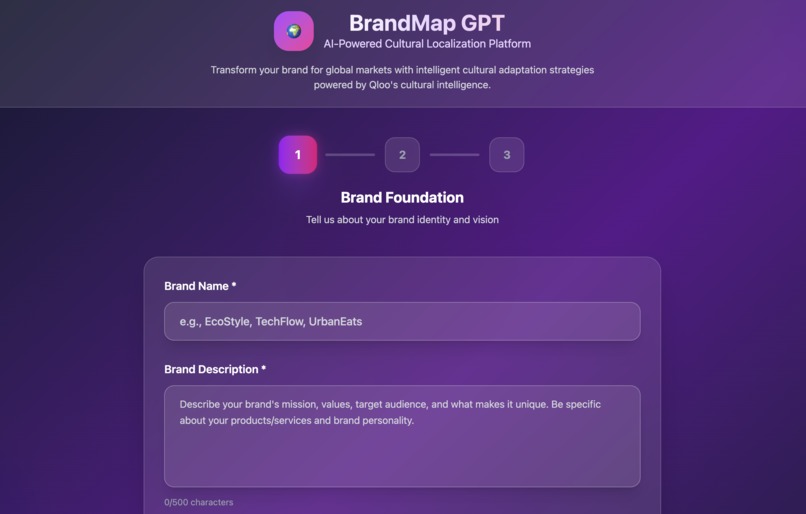
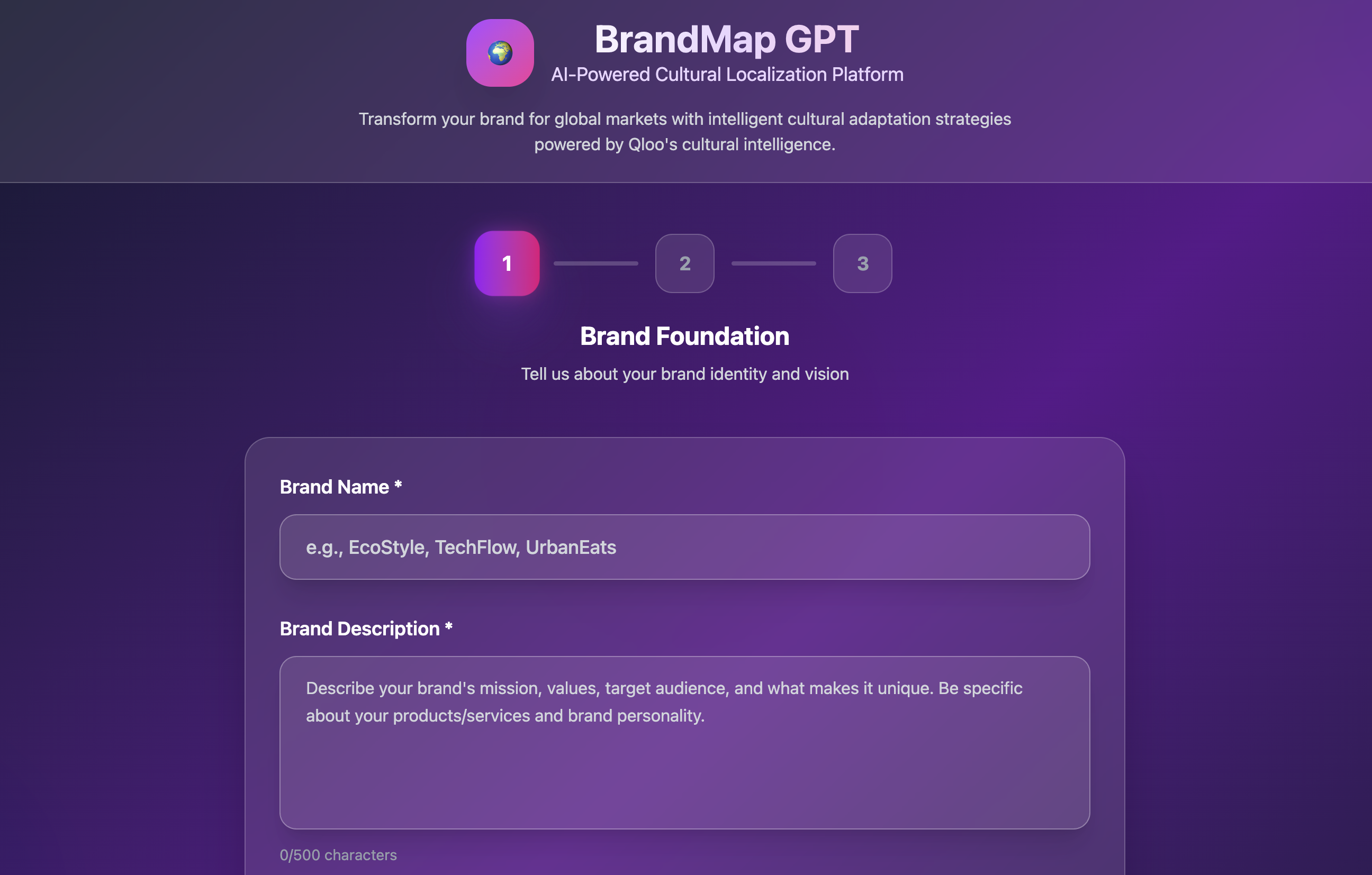
Home Page
-
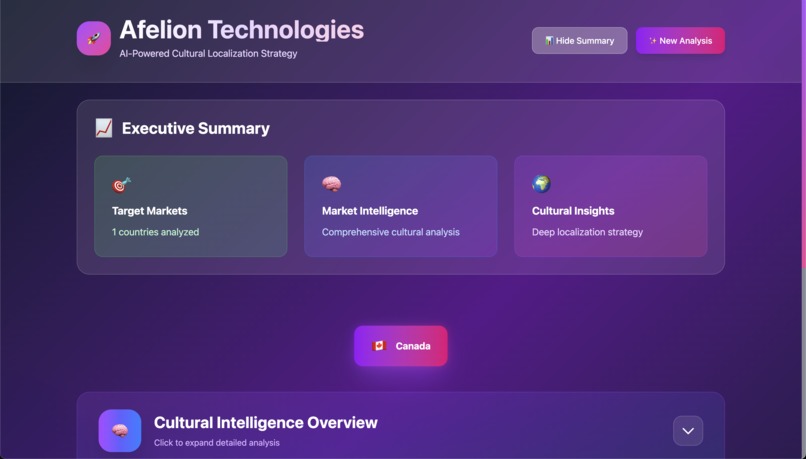
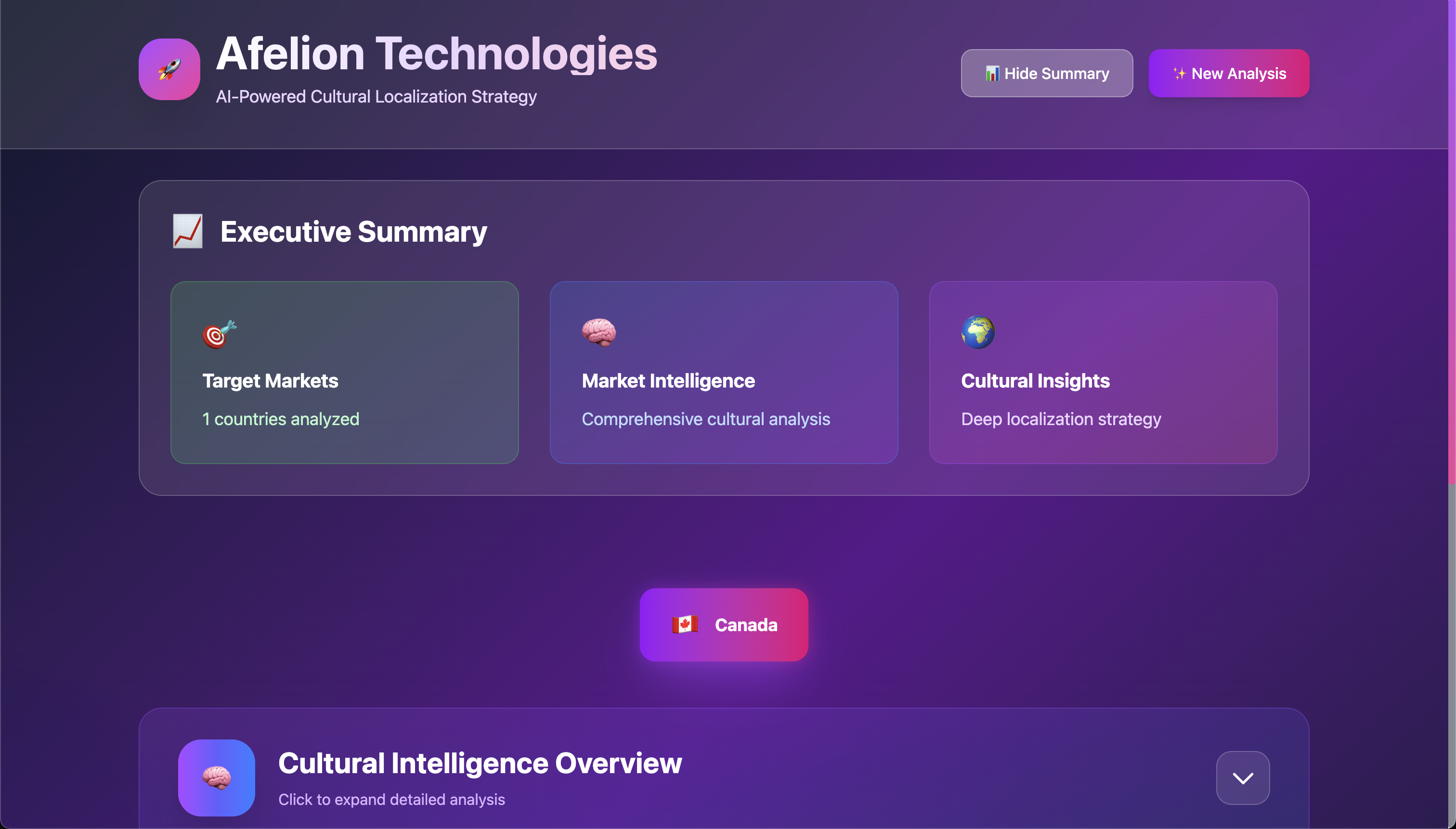
Result Page
🚀 Inspiration
We were inspired by the universal challenge that brands face when entering new markets: a lack of cultural context and insight. Traditional market research is often slow, expensive, and doesn't capture the nuanced tastes of a region.
When we discovered the Qloo Taste Graph API, a cultural intelligence engine, we realized we could bridge this gap with a generative AI assistant that provides contextual brand advice based on real cultural data.
🧠 What it does
BrandMapGPT helps brands and marketers explore and plan entry into new geographic markets by combining cultural insight with generative intelligence.
Given a target country or region, BrandMapGPT:
- Uses the Qloo API to retrieve culturally relevant entities (e.g., local musicians, destinations, fashion brands, movies)
- Analyzes cross-domain taste patterns of people in the region
- Uses Gemini 2.5 Flash to:
- Generate a strategic market summary
- Suggest brand tone, marketing approaches, and positioning ideas
- Identify local collaborations or avoidances based on cultural sensitivity
- Provide competitive context using Qloo's taste graph data
- Presents the output in a conversational and visually organized interface
🛠️ How we built it
Frontend: React + Tailwind UI
Form-based interface to input target countries, and a dynamic card UI to display insight summariesBackend: Django + REST Framework
Endpoint to query Qloo'ssearch,insights, andrecommendationendpoints, with middleware to sanitize, validate, and enrich user input. GPT-4 prompt orchestration generates actionable recommendations.AI Stack:
- GPT-4 (OpenAI API) for language generation
- Qloo API for cultural data
- Gemini (used as a fallback agent for alternate insights when needed)
Database: PostgreSQL for session logs and entity caches
Testing & Debugging: Postman, curl, and unit tests
🧱 Challenges we ran into
- Qloo’s API returned errors for invalid or low-density entities. It took careful parsing of valid entity types (like
urn:entity:locality) and proper URL encoding to get consistent results. - Signal filtering using Qloo’s
signal.interests.entitiesrequired entity IDs with the correct structure and subtype. We had to reverse-engineer from sample IDs. - Gemini flash model occasionally hallucinated when Qloo data was weak, so we added fallback clarifications and entity fallback sequences.
- Rate limits from LLM APIs made debugging iterative requests tricky.
🌟 Accomplishments that we're proud of
- Built a fully working pipeline from query → insight → GPT reasoning → strategic output within 48 hours
- Successfully combined cultural intelligence (Qloo) with strategic narrative generation (GPT)
- Delivered real-time insights for over 50+ global locations during testing
📚 What we learned
- Gained proficiency in working with Qloo’s cultural graph, including handling UUID-based signal filtering and decoding entity types
- Learned how to extract insights from cross-domain recommendations
- Understood how to balance factual data from APIs with generative reasoning from LLMs
🔮 What’s next for BrandMapGPT
- Add multi-region comparison, such as "How does Gen Z in Brazil compare to Spain for skincare brands?"
- Allow users to upload their brand deck for more personalized recommendations
- Introduce taste-based product recommendation modules
- Explore fine-tuning LLMs on historical marketing playbooks for deeper personalization
- Launch as a B2B product for agencies and global brands
🧠 Fun Sample Output
Given the country "Japan", BrandMapGPT suggested:
- Positioning a lifestyle brand around "quiet luxury"
- Collaborating with local minimalist architects and musicians like Cornelius
- Avoiding overly loud Western influencer strategies
- Targeting art-house cinema lovers and boutique travelers for soft launches
Built With
- digitalocean
- django
- firebase
- gemini-flash-pro
- javascript
- python
- qloo-api
- react
- tailwind-css

Log in or sign up for Devpost to join the conversation.