-
-
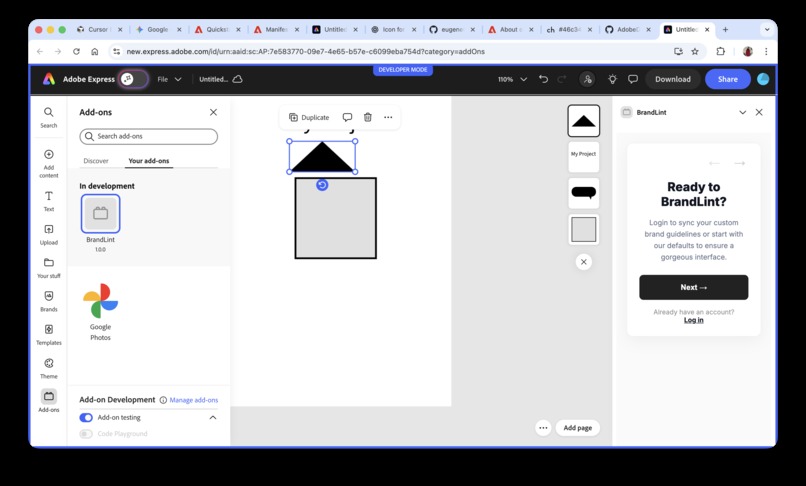
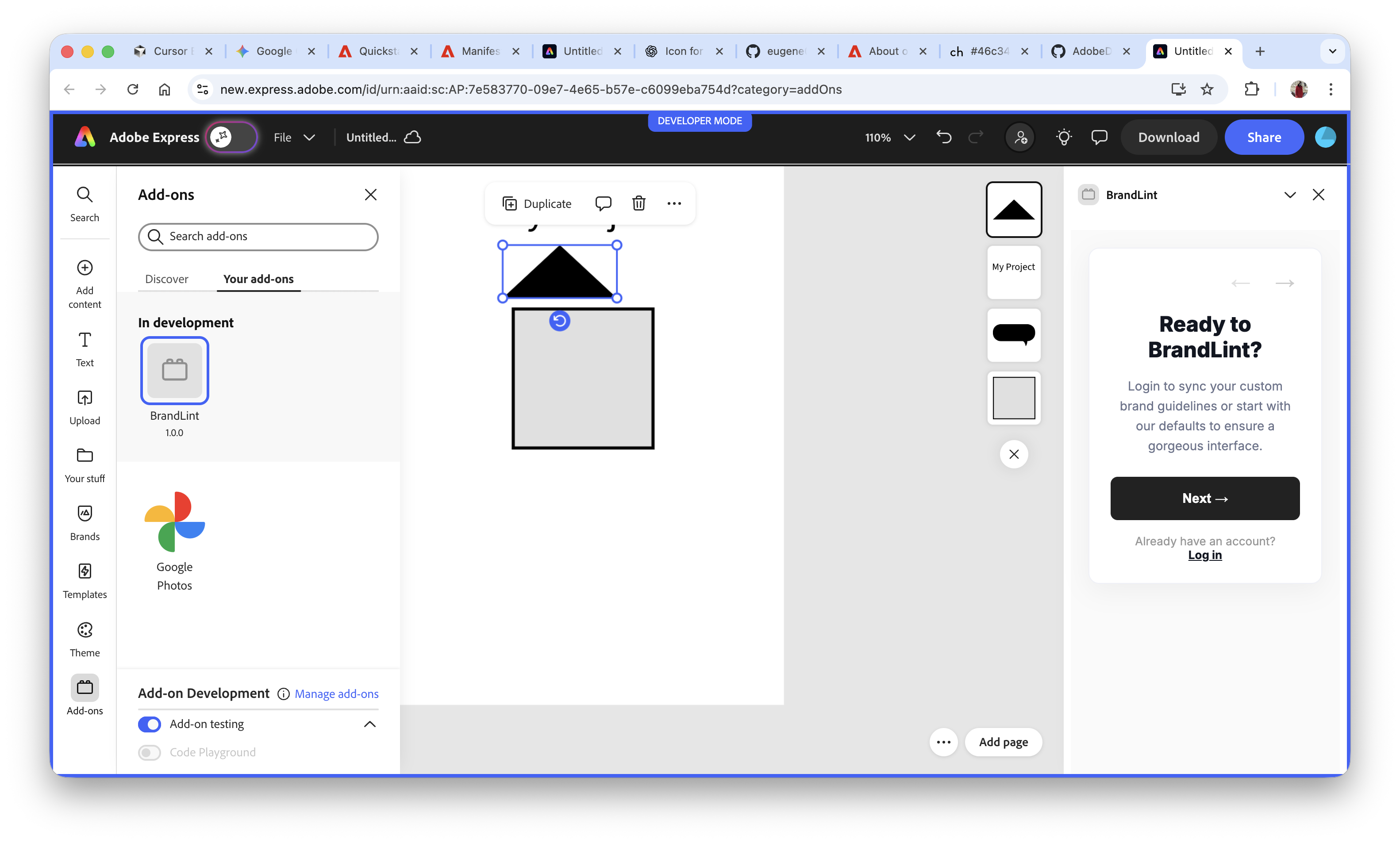
Welcome Screen
-
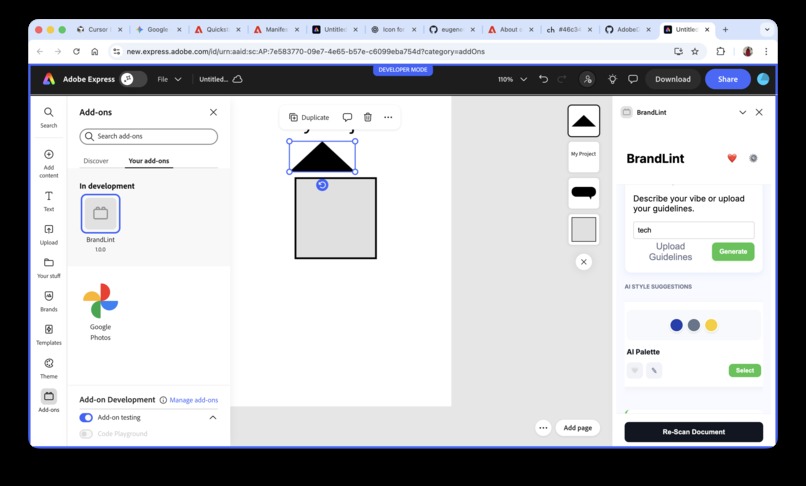
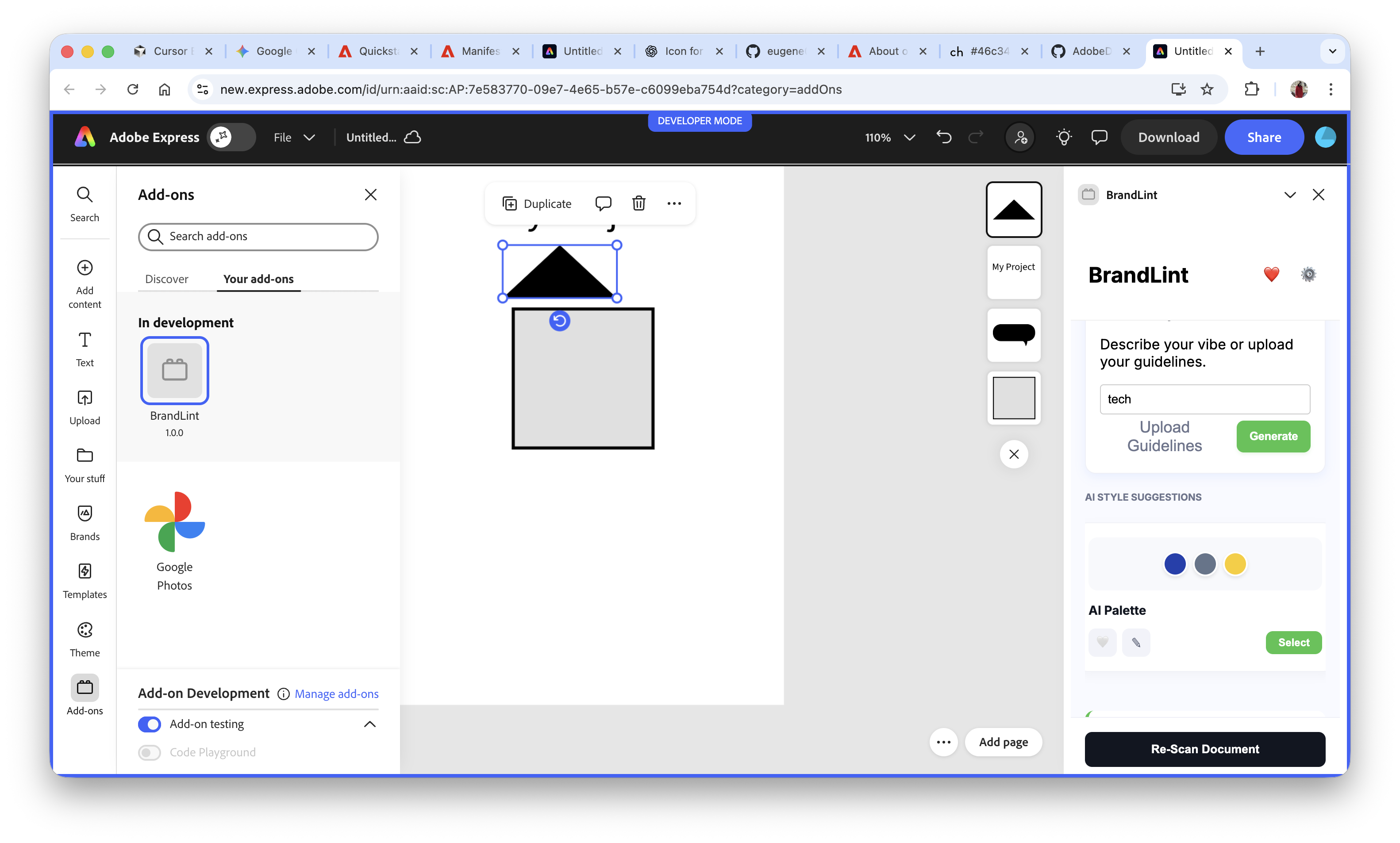
Ai suggestions or upload brand kit
-
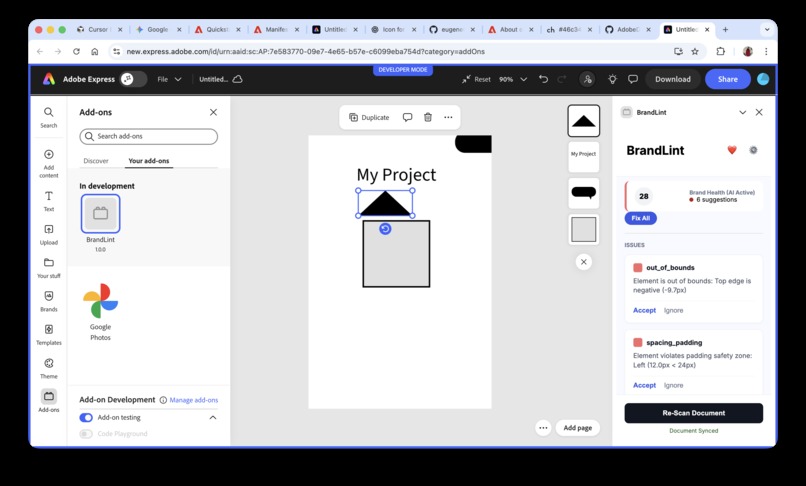
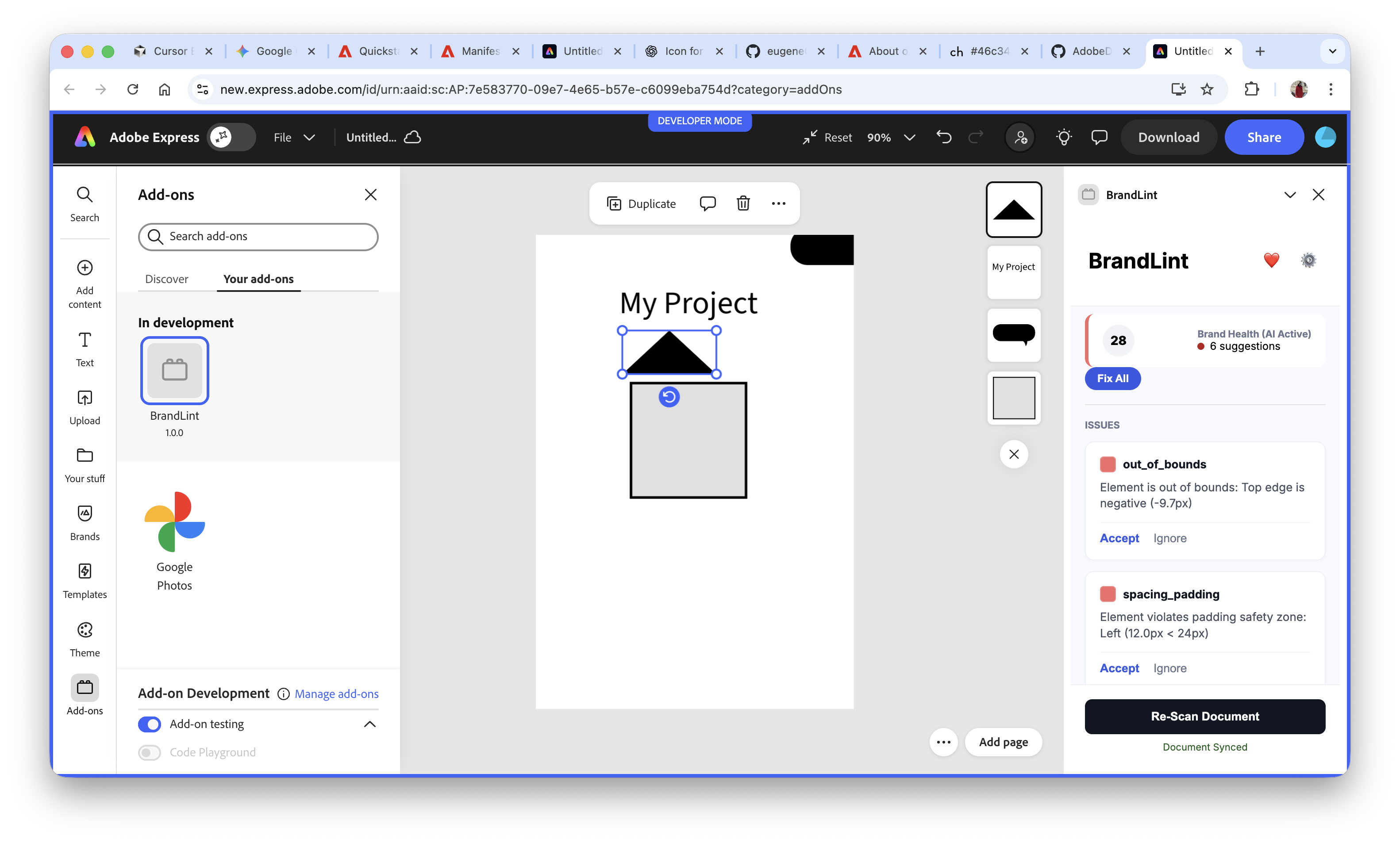
Issues with the design
-
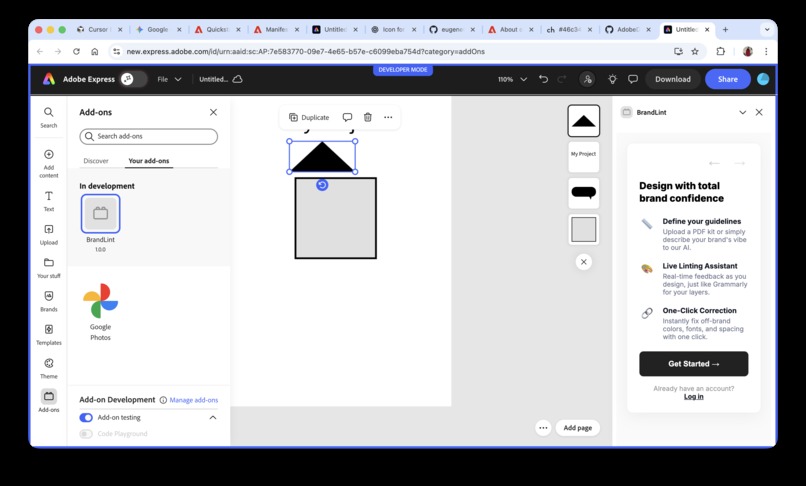
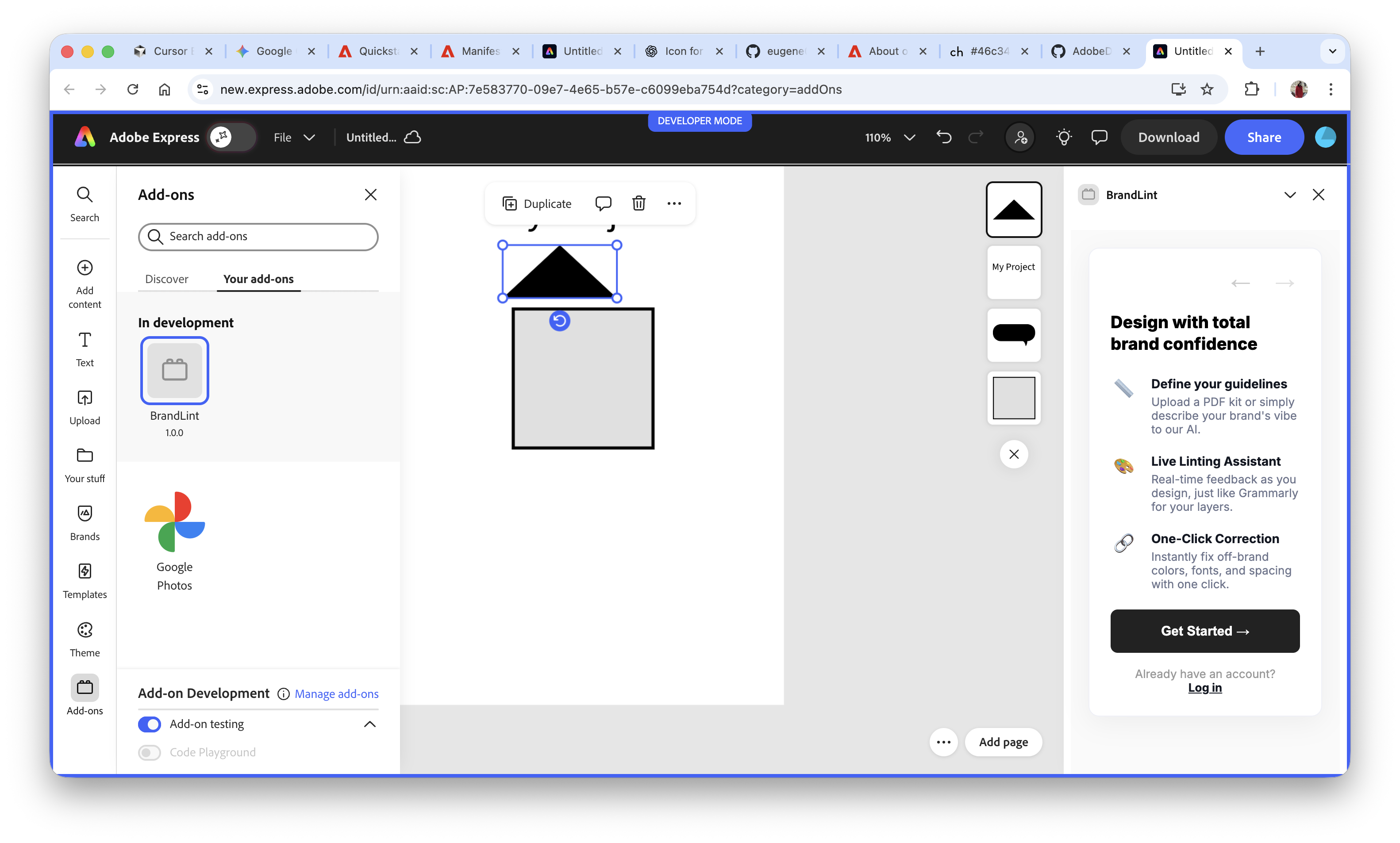
Features brief/login
BrandLint
Project Story: Inspiration
In the fast-paced world of marketing and sales, "Brand Drift" is a silent killer. We’ve all seen it: a social media post with a slightly off-shade of corporate blue, or a sales deck using the wrong font weights.
For brand managers and marketing validators, the current workflow is a manual bottleneck. Every design must be cross-referenced against a static, 60-page PDF manual. It’s tedious, prone to human error, and slows down time-to-market.
We asked ourselves:
"Why do we have spell-checkers for our words, but not for our visual identity?"
BrandLint was born to bridge this gap—acting as an automated auditor that empowers managers to maintain perfect brand integrity without the manual labor.
What It Does
BrandLint is an intelligent design linter built directly into Adobe Express. It allows managers and validators to:
Define Digital Guidelines
Upload a brand kit or describe a brand’s vibe to set the ground rules.Automate Audits
With one click, the tool scans the entire document layer-by-layer to find:- Font mismatches
- Off-palette colors
- Accessibility violations
- Font mismatches
Monitor Brand Health
Provides a real-time Health Score, giving validators a quantitative metric of how brand-safe a design is before it goes live.Bridge the Gap
Offers a Found vs. Expected comparison for every error, showing exactly what was used and what should have been used instead.
How We Built It
We engineered BrandLint as a full-stack solution integrated into the Adobe Express SDK:
🔍 Extraction Engine
- Used the Document SDK to traverse the complex layer tree of a project.
- Extracted hex codes, font families, and positioning data into structured JSON.
🧠 Validation Backend
- Built with Node.js and Express.
- Runs validation logic, including math-heavy accessibility checks such as contrast ratio:
[ C = \frac{L_1 + 0.05}{L_2 + 0.05} ]
Where:
- (L_1) = relative luminance of the lighter color
- (L_2) = relative luminance of the darker color
🖥️ Frontend Dashboard
- A React-based UI designed for managers.
- Focused on scannability and high-level status updates rather than technical jargon.
Challenges We Ran Into
Data Integrity
Moving data between the Adobe Express Sandbox environment and our external validation backend while maintaining real-time performance was a significant hurdle.Contextual Logic
Teaching the system to distinguish between a brand color violation and a decorative element (like a photo or illustration) required refining our filtering algorithms to ensure we only flagged intentional design choices.
Accomplishments We’re Proud Of
We are incredibly proud of our Rule Engine.
In just 24 hours, we built a system that doesn’t just look for exact matches—it understands the intent of brand guidelines. Seeing the Suggestions Feed accurately identify a contrast ratio of 1.0 on a white-on-white text layer felt like a major win for design accessibility.
What We Learned
This project taught us that “Governance is a Service.”
Brand consistency isn’t just about aesthetics—it’s about trust. By automating the boring parts of design validation, we actually unlock more creative freedom for marketing teams, because they no longer fear making technical brand mistakes.
What’s Next for BrandLint
Due to the 24-hour hackathon constraint, we focused on the most critical part of the validator’s workflow: The Audit.
While the system currently identifies every error with precision, we haven’t yet implemented the “One-Click Fix All” feature.
🚀 Our Vision
- Move from a tool that finds errors to one that heals them.
- Instantly fix violations across the entire document.
- Make BrandLint a standard part of the creative sign-off process for every major brand.
Built With
- adobe
- cursor
- github
- javascript
- react
- sandbox
- stateless


Log in or sign up for Devpost to join the conversation.