-
-
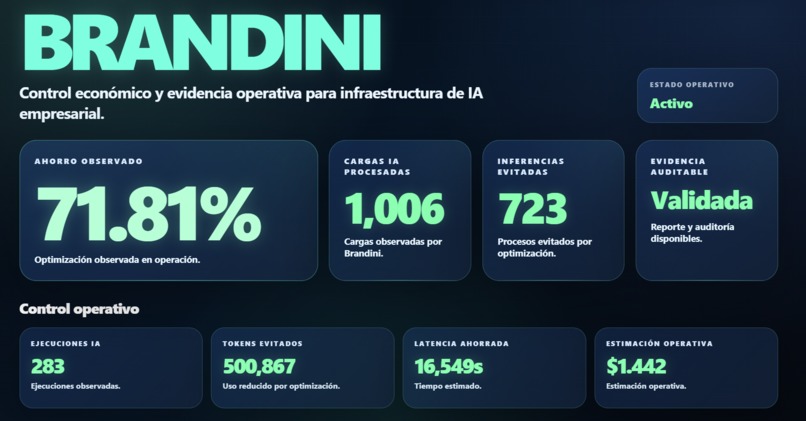
Brandini
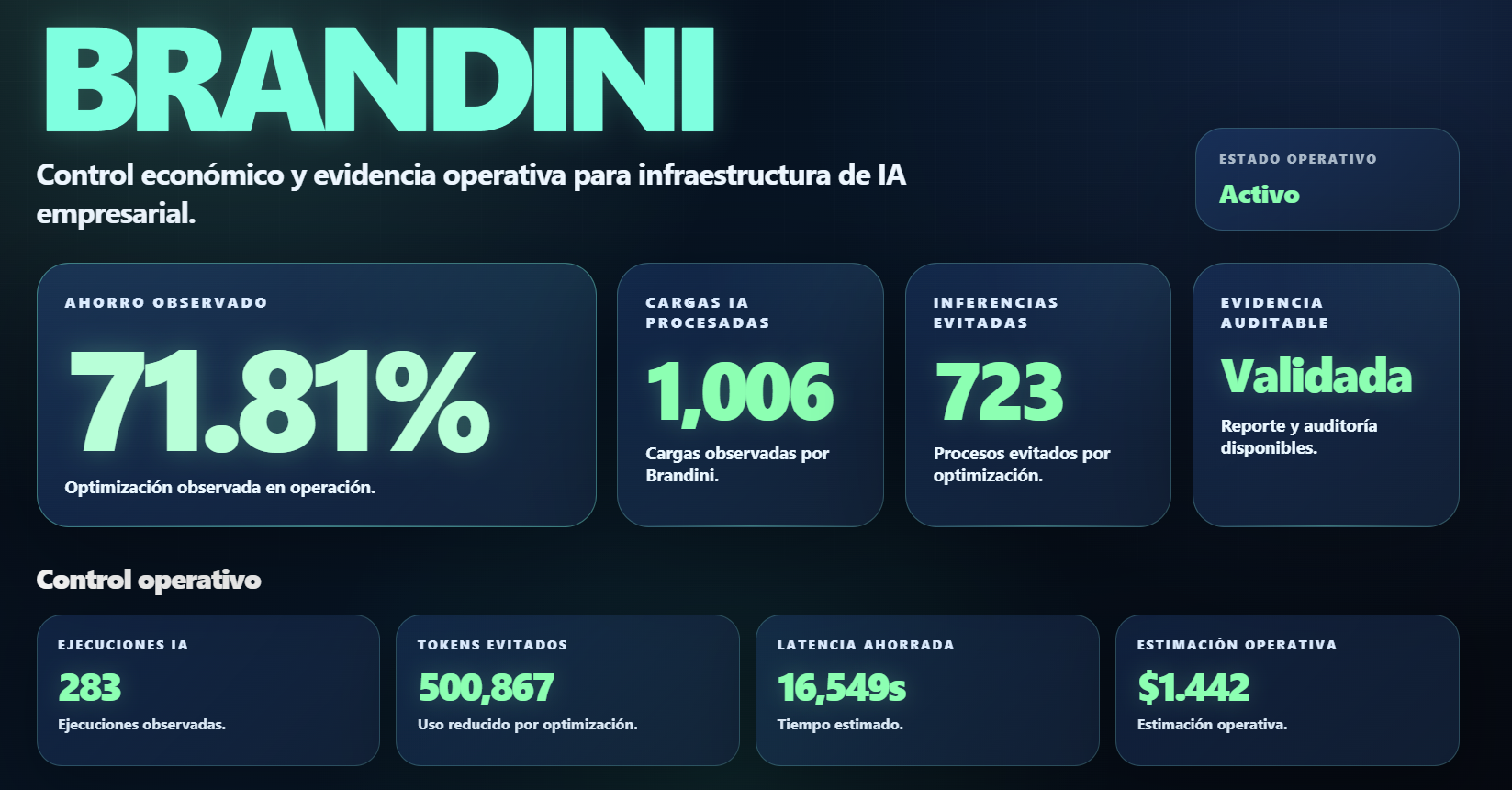
Inspiration
As AI adoption grows, one problem becomes impossible to ignore: organizations repeatedly pay for the same inference, struggle to control costs, and have limited visibility into what happens inside their AI runtime.
I wanted to build an infrastructure layer instead of another AI application. The goal was to make AI systems more efficient, observable, and economically sustainable without changing the models developers already use.
What it does
Brandini is an AI Runtime Intelligence layer that sits between applications and LLM providers.
It reduces unnecessary inference costs through semantic reuse, exact caching, intelligent routing, and runtime observability.
Instead of replacing existing models, Brandini optimizes how they are used.
Key capabilities include:
- Semantic and exact cache
- Multi-provider routing
- Runtime observability
- AI cost intelligence
- Economic decision tracking
- Live telemetry dashboards
- Evidence and audit reports
How we built it
The project was built as a production-oriented runtime using Python, FastAPI, Redis, SQLite, REST APIs, and a modular architecture.
Brandini integrates with multiple LLM providers while maintaining a single runtime interface.
The platform includes:
- Runtime telemetry
- Cost Ledger
- Economic Memory
- Semantic cache
- Multi-provider routing
- Stress testing
- Executive dashboards
- Operational dashboards
Everything shown in the dashboards is generated from real runtime metrics instead of static examples.
Challenges we ran into
The biggest challenge was designing a runtime that could optimize AI execution without affecting response quality.
Another challenge was coordinating telemetry, caching, routing, and economic tracking into a single consistent architecture while keeping every metric observable and auditable.
Accomplishments that we're proud of
We built a working runtime capable of:
- Reducing repeated inference costs through semantic reuse.
- Routing requests across multiple LLM providers.
- Tracking AI economics in real time.
- Producing live operational dashboards.
- Generating auditable evidence from production metrics instead of synthetic data.
What we learned
Building AI infrastructure is fundamentally different from building AI applications.
The next generation of AI systems will require runtime intelligence, observability, governance, and cost awareness as core capabilities rather than optional features.
What's next for Brandini
Our next objective is to evolve Brandini into a complete AI Runtime Intelligence platform capable of serving enterprise deployments with stronger governance, deeper observability, broader provider support, and increasingly autonomous runtime optimization.


Log in or sign up for Devpost to join the conversation.