-
-
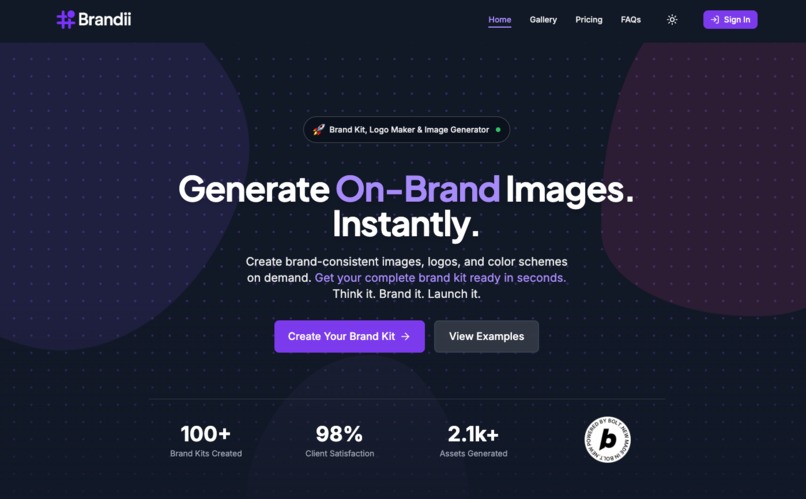
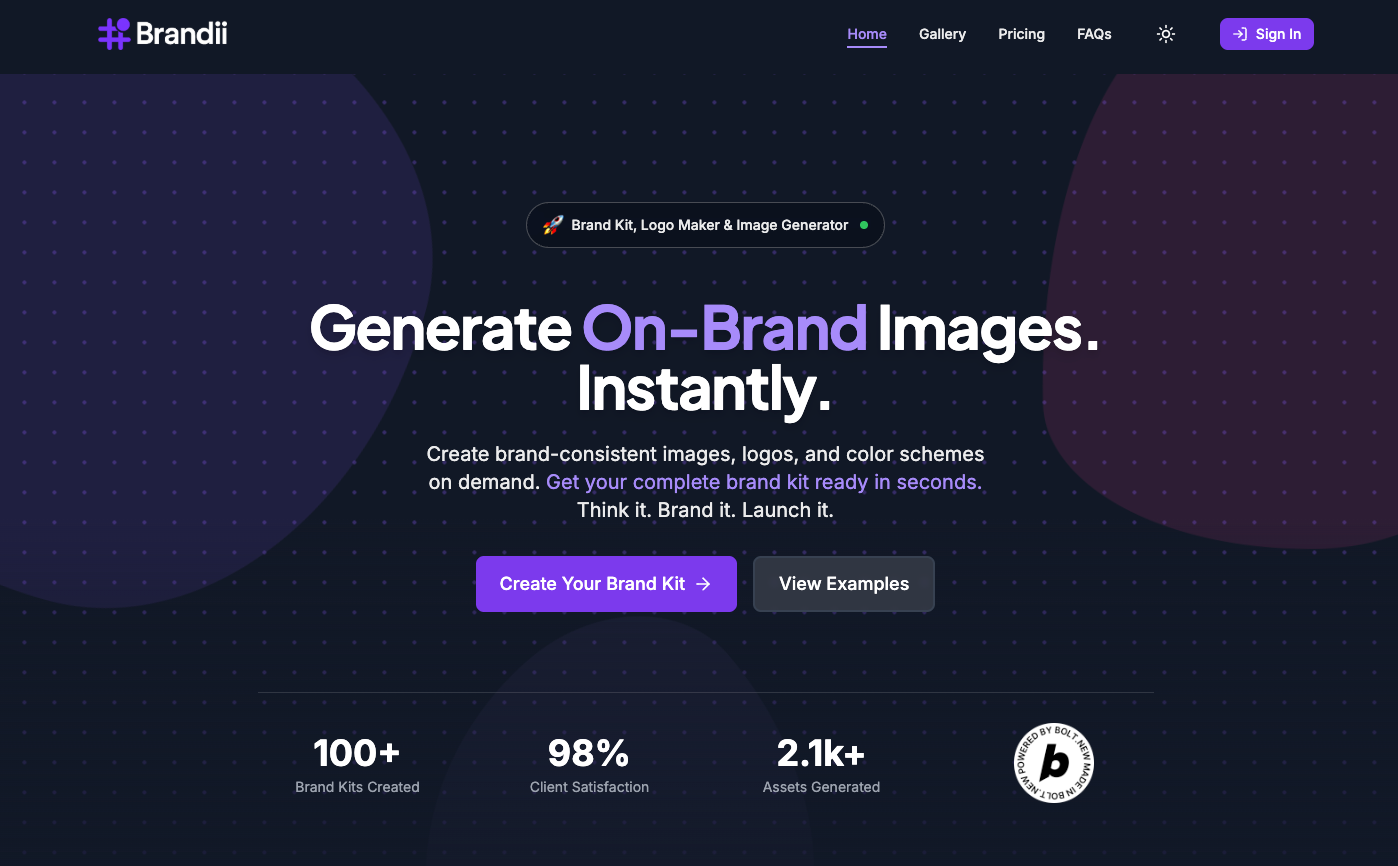
Homepage View - Brandii
-
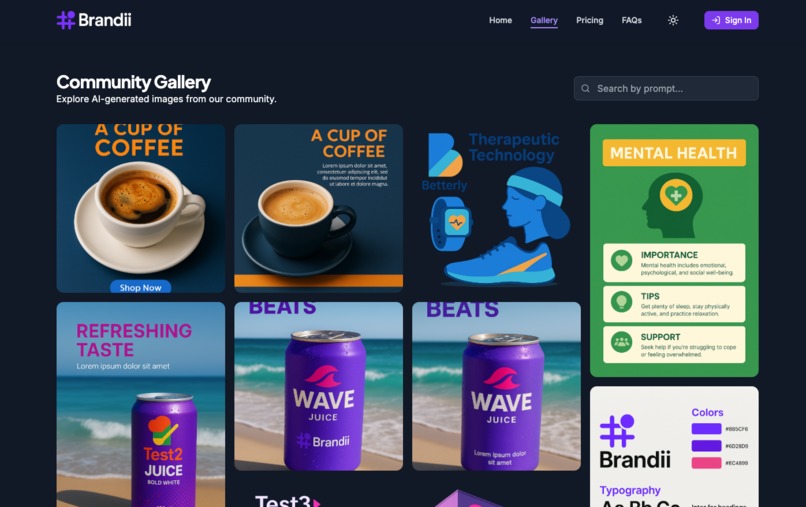
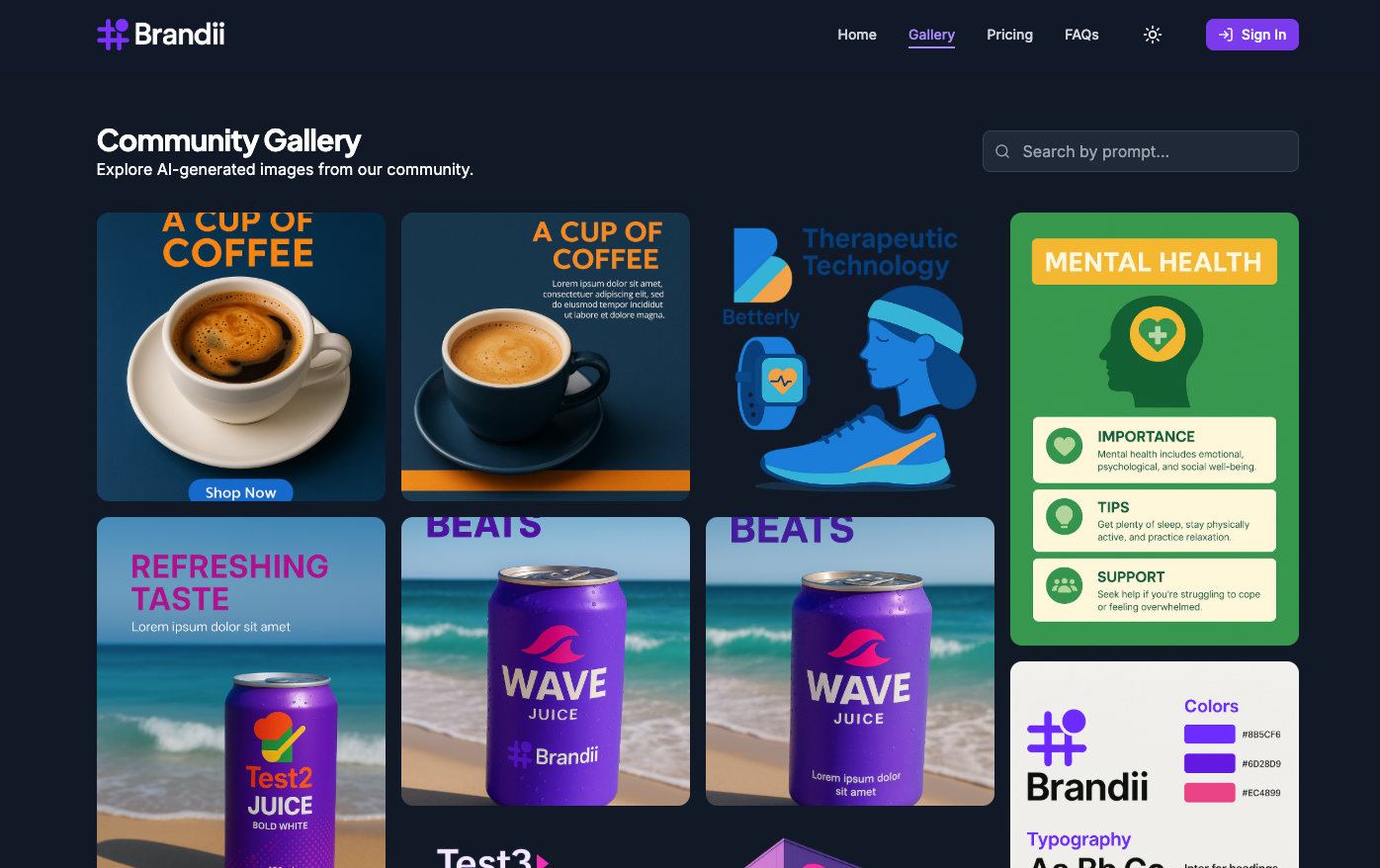
Public Gallery View - Brandii
-
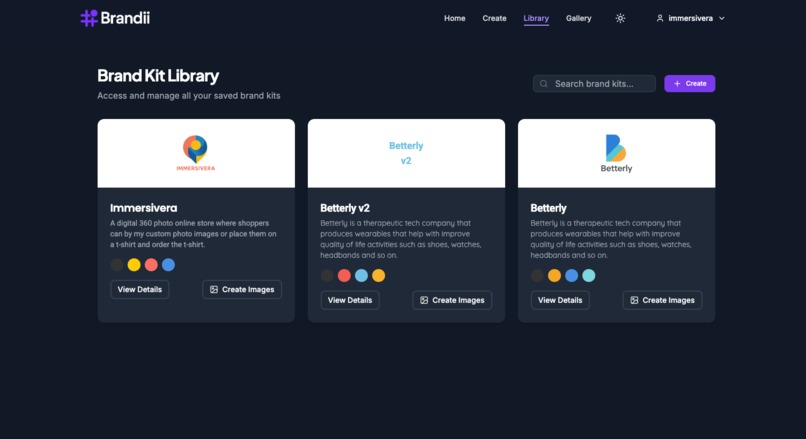
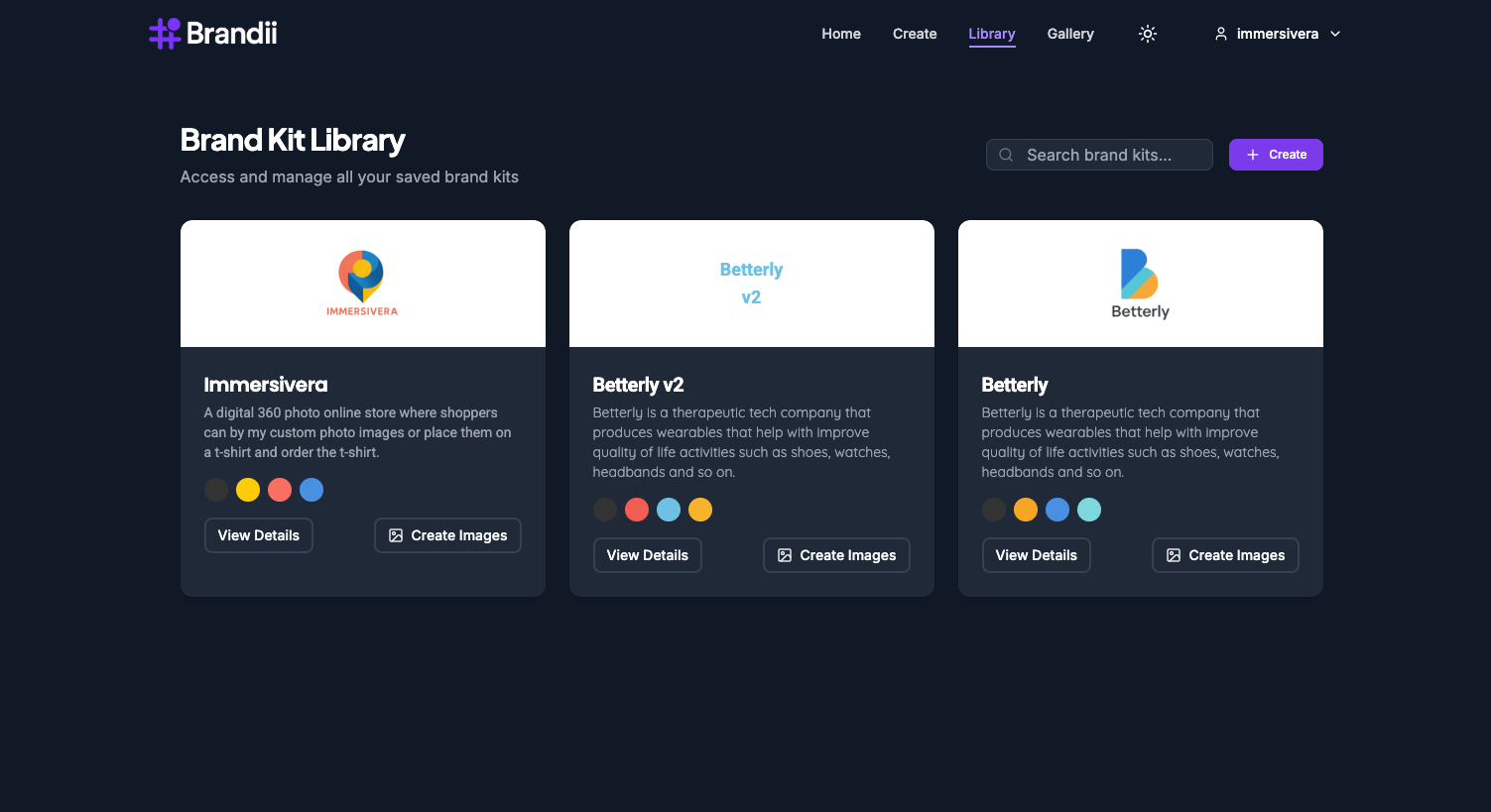
User Library of BrandKits - Brandii
-
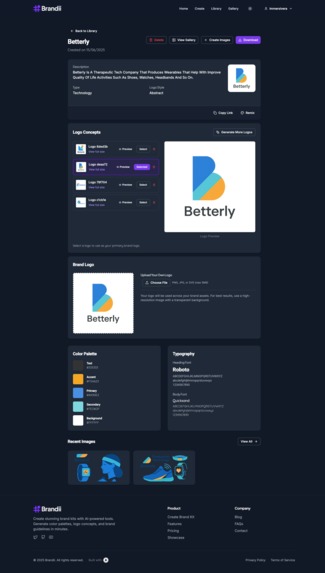
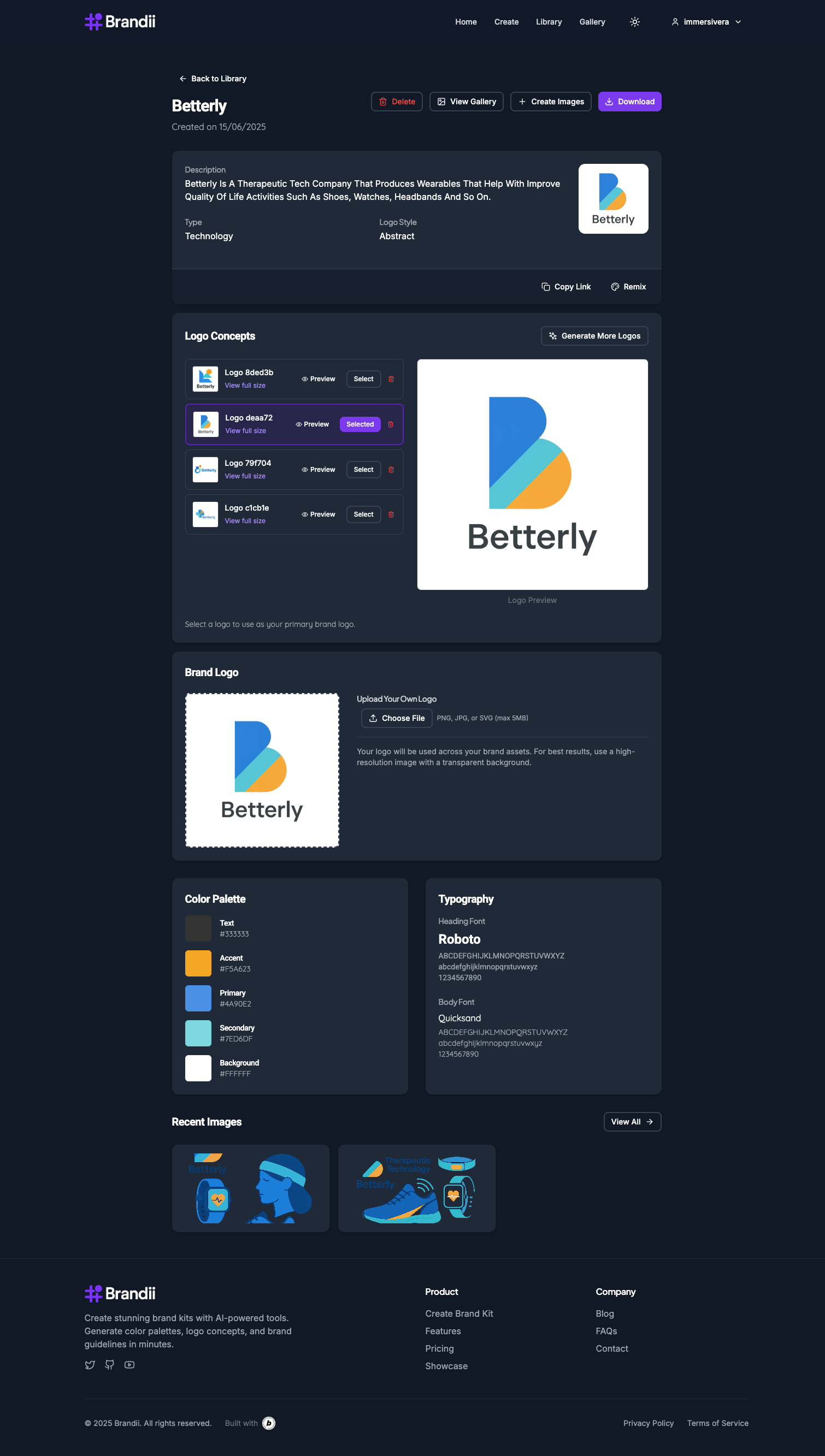
BrandKit Page Details - Brandii
Inspiration
Brandii was born from a challenge I've consistently faced throughout my career. The visual identity gap that exists when launching new ideas or businesses. As a developer and fellow entrepreneur/solopreneur, I believe often times we have this great vision for what our business should be called and what it should do, but frequently struggle with what it should look like.
As the saying goes, "If a tree falls in a forest and no one is around to hear it, does it make a sound?" Similarly, a brilliant business concept without consistent visual representation risks going unnoticed. Social media becomes the natural platform to establish presence, but herein lies the problem: inconsistent visual branding can lead to content that fails to stand out in a sea of posts, ultimately causing engagement to fade and brand recognition to suffer.
This is precisely where Brandii steps in, to empower small businesses, soloprenuers and content creators to establish and maintain a cohesive visual identity that helps to capture their audiences' attention and boost brand recognition.
What It Does
Brandii is an AI-powered platform designed to help businesses and individuals maintain visual brand consistency across all their digital content. The platform enables users to:
Create Brand Kits Define and store your visual identity—including colors, typography, and style preferences—for consistent use across all assets.
Generate On-Brand Images Produce visuals by simply entering text prompts. Brandii intelligently applies your brand elements to ensure every image aligns with your identity.
Customize Image Generation Choose which brand elements to include in the output, allowing flexibility while preserving brand integrity across different types of content.
Enhance Prompts with Uploaded Images Add your own images to serve as context or inspiration, giving the AI additional guidance to produce more relevant visuals.
Control Output Parameters Adjust options like aspect ratio and number of image variants from a single prompt—perfect for tailoring content across various platforms.
Download Ready-to-Use Assets Instantly download high-quality images suitable for marketing campaigns, social media, presentations, and more.
Brandii eliminates the struggle of maintaining visual consistency by automating the creation of brand-aligned imagery, saving businesses countless hours of design work while ensuring their visual presence remains cohesive and professional.
How I built it
Brandii was developed using Bolt.new as the foundation for quickly scaffolding the UI, building core features, and iterating through designs via prompt-based development. Bolt.new's seamless integration with Supabase allowed me to easily create and manage the backend, including database tables, edge functions, and authentication. I also leveraged GitHub for live testing, version control, and deployment workflows.
Tech Stack
- React 18 – For building a fast, component-based frontend.
- TypeScript – To ensure type safety and improved developer experience.
- Vite – For blazing-fast development and optimized builds.
- Tailwind CSS – For responsive and utility-first styling.
- Framer Motion – For smooth and modern UI animations.
- Supabase – For the backend, including authentication, database, storage, and serverless functions.
- OpenAI – Used for generating AI-driven image content and text suggestions within the app.
All image and text generation features in Brandii are powered by OpenAI, with serverless execution handled through Supabase Edge Functions to keep everything lightweight, scalable, and cost-effective.
Challenges I Ran Into
Serverless Limitations with Bolt.new One of the initial challenges was working within the constraints of Bolt.new’s static app deployment, which didn’t support traditional server-side code. At first, I saw this as a limitation, but I quickly discovered that using Supabase Edge Functions allowed me to run backend logic in a fully serverless way. This approach not only solved the issue but also enabled essentially free server hosting through Netlify, which paired seamlessly with Bolt’s one-click deploy system.
Performance Bottlenecks from Base64 Image Storage Early in development, the app suffered from slow load times due to large volumes of base64-encoded image data being stored directly in Supabase tables. Since I hadn’t used Supabase Storage before, I had to quickly learn how to offload images to storage buckets instead. Separating logos and AI-generated images into distinct buckets, and storing only the public URLs in the database, dramatically improved performance and made the app much smoother and faster.
Learning Curve with OpenAI Image Generation Integrating OpenAI’s Image Gen 1 model brought its own set of challenges. It took several iterations to correctly generate images based on user prompts while factoring in optional brand asset toggles. Wrapping these API calls inside Supabase Edge Functions and ensuring reliable output was a valuable learning experience. Eventually, I was able to generate brand-consistent visuals dynamically, and the satisfaction of getting it all to work was well worth the trial-and-error process.
Accomplishments I'm Proud Of
Seamless Brand-to-Image Pipeline I built an end-to-end solution that transforms brand guidelines into consistent visual assets with minimal user input. Maintaining brand consistency across all generated images is something I'm especially proud of.
Optimized Performance I overcame performance bottlenecks by switching from storing base64 image data in database tables to using Supabase storage buckets. This change significantly improved load times and overall responsiveness.
Intuitive User Experience Despite the technical complexity behind the scenes, I designed a user-friendly interface that makes brand asset generation accessible to users with no design or technical background.
Effective AI Integration I successfully integrated OpenAI’s image generation capabilities through Supabase Edge Functions, creating a cost-effective, scalable, and serverless solution.
Robust Brand Management I developed a comprehensive brand kit system that allows users to define, store, and apply brand elements consistently across all generated content.
Serverless Architecture I built a fully functional application without relying on traditional servers, using Supabase and Netlify for a modern, maintainable, and scalable deployment setup.
What I Learned
Serverless Architecture Patterns I gained hands-on experience designing and scaling a complex application using entirely serverless technologies, learning the trade-offs and benefits of this approach.
Supabase Ecosystem I deepened my understanding of Supabase beyond database usage, leveraging Edge Functions and storage buckets for critical parts of the architecture.
AI Image Generation Working with OpenAI’s API taught me about prompt engineering, content moderation, and the nuances of generating brand-consistent imagery through AI.
Performance Optimization I learned how storage strategies directly impact performance, especially the importance of using dedicated storage for large binary assets like images.
User Experience Design I refined my ability to create intuitive workflows that simplify complex processes, making advanced features approachable for non-technical users.
Modern Frontend Practices The project strengthened my skills in React development, including component architecture, state management, and responsive UI design.
Deployment Automation I streamlined deployment using Bolt.new and Netlify, enabling a seamless pipeline from development to production with minimal overhead.
These accomplishments and lessons not only made Brandii possible, but also helped me grow significantly as a solo developer in the AI tech space.
What's next for Brandii
As Brandii continues to evolve, several enhancements are planned to expand its capabilities, improve the user experience, and support broader creative use cases. Upcoming features include:
Image Prompt Suggestions Provide smart, AI-generated prompt ideas to help users kickstart their creative process and generate better visuals with less effort.
Shareable Brand Kit Portfolio Pages Create public-facing landing pages where users can showcase their brand kits and generated assets—perfect for agencies, freelancers, and portfolio sharing.
Multiple Image Generation Models Integrate support for additional AI models, allowing users to choose between styles, output quality, and speed to fit different creative needs.
Image Upscaling Add high-resolution upscaling for generated images, enabling users to download print-ready or professional-quality visuals suitable for large-format use.
Built With
- ai
- bolt
- claude
- openai
- react
- supabase
- tailwind
- vite

Log in or sign up for Devpost to join the conversation.