-
-
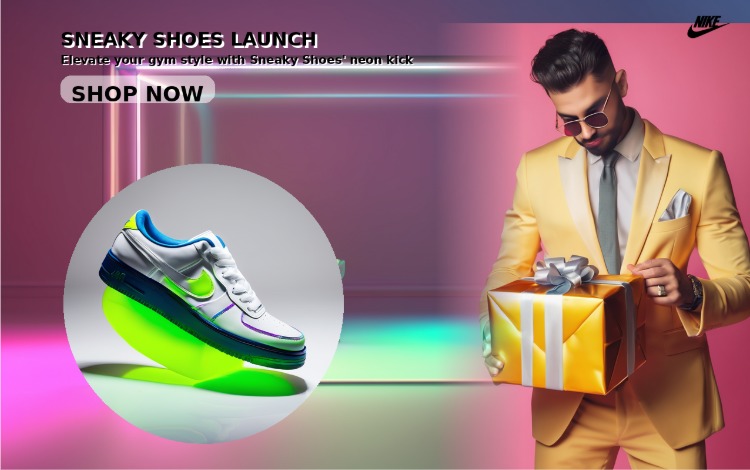
prompt was neon shoes, but reference shoes were blue.
-
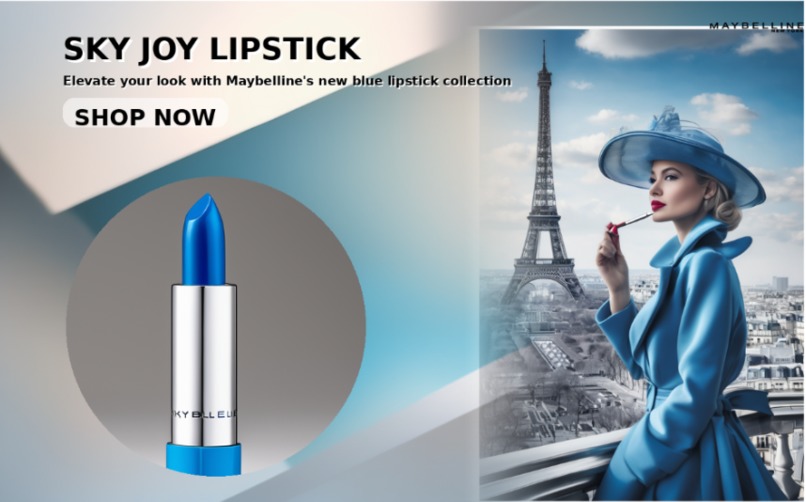
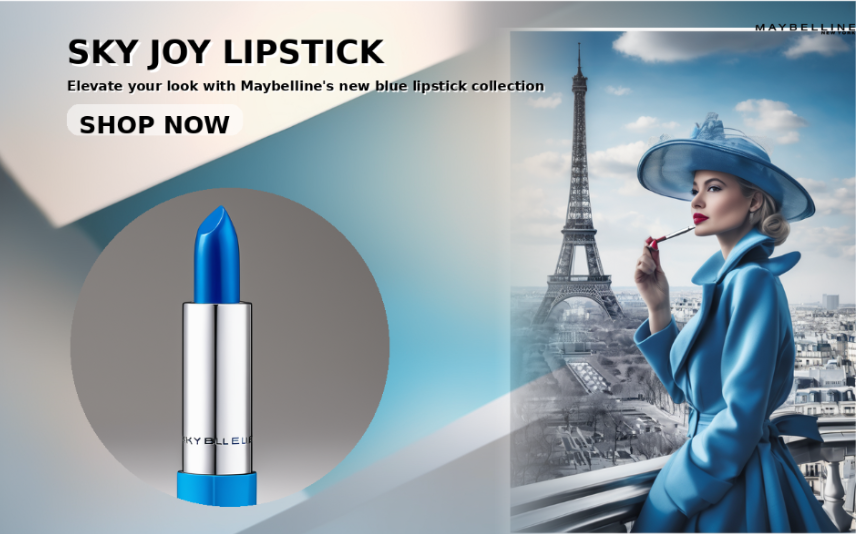
eiffel tower background
-
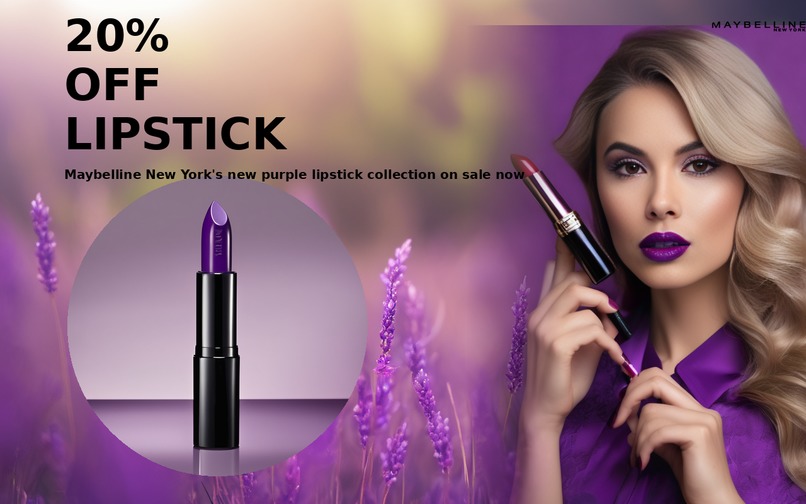
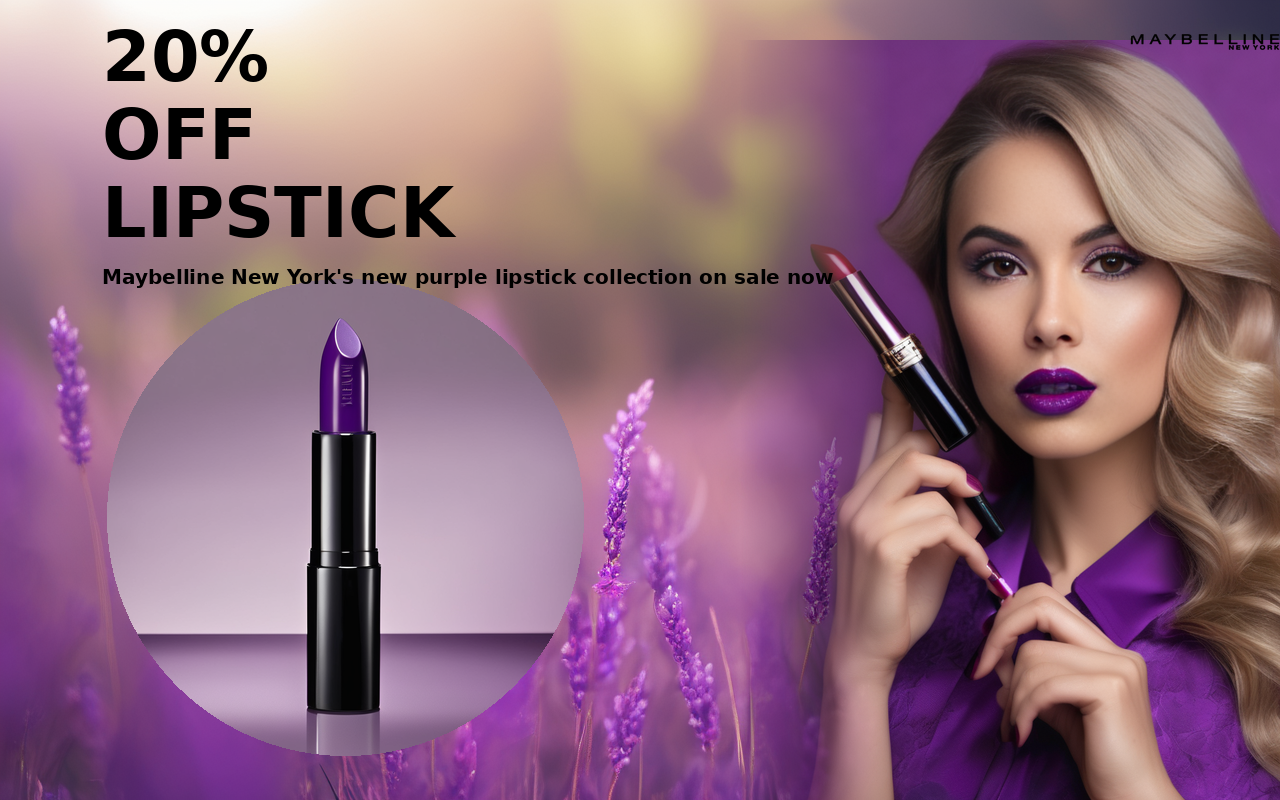
poster generated for sale of lipsticks at maybelline
💡 Inspiration
BrandDiffusion was born from a problem I repeatedly saw in the creator economy:
"Blank Canvas Paralysis" combined with "Brand Safety Anxiety."
Small business owners and marketers using tools like Adobe Express want fast, high-quality visuals, but they also need:
- Brand accuracy
- Product fidelity
- Cultural relevance
- Immediate usability
Generative AI is powerful, but it is unpredictable. If a user asks for "Diwali Sale", most models generate generic lights and fireworks while missing cultural elements like diyas and rangoli. If they ask for "Launch our new sneakers", the product shape often changes, logos distort, and hands appear incorrectly holding objects.
I wanted to build a system that does not just generate images, but understands Marketing Intent.
A system that knows the difference between:
- A Product Launch → product accuracy is critical
- A Festival Greeting → emotion and cultural aesthetics matter
- A Sale Campaign → urgency and clarity matter
and enforces brand compliance so the output is production-ready.
⚙️ How I Built It
BrandDiffusion is a modular, multi-stage pipeline written in Python and designed as a backend for an Adobe Express Add-on.
It follows a Generate → Verify → Composite architecture.
Instead of returning one flat image, it outputs an editable design system:
- Background layer
- Subject (person) layer
- Hero product layer
- Logo layer
- Text and layout metadata
Each asset is exported separately so Adobe Express can treat them as independent, editable layers.
🧠 AI Brain – Intent & Use Case Detection
Before any generation, I analyze the user's marketing intent using Llama-3 (via Groq):
$$P(\text{intent}) \in {\text{Product Launch},\ \text{Festival},\ \text{Sale},\ \text{General}}$$
This decision controls:
- Whether the exact product must be preserved
- Whether festival objects should replace retail products
- How much creative freedom the background gets
- What kind of marketing copy is generated
For example:
- "Happy Diwali wishes" → diyas, rangoli, festive decor
- "Christmas sale on shoes" → shoes, not ornaments
This layer prevents most AI hallucination errors.
🎭 Event Booster Engine
The Event Booster is the heart of BrandDiffusion V39:
Event Priority Boost
Festival keywords (Diwali, Christmas, Eid) are strongly emphasized in prompts.
Background Freedom Mode
For festivals:
$$\text{ControlNet Scale} = 0.05$$
This allows creative generation of lights, fireworks, and decorations.
Cultural Context Injection
The system auto-injects:
- Traditional clothing
- Festival lighting
- Region-appropriate decor
So users never need expert prompt engineering.
🖼 Diffusion Factory – Controlled Visual Synthesis
I use Stable Diffusion XL + ControlNet (Canny) with adaptive control:
| Use Case | ControlNet Scale |
|---|---|
| Festival | 0.05 |
| Sale | 0.60 |
| Product Launch | 0.40 |
This creates a balance:
$$\text{Creativity} \uparrow \text{ for emotional campaigns}$$
$$\text{Fidelity} \uparrow \text{ for product campaigns}$$
🧍 Human Refinement Pipeline
AI often fails on faces and hands. I solved this using:
- MediaPipe → hand landmark detection
- GFPGAN → face restoration
- SDXL inpainting → local corrections
$$\text{Mask}_{\text{hands}} = \text{Dilate}(\text{MediaPipe}(\text{Image}))$$
Only damaged areas are refined, keeping realism intact.
📐 PosterLLaMA – Professional Layout Intelligence
I trained a PosterLLaMA-style layout model using:
https://huggingface.co/datasets/creative-graphic-design/PKU-PosterLayout
This dataset contains professionally designed posters with bounding box annotations.
The model learns real graphic design principles and outputs bounding boxes for:
- Title
- Subheading
- Product
- Logo
- Call-to-Action
This turns AI images into designer-quality compositions.
✍️ Text Rendering Engine
Diffusion models are unreliable for text, so I removed text generation entirely from AI.
Workflow:
- PosterLLaMA predicts layout boxes
- LLM generates grounded marketing copy
- Python Pillow renders text inside boxes
Guaranteeing:
- Zero spelling mistakes
- Brand-safe typography
- Print-ready quality
🧩 Layered Output for Adobe Express
Each poster exports:
layer_1_background.png
layer_2_subject.png
layer_3_hero.png
layer_4_logo.png
response.json
This allows users in Adobe Express to:
- Move, rotate, resize elements
- Change product color
- Replace backgrounds
- Swap logos
- Animate components
BrandDiffusion does not generate an image.
It generates an editable design file.
🎯 Exact Product Preservation Mode
If the user requests:
"Use the exact product from my reference image"
The system:
- Skips AI generation
- Uses the uploaded product directly
Guaranteeing:
$$\text{Product Fidelity} = 100\%$$
This is critical for e-commerce brands.
🌍 Context Switching
Users can re-imagine any product anywhere:
"Show this Nike shoe in a desert at sunset"
The product remains identical.
Only the background is regenerated.
This makes BrandDiffusion a visual recontextualization engine.
🧠 What I Learned
- Pipeline Engineering > Prompt Engineering
- Brands need trust more than creativity
- Design requires layout control, not just image generation
- Marketing AI must understand intent before creating visuals
🚧 Challenges I Faced
Floating Product Problem
Solved using depth-aware compositing and lighting alignment.
Correctly identifying which bounding box needs to fit which model
Hand Deformation
Solved using MediaPipe + targeted inpainting.
Festival vs Product Confusion
Solved by strict AI intent classification and rule enforcement.
🚀 Final Thought
BrandDiffusion transforms Generative AI from an image generator into a real marketing design engine.
It is:
- Editable
- Layer-based
- Brand-safe
- Culturally aware
- Marketing-intelligent
It does not generate images.
It generates campaign-ready design systems.
✅ Credibility & Current State
BrandDiffusion is not a concept project. It is already a working, end-to-end system.
The full pipeline exists:
- Intent understanding
- Reference image analysis
- Diffusion-based generation
- Layer separation
- Adobe Express–ready outputs
It already generates:
- Background
- Hero product
- Subject
- Logo
- Text layout metadata
as separate, editable layers.
This proves BrandDiffusion is not experimental.
It is production-ready design infrastructure.
🔥 Why BrandDiffusion & Call to Action
Most AI tools stop at image generation.
BrandDiffusion goes further and creates editable marketing designs.
It stands out because it:
- Understands marketing intent
- Preserves exact products
- Allows creativity with control
- Fits directly into Adobe Express workflows
BrandDiffusion is not a feature.
It is a new design paradigm.
It bridges AI creativity with real-world branding.
This is where AI becomes usable for serious marketing.
🚀 How We Ship to Market
BrandDiffusion will ship using:
- High-performance GPU servers for fast diffusion inference
- A scalable backend for multiple users
- Adobe Express as the editing and distribution layer
This allows:
- Fast generation
- Reliable performance
- Brand-safe workflows
- Easy adoption by creators and companies
With proper GPU infrastructure and Adobe Express integration,
BrandDiffusion can scale into a commercial AI design engine.
Built With
- controlnet
- gfpgan
- groq-cloud-api
- hugging-face-diffusers
- llama-3
- mediapipe
- openai-clip
- opencv
- pillow
- python
- pytorch
- remove.bg-api
- scikit-learn
- stable-diffusion-xl


Log in or sign up for Devpost to join the conversation.