-
-
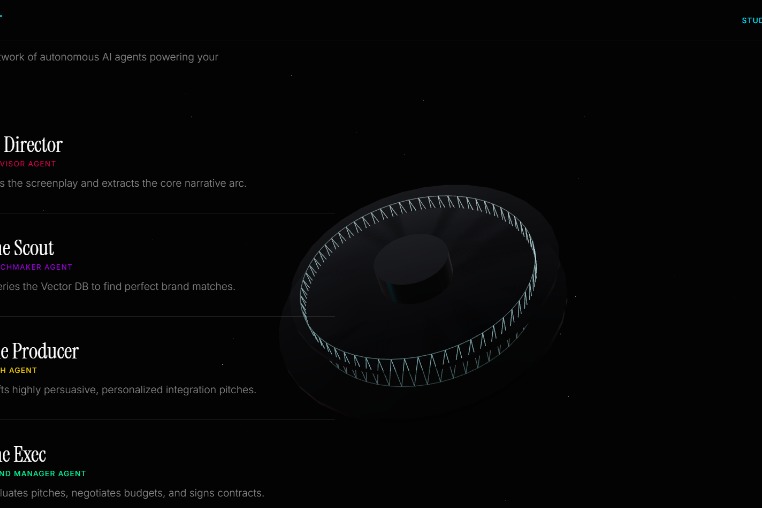
BrandCast AI Agent Crew
-
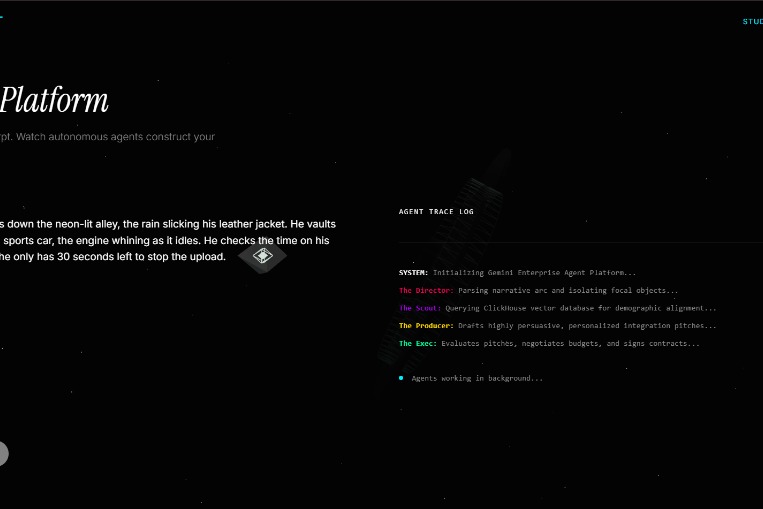
BrandCast AI Agent In Action
-
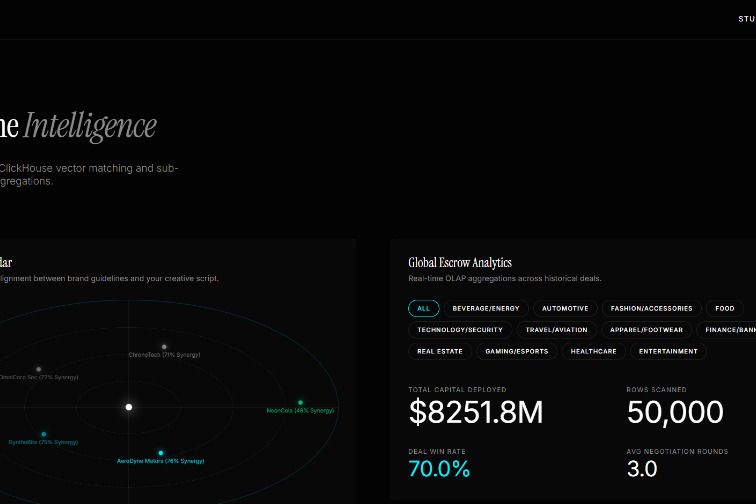
BrandCast Telemetry
-
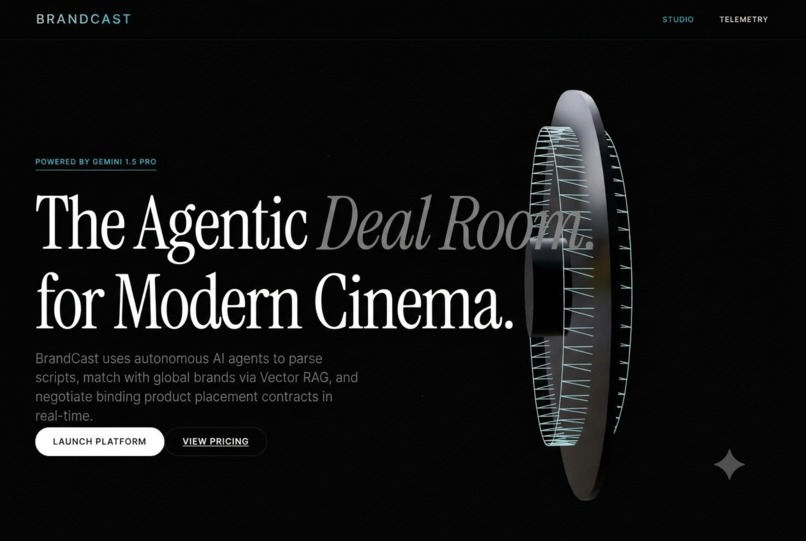
BrandCast Hero
BrandCast: The Agentic Deal Room for Cinema
Inspiration
The product placement industry is a multi-billion dollar walled garden. It is locked behind elite agencies, massive retainers, and months of grueling manual negotiation. Independent creators and mid-sized studios often lack the resources or connections to secure lucrative brand integrations for their films.
We wanted to completely democratize this process. Our inspiration was to build a platform where artificial intelligence agents act as an instantaneous, 24/7 digital agency for filmmakers—capable of reading scripts, mathematically finding the perfect brand partners, and autonomously negotiating binding contracts in seconds.
What it does
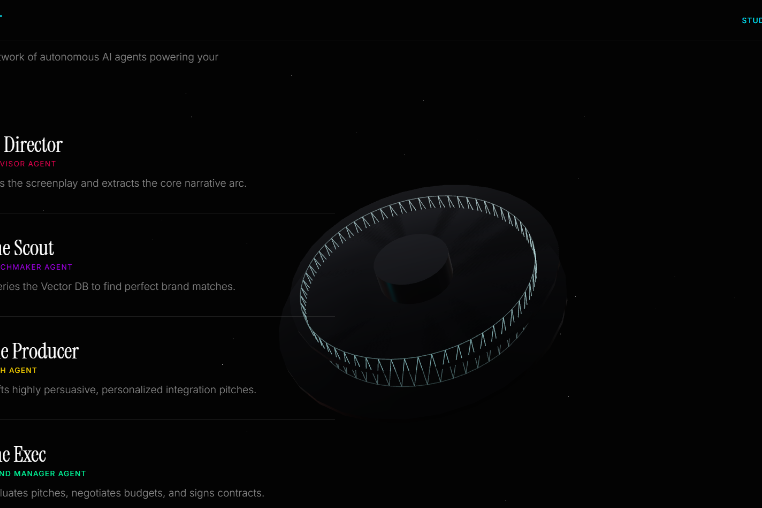
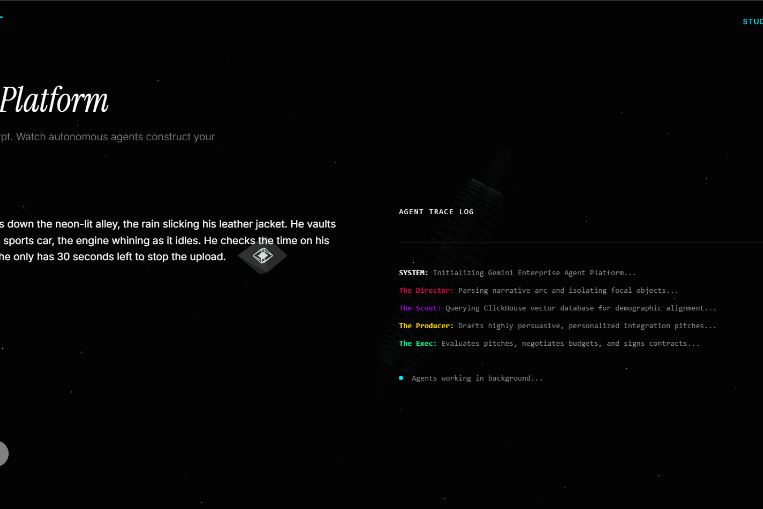
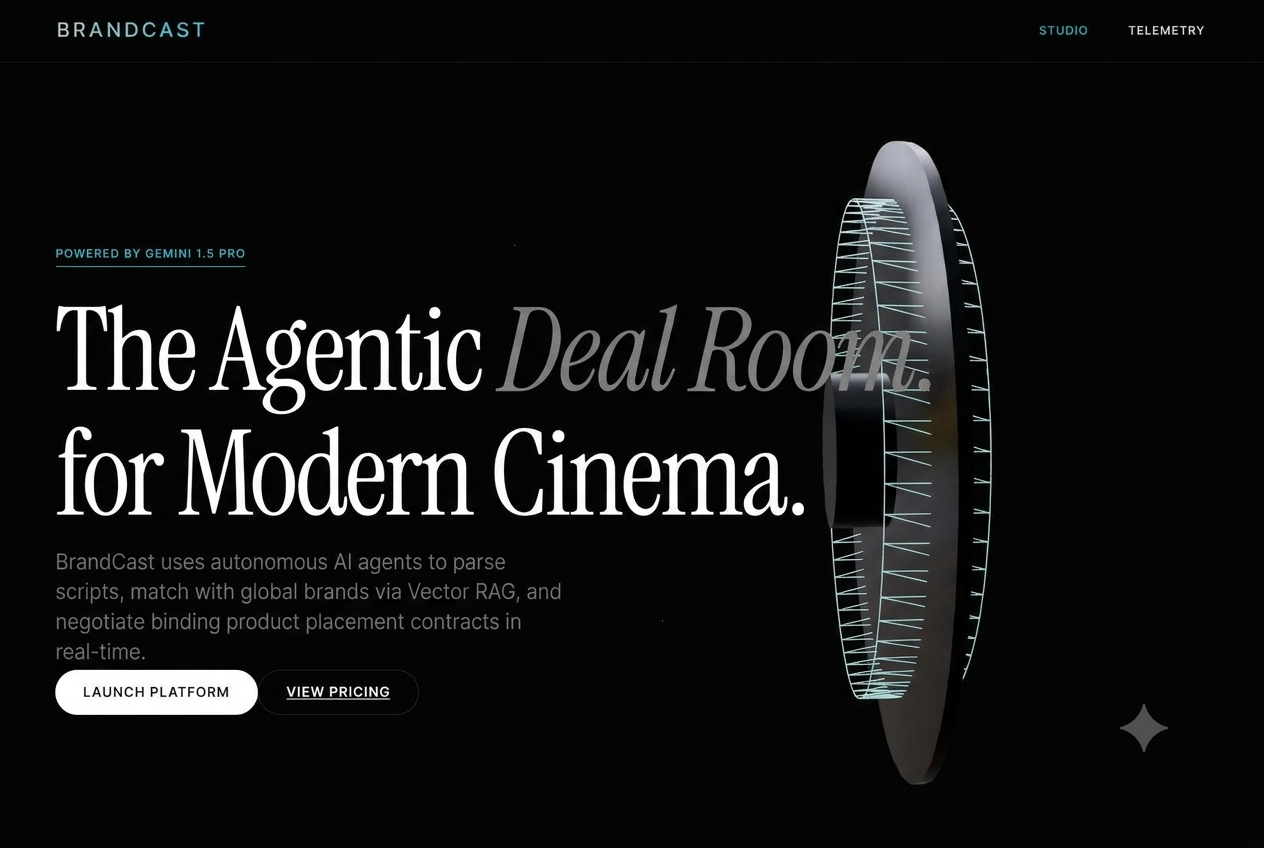
BrandCast is the world's first Agentic Deal Room. Users simply paste an excerpt from their screenplay. Behind the scenes, an orchestrated crew of specialized, autonomous Gemini-powered agents spring into action:
- The Director (Supervisor Agent): Parses the narrative arc and isolates visual focal objects.
- The Scout (Matchmaker Agent): Uses Vector RAG to match the scene's semantic "vibe" against a database of global brands, their target demographics, and their placement budgets.
- The Producer (Pitch Agent): Drafts highly personalized, persuasive B2B integration pitches for each matched brand.
- The Exec (Brand Manager Agent): The user enters a virtual deal room to negotiate live. The Brand Manager Agent evaluates the pitch against its remaining budget, counters offers in real-time, and if a deal is struck, autonomously drafts a binding Memorandum of Understanding (MoU).
How we built it
- Frontend / Backend: Next.js (App Router) deployed on Vercel, utilizing vanilla CSS for an ultra-premium, cinematic dark-mode UI.
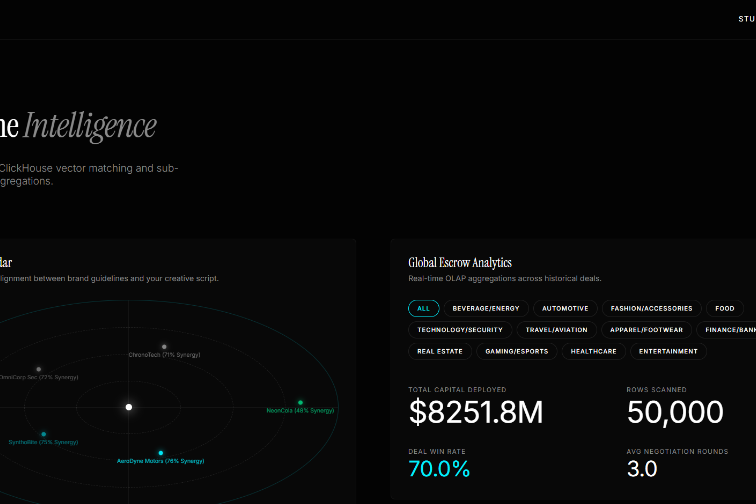
- Vector RAG & Database: We used ClickHouse Cloud as our OLAP and Vector database. We utilized Gemini's embedding models (
gemini-embedding-2) to generate vector representations of brand guidelines. When a script is submitted, we perform real-time Cosine Distance (\cos(\theta) = \frac{\mathbf{A} \cdot \mathbf{B}}{|\mathbf{A}| |\mathbf{B}|}) calculations in ClickHouse to find the most mathematically aligned brands. - Agentic Orchestration: We utilized the official
@google/genaiSDK. To ensure instant, hackathon-friendly response times, we deliberately chosegemini-3.5-flash-litefor the rapid-fire decision engine, ensuring the AI could reason and counter-offer instantly.
Challenges we ran into
The biggest challenge was the conflict between the sheer complexity of multi-agent negotiations and the strict 10-second serverless execution timeouts on free-tier cloud platforms.
Initially, forcing the LLM to decide on a deal and draft a massive legal contract in one monolithic JSON block resulted in constant timeouts.
We solved this by architecturally decoupling the AI brain: we built a lightning-fast "Decision Engine" that strictly outputs JSON logic (ACCEPT/COUNTER/REJECT), and a completely separate "Drafting Engine" that uses Web Streams to pipe the contract text back to the client chunk-by-chunk. This bypassed the timeout limits while creating a beautiful, real-time "live-typing" effect on the frontend.
Accomplishments that we're proud of
- Premium UX/UI: Achieving a buttery smooth, incredibly premium user interface that feels like a high-end Enterprise SaaS product rather than a typical weekend hackathon MVP.
- Real-Time Vector Matching: Successfully integrating ClickHouse Vector Search to make semantic matchmaking across thousands of data points feel instantaneous.
- The Streaming Architecture: Splitting the agent's logic into decoupled micro-services so that the AI can negotiate instantly and then stream a contract live in front of the user's eyes. It provides an incredible "wow" factor.
What we learned
We learned the critical importance of "right-sizing" LLMs for the specific task at hand. Bigger isn't always better when latency is the enemy. By utilizing gemini-3.5-flash-lite, we achieved near-instantaneous reasoning that allowed our agents to converse back and forth without testing the user's patience. We also learned how powerful integrating standard Web Streams in Next.js can be for drastically improving perceived performance in generative AI apps.
What's next for BrandCast
We envision integrating a fully visual pipeline. Instead of just pasting script text, filmmakers will upload actual video storyboards, and BrandCast will use Gemini Pro Vision to analyze the frames for placement opportunities. We also plan to integrate digital escrow smart contracts so that when the Agentic Brand Manager signs the Term Sheet, funds are automatically locked and released upon film distribution.
Built With
- ai-agents
- b2b-sales
- clickhouse
- cosine-similarity
- edge-computing
- gemini-1.5-pro
- gemini-flash-lite
- generative-ai
- google-gemini
- javascript
- llm
- multi-agent-systems
- next.js
- node.js
- product-placement
- rag
- react
- react-three-fiber
- serverless
- three.js
- ui/ux-design
- vector-database
- vector-search
- vercel
- web-streams


Log in or sign up for Devpost to join the conversation.