-
-
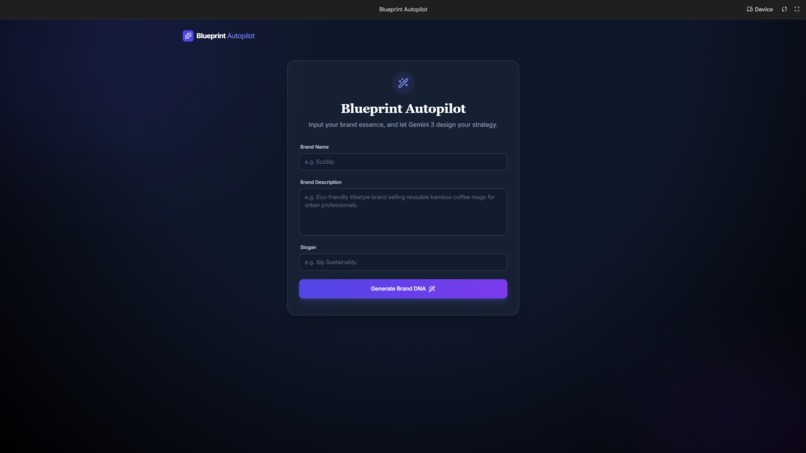
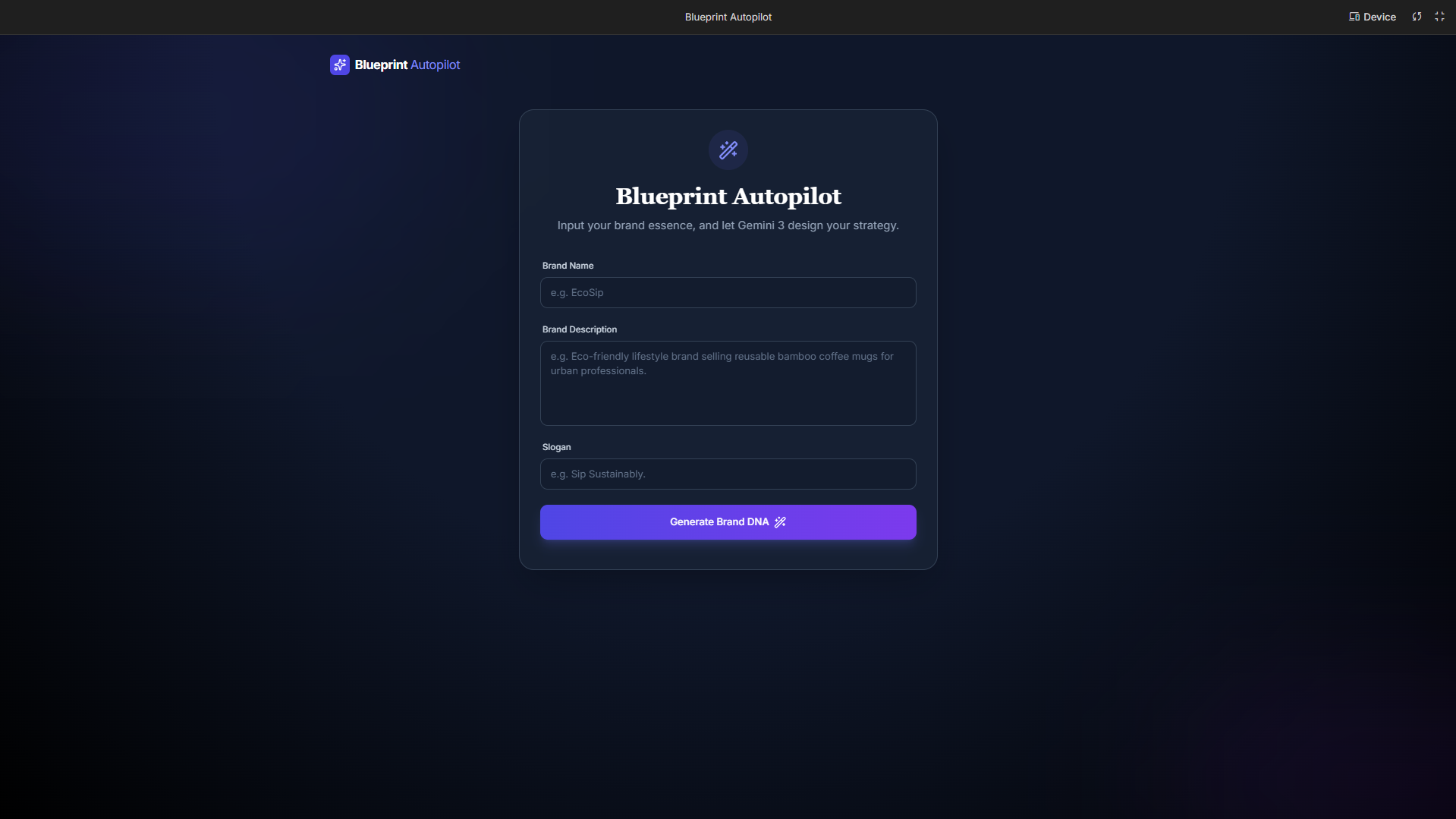
Brand input interface where users define brand identity, goals, tone, and constraints before generation.
-
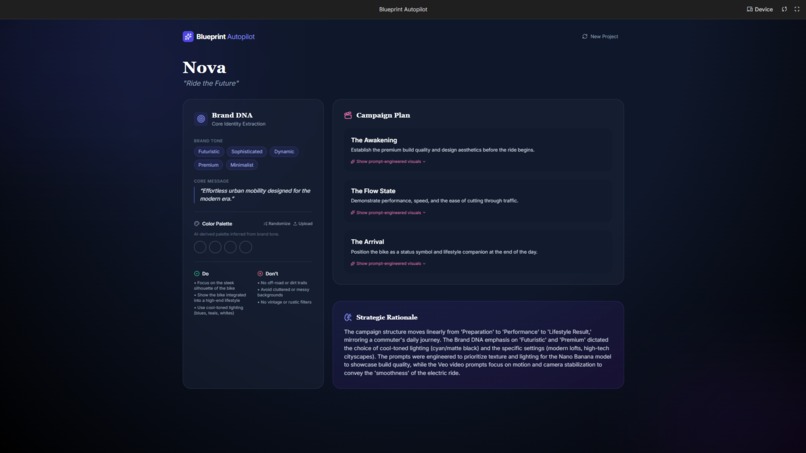
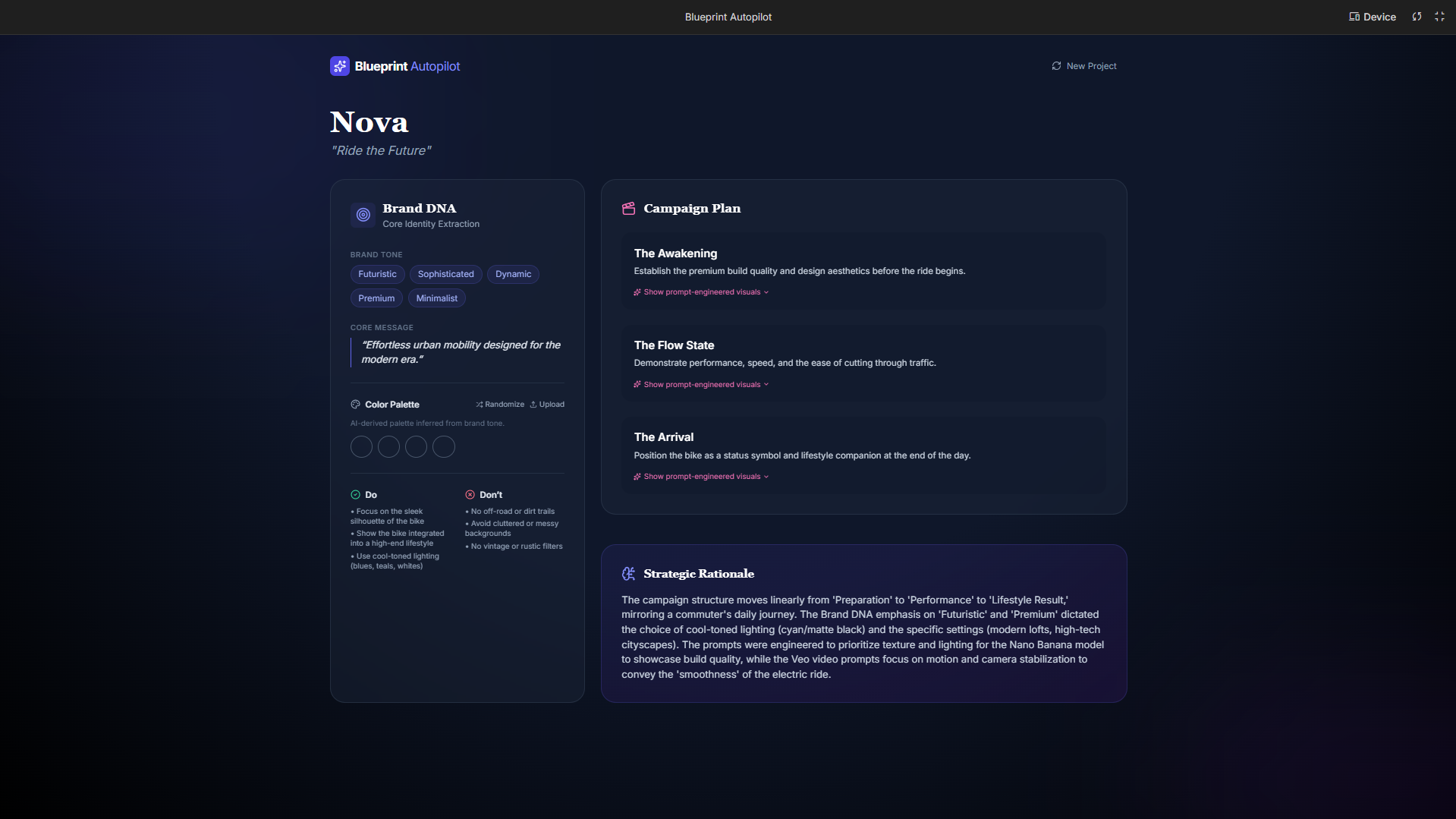
AI-generated Brand DNA and campaign structure, presenting strategic outputs in a clear, scannable format.
-
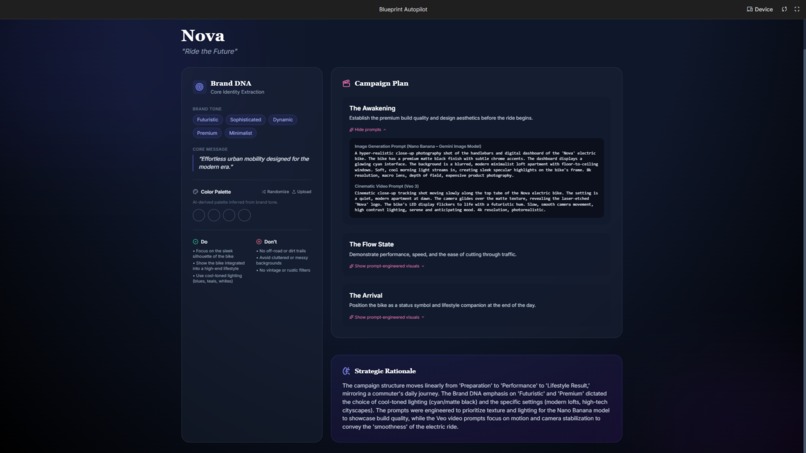
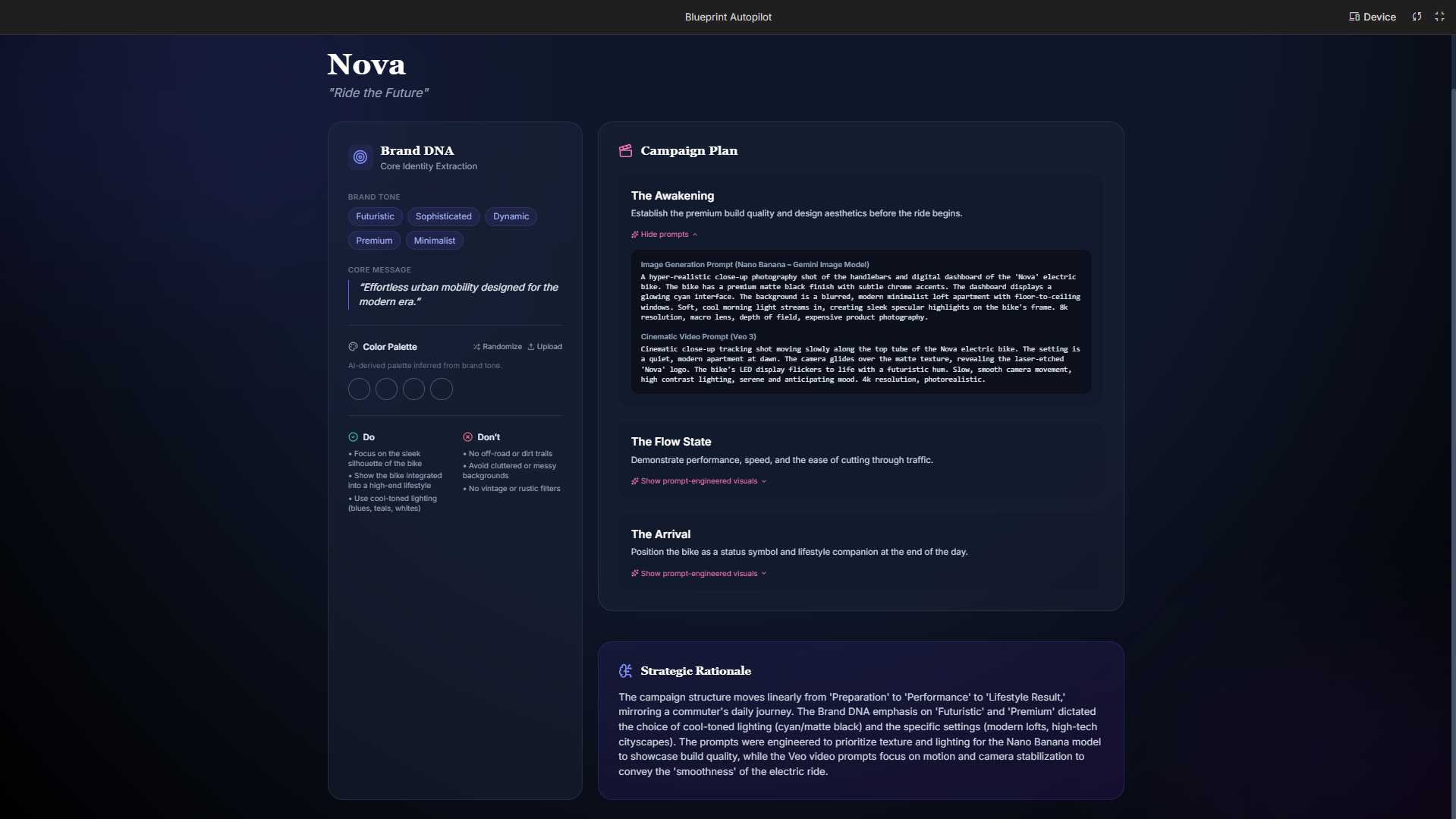
Expanded view showing prompt-engineered outputs, including detailed Gemini and Veo-ready prompts for visual creation.
About the project Blueprint Autopilot was built to solve a growing gap in generative AI workflows: while models can create images and videos, brands still struggle with strategy, consistency, and creative direction. The project explores how AI can act not just as a generator, but as a creative strategist—producing structured brand thinking that directly informs high-quality generative outputs.
Inspiration The inspiration came from observing how most generative tools jump straight to visuals without understanding brand identity. This often leads to outputs that look impressive but lack coherence, consistency, or strategic intent. Blueprint Autopilot was inspired by how creative directors work in the real world—starting with brand DNA, then campaign structure, and only then producing visuals.
What it does: Blueprint Autopilot takes three simple inputs: The Brand name, Brand description and the Slogan and from this, it generates:
A Brand DNA (with tone, audience, core message, visual rules, do/don’t guidelines), a simple 3 scene campaign plan with narrative structure and Industry standard prompt-engineered image and video prompts designed for generative models (Nano Banana & Google Veo) that help bring the scene into reality. The result is a complete creative blueprint that can be used directly to generate consistent, on-brand visuals.
How we built it The app is built using Google AI Studio.
At its core: Gemini is used not to generate images, but to reason like a creative director and help flesh out ideas and creative stories. Moreover, Strict JSON schemas enforce reliable, structured outputs. The campaign scenes include expandable sections with ready-to-use generative prompts for both video (Google Veo) and images(Nano Banana). The UI emphasizes clarity, simplicity, hierarchy, and presentation-readiness
The system deliberately separates strategy from execution, making AI outputs more controllable and brand-safe.
Challenges we ran into: Designing prompts that reliably produce structured strategy rather than generic text Enforcing strict JSON schemas to avoid hallucinated or malformed outputs Translating abstract brand concepts into concrete, reusable generative prompts Balancing creative flexibility with brand consistency
Accomplishments that we’re proud of A fully structured, presentation-ready creative output Prompt-engineered visuals that are explainable and reproducible A clean UI that communicates strategy, not just AI novelty A workflow that mirrors real creative industry processes
What we learned Generative AI is far more powerful (and the future of technology ) when guided by intent and structure. Prompt engineering works best when grounded in strategy, not aesthetics alone. Constraints (brand rules, tone, DNA) improve creative outputs rather than limiting them.
What’s next for Blueprint Autopilot Direct image and video generation inside the app Brand memory across multiple campaigns Exportable creative briefs for agencies and teams A streamlined “instant visuals” mode for non-technical users It also democratizes high-end branding for solopreneurs/SMBs; and it is scalable to agencies or e-commerce integrations.

Log in or sign up for Devpost to join the conversation.