Inspiration
Building a strong brand identity is still a fragmented process. Founders and small teams often move between AI chat tools, logo generators, design editors, color-palette tools, and documents just to turn an idea into a usable brand.
We wanted to explore a different approach: what if an AI agent could collaborate with you like a brand strategist and designer, while also taking actions inside an editable design workspace?
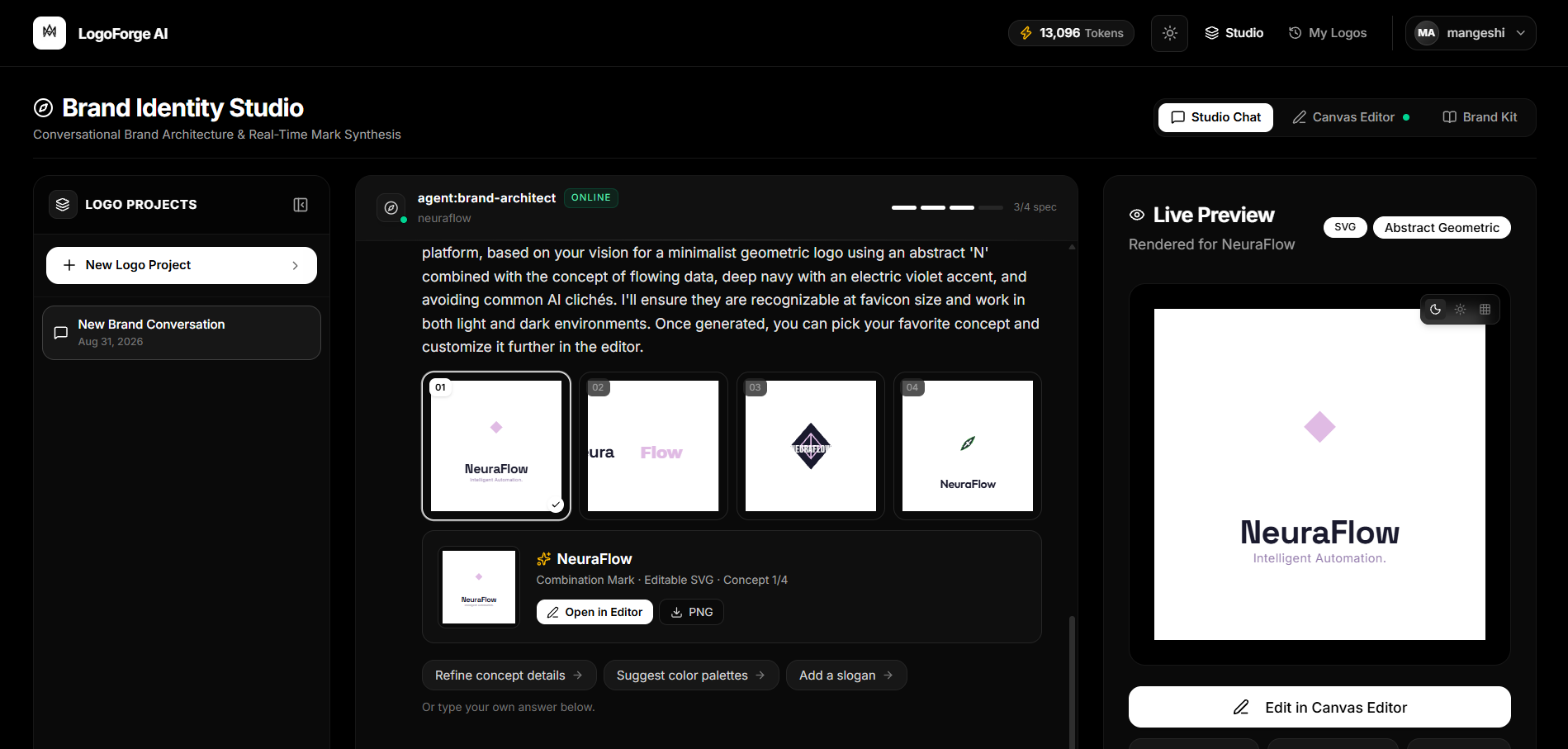
That idea became BrandForge AI — an AI-powered brand identity agent designed to help users move from a simple business idea to a complete, editable visual identity.
Instead of only responding with suggestions or generating a flattened image, BrandForge AI is designed to understand the user's brand, plan the branding workflow, generate concepts, modify structured designs, respond to feedback, and create brand guidelines.
What it does
A user can start with a simple description such as:
"I'm launching a sustainable premium coffee brand for young professionals. I want the identity to feel modern, minimal, and environmentally conscious."
BrandForge AI turns that conversation into a structured brand identity.
The agent can:
- Understand the business, audience, personality, and desired visual direction
- Ask follow-up questions when important information is missing
- Develop a structured brand strategy
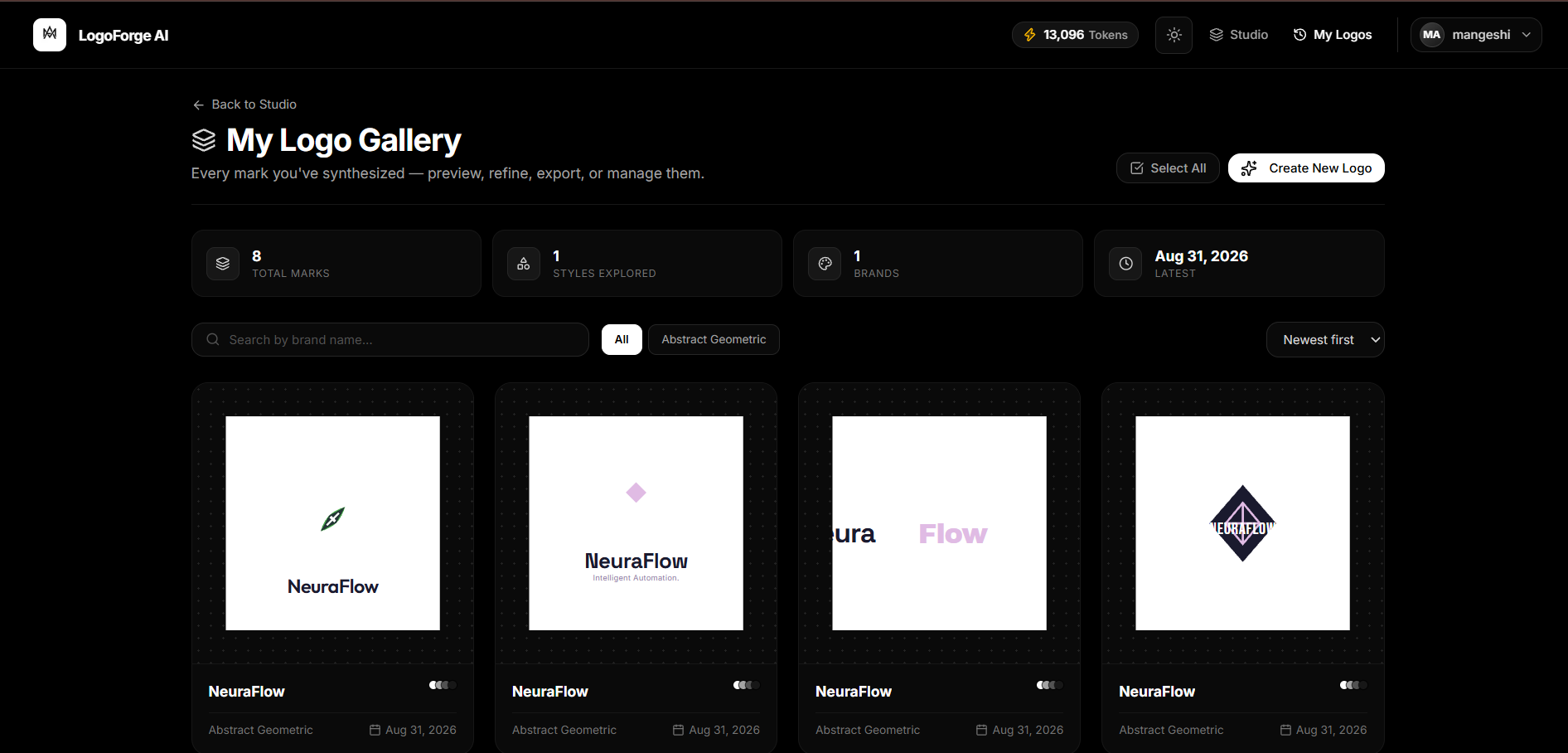
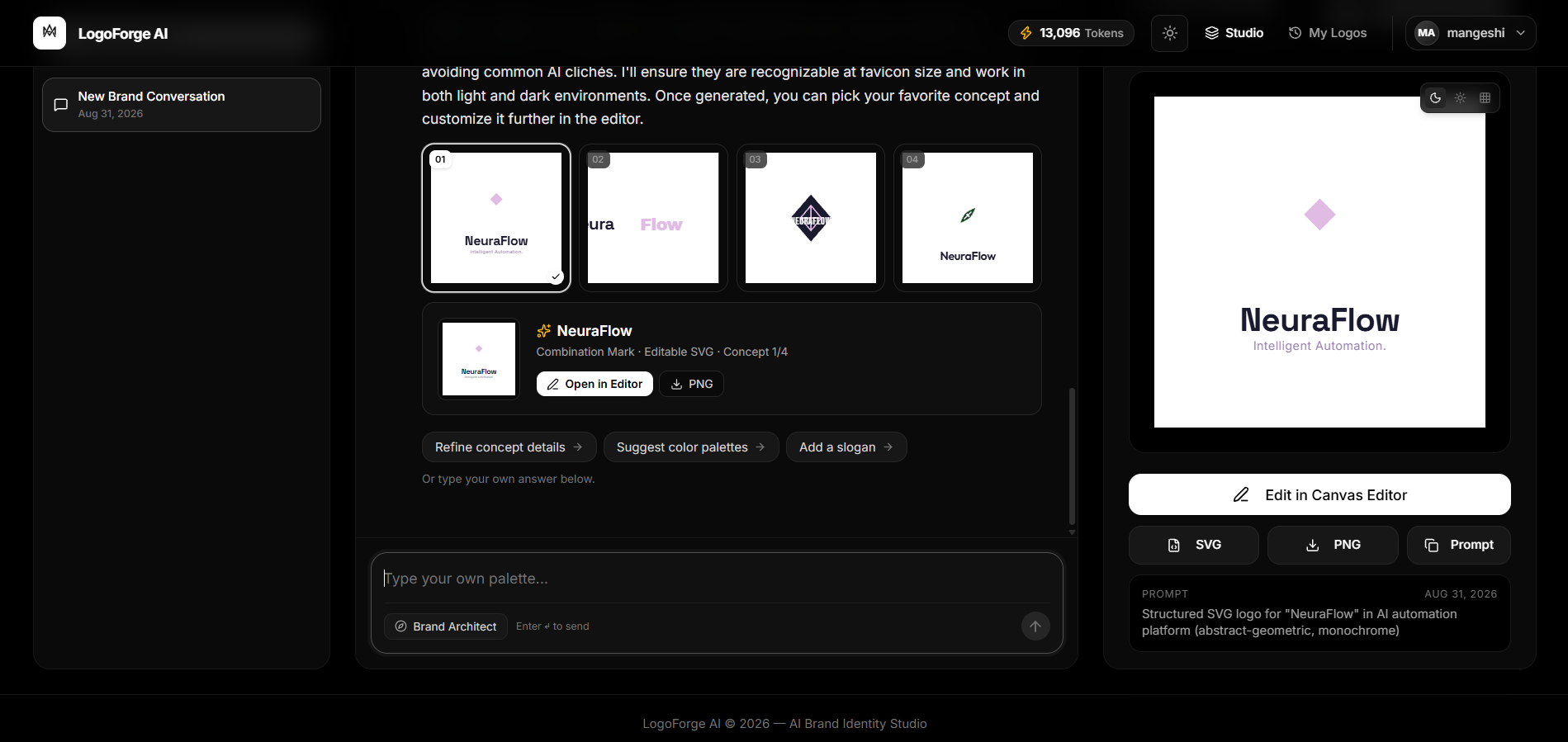
- Generate logo concepts
- Recommend color palettes and typography
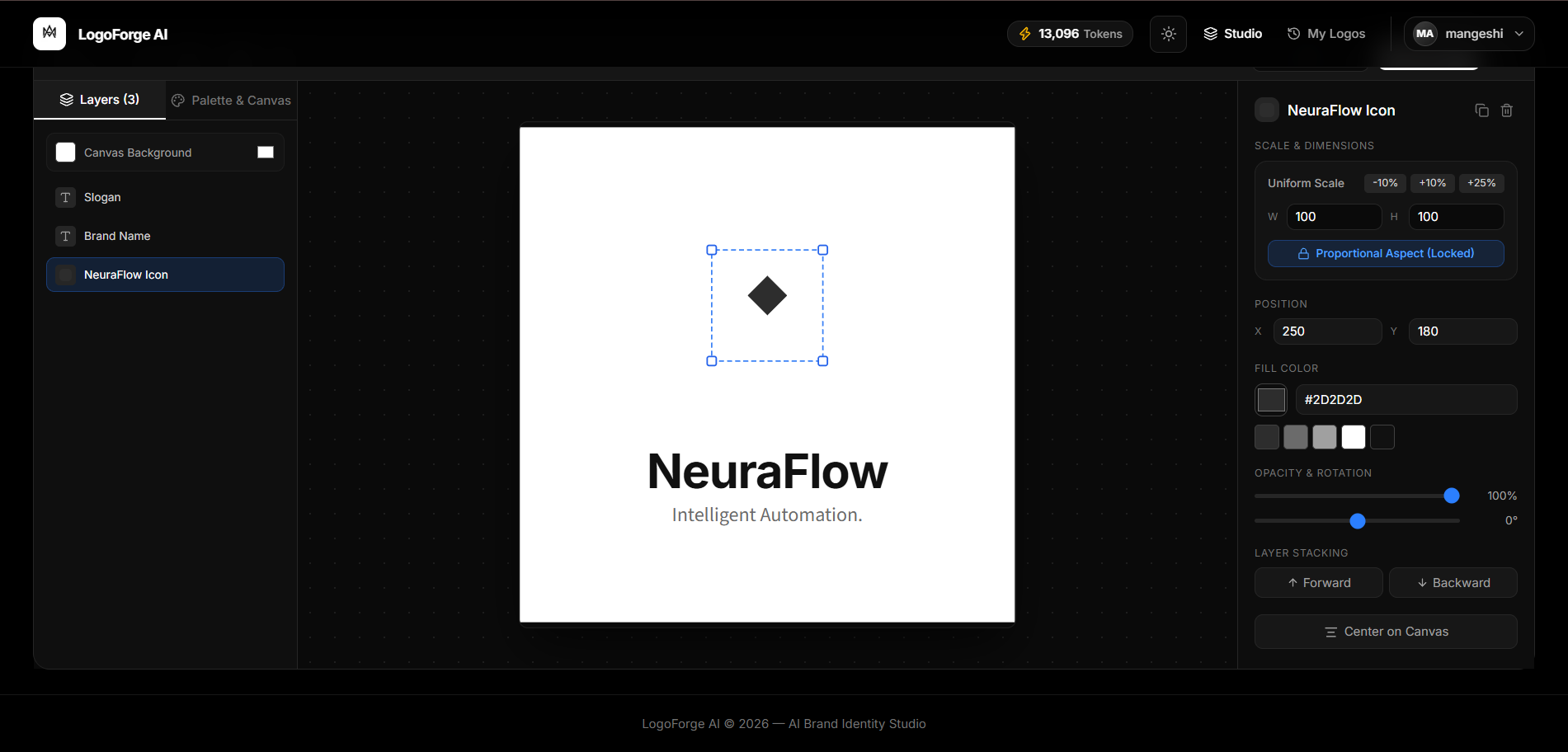
- Create an editable logo workspace
- Translate natural-language feedback into design changes
- Maintain design versions as the identity evolves
- Generate consistent brand guidelines
- Prepare brand assets for export
The goal is to make the experience feel less like prompting an image generator and more like working alongside an AI brand designer.
How we built it
BrandForge AI is being built as a full-stack web application using Next.js and TypeScript.
The interactive design workspace uses Fabric.js, allowing logos to exist as structured, editable canvas objects rather than only flattened images.
At the center of the application is a Gemini-powered AI agent. The agent interprets the user's goals and can invoke controlled application tools for operations such as analyzing the brand, generating design directions, modifying canvas elements, updating the color system, selecting typography, and generating brand guidelines.
For example, a user can request:
"Make the company name larger, simplify the icon, and change the primary color to forest green."
Instead of treating that request only as another image-generation prompt, the agent can translate the instruction into structured design operations that can be applied to the editable canvas.
The application architecture combines:
- Next.js for the application and user experience
- TypeScript for type-safe application development
- Gemini for reasoning, conversation, and agentic decision-making
- Google GenAI tooling for AI integration and tool calling
- Fabric.js for the editable design canvas
- MongoDB for projects, conversations, design state, and version history
- Google authentication for user sign-in
- Google Cloud Run for production deployment
- Google Cloud Storage for generated brand assets
We intentionally separate AI reasoning from execution. The model produces validated, structured actions, while the application controls what operations can actually be performed. This makes the system safer and more predictable than executing arbitrary model-generated code.
Agentic workflow
BrandForge AI follows a multi-step branding workflow:
Understand → Plan → Create → Edit → Refine → Document → Export
The agent maintains context about the brand throughout this process.
Rather than requiring the user to separately prompt different AI tools for strategy, logo creation, colors, typography, and documentation, the agent coordinates these tasks as parts of the same brand identity.
This persistent context also means feedback given during logo refinement can influence the rest of the brand system.
Challenges we faced
One of our biggest challenges was bridging generative AI with a structured visual editor.
Generating an image from a prompt is relatively straightforward. Creating something that remains editable — and allowing an AI agent to reliably modify individual visual elements through natural language — is much more difficult.
We had to think carefully about how to represent canvas objects, identify individual elements, translate natural-language requests into deterministic operations, validate AI-generated actions, and preserve previous versions without losing the user's work.
Another challenge was deciding how autonomous the agent should be.
Branding is subjective, so fully autonomous generation is not always desirable. We designed the workflow around collaboration: the agent can make decisions and take actions, while users remain able to guide, edit, approve, or reverse those decisions.
What we learned
Building BrandForge AI changed how we think about AI-powered creative applications.
A useful creative agent needs more than a powerful model. It needs tools, structured state, memory, constraints, and a reliable execution layer.
We also learned that AI and traditional editors do not need to compete with each other. Combining natural-language interaction with a structured visual canvas can make both approaches more powerful.
Users can describe what they want conversationally while still retaining direct control over their design.
What's next
We see BrandForge AI evolving beyond logo creation into a broader autonomous branding workspace.
Future capabilities could include social media templates, marketing assets, presentation themes, website design systems, packaging concepts, collaborative brand workspaces, and automated brand-consistency checking.
Our long-term vision is simple:
Describe the brand you want to build, collaborate with an AI agent, and leave with a complete identity that you actually own and can continue editing.
Built With
- ai
- cloud-run
- cloud-storage
- docker
- fabric.js
- gemini
- generative-ai
- google-cloud
- google-genai
- google-oauth
- mongodb
- next.js
- node.js
- react
- typescript


Log in or sign up for Devpost to join the conversation.