Inspiration
Our inspiration for Brainy AI stemmed from the desire to create a tool that simplifies the extraction of insights from complex academic documents. We envisioned a solution that could empower researchers and educators by providing them with concise summaries and answers to questions within documents.
What it does
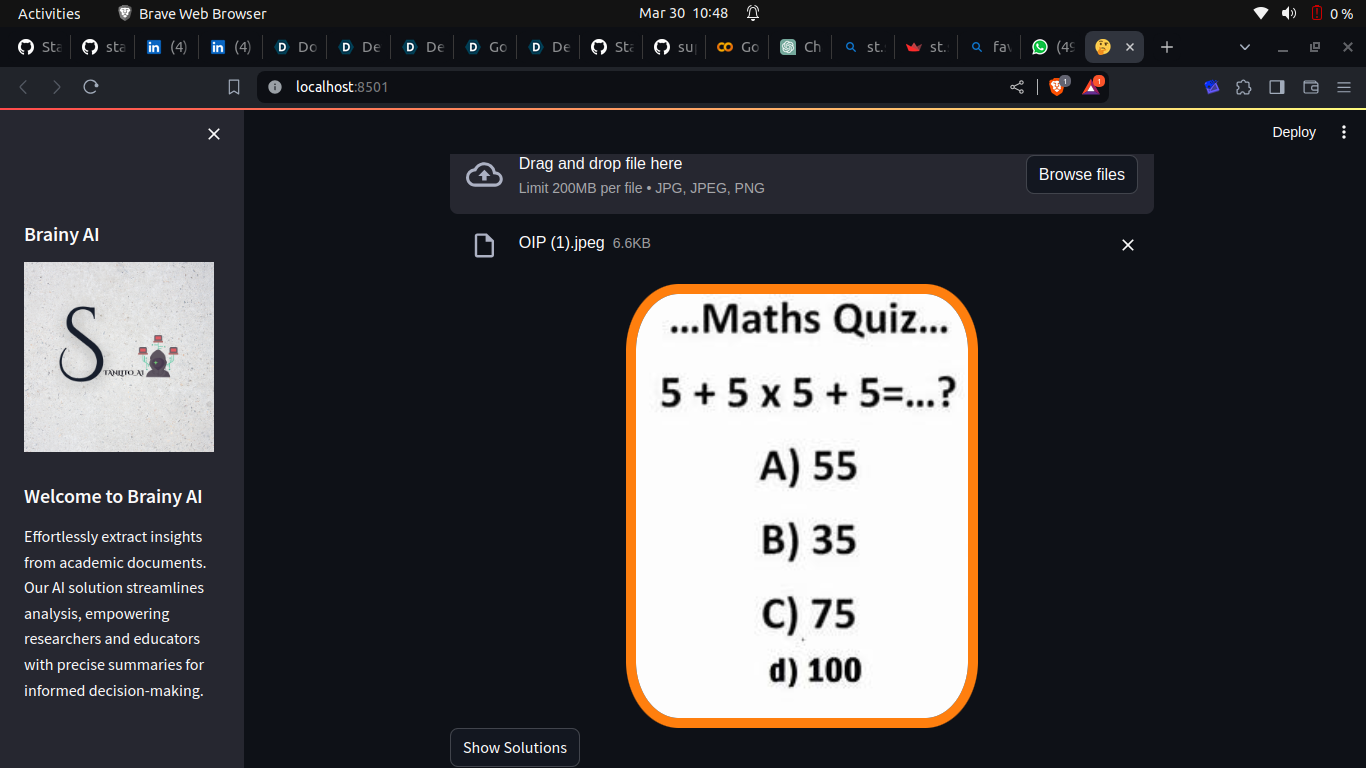
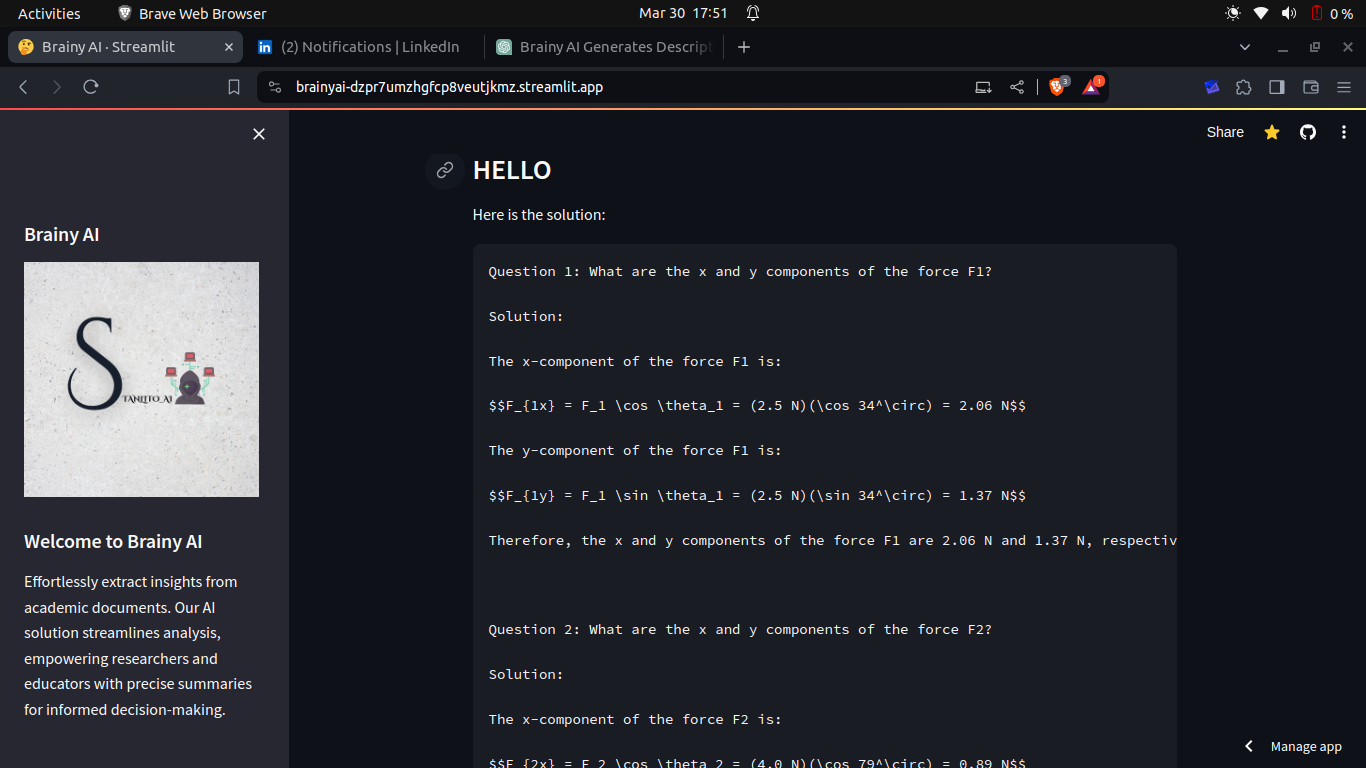
Brainy AI is an AI tool designed to extract and solve questions from documents efficiently. It utilizes advanced AI techniques to analyze text and images, allowing users to generate descriptive summaries and answers to questions contained within the documents.
How we built it
We built Brainy AI using a combination of powerful technologies, including Streamlit for the user interface, Google's generative AI for content generation, and Python for backend processing. The development process involved meticulous planning, experimentation, and integration of various components to ensure seamless functionality and user experience.
Challenges we ran into
During the development of Brainy AI, we encountered several challenges that tested our problem-solving skills and resilience. One significant challenge was fine-tuning the AI models to generate accurate and human-like responses consistently. We also faced technical hurdles in integrating different components and optimizing performance. However, through collaborative effort and perseverance, we overcame these challenges and achieved our goals.
Accomplishments that we're proud of
We're proud to have created Brainy AI, a cutting-edge solution that harnesses the power of AI to simplify document analysis and information extraction. Our accomplishments include developing a user-friendly interface, implementing advanced AI algorithms, and delivering a robust and reliable tool that meets the needs of researchers and educators. Additionally, we're proud of our team's collaboration and dedication throughout the development process.
What we learned
The development of Brainy AI provided us with valuable insights and learning experiences. We gained a deeper understanding of AI technologies, including natural language processing and computer vision. We also learned about the challenges involved in building complex software systems and the importance of user feedback in iterative development. Overall, the project enriched our skills and knowledge, contributing to our growth as software developers and AI enthusiasts.
What's next for Brainy AI
Looking ahead, we have ambitious plans to further enhance and expand the capabilities of Brainy AI. Our future roadmap includes implementing additional features such as language translation, sentiment analysis, and integration with popular document management platforms. We also aim to incorporate user feedback to continuously improve the accuracy and usability of the tool. Ultimately, we envision Brainy AI becoming a indispensable tool for researchers, educators, and professionals seeking to extract insights from documents efficiently and effectively.


Log in or sign up for Devpost to join the conversation.