-
-
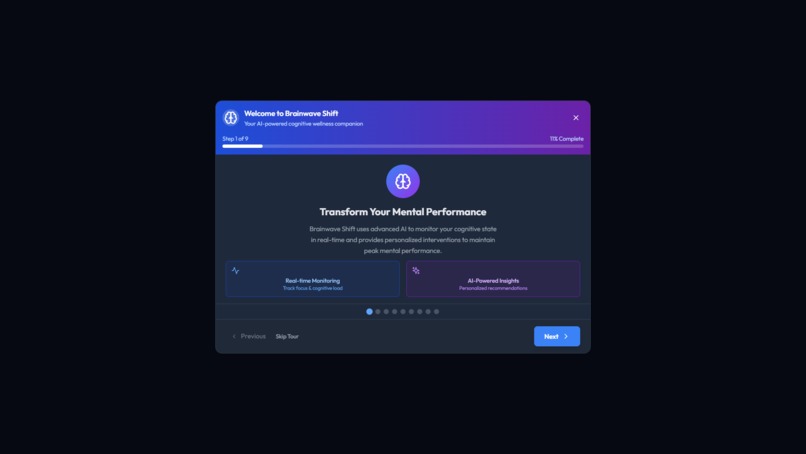
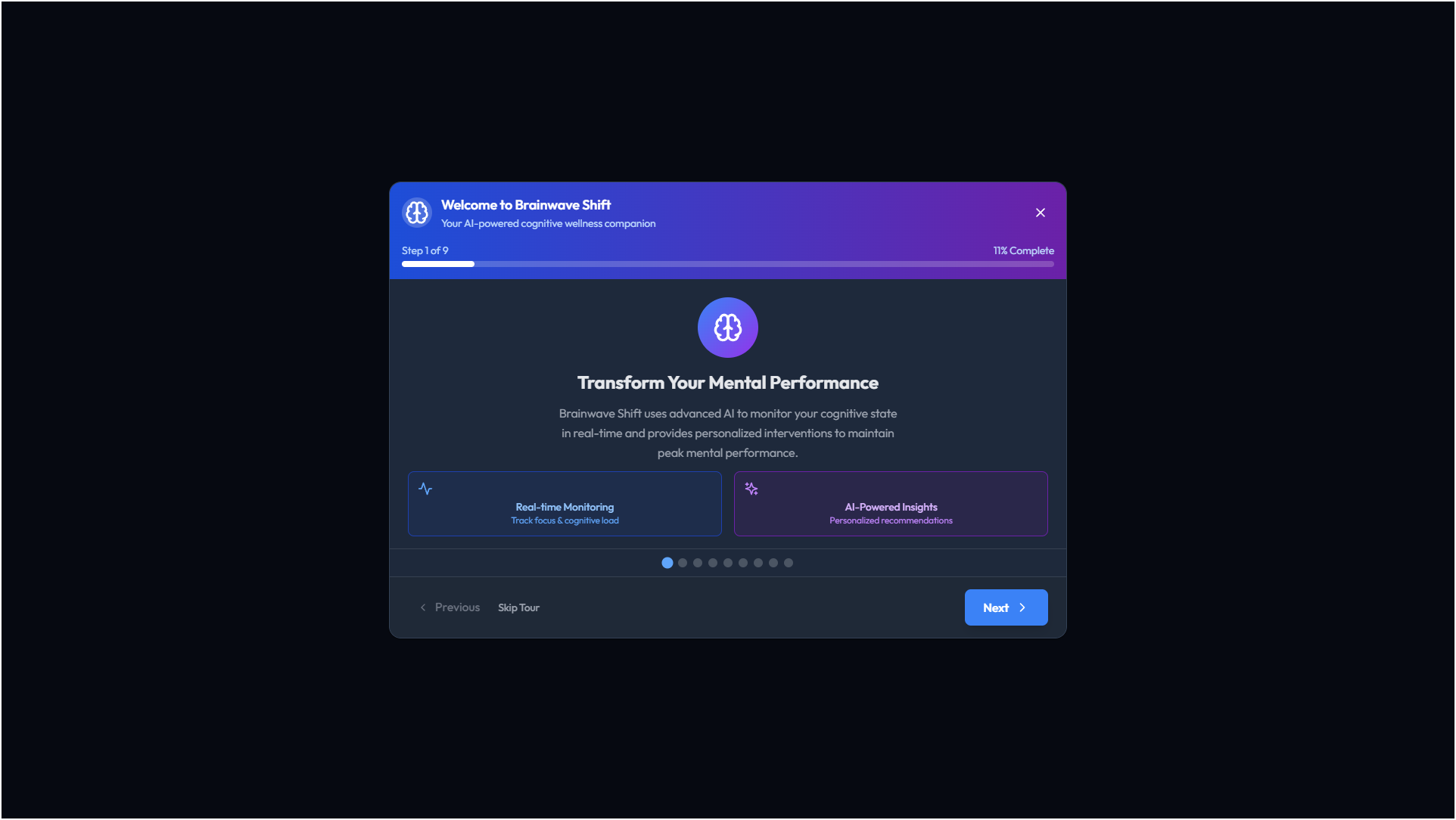
Onboarding Step 1
-
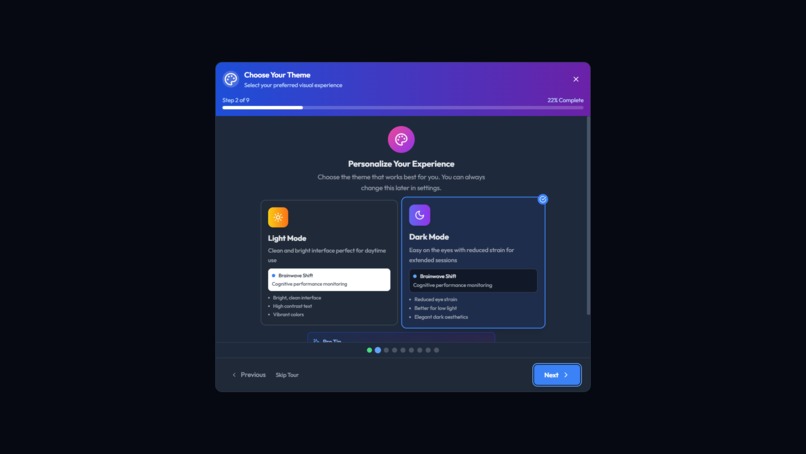
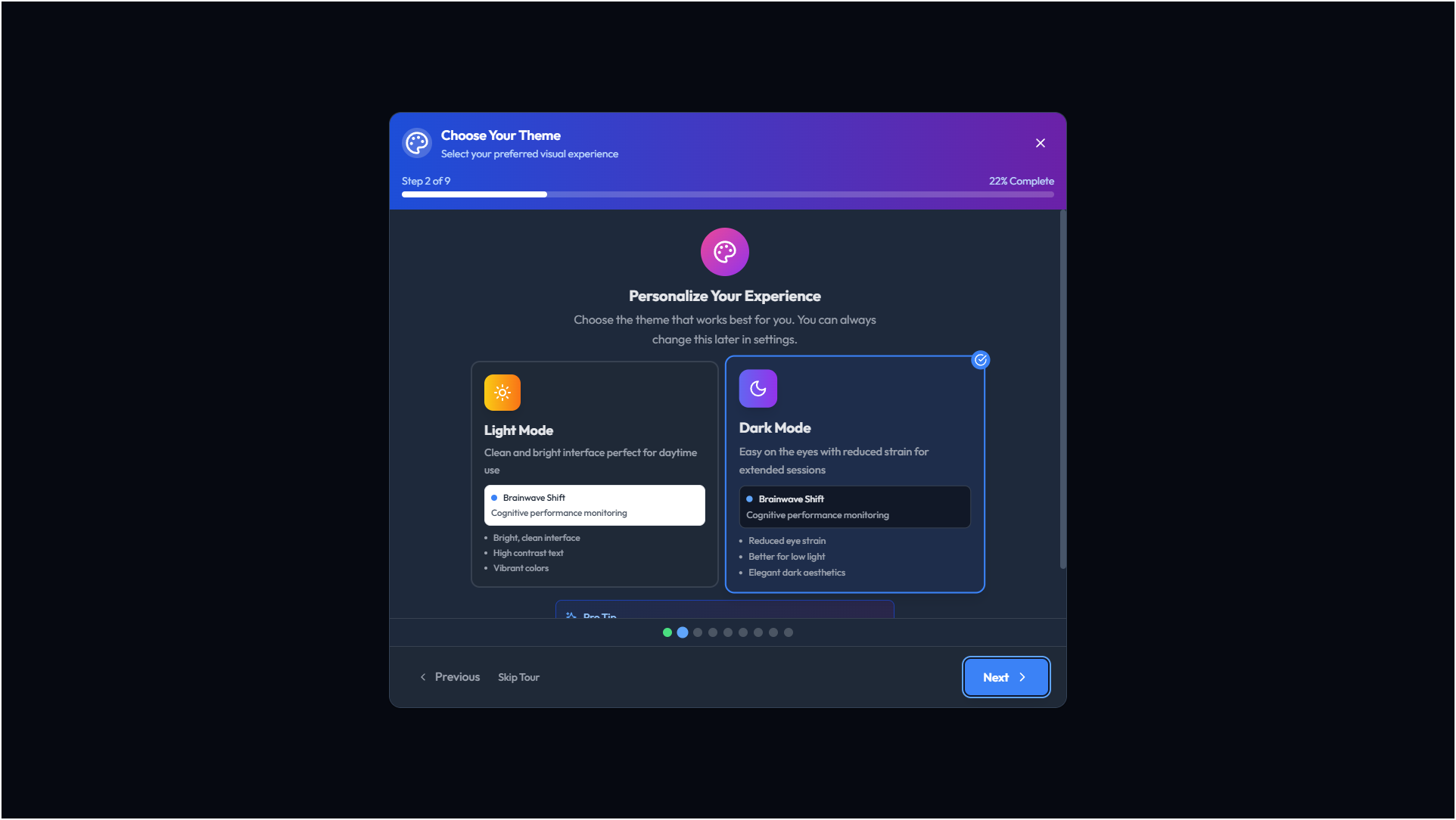
Onboarding Step 2
-
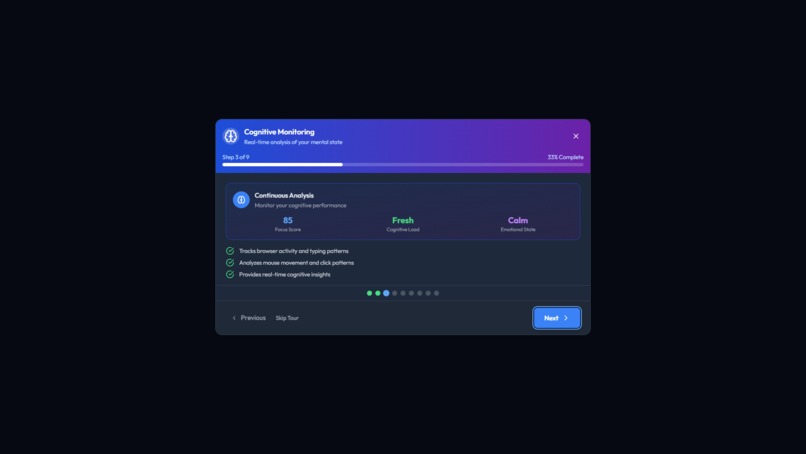
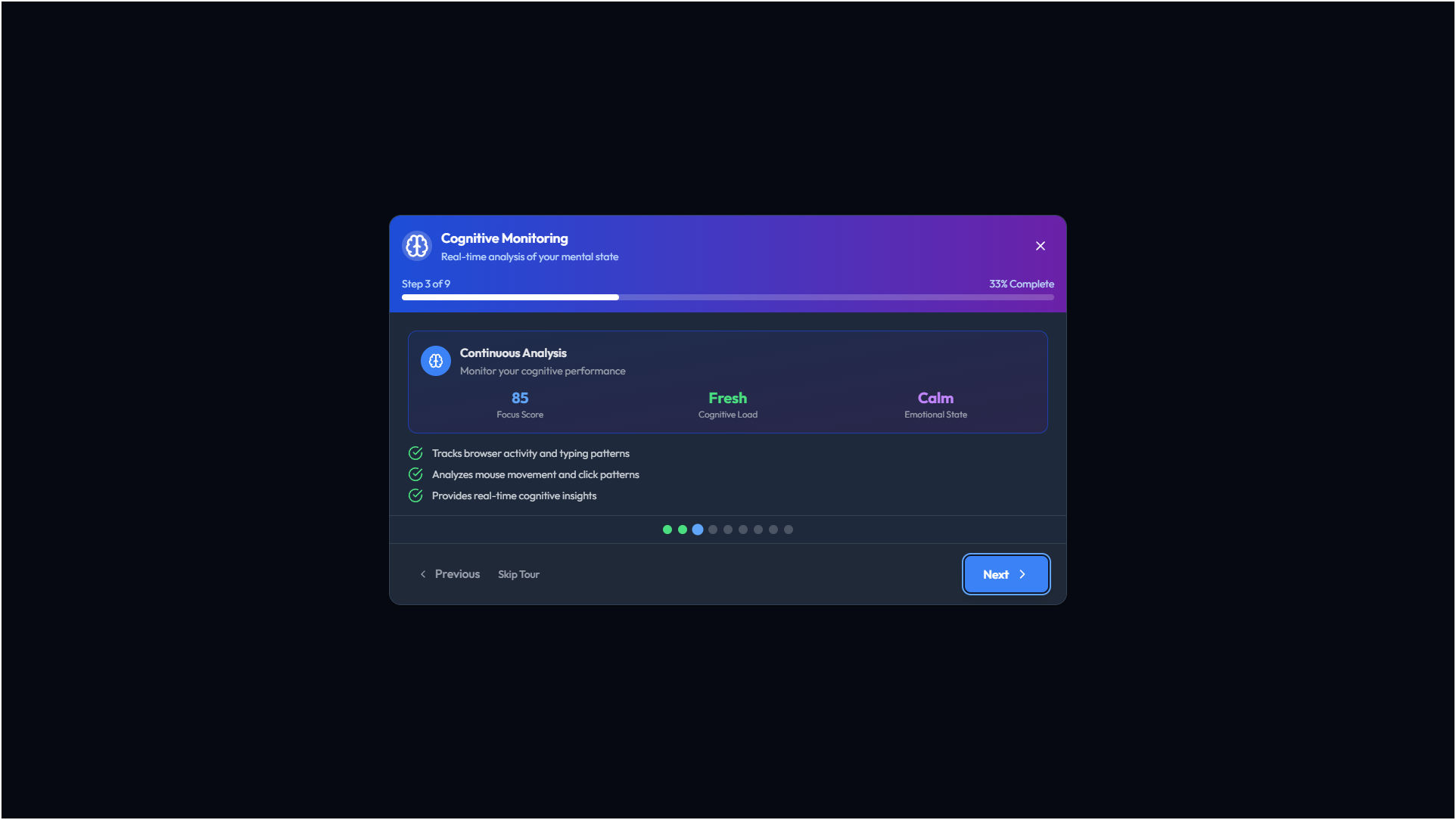
Onboarding Step 3
-
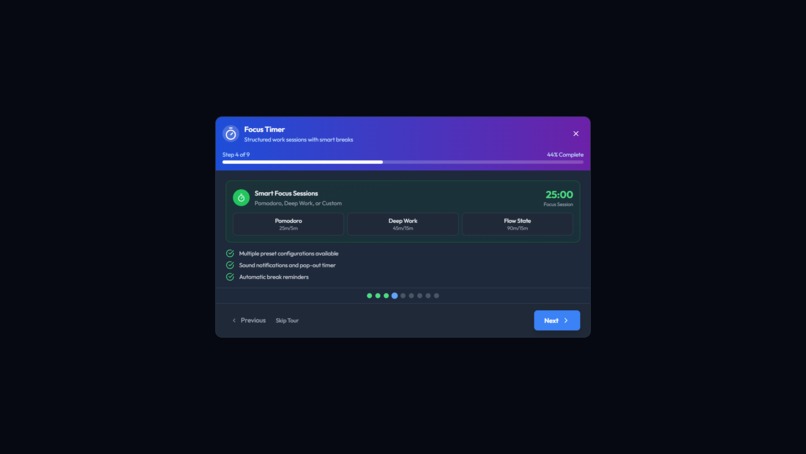
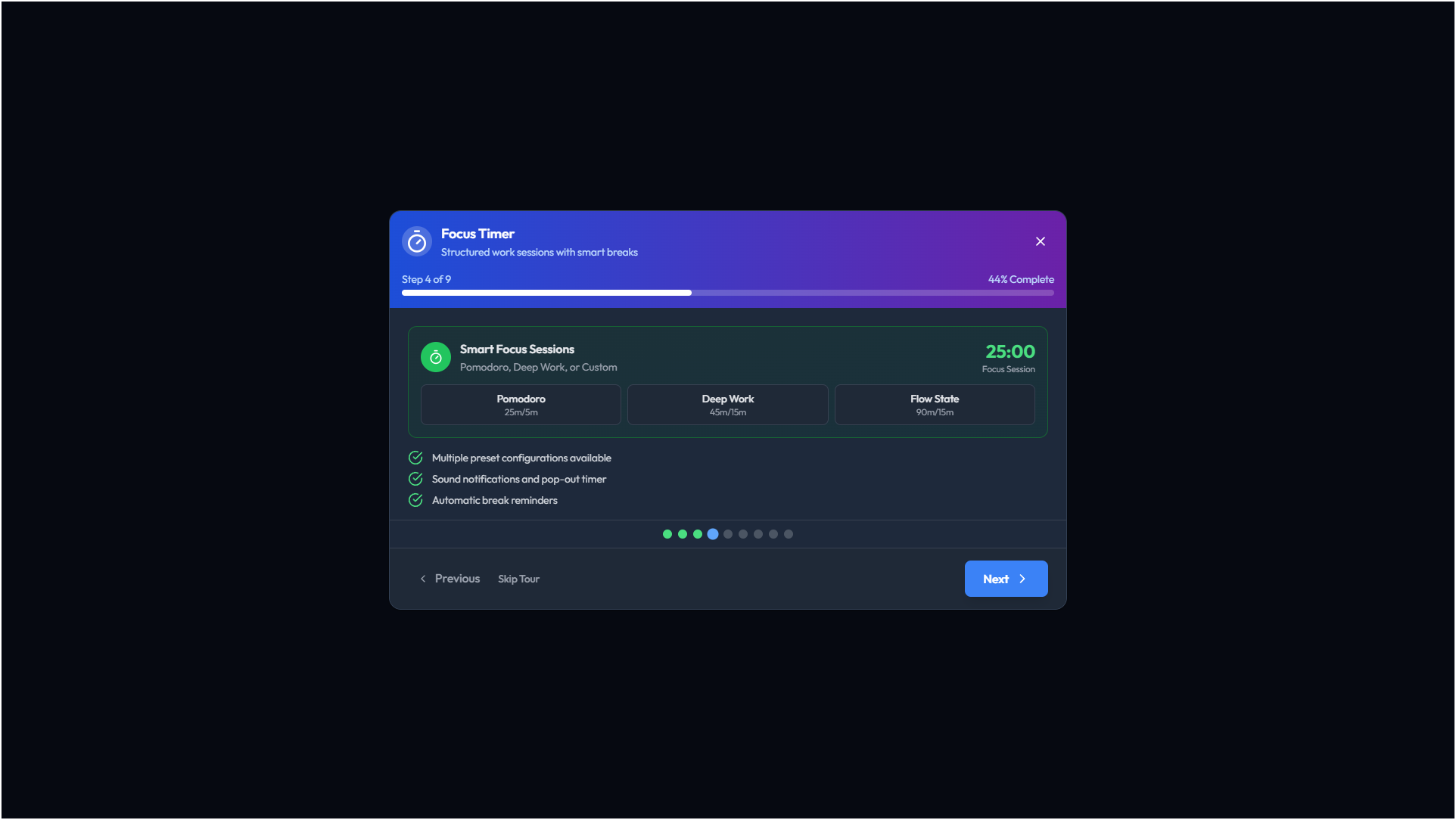
Onboarding Step 4
-
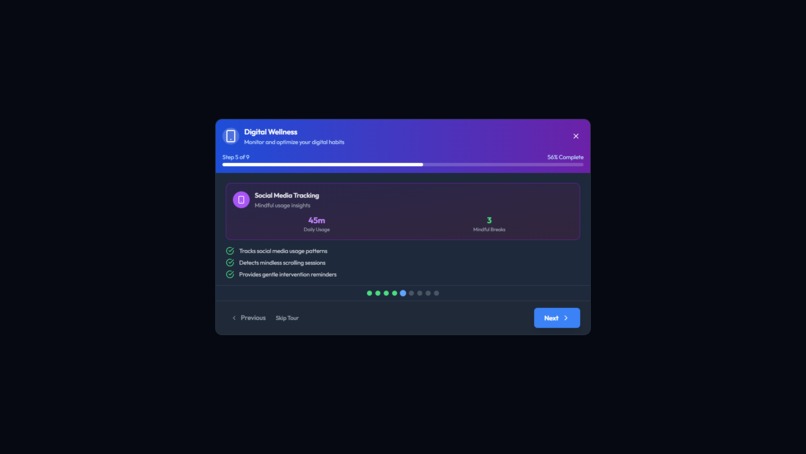
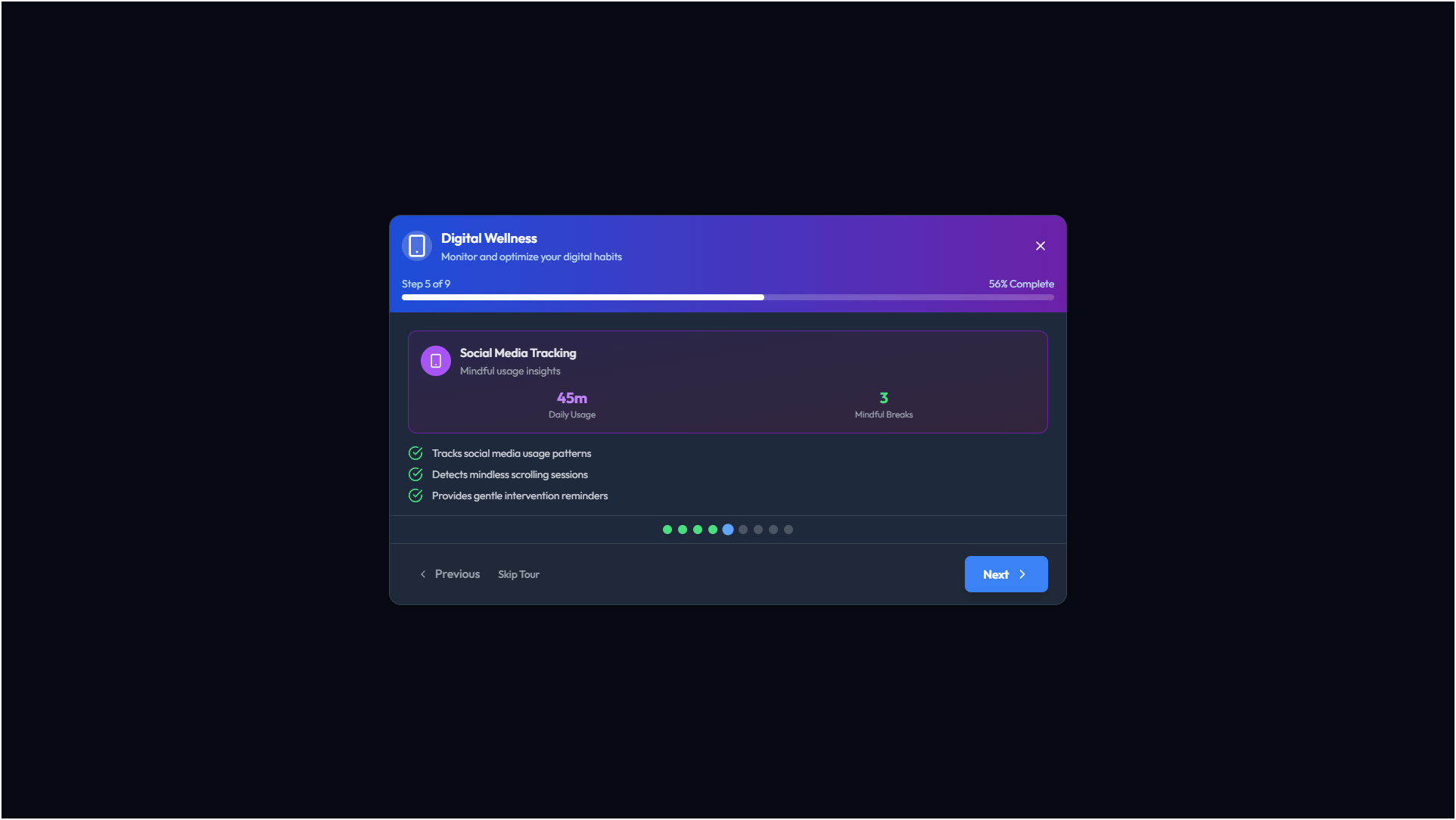
Onboarding Step 5
-
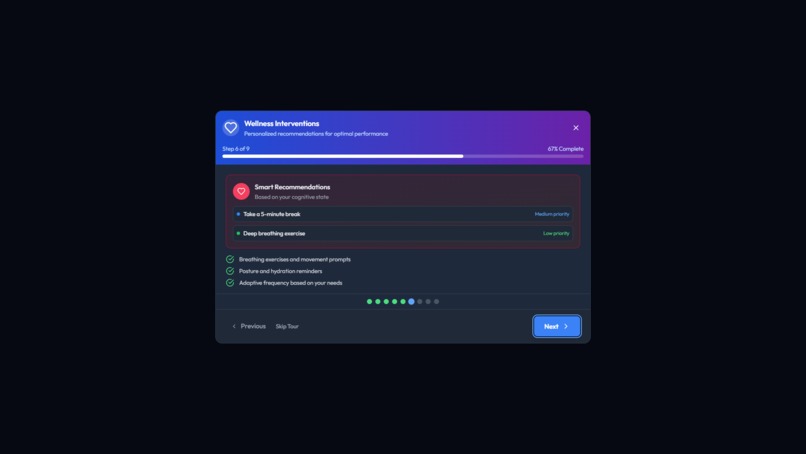
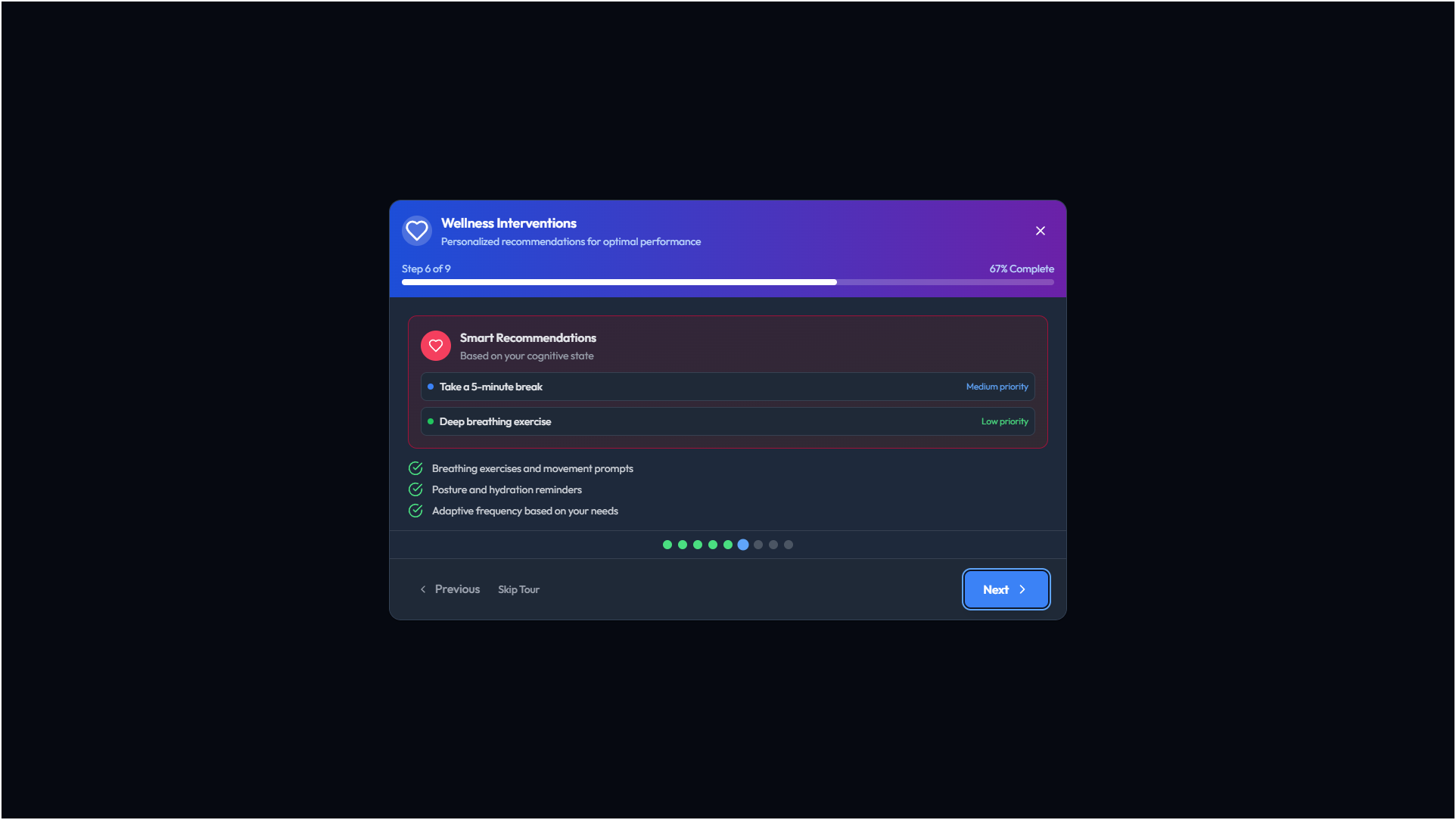
Onboarding Step 6
-
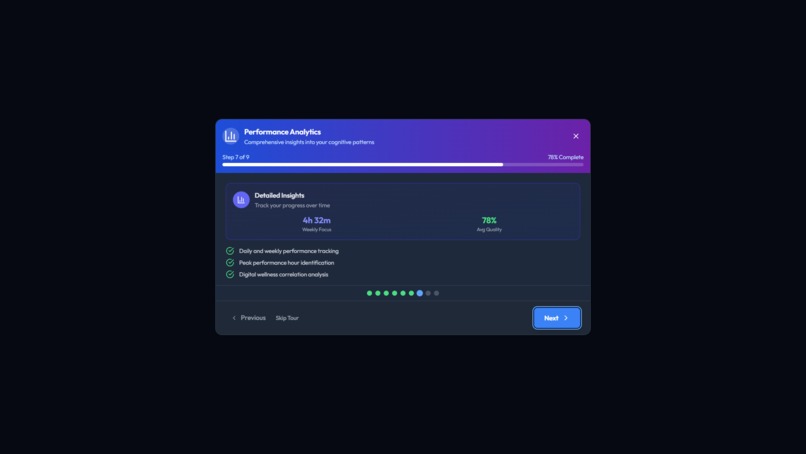
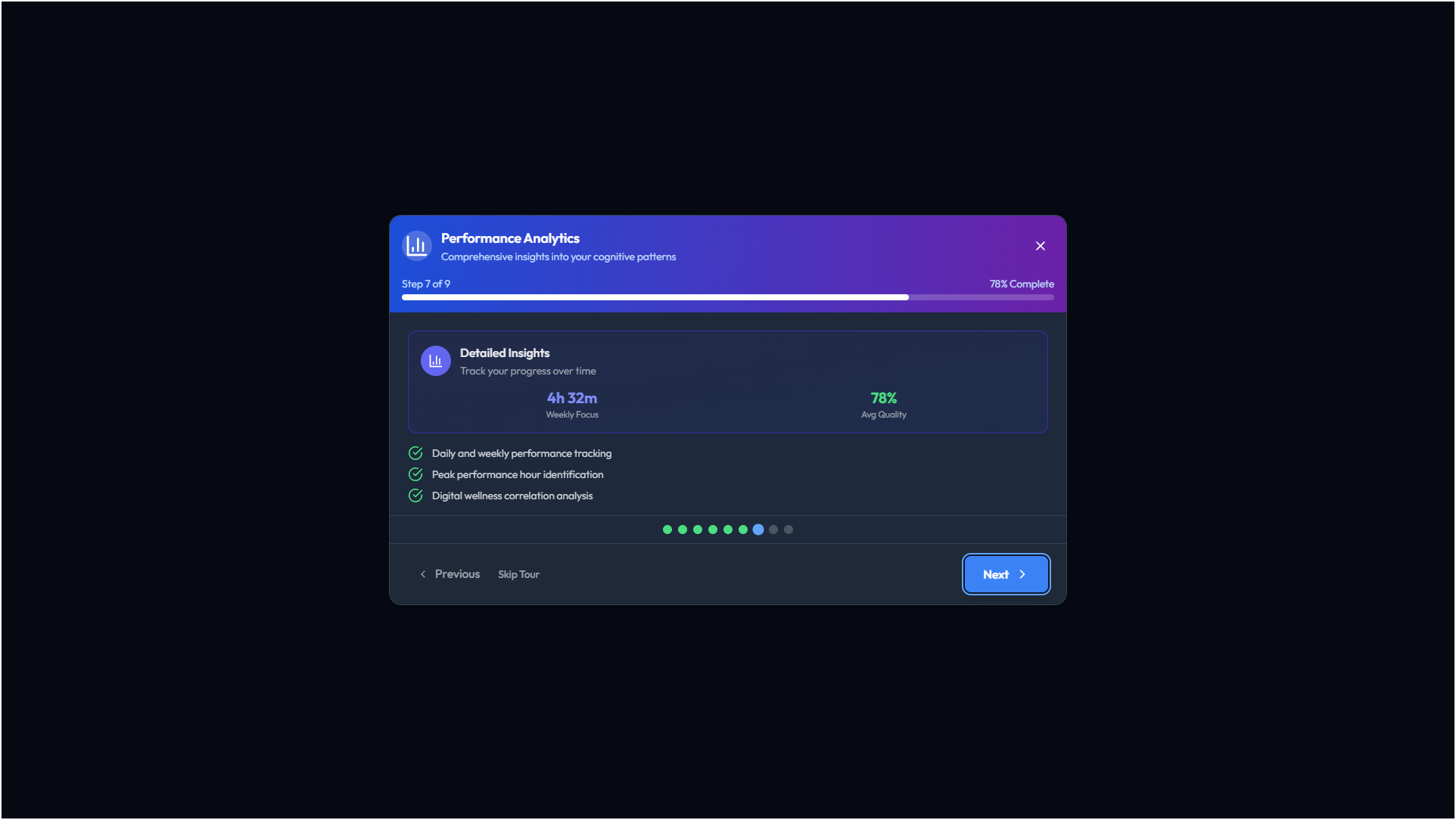
Onboarding Step 7
-
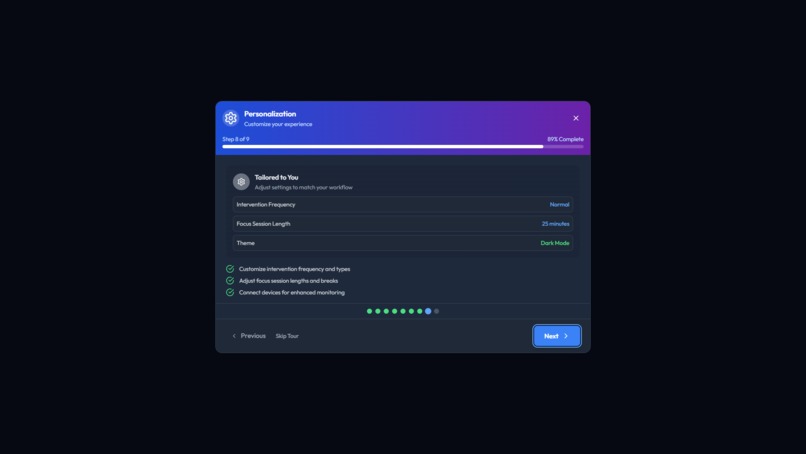
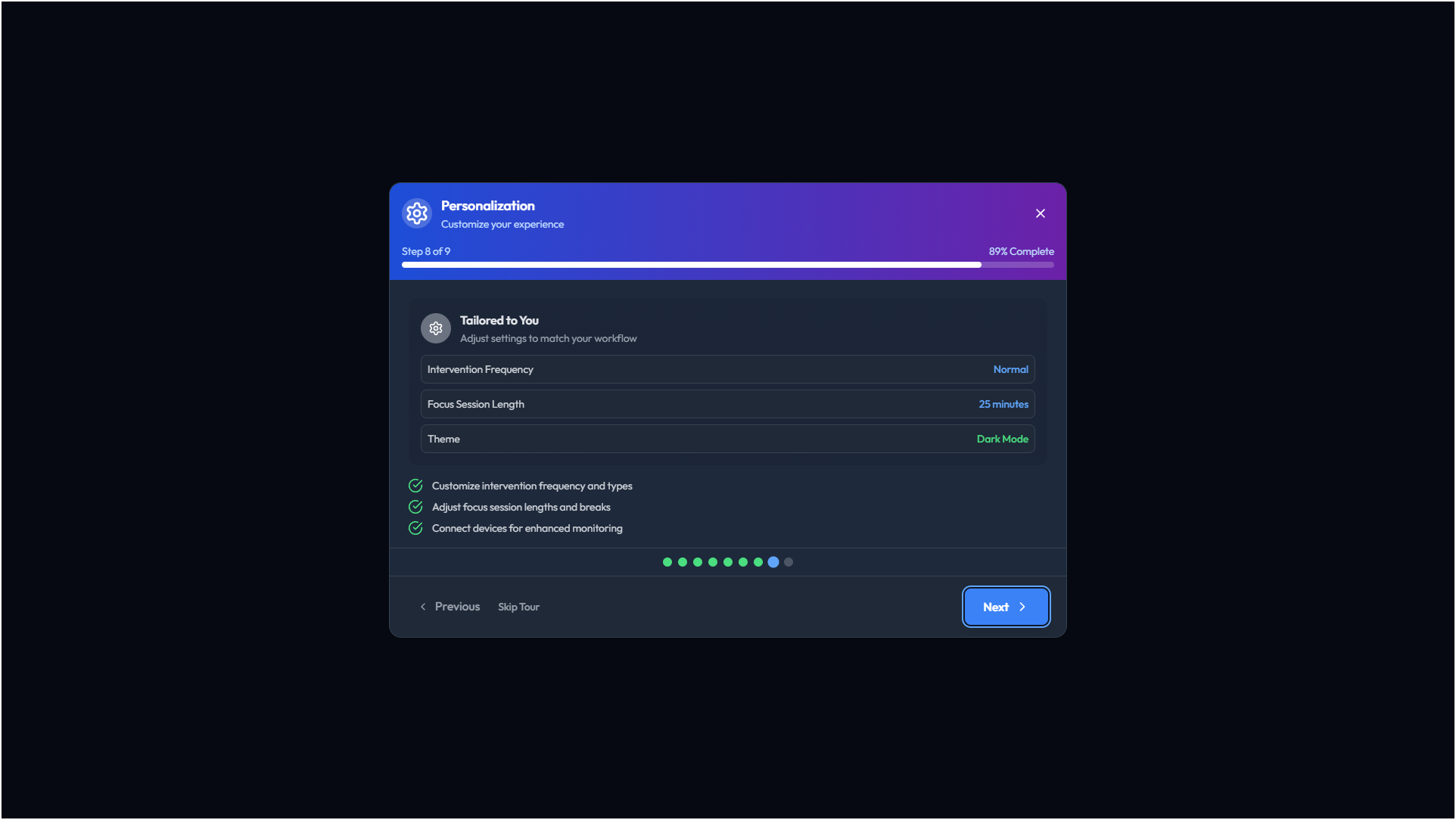
Onboarding Step 8
-
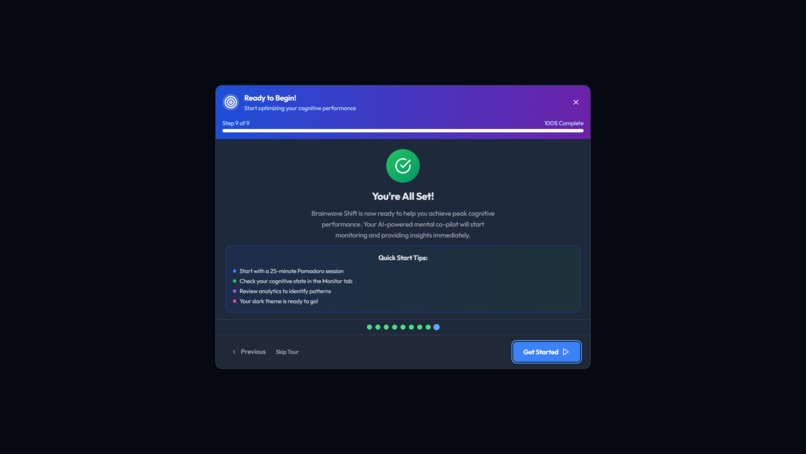
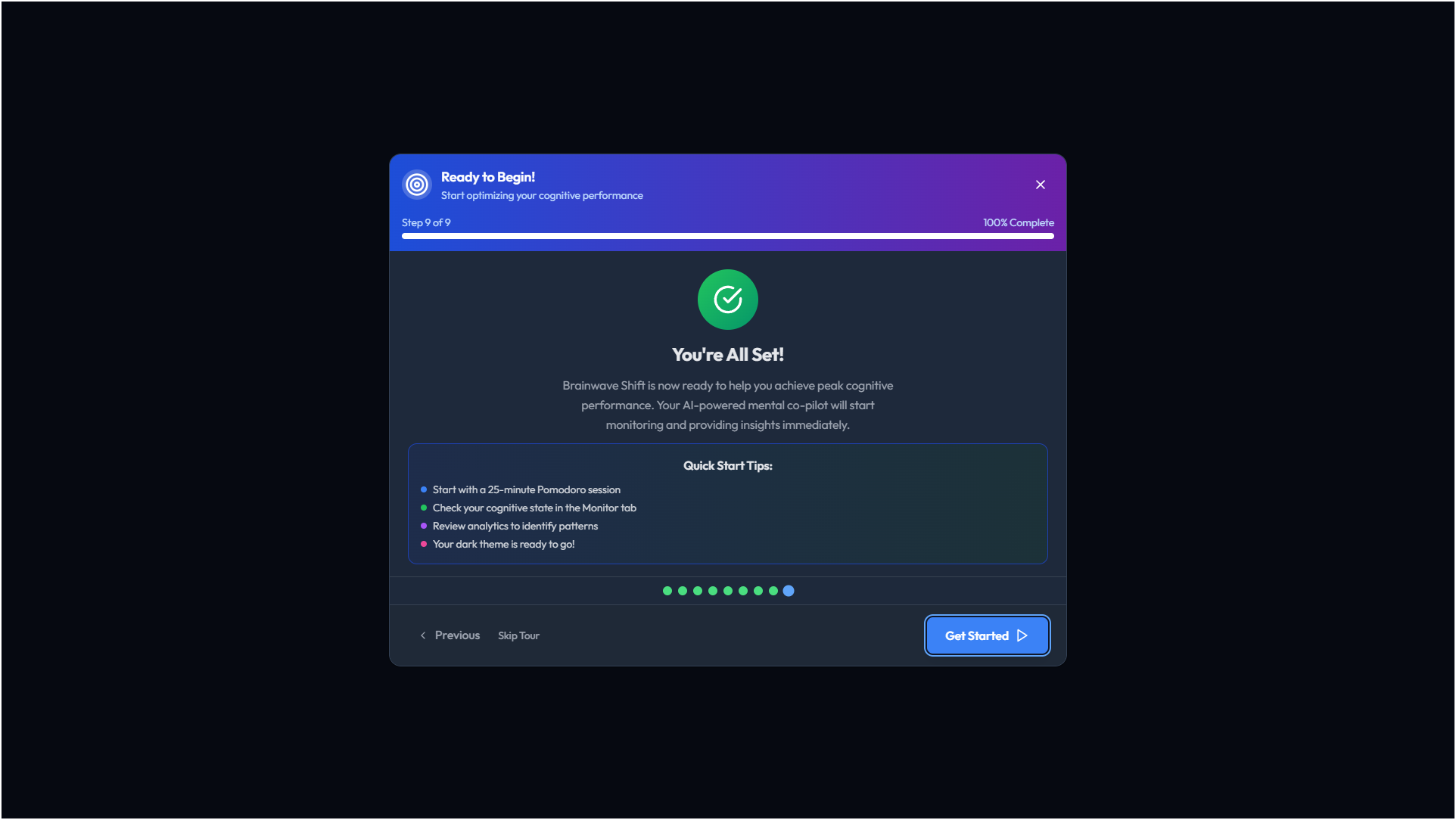
Onboarding Step 9 (Final Step)
-
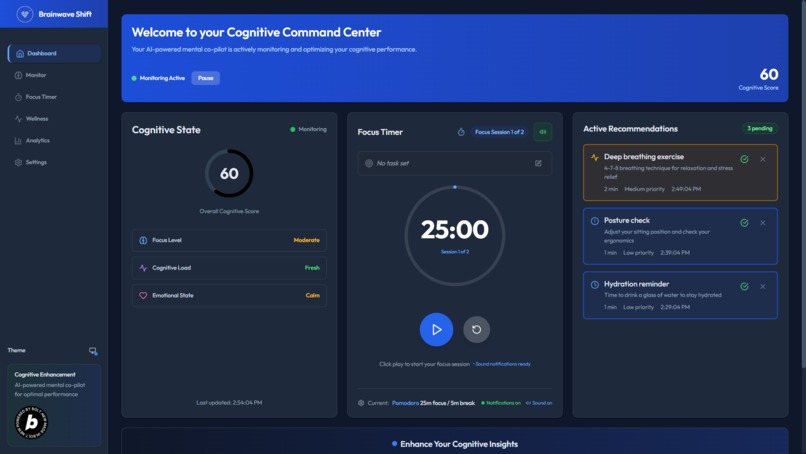
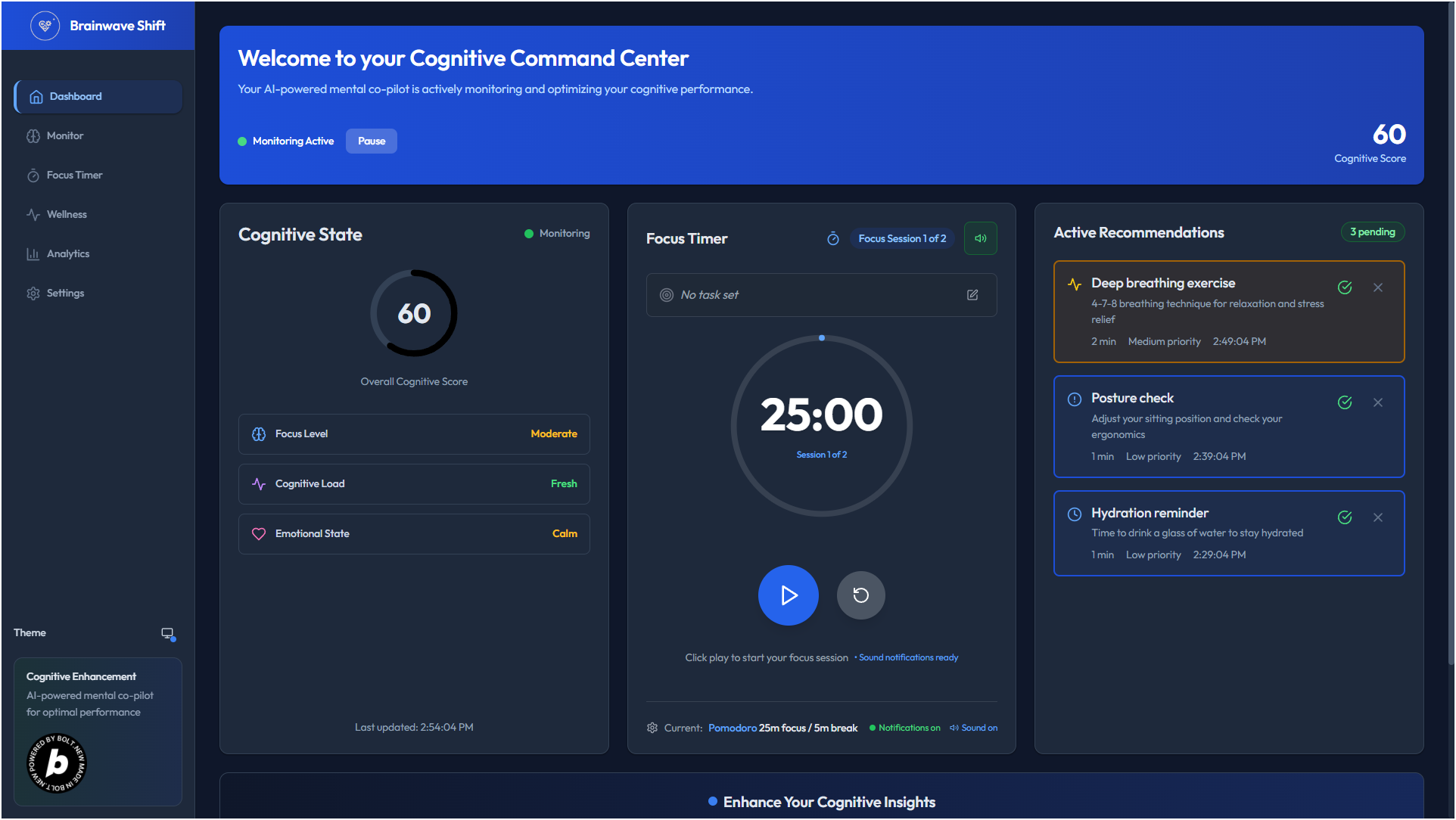
Dashboard Dark Theme
-
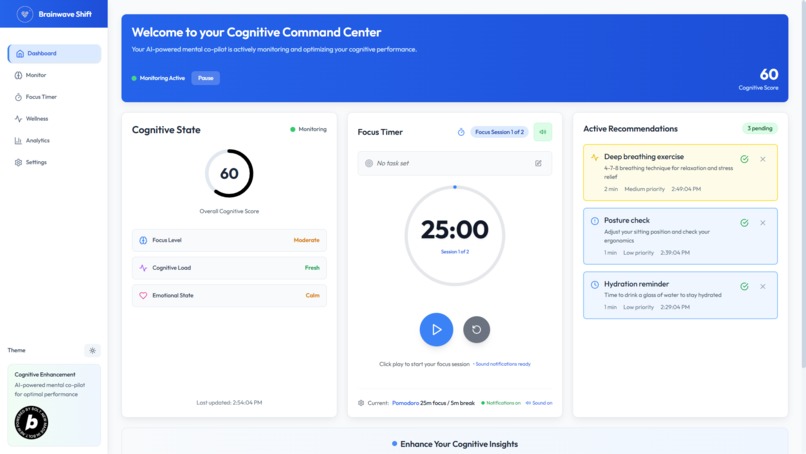
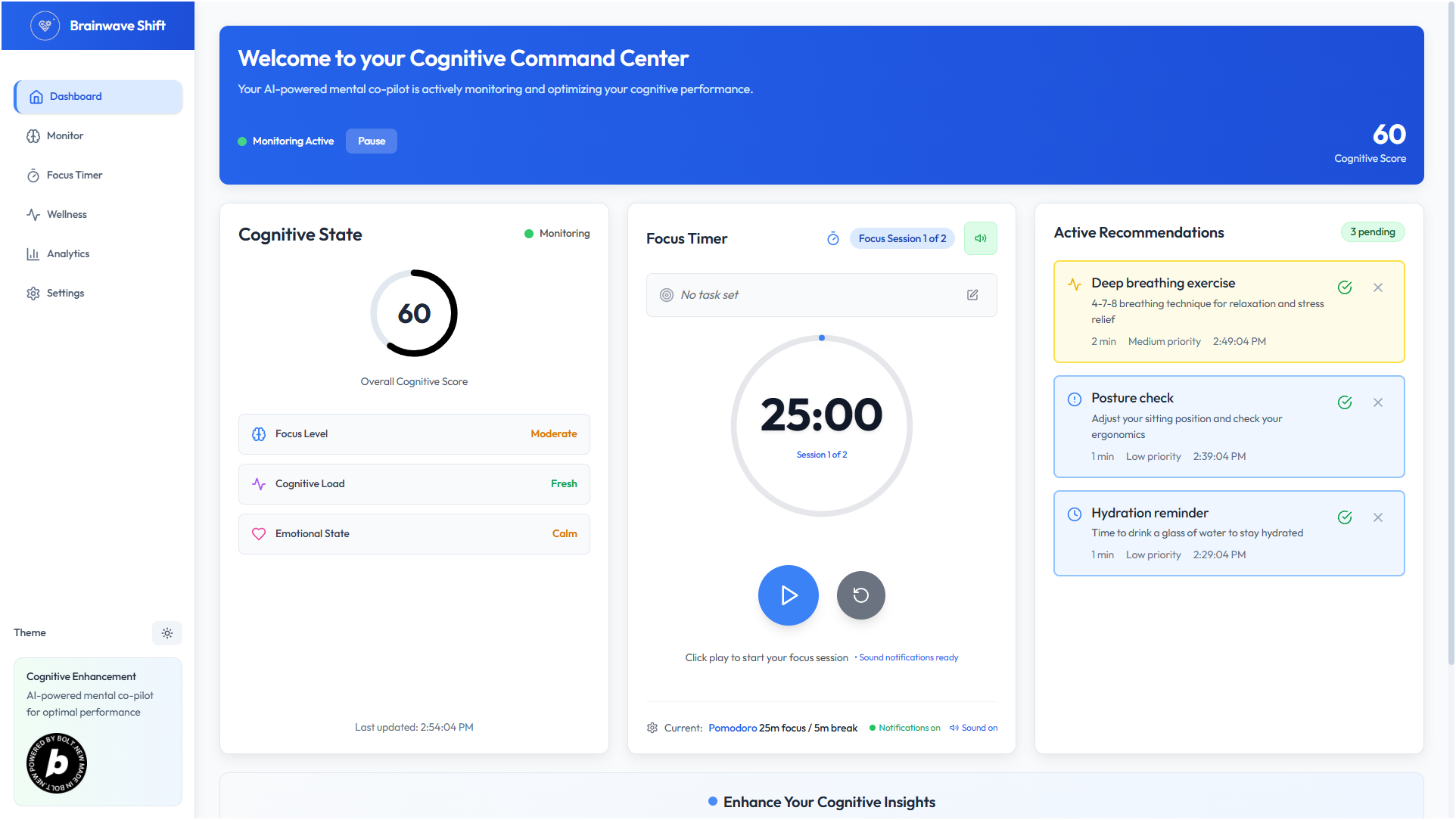
Dashboard Light Theme
-
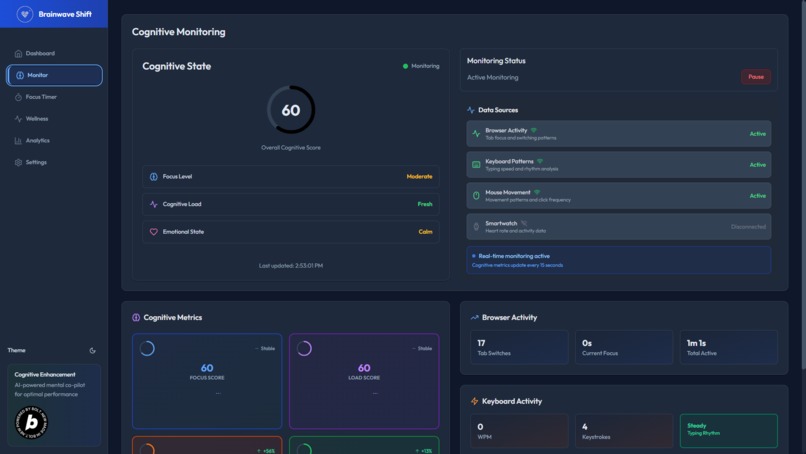
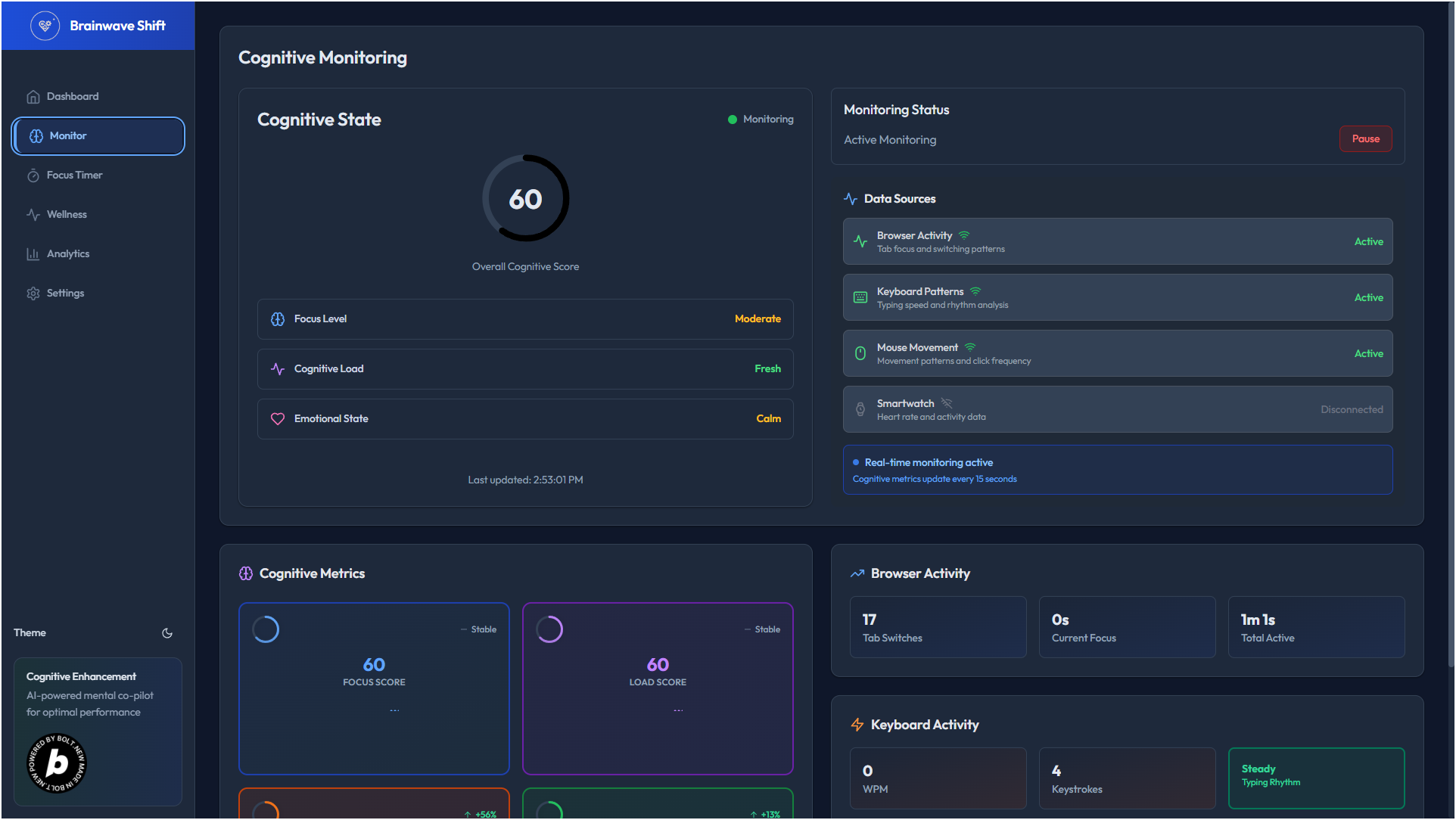
Monitor Section Dark Theme
-
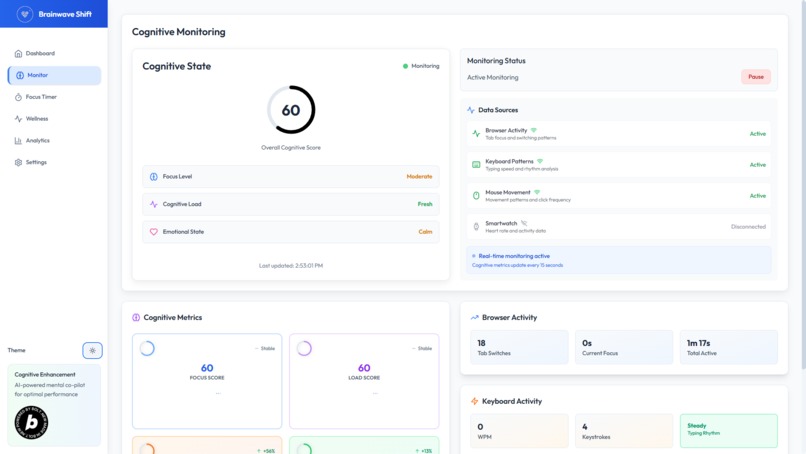
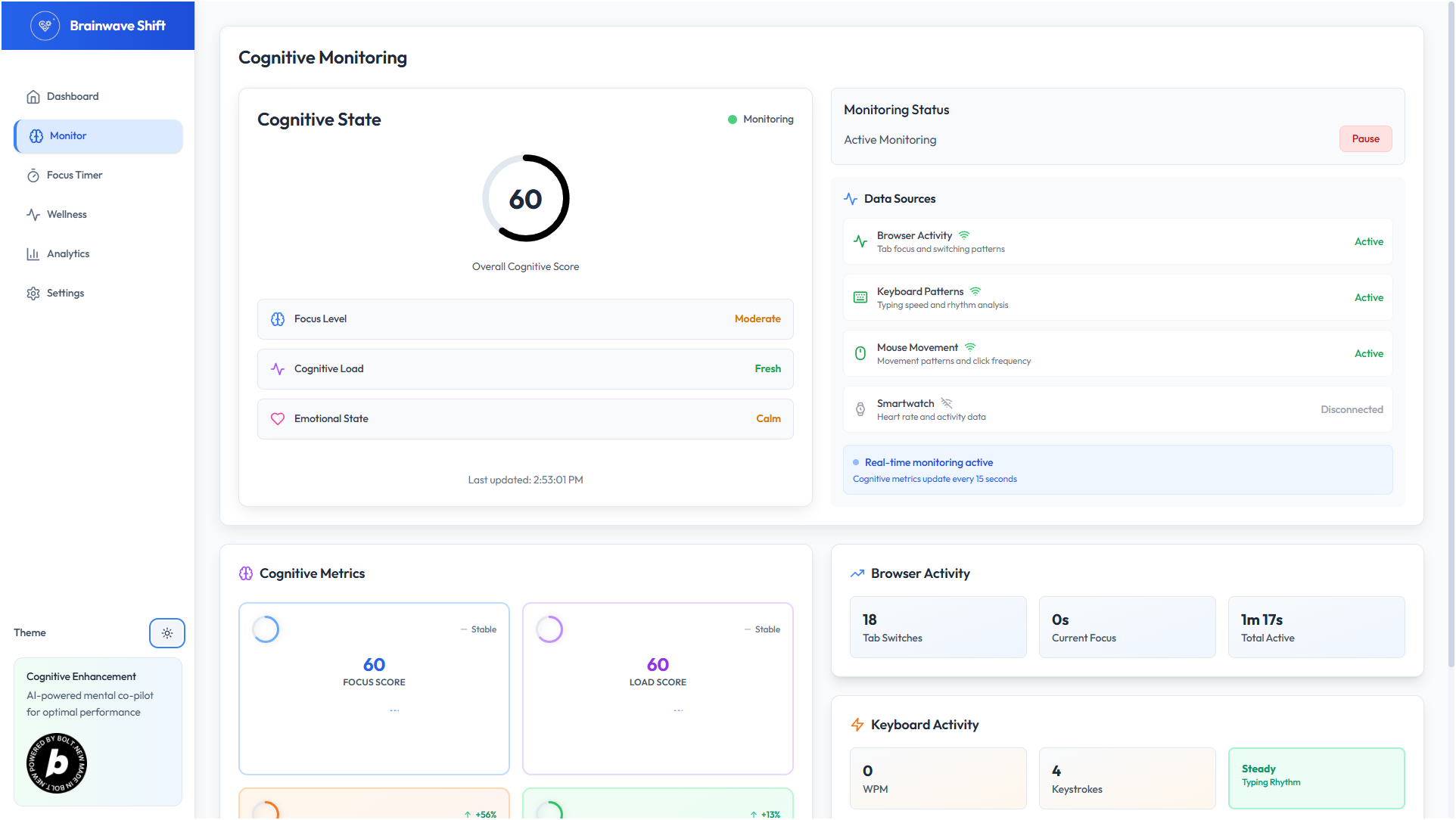
Monitor Section Light Theme
-
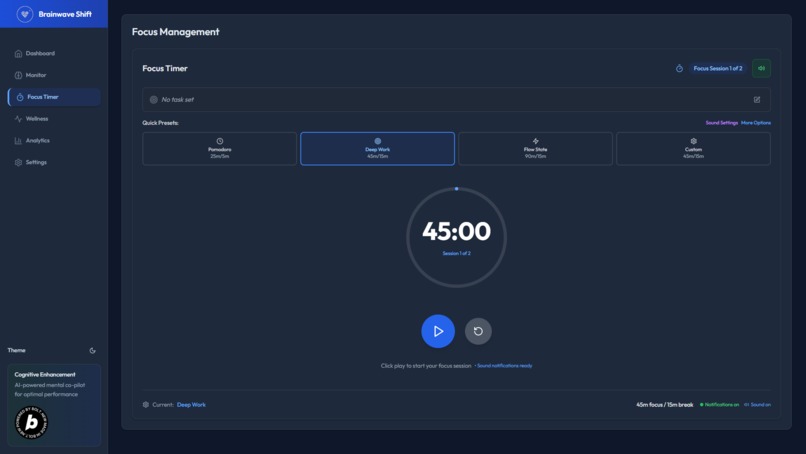
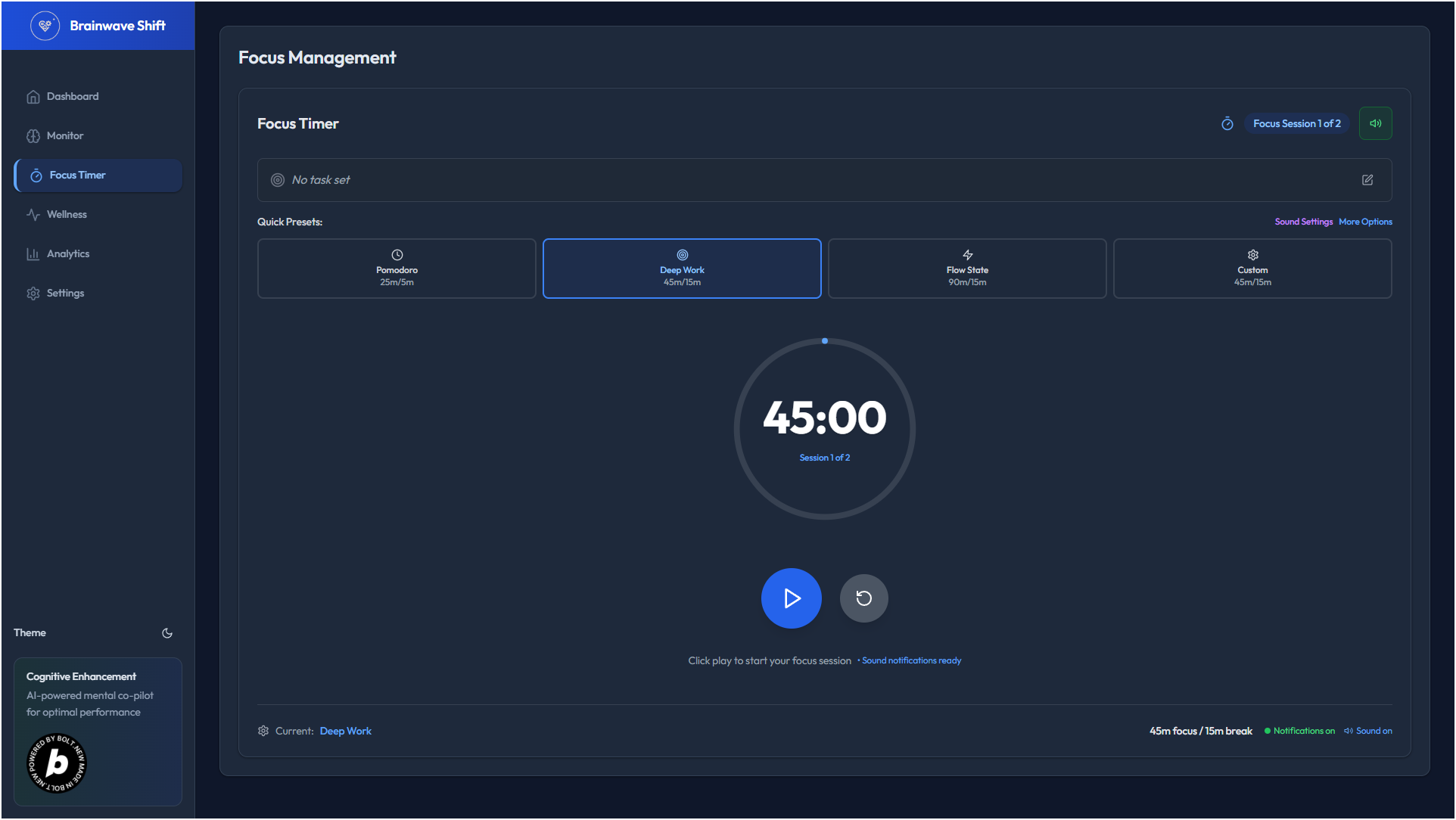
Focus Timer Dark Theme
-
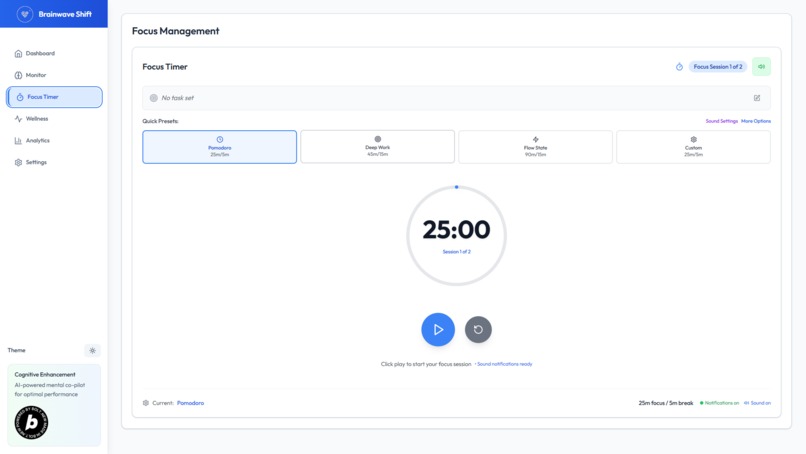
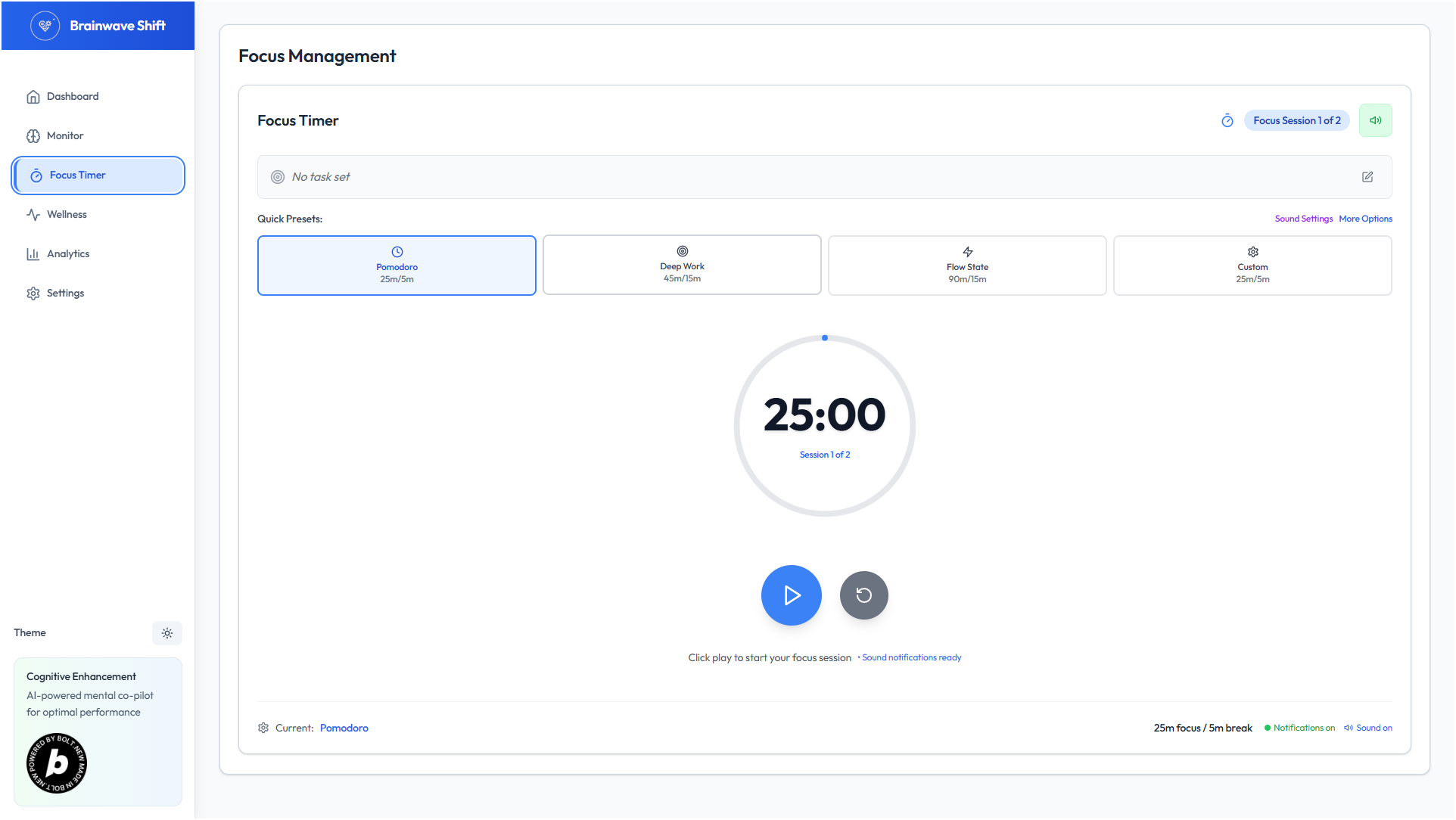
Focus Timer Light Theme
-
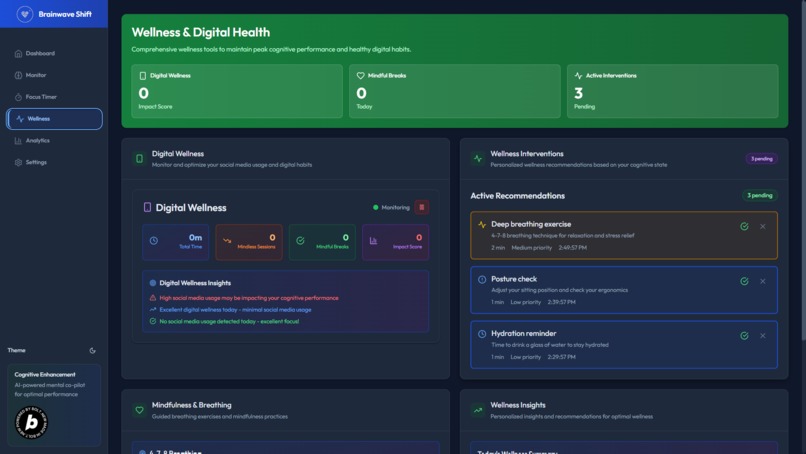
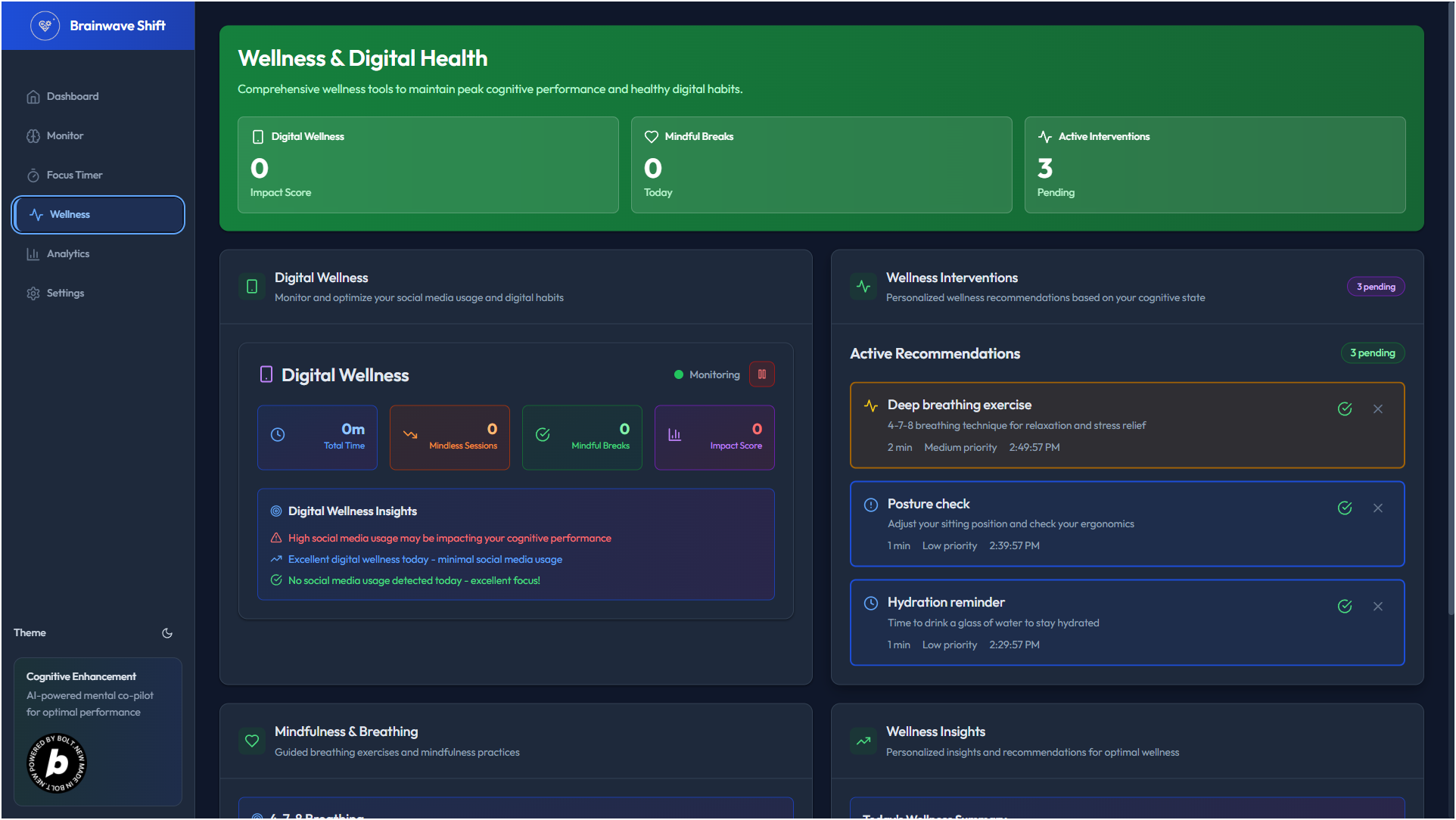
Wellness Section Dark Theme
-
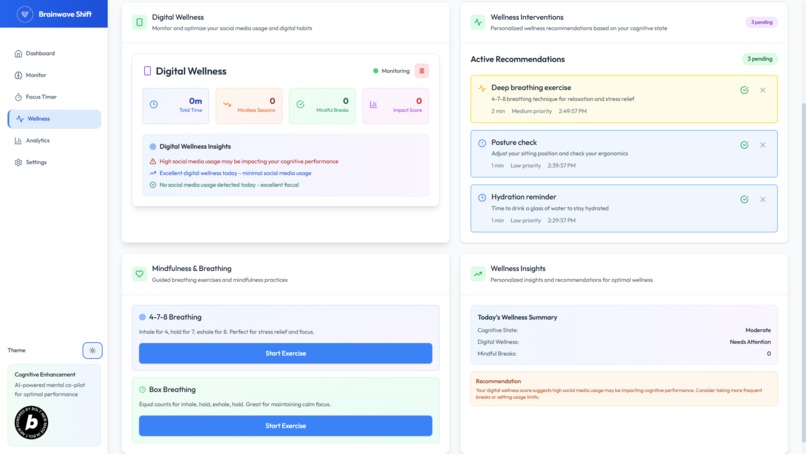
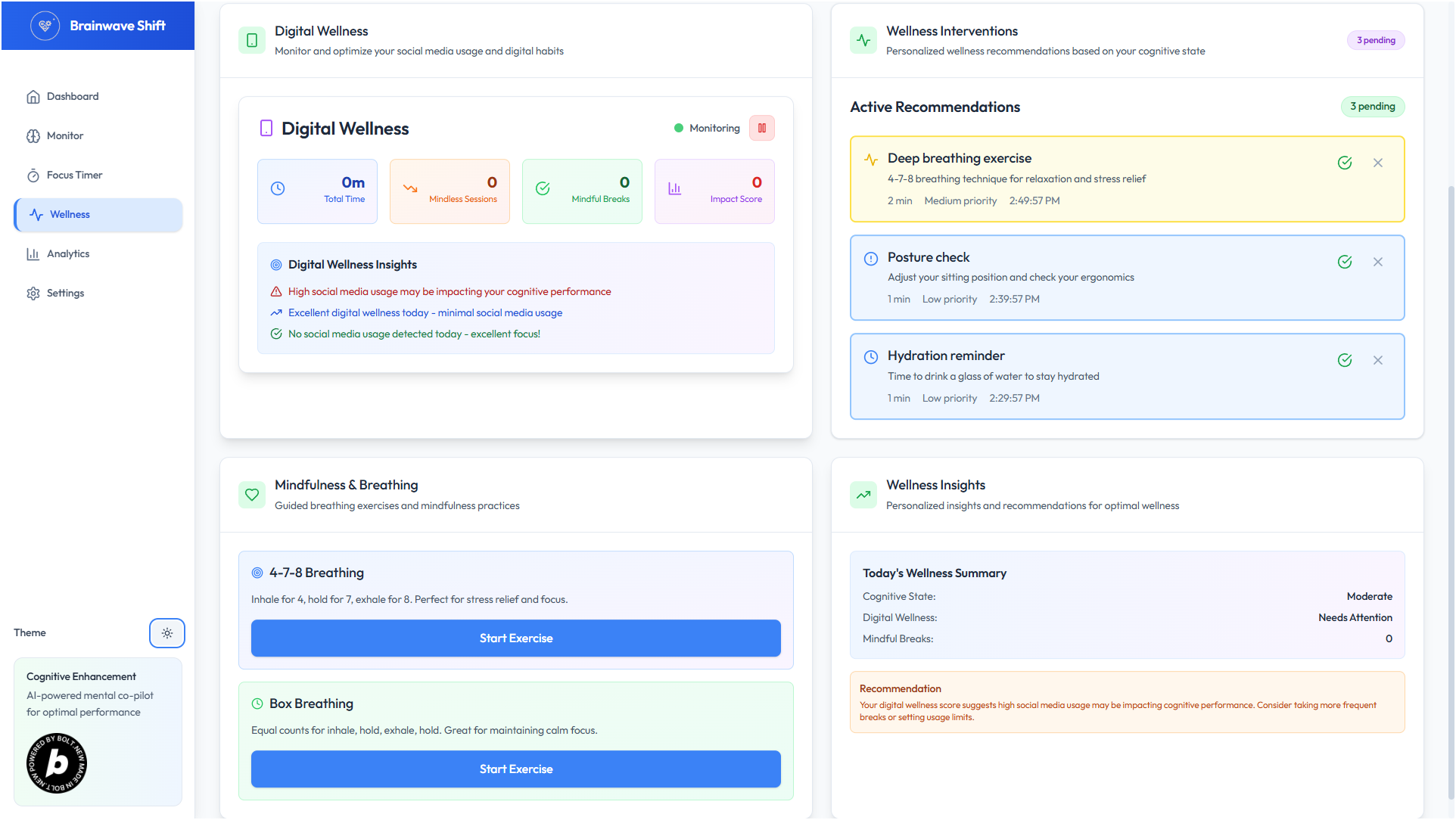
Wellness Section Light Theme
-
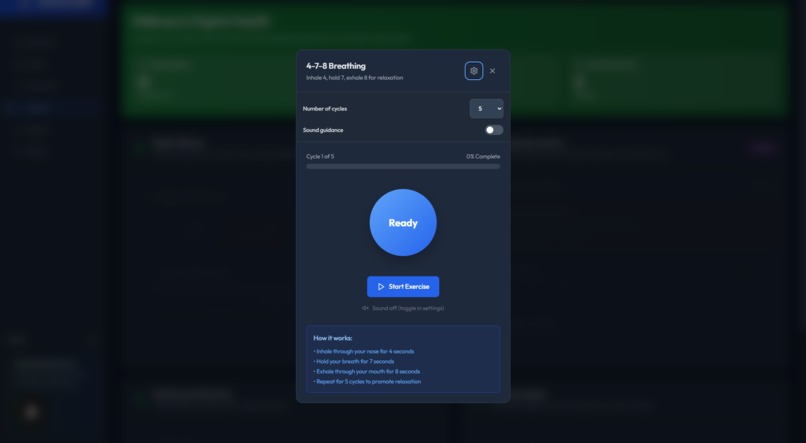
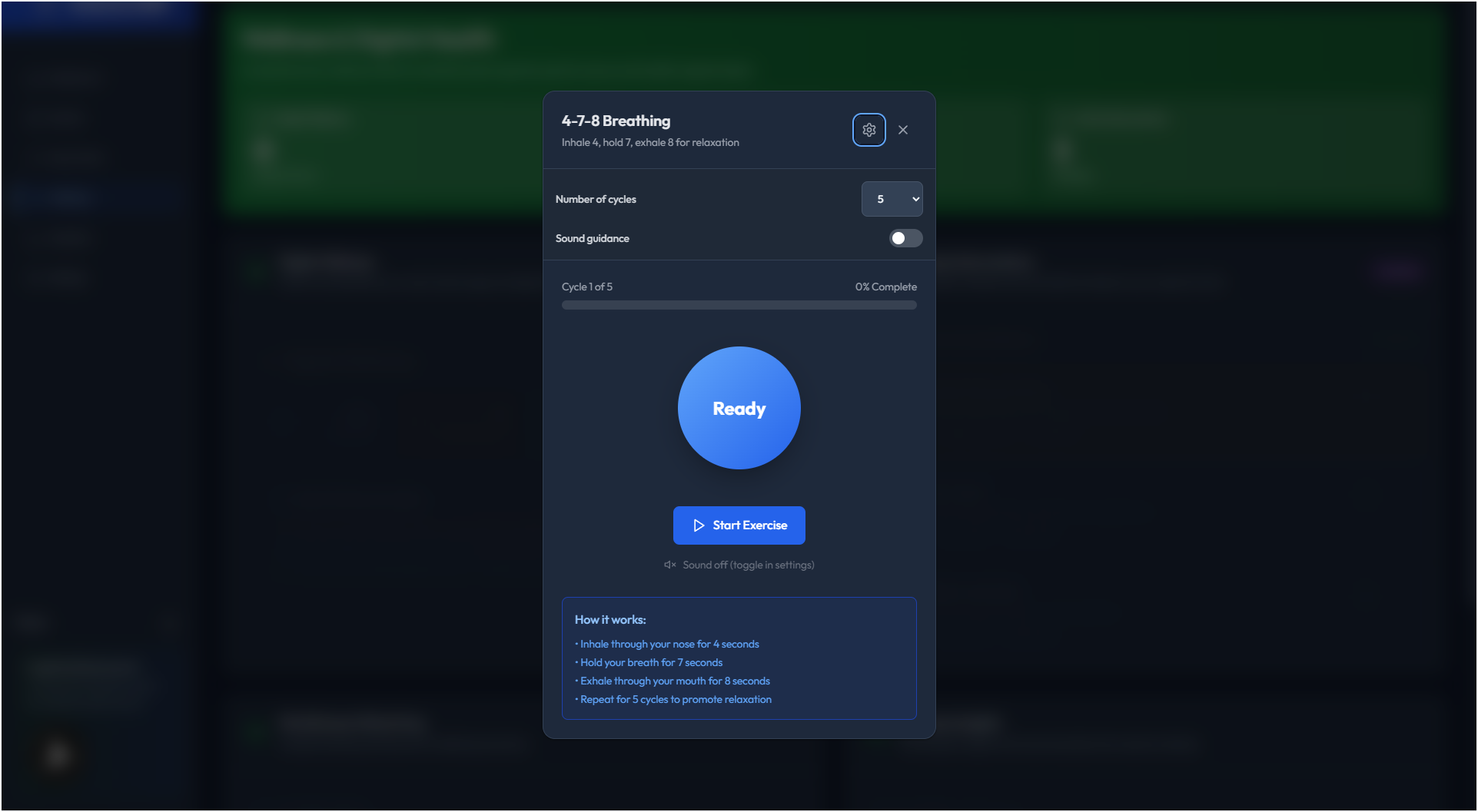
Breathing Exercise Dark Theme
-
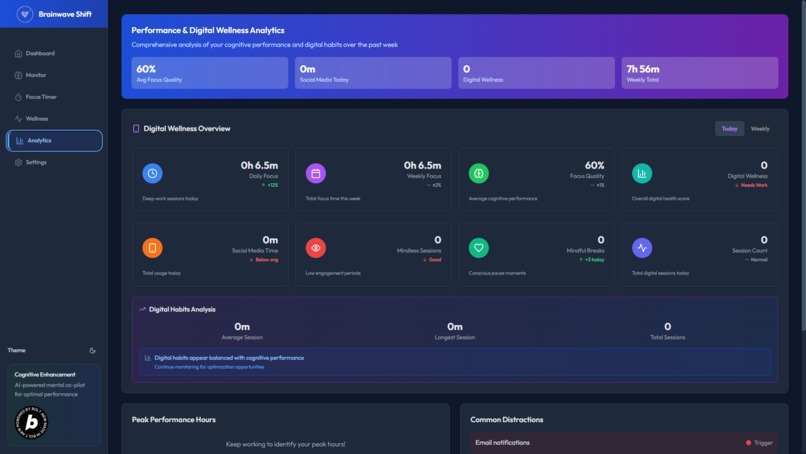
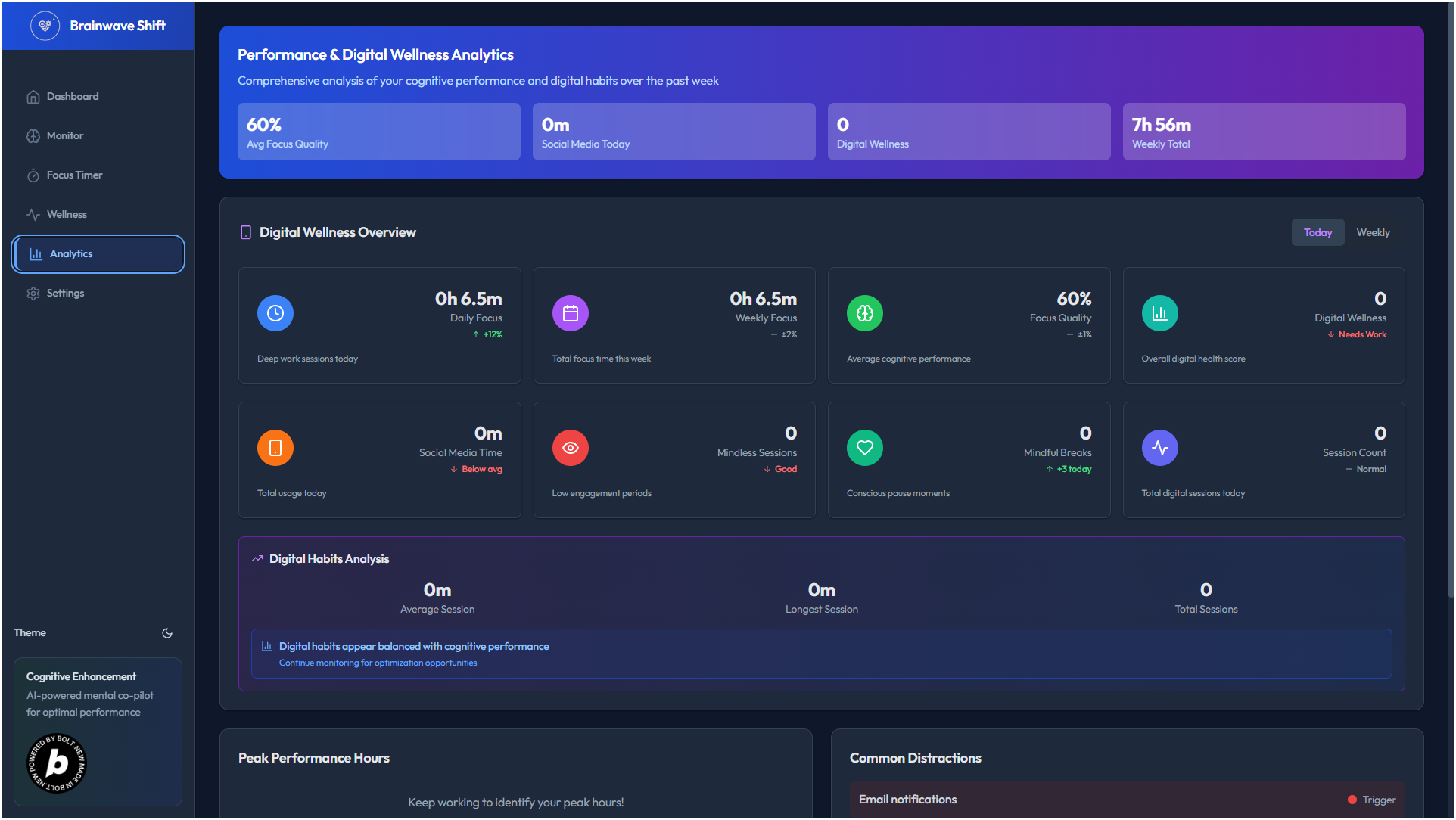
Analytics Dark Theme
-
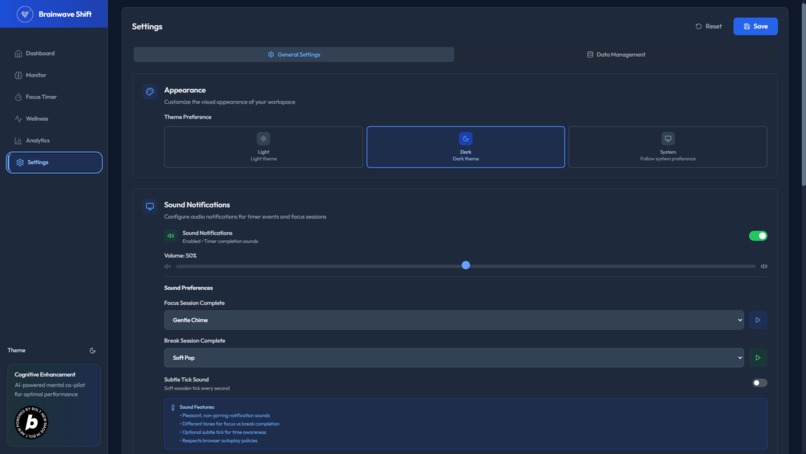
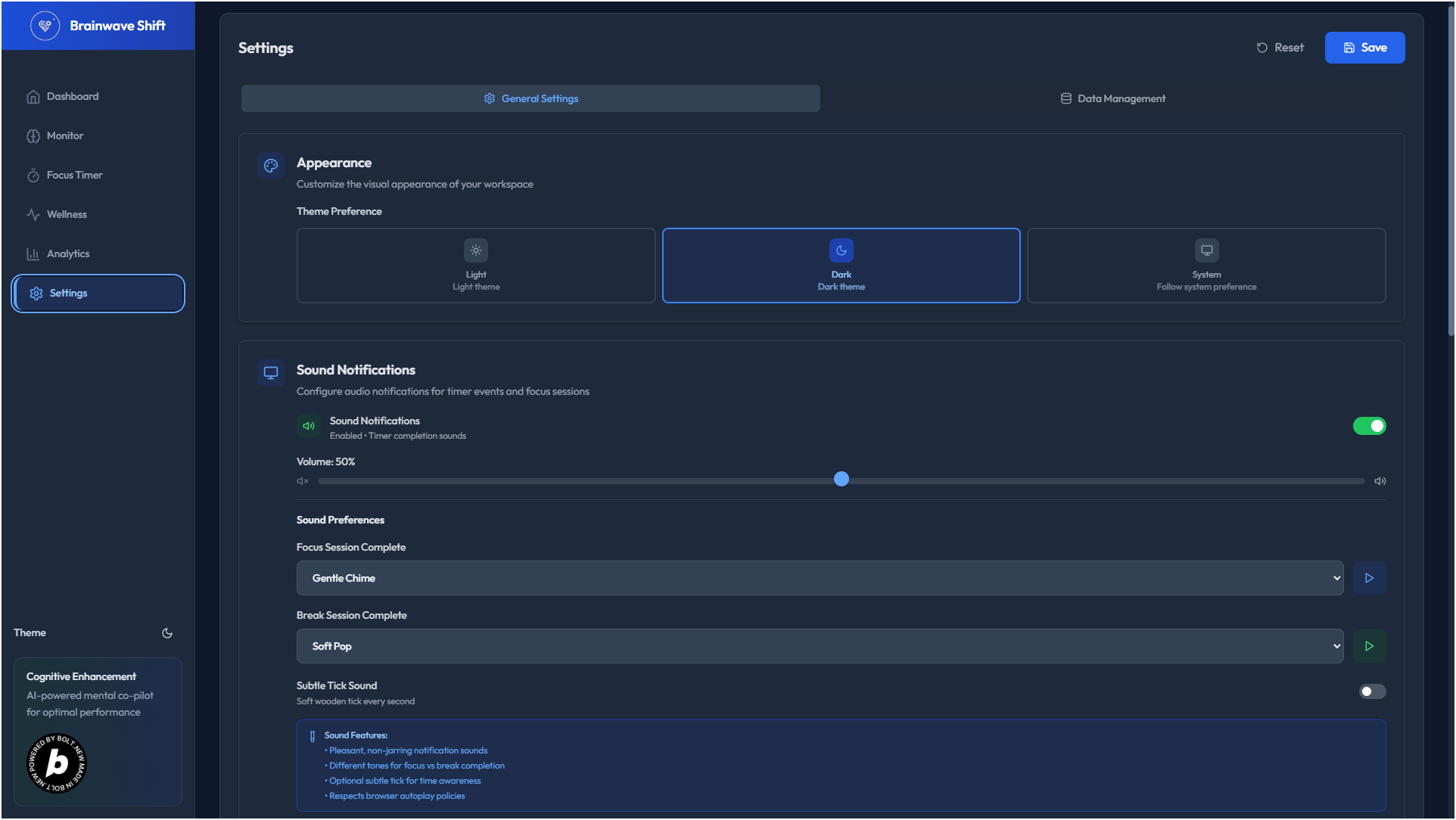
Settings Dark theme
-
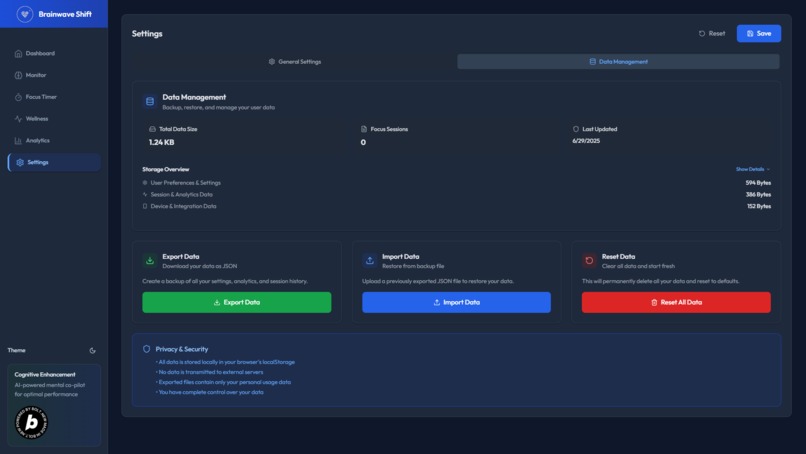
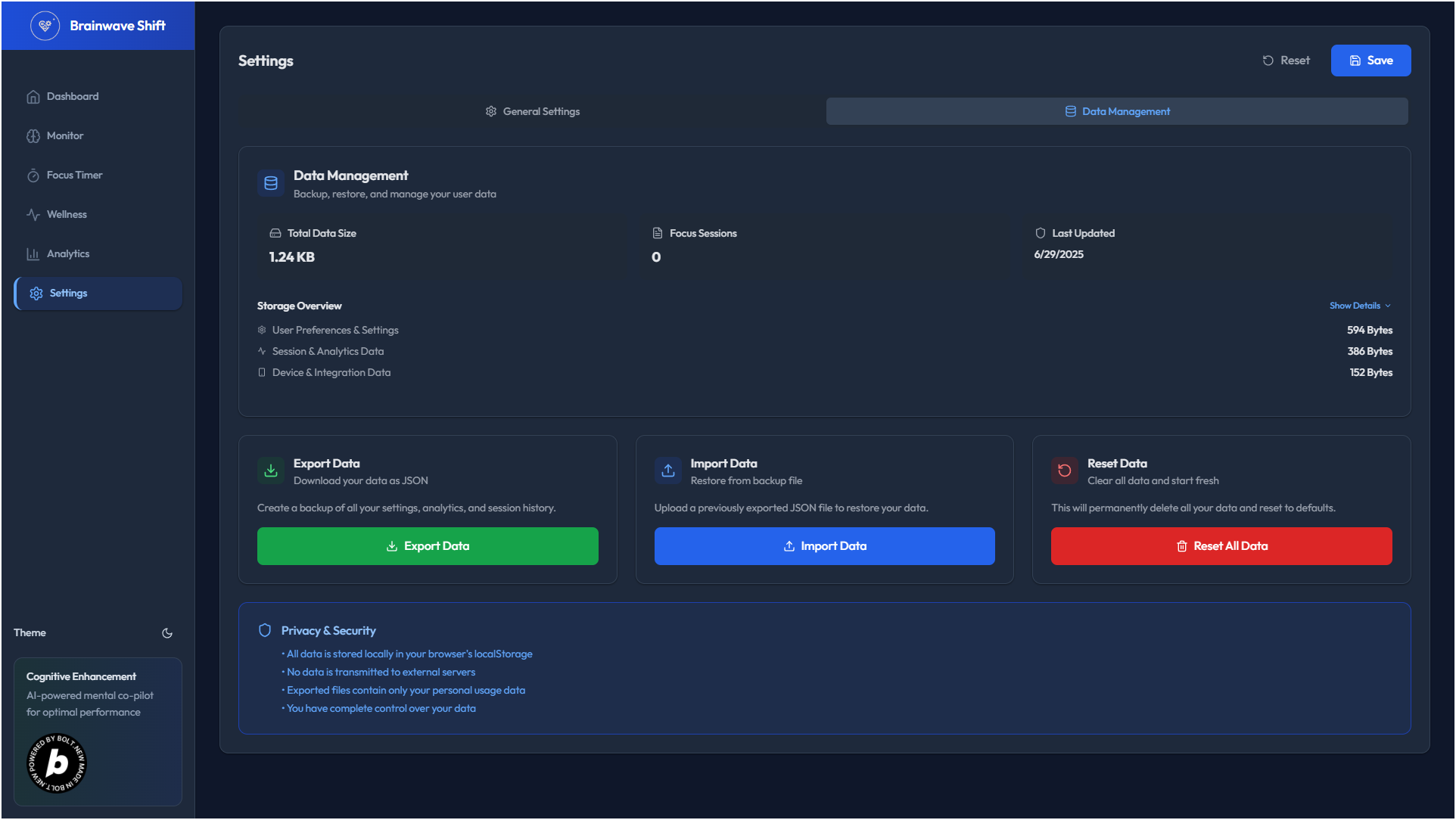
Data Management Dark Theme
Inspiration
In our fast-paced digital world, maintaining focus and cognitive resilience has become increasingly challenging. I was inspired by the growing need for personalized mental wellness solutions that go beyond generic productivity apps. The idea emerged from recognizing that everyone's brain works differently and requires tailored approaches to optimize cognitive performance and build mental resilience.
What it does
Brainwave Shift is a web-based cognitive resilience and focus platform designed to help users improve their mental wellness and productivity. The platform provides:
1) Interactive focus training exercises and guided techniques.
2) Cognitive resilience building exercises and techniques.
3) Real-time performance tracking and analytics.
4) Progress tracking that adapts recommendations based on user activity.
5) A comprehensive dashboard for monitoring cognitive wellness metrics.
How I built it
I used AI-assisted development tools to create Brainwave Shift to life:
Development Platform: Built using Bolt.new, an AI-powered development platform that enabled rapid prototyping.
AI-Powered Development: Utilized AI assistance to generate clean, efficient code and implement complex features quickly.
Deployment: Seamlessly deployed to Netlify for reliable, fast content delivery.
Rapid Prototyping: Bolt.new enabled me to transform my vision into a functional web application in record time.
Modern Web Stack: The AI platform helped me implement modern web technologies and best practices.
Iterative Design: Used AI-assisted development to quickly test and refine features based on my cognitive wellness goals.
Challenges I ran into
User Experience Design: Creating an intuitive interface that provides personalized recommendations without overwhelming users.
User Interface Design: Balancing feature richness with simplicity to avoid cognitive overload.
Data Privacy: Implementing secure data handling practices to protect user information.
Performance Optimization: Creating a smooth, distraction-free experience across different devices and network conditions.
Content Quality: Drawing from established wellness and productivity principles to create helpful user experiences.
Accomplishments that I am proud of
1) Successfully created a functional web application that addresses real cognitive wellness needs.
2) Developed an intuitive user interface that embodies the focus principles I promote.
3) Implemented a scalable architecture that can grow with user needs and feedback.
4) Created a platform that makes cognitive resilience training accessible to a broad audience.
5) Built a foundation for evidence-based digital wellness intervention.
What I learned
1) How to balance scientific rigor with user accessibility in cognitive training applications.
2) The technical challenges and solutions for building responsive, performant web applications.
3) The value of iterative development and user feedback in refining personalization algorithms.
4) How deployment and hosting decisions impact user experience and platform reliability.
What's next for Brainwave Shift
Real-time Sync Optimization: Improve smartwatch and calendar integrations to achieve seamless real-time data synchronization.
Enhanced Biometric Processing: Upgrade smartwatch connectivity for instant heart rate variability and stress level updates.
Live Calendar Adaptation: Enable real-time calendar analysis to dynamically adjust focus recommendations throughout the day.
Enhanced Personalization: Integrate machine learning models for more sophisticated adaptation to user patterns.
Mobile Application: Develop native mobile apps for iOS and Android for better accessibility and integration.
Community Features: Add social elements like progress sharing and peer support networks.
Accessibility Improvements: Enhance the platform for users with different cognitive abilities and needs.

Log in or sign up for Devpost to join the conversation.