Inspiration
Medical Need: Brain tumors can be life-threatening, and they can have a substantial impact on a person's cognitive and physical function. There is a strong motivation to develop better treatments and diagnostic tools to improve patient care and outcomes.
Scientific Curiosity: Researchers are often inspired by the opportunity to explore the complexities of brain tumors at a cellular and molecular level. Understanding the underlying biology of these tumors is critical for the development of new therapies.
Technological Advancements: Advances in medical imaging, genomics, and other technologies have opened up new avenues for studying and treating brain tumors. Researchers may be inspired to leverage these tools to make progress in the field.
Patient Advocacy: Advocacy groups, patients, and their families play a crucial role in inspiring and supporting research into brain tumors. They raise awareness, provide funding, and push for more research to improve treatment options.
Collaboration: Collaboration among researchers, medical professionals, and institutions can inspire and facilitate the development of brain tumor projects. Sharing knowledge and resources can lead to breakthroughs in the field.
What it does
An AI system dedicated to detecting and classifying brain tumors in medical imaging serves a crucial role in healthcare by assisting medical professionals in the accurate diagnosis and treatment of brain tumors. Here's what it does:
Image Analysis: The AI system analyzes medical images, such as MRI (Magnetic Resonance Imaging) or CT (Computed Tomography) scans, of the patient's brain. These images are typically provided in DICOM (Digital Imaging and Communications in Medicine) format.
Tumor Detection: The AI system uses deep learning algorithms, often based on convolutional neural networks (CNNs), to identify and locate potential tumors within the medical images. It can detect the presence of tumors by analyzing patterns and anomalies in the images.
Classification: Once a potential tumor is detected, the AI system classifies it based on various characteristics, such as tumor type, size, location, and malignancy. This classification helps determine the nature of the tumor, which is crucial for treatment planning.
Segmentation: In addition to detection and classification, the AI system may perform tumor segmentation. This involves outlining the exact boundaries of the tumor within the medical images. Segmentation is important for precise surgical planning and radiation therapy.
Quantitative Analysis: The AI system can provide quantitative measurements, such as tumor volume and growth rate, which are valuable for tracking the progression of the tumor over time.
Alerts and Notifications: The system generates alerts and notifications for healthcare professionals when potential tumors are detected. This can help ensure timely diagnosis and intervention.
How we built it
Data Collection: The first step is to gather a large and diverse dataset of medical images that include both cases with brain tumors and cases without tumors. This dataset should be well-curated and annotated to indicate the presence, type, and location of tumors.
Preprocessing: Medical images often require preprocessing to ensure consistency and improve the performance of the AI model. This can include resizing images, normalizing pixel values, and enhancing image quality.
Data Split: Divide the dataset into training, validation, and testing sets. The training set is used to train the AI model, the validation set is used for hyperparameter tuning, and the testing set is used to evaluate the model's performance.
AI Model Selection: Choose the appropriate deep learning architecture for the task. Convolutional Neural Networks (CNNs) are commonly used for image classification tasks. For medical imaging, specialized architectures like 3D CNNs or radiomics models may be used.
Model Training: Train the selected AI model on the training data. This involves feeding the images through the model, adjusting the model's parameters (weights and biases) to minimize classification errors, and iteratively fine-tuning the model.
creating the app for the brain tumor using AI and android studio
Challenges we ran into
Data Quality and Quantity: Acquiring a sufficient amount of high-quality medical imaging data for training and validation can be a substantial challenge. The availability of diverse and well-annotated datasets is crucial for developing accurate AI models.
we had talk with different healthcare officials and even collected the data from the Kaggle for the image preprocessing
User Interface and Usability: Designing an intuitive user interface for medical professionals and ensuring the system is user-friendly can be challenging. It should seamlessly integrate into their workflow and be easy to interpret.
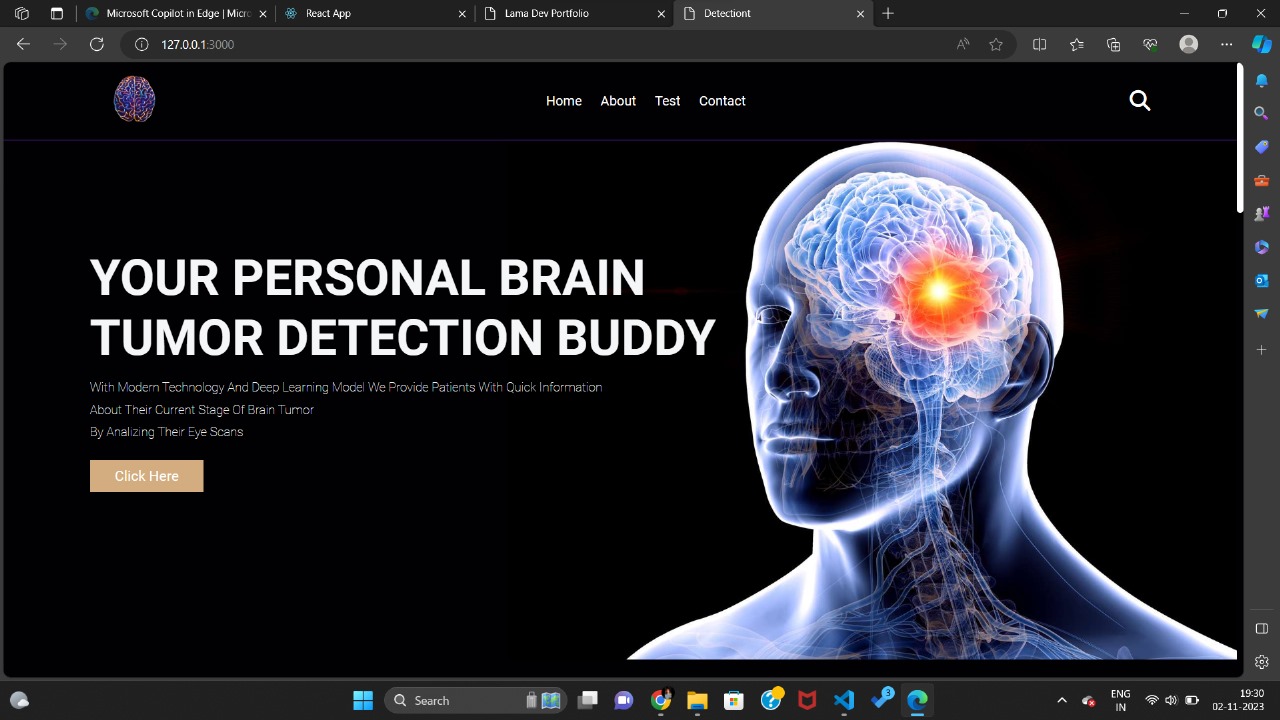
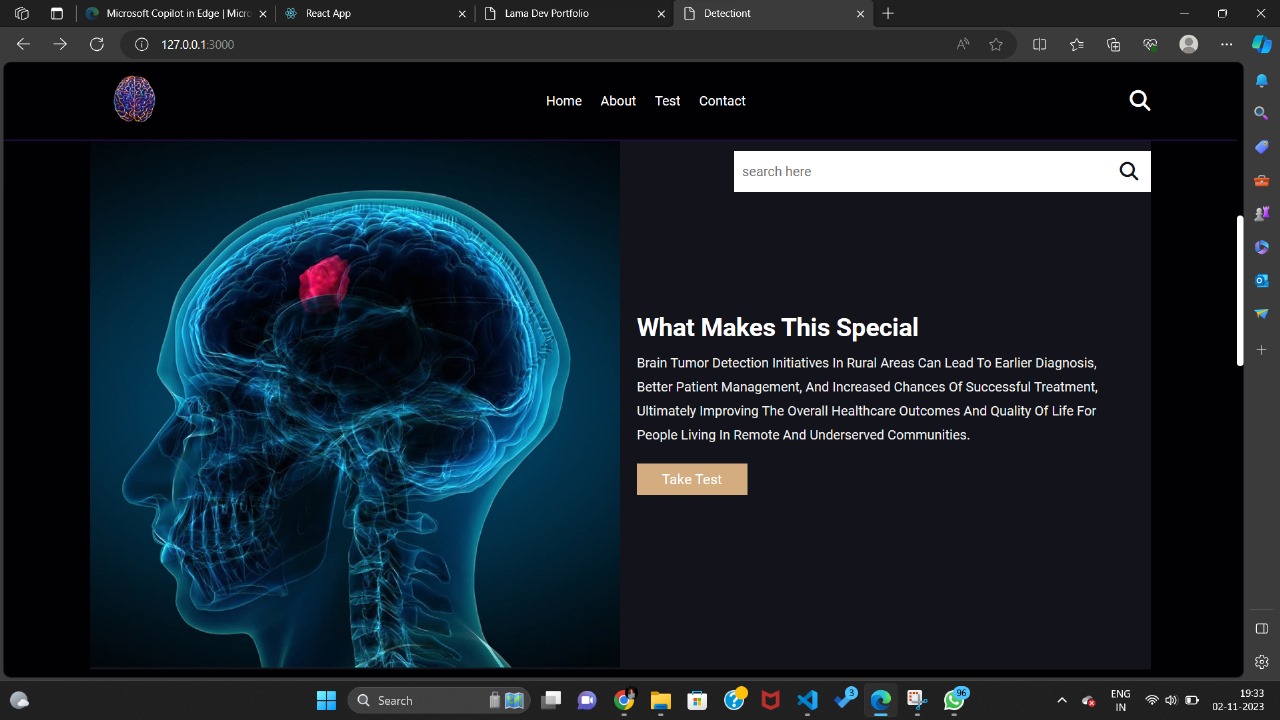
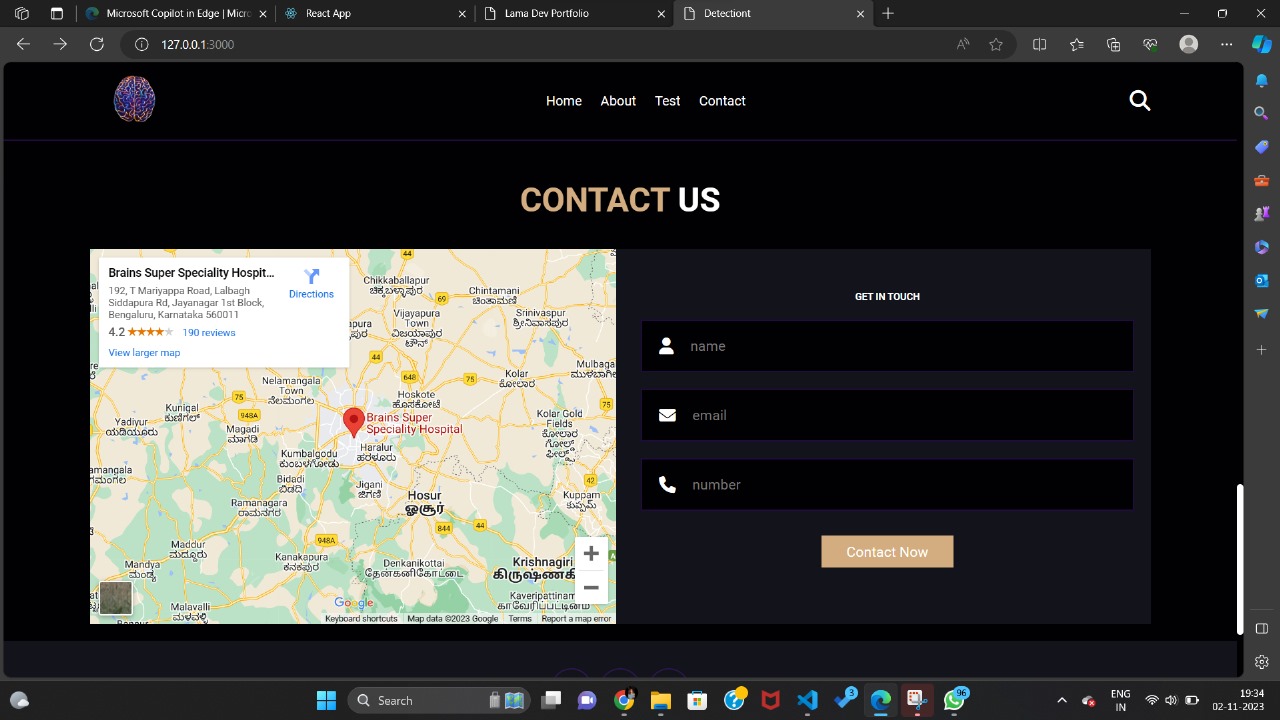
While developing the project there was the issue of UI and how to interact with the Project we took nearly 5-6 days to make it user-friendly
While making the app for the project there were several issues of the app crashes the app for not running and was not able to predict the brain tumor accurately we surfed for the solution iin internet and solved the issue
Accomplishments that we're proud of
Research Breakthroughs: If you are involved in research, significant breakthroughs, novel discoveries, or the publication of influential papers in your field are accomplishments to be proud of.
Innovations: Developing new technologies, products, or services that have a positive impact on society, such as a groundbreaking medical device or a sustainable energy solution.
Awards and Recognitions: Receiving awards, honors, or recognition from peers, industry leaders, or organizations can be a source of pride.
Contributions to Community or Society: Achieving meaningful contributions to the community or society at large, such as charitable work, volunteer efforts, or advocacy for important causes.
Business Success: Hitting significant business milestones, such as revenue growth, profitability, or successful product launches.
Educational Achievements: Completing advanced degrees, certifications, or courses, or successfully mentoring and guiding others in their educational pursuits.
What we learned
Skill Development: Accomplishments often involve acquiring new skills, knowledge, and expertise. These skills can be directly applied to future projects or challenges.
Problem-Solving Abilities: Achievements often require creative problem-solving. You can learn effective problem-solving strategies that can be applied in various situations.
Resilience: Overcoming challenges and obstacles during the pursuit of accomplishments can teach you resilience and the ability to bounce back from setbacks.
Time Management: Successful accomplishments often involve managing time efficiently. You can learn how to prioritize tasks, set goals, and manage your time effectively.
Leadership and Teamwork: If your accomplishments involve working with others, you may have learned valuable leadership and teamwork skills that are transferable to future collaborative projects.
Innovation and Creativity: Achievements often require thinking outside the box and finding innovative solutions. You can learn to foster creativity and innovation in your work.

Log in or sign up for Devpost to join the conversation.