-
-
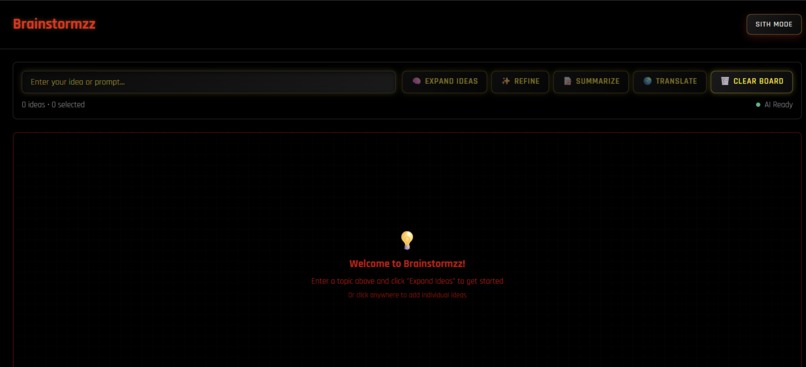
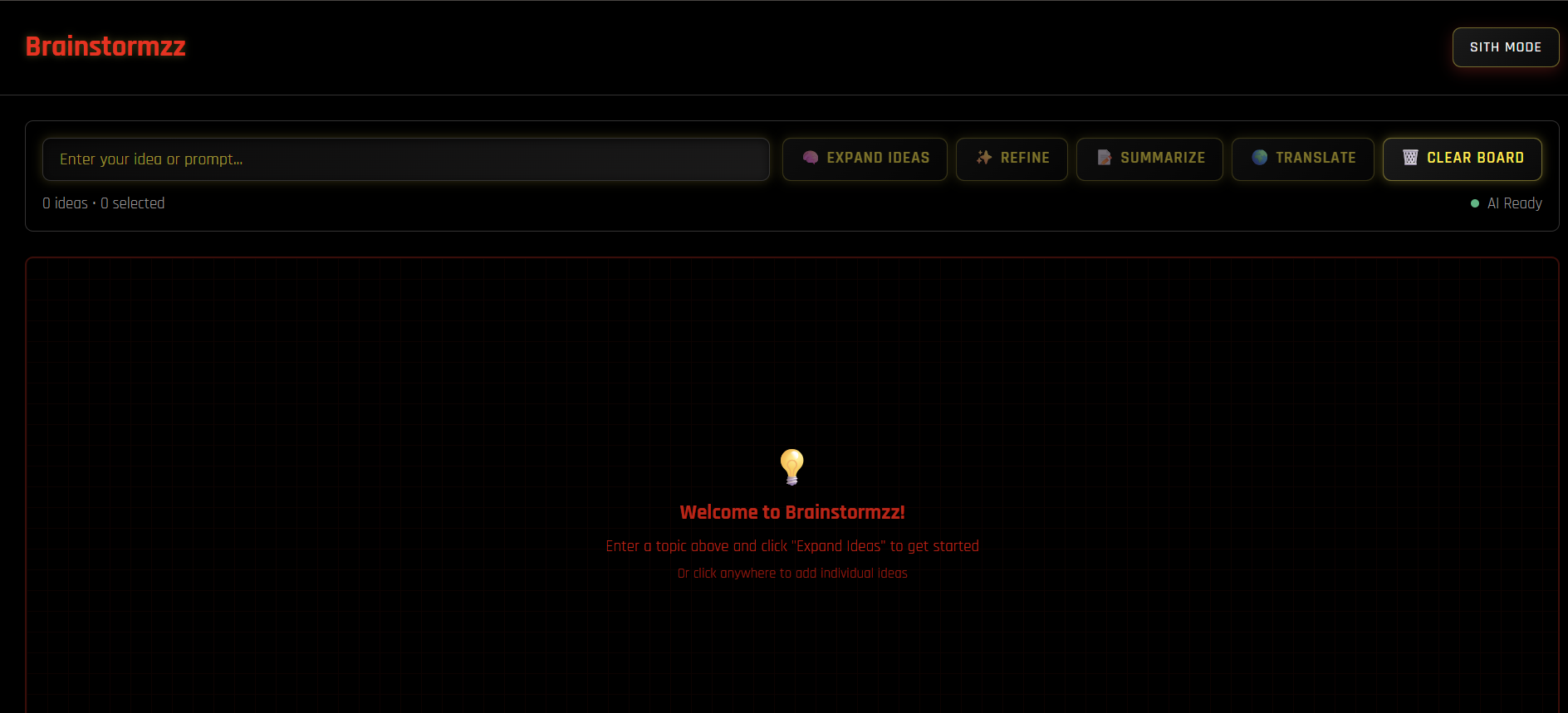
Dark mode(Sith Mode)
-
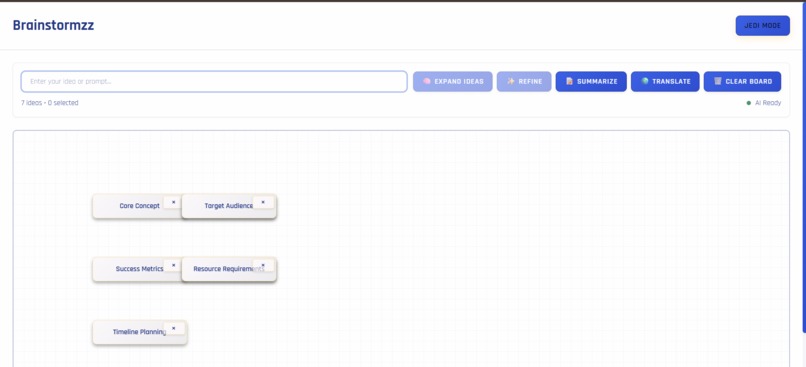
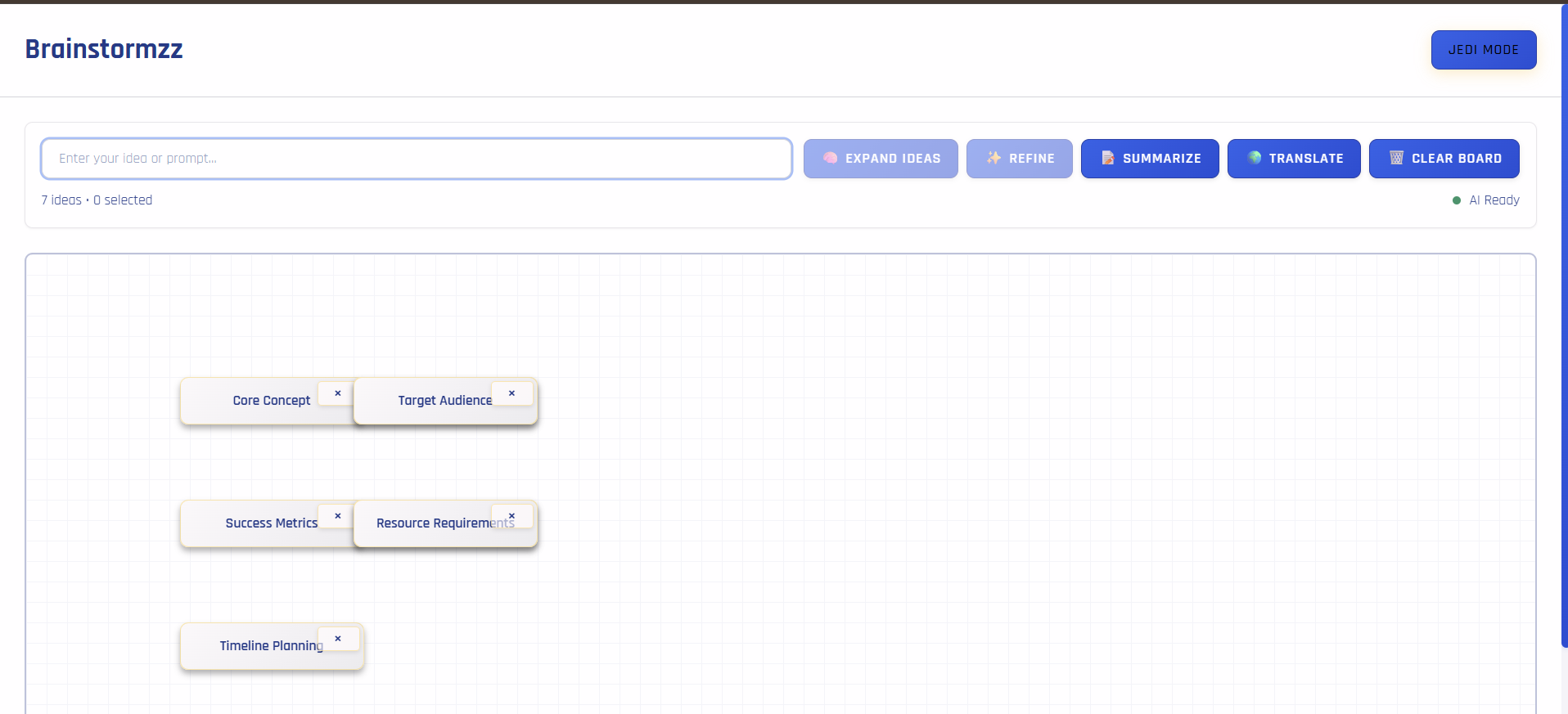
Light mode(Jedi Mode)
Inspiration
Me and my teammate have always struggled with creativity during brainstorming sessions ,we’d spend hours trying to spark ideas but often ended up stuck. That frustration inspired us to create something that could turn creative blocks into breakthroughs.
Brainstormzz was born from our desire to make brainstorming more intuitive, structured, and intelligent powered entirely by Chrome’s built-in Gemini Nano model. The goal: help creators, students, and entrepreneurs organize their ideas instantly, privately, and offline, just like we wished we could when we started.
What it does
Brainstormzz is an AI-powered brainstorming whiteboard that helps users expand, refine, and summarize ideas effortlessly. Users can type a prompt like “Sustainable fashion startup” and within seconds, the app generates structured idea branches like target audience, core concept, and success metrics.
Beyond that, users can:
Refine ideas for clarity and creativity
Summarize brainstorming sessions into concise takeaways
Translate ideas into multiple languages
Visually organize and connect thoughts on an interactive canvas
And the best part , everything happens locally using Chrome’s on-device Gemini Nano, ensuring total privacy and lightning-fast response
How we built it
We built BrainStormzz using: React 18 for the frontend Tailwind CSS for styling HTML5 Canvas for the whiteboard interaction LocalStorage for saving ideas between sessions All AI features were integrated through Chrome’s built-in APIs: Prompt API for idea generation Summarizer API for condensing thoughts Rewriter API for refining and polishing ideas Translator API for multilingual support When the on-device AI wasn’t available, we added graceful fallback logic, so the app stays functional even without active AI sessions.
Challenges we ran into
Gemini Nano Setup: Getting Chrome Canary, origin trials, and window.ai configured properly was a huge challenge.
Limited Documentation: The experimental APIs are still evolving, so we had to rely on trial and error for many integrations.
AI Availability: Handling cases where window.ai returns undefined without breaking the experience required careful fallback design.
Performance Tuning: Optimizing canvas rendering for smooth interaction with multiple idea nodes took time.
Accomplishments that we're proud of
Successfully built a fully local AI prototype that runs without cloud calls
Designed a clean, retro-futuristic UI theme (Sith Mode)
Integrated multiple Chrome AI APIs in one cohesive app
Created a tool that genuinely helps people think more creatively, just like we wanted for ourselves
What we learned
How Gemini Nano operates under the hood and how Chrome exposes on-device AI
The importance of fallback design when working with experimental APIs
How to build user-friendly, modular AI interfaces in React
And most importantly ,that AI can enhance creativity, not replace it.
What's next for Brainstormzz
BrainStormzz started as a prototype to explore how Chrome’s built-in Gemini Nano can enhance creativity , but we see it growing into a full-fledged AI collaboration space.
Here’s what’s next on our roadmap:
Real-Time Collaboration: Allow multiple users to brainstorm together on the same whiteboard.
Idea Export: Let users export summaries and mind maps directly to Google Docs or Notion.
Smarter Idea Linking: Use on-device embeddings to connect related ideas automatically.
Cross-Platform Support: Build a lightweight PWA version for tablets and mobile brainstorming.
Voice-to-Idea Mode: Integrate Chrome’s on-device speech recognition to turn spoken thoughts into structured ideas.
Offline Persistence: Enhance local caching so sessions survive restarts and sync seamlessly between browsers.
Ultimately, we want BrainStormzz to become the go-to tool for anyone who wants to think better ,faster using local AI.

Log in or sign up for Devpost to join the conversation.