Inspiration
Students may blindly copy and paste answers from AI chatbots and not actually understand and learn. This malpractice has become so frequent that it has culminated into a phenomenon, often called "Cognitive Offloading". This is when the brain 'switches off' as it expects the technology to do the heavy lifting. In the UK alone, the number of students using AI specifically for assessments jumped from 53% in 2024 to 88% in 2025. This exemplifies the fact that this trend will only continue to exacerbate over time, which could in turn harm our children's well-being and future.
What it does
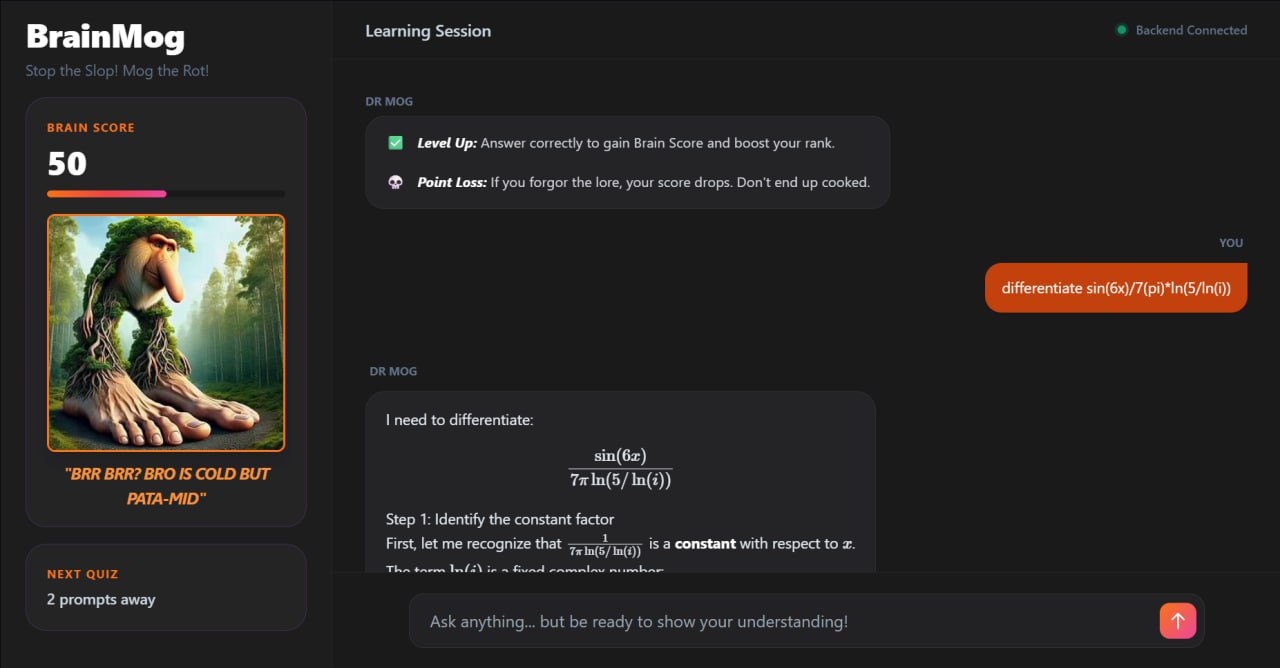
It provides a quiz after a few prompts to test the user's learning based off the given prompts, and tracks their learning through a 'brain score'. This allows users to be more aware of themselves when using AI for their own education. Additionally, it generates its own questions and answers, specifically tailored to the needs of the students. To make the product more engaging, we incorporated elements that appeal to young people through the usage of familiar internet personalities and memes.
How we built it
Built in vanilla HTML, CSS and Javascript. We utilized Claude's Sonnet 4.5's API as it was the most ideal model for our project. Nodejs was used to host the backend to handle the API requests to Anthropic. We also implemented Tailwind CSS to beautify the overall look of the website.
Challenges we ran into
One of the biggest challenges we encountered was how to collaborate over a single project. As no one in the team had any experience with team projects or git in general.
Accomplishments that we're proud of
Successfully implemented a full-stack programme that involved using complex APIs.
What we learned
How to properly handle our API key to ensure security, and the use of JavaScript for user interaction
What's next for BrainMog
Addition of open-ended questions and multiple MCQs.
Built With
- claude
- css
- html
- javascript
- node.js

Log in or sign up for Devpost to join the conversation.