-
-
App Icon
-
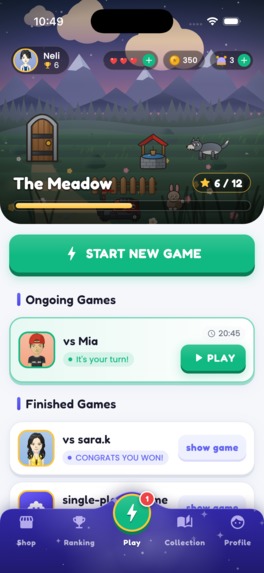
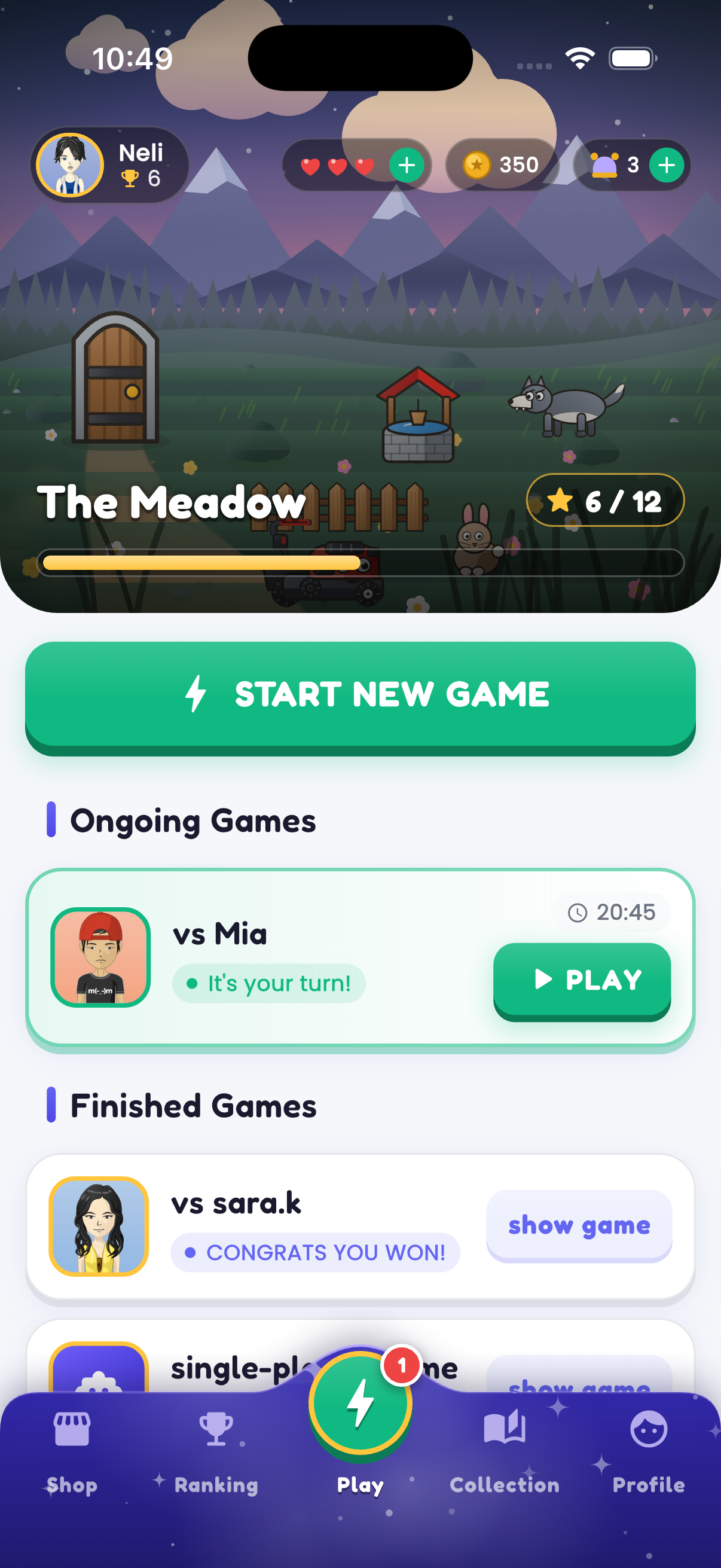
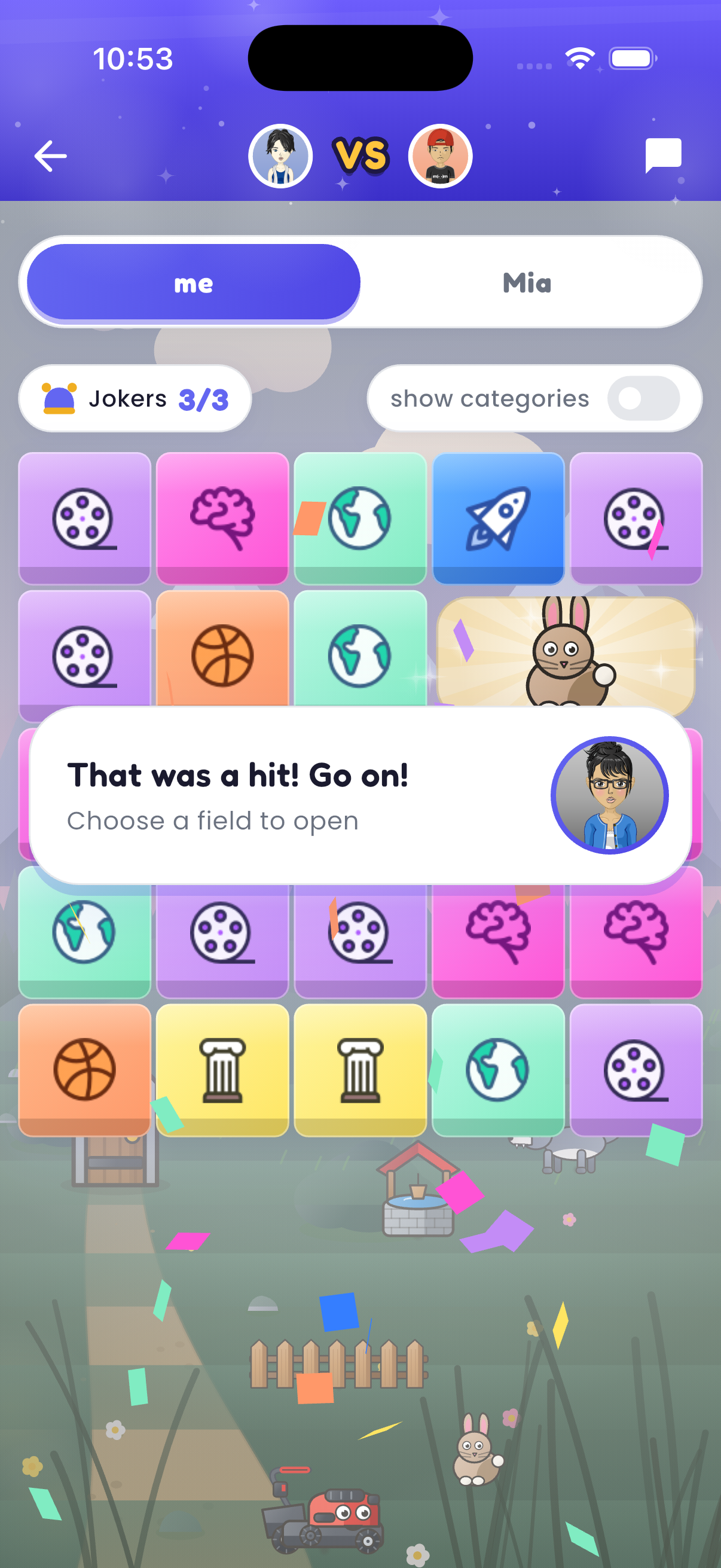
Track story progress, ongoing matches, lives, Coins and Jokers from your main game screen.
-
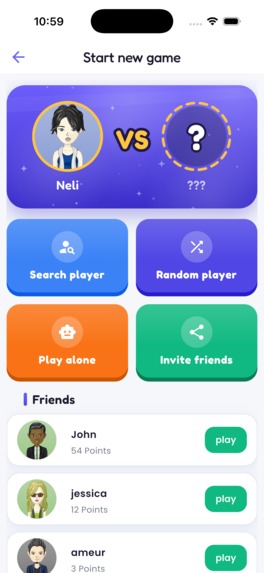
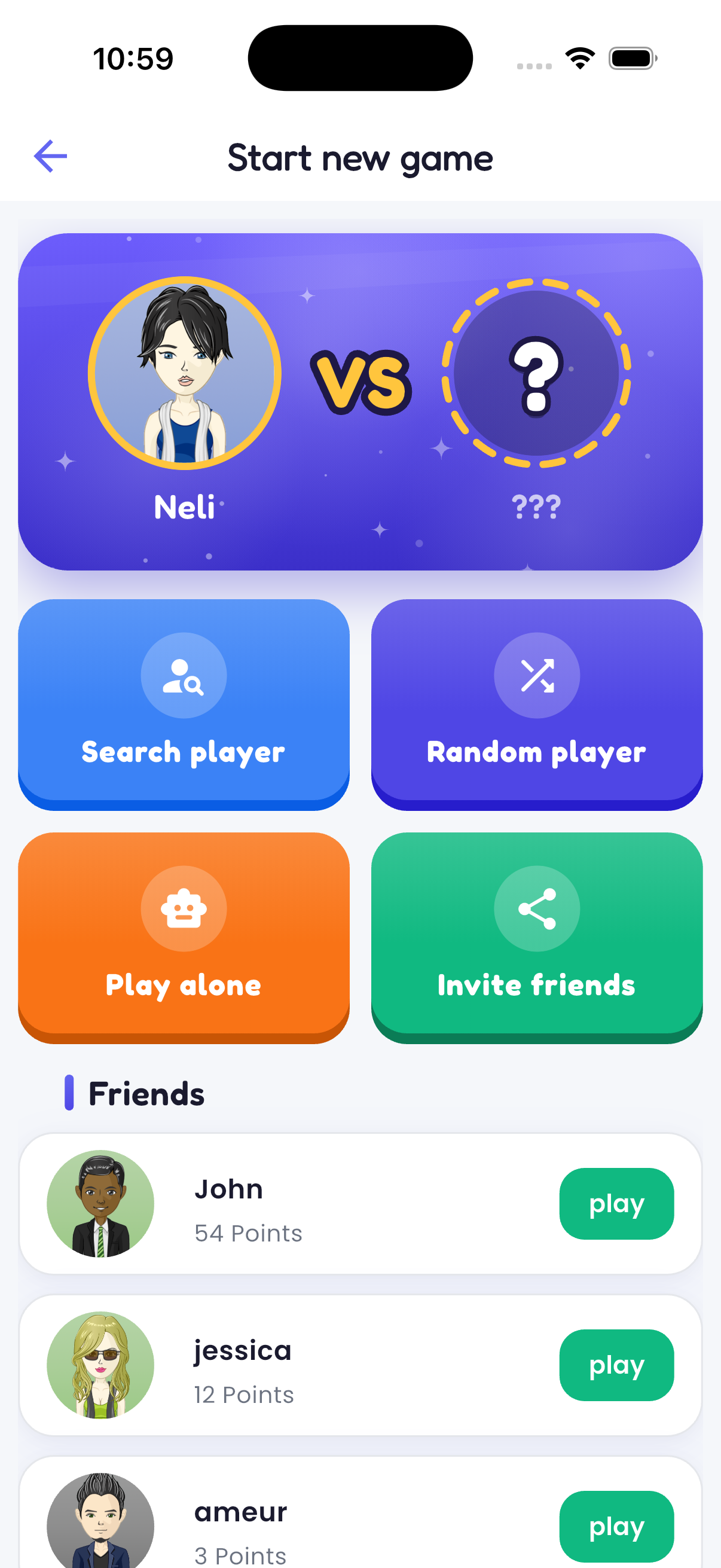
Challenge friends, find other players, face a random opponent, or play solo.
-
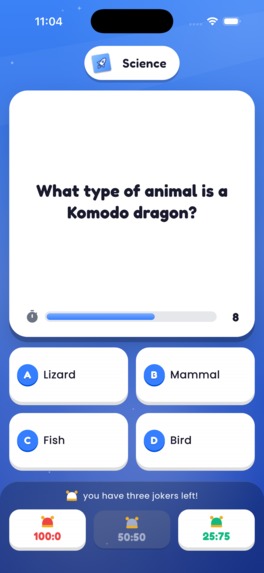
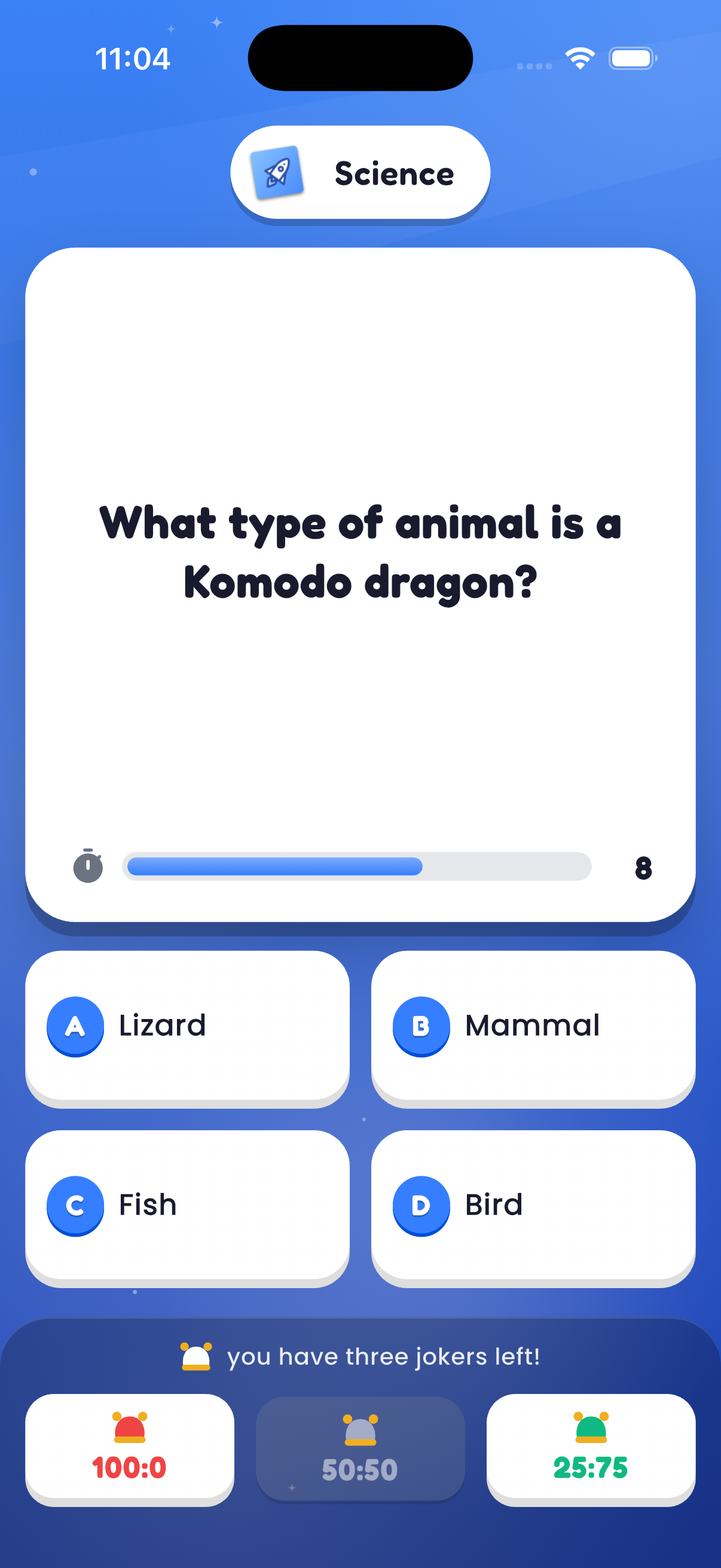
Answer timed trivia questions across many categories and use Jokers when you need a little help.
-
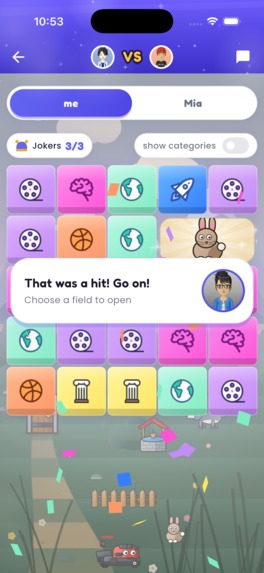
Correct answers let you open tiles and uncover hidden characters before your opponent.
-
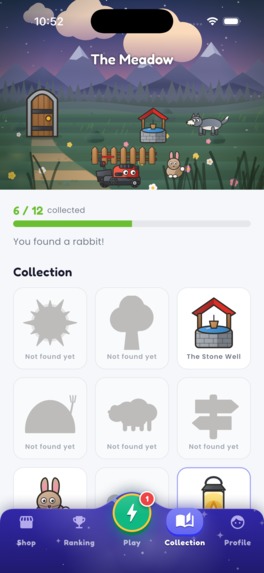
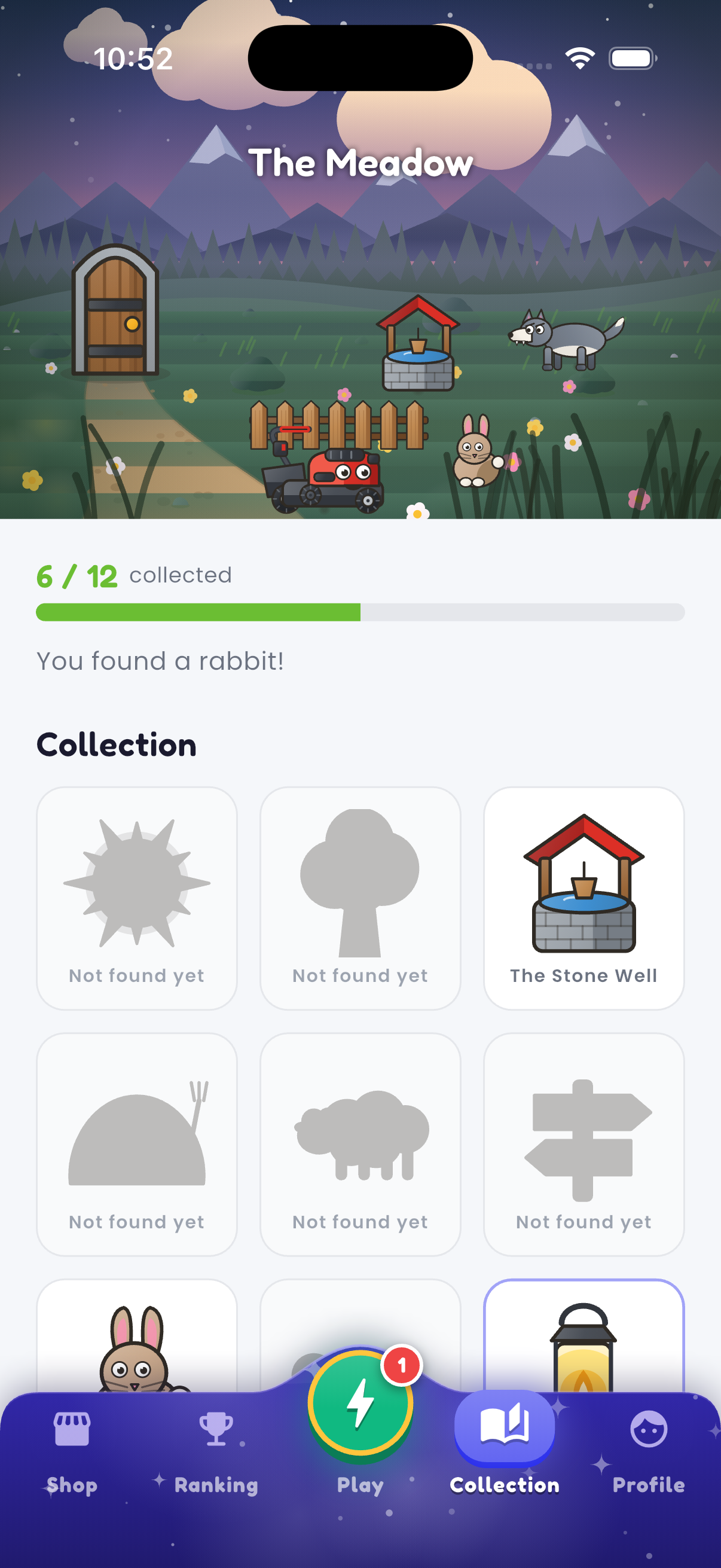
Collect hidden characters, complete each scene, and reveal the full story as you progress.
-
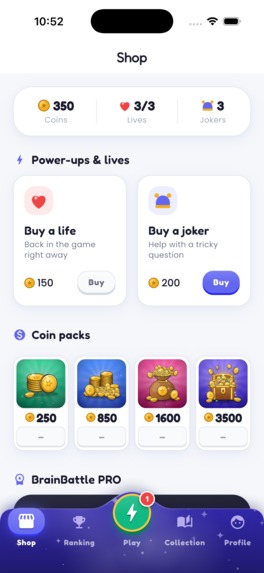
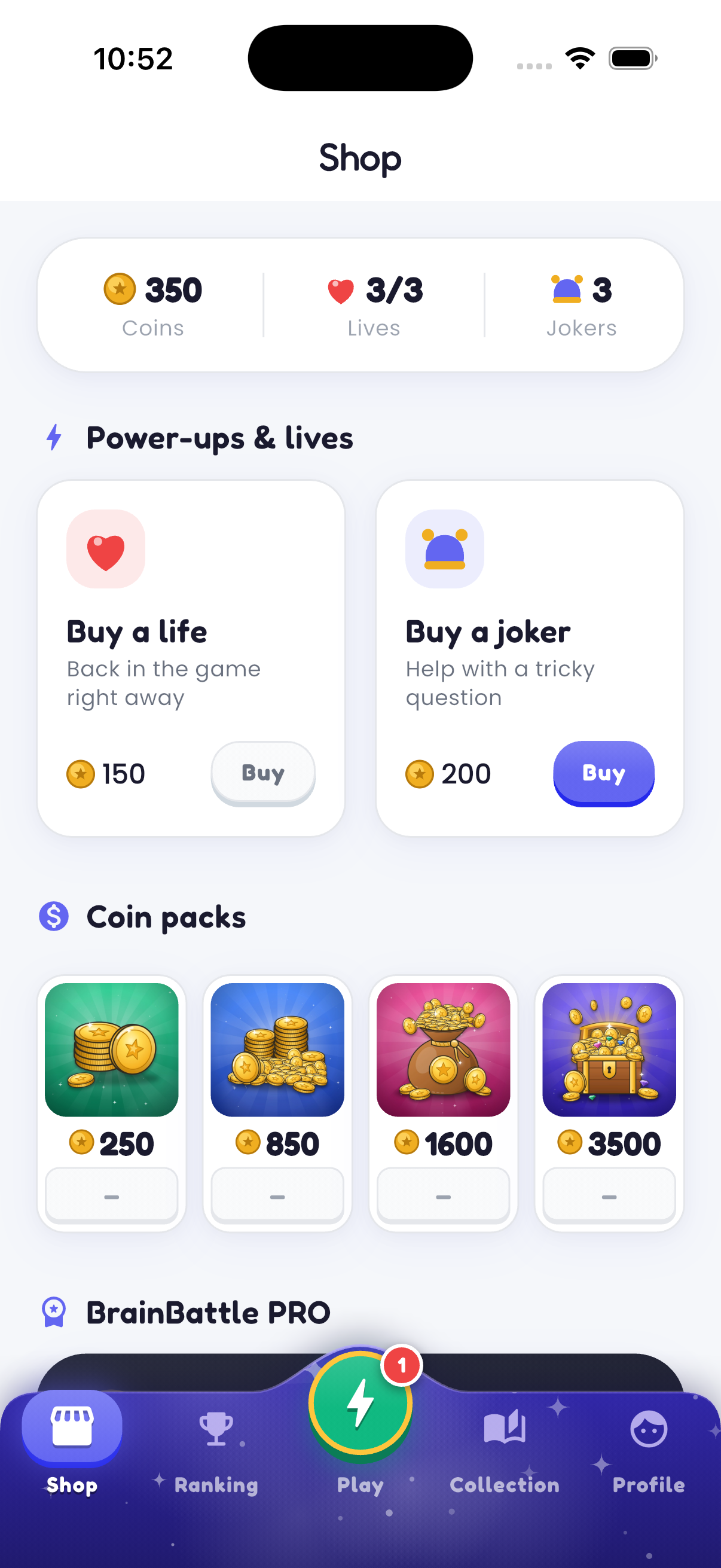
Use Coins for lives and Jokers, buy Coin packs, or upgrade to BrainBattle PRO.
-
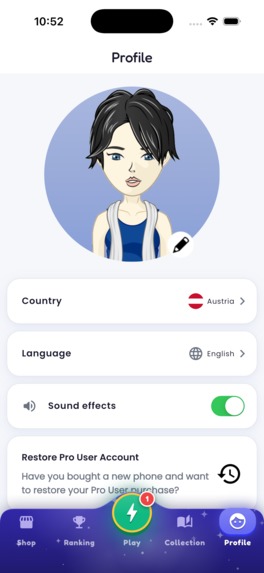
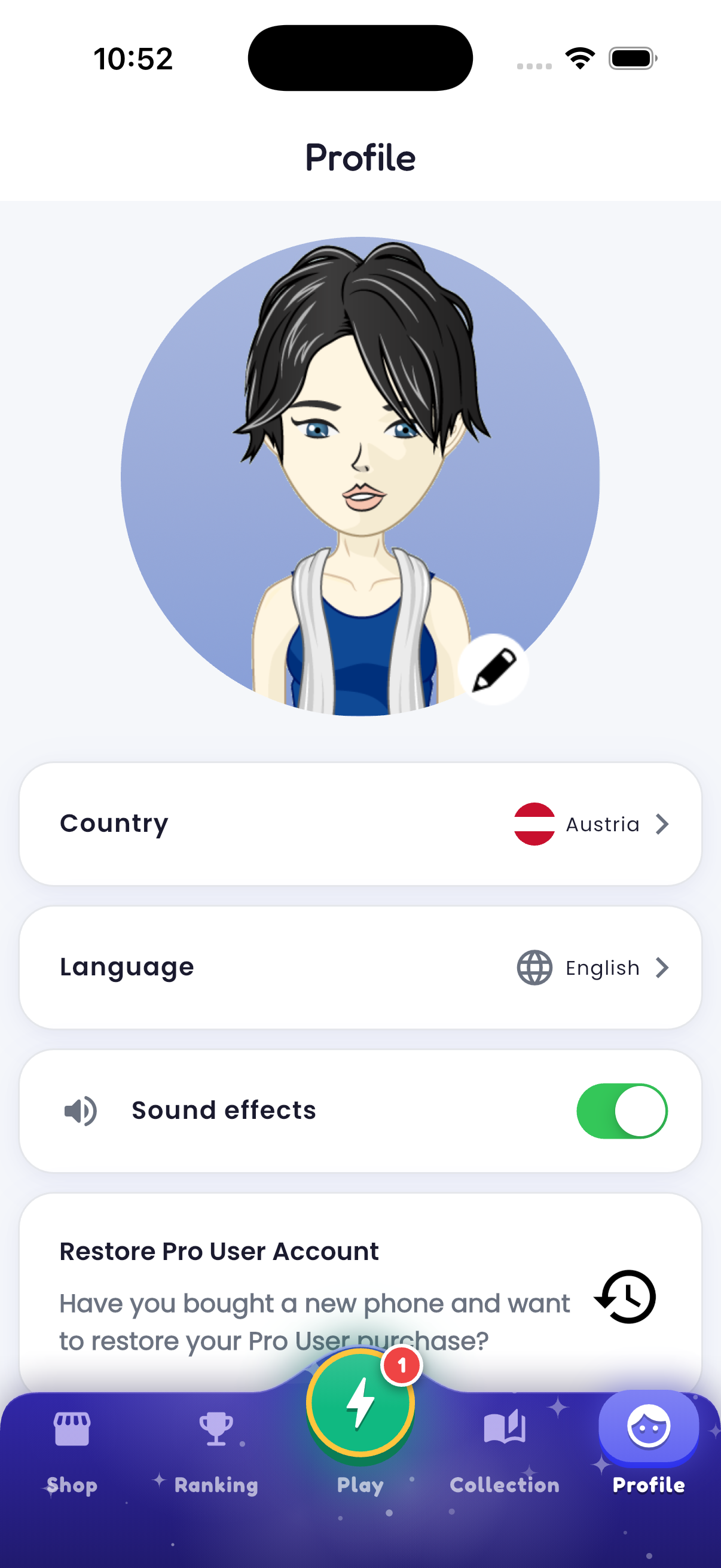
Personalize your avatar, country and language, and manage your game settings.
Inspiration
The idea behind BrainBattle has been in my head for a long time: a competitive trivia game that combines knowledge, board-game mechanics, collecting, and story progression.
But as the owner of TecFox GmbH, a one-person software company based in Switzerland, building a polished mobile game that could compete with products from large game studios did not feel realistic.
Over the last months, AI completely changed that assumption.
BrainBattle is being built together with Chemli Tech Ltd, a one-person software company. I originally found its founder, a Tunisian developer, through a freelance platform around three years ago, and since then we have worked together remotely on several of my projects — but we have never met in person.
Previously, I mainly outsourced development work to him because I had more ideas and projects than I had time to implement myself. With AI, pure development work has become dramatically faster. Ironically, this meant I no longer needed to outsource as much development as before.
Instead of ending our collaboration, we decided to take it in a completely new direction: become partners and build something together that would previously have been too ambitious for either of our companies alone.
BrainBattle is our first joint project.
What it does
BrainBattle blends trivia, competition, collecting, and story progression.
Players compete head-to-head against friends or random opponents. Both players receive a board consisting of tiles from different trivia categories. Answering a question correctly opens the corresponding tile and may reveal a part of the hidden characters underneath. The goal is simple: find all three hidden characters before your opponent does. The winner earns coins, while the losing player loses a life.
But every match is also part of something bigger. The characters players uncover belong to collections connected to stories. In the collection area, players can see the complete story scene, the characters they have already discovered, and the silhouettes of those still missing. Completing the collection unlocks the story.
BrainBattle also includes leaderboards showing overall and category-specific performance, country-specific trivia questions, virtual currency, lives, a shop, personalized avatars, and a subscription offering unlimited games and additional benefits.
How we built it
We are a very small team, but not new to app development. TecFox has already launched several apps to the market, and the founder of ChemliTech has worked on many mobile app projects over the years. That experience helped us make fast architectural and product decisions and gave us a strong foundation for building BrainBattle.
We both had experience with Flutter and RevenueCat from previous projects, so using the same stack for BrainBattle allowed us to move quickly.
AI became a core part of our development workflow. We use it to accelerate implementation, explore solutions, iterate on UI and game mechanics, debug problems, and turn ideas into working features much faster.
This does not mean pressing a button and letting AI build the game. Our role as developers has shifted toward architecture, product decisions, reviewing and improving generated solutions, connecting all the pieces, and deciding what actually creates a good game experience.
AI gives our two-person team something we never had before: leverage.
Challenges we ran into
One advantage was that we did not have to start completely from scratch. We were able to reuse and adapt parts of technology, components, and experience from apps we had already built before.
The real challenge was bringing all our ideas together into one coherent product experience.
BrainBattle combines trivia, board-game mechanics, competition, collections, stories, leaderboards, virtual currency, subscriptions, lives, avatars, and localized content. Building the individual features was manageable — making all of them feel like one consistent and intuitive game was much harder.
We spent a lot of time refining how players move through the app, how progression feels, what should be visible at each moment, and how the different mechanics support rather than distract from each other.
Accomplishments that we're proud of
Trivia, board-game mechanics, collecting, competition, and story progression could easily feel like separate ideas. One of our biggest achievements was turning them into a game loop that feels connected, engaging, and exciting to play.
We are especially proud of the visual result. BrainBattle has a strong, polished design and a distinctive game world — created without a large design team behind us. Building something that looks and feels like a much bigger production with such a small team is one of the things we are most proud of.
We are also proud of the team we have become. What started as a client-freelancer relationship evolved into a real partnership. Over the course of building BrainBattle, we learned how to challenge each other's ideas, divide responsibilities, make decisions together, and combine our strengths into one shared product vision.
What we learned
One thing we definitely learned is how fast time passes when you are building an ambitious product with a small team. Even with AI accelerating development, there are always more ideas, improvements, and details than there is time to implement them. We had to learn to prioritize continuously and focus on what really matters for the player experience.
At the same time, we learned that faster coding does not automatically create a better product. Product thinking, architecture, design decisions, prioritization, testing, and knowing when an AI-generated solution is not good enough are more important than ever.
For us, that may be the biggest lesson from BrainBattle: AI gives a small team incredible speed and leverage — but using that speed in the right direction is still up to us.
What's next for BrainBattle: Ultimate Quiz
BrainBattle is now live on Android, while the iOS version is currently under review by Apple and is expected to go live within the next few days.
The next step is to grow it.
We are starting our marketing activities and will focus on bringing more players into the game while systematically measuring how they actually use it: where they engage most, where they drop off, which mechanics keep them coming back, and where friction still exists.
We will use those insights to improve onboarding, progression, retention, balancing, and the overall game flow.
At the same time, we want to expand BrainBattle with new stories, characters, collections, trivia content, and competitive features, while continuously testing which ideas create the strongest player experience.
For us, launching BrainBattle is not the finish line. It is the starting point for turning it into a product that can grow and improve based on real player behavior.
And it will also help us answer the question that motivated us to take on this project:
Can two one-person companies, empowered by AI and years of app-development experience, build and grow a game that can genuinely compete with products from much larger players in the mobile gaming market?
BrainBattle is our attempt to find out.


Log in or sign up for Devpost to join the conversation.