The Problem
Language learning apps suck. We've all tried Duolingo's "The boy eats an apple" exercises and quit after three days. Meanwhile, we doom scroll TikTok for hours without even thinking about it. So we asked: what if we tricked your brain into learning a language by making it feel like social media?
But there's a deeper problem: traditional language apps teach you words and grammar, but they don't teach you culture. You can memorize Spanish verb conjugations for months and still have no idea what's trending in Mexico City, what jokes people are making, or how they actually talk online. You're learning a language in a vacuum, disconnected from the real people who speak it.
What We Built
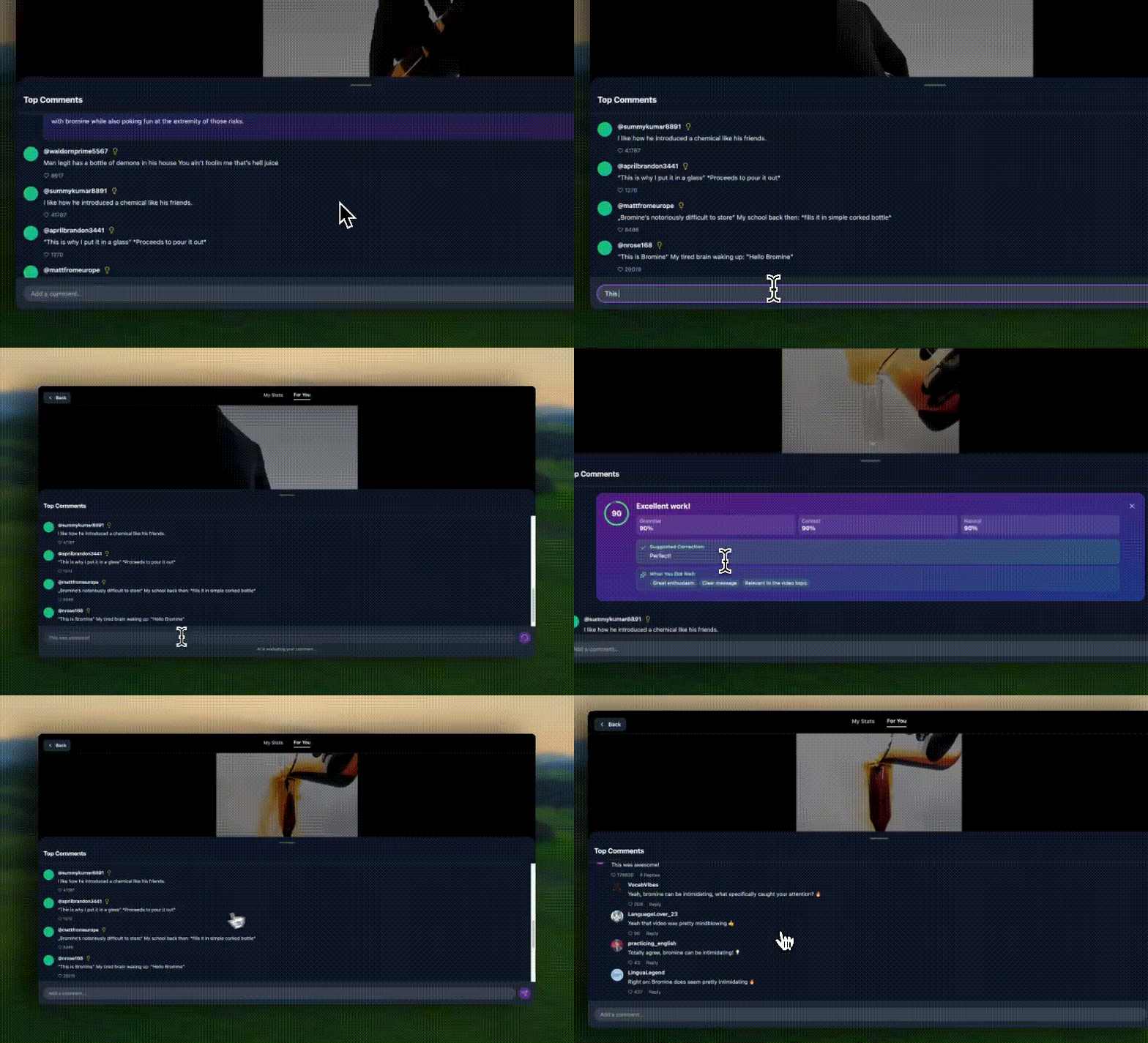
Brain Thought is a language learning app that looks exactly like TikTok. You scroll through real YouTube Shorts, leave comments in whatever language you're learning, and get instant AI feedback disguised as social validation: likes, emoji reactions, and roast-style comments from an AI coach with Gen Z energy.
The magic is that it doesn't feel like homework. You're just commenting on funny videos and getting validation, but secretly you're practicing grammar and vocabulary.
More importantly: you're seeing what native speakers actually watch, comment on, and find funny. You're learning slang as it evolves ("bussin", "no cap", "fr fr"). You're experiencing the culture firsthand—the memes, the trends, the way people joke around in comments. This is something no textbook can teach you.
How We Built It
Frontend: React with a vertical scroll UI that mimics TikTok's swipe navigation. We embedded YouTube Shorts as iframes and built the comment overlay system with the iconic right-side action buttons.
Backend: FastAPI server that handles two things:
- Fetching YouTube Shorts with slang-heavy comments (using YouTube Data API)
- Evaluating user comments with Groq's Llama 3.3 70B model
The AI: We designed a prompt that scores comments on grammar, relevance, and vocabulary, then generates a response that sounds like a supportive friend roasting you. Think "Bro really said 'I eated' 😭 it's 'I ate' but A+ for confidence lmao"
The feedback appears as likes (scaled to your score) and a reply from the AI, so it feels like TikTok engagement instead of a red X.
Cultural Authenticity: We specifically search for trending topics (gaming, food reviews, dance trends, pets) and filter for videos with natural, slang-filled comments. This gives learners exposure to how real people, especially younger generations, communicate online in their target language.
Challenges
The scroll was harder than expected: Building smooth vertical scrolling with mouse wheel + touch support took way longer than we thought. TikTok makes it look easy.
YouTube API limitations: We had to get creative with search queries and filtering to find Shorts with enough slang/natural language in the comments. Lots of videos have spam or non-English comments.
Prompt engineering: Getting the AI to roast you just enough without being mean or cringy took iteration. We wanted it to feel like a friend correcting you, not a teacher grading you.
Sub-second response times: We needed the AI feedback to feel instant (like real social media). Groq's API got us under 1 second, but we had to carefully manage context length.
What We Learned
The biggest lesson: friction kills learning. Every extra click, every "Start Lesson" button, every reminder notification pushes people away. But infinite scroll? That's frictionless. That's addictive.
We also learned that social validation is a hell of a drug. Seeing those likes go up (even when you know it's fake) hits different than a "Correct!" checkmark.
Cultural learning is just as important as vocabulary: Watching a Spanish gaming streamer rage quit, or seeing French Gen Z argue in the comments about whether something is "cheh" or not. That context is invaluable. On top of learning words, you're learning when and how to use them, what's funny, what's cringe. You can't get that from flashcards.
On the technical side, we got deep into prompt engineering for personality (way harder than we expected), FastAPI for rapid backend prototyping, and the surprising complexity of recreating TikTok's UX.
What's Next
We want to add:
- Multi-language support (currently just demos with English/Spanish)
- Real progress tracking hidden in the UI
- Actual comment threads with other learners
- Video captions integrated into the AI context for better evaluation
- Region-specific content curation (Brazilian Portuguese vs. European, Mexican Spanish vs. Spanish from Spain)
The hope to make language learning so disguised as entertainment that people don't even realize they're studying, all while giving them a window into cultures they'd never experience from a textbook.


Log in or sign up for Devpost to join the conversation.