-
-
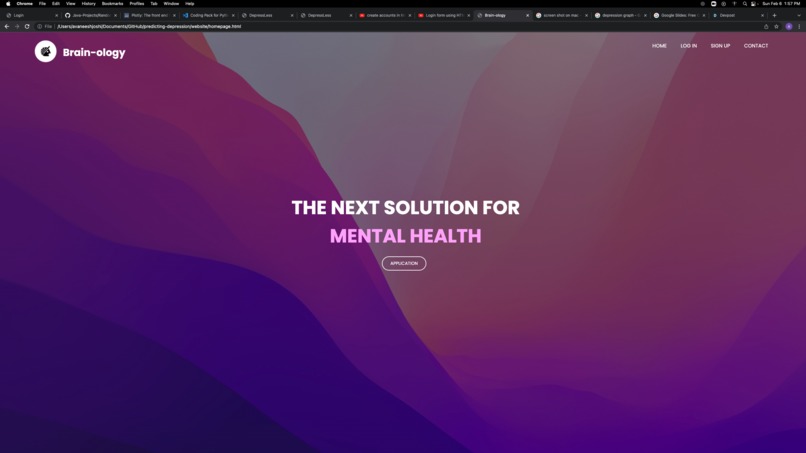
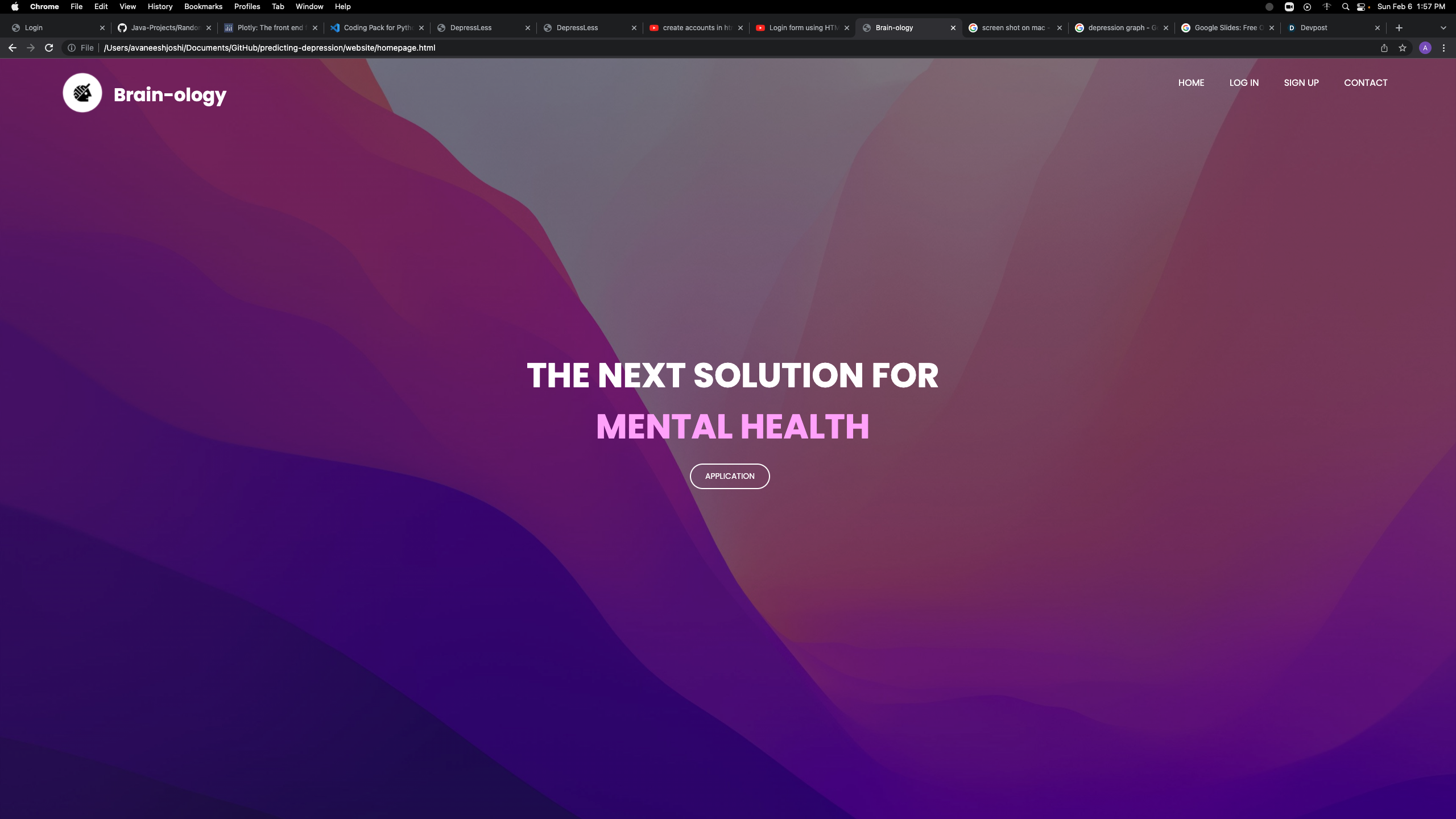
homepage
-
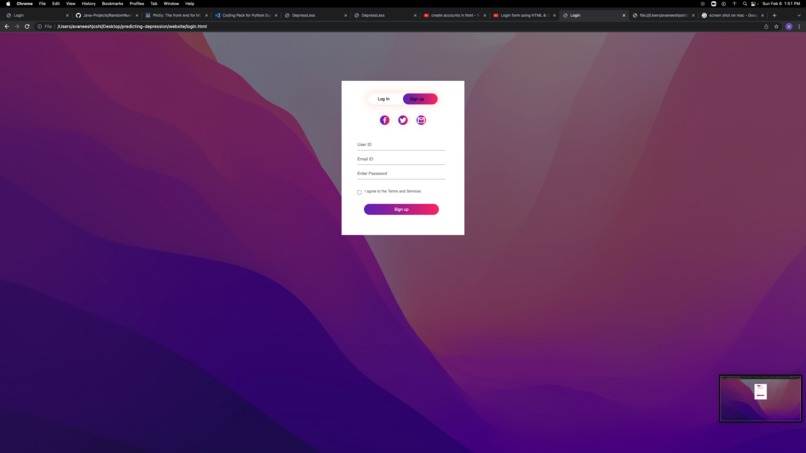
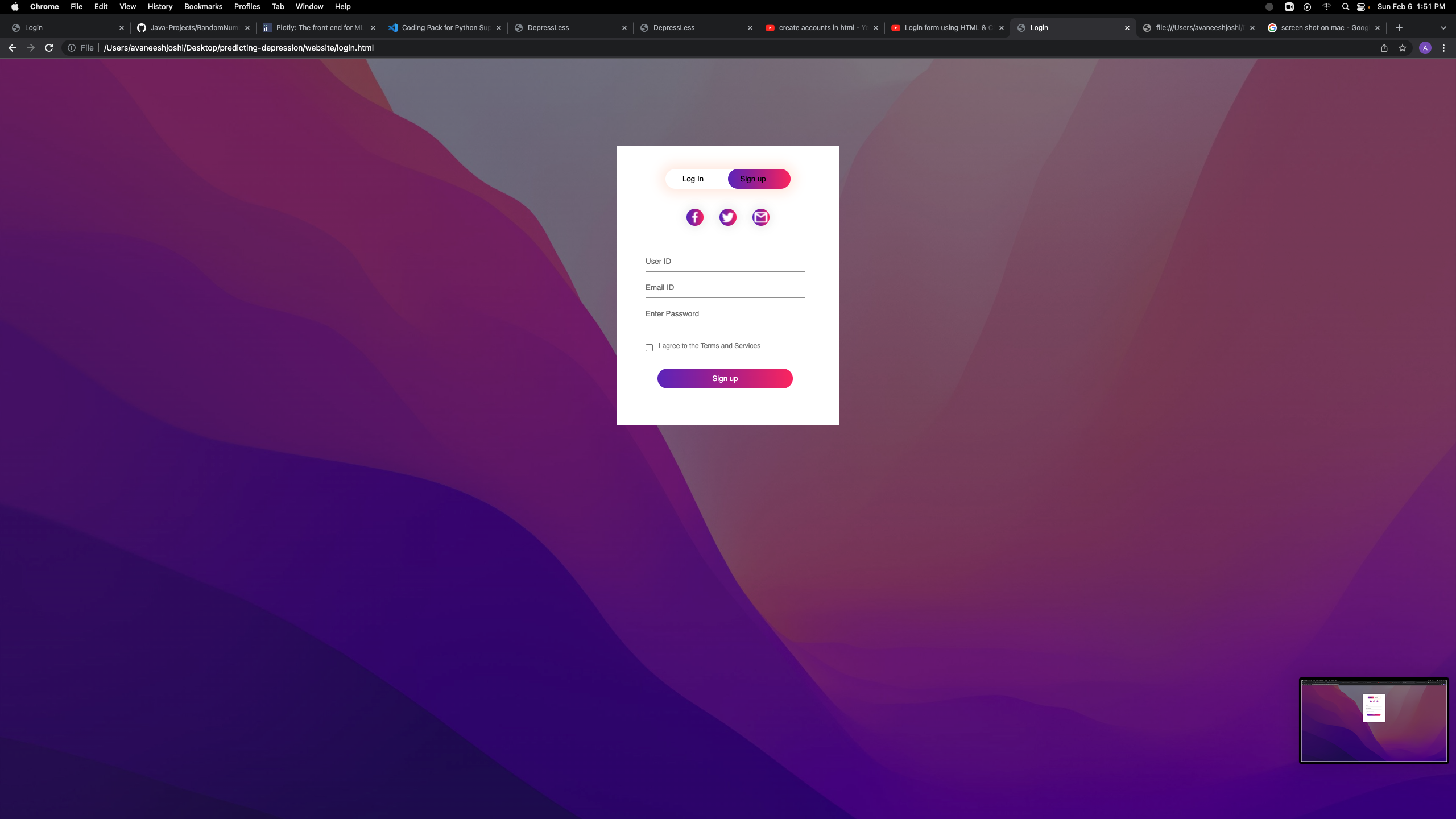
sign up
-
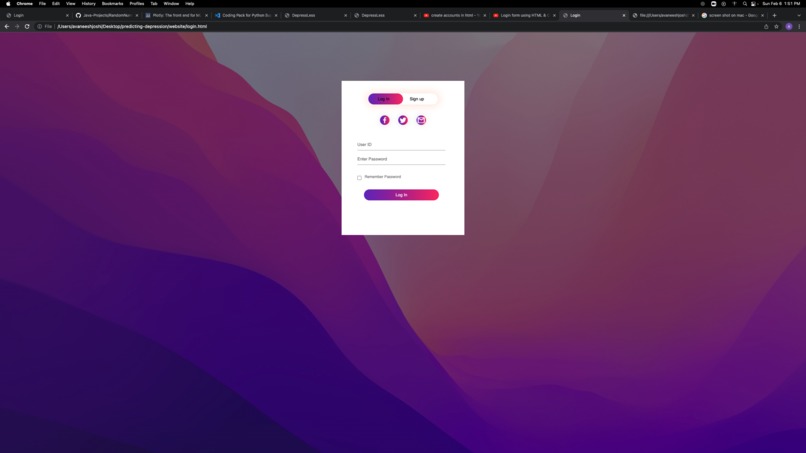
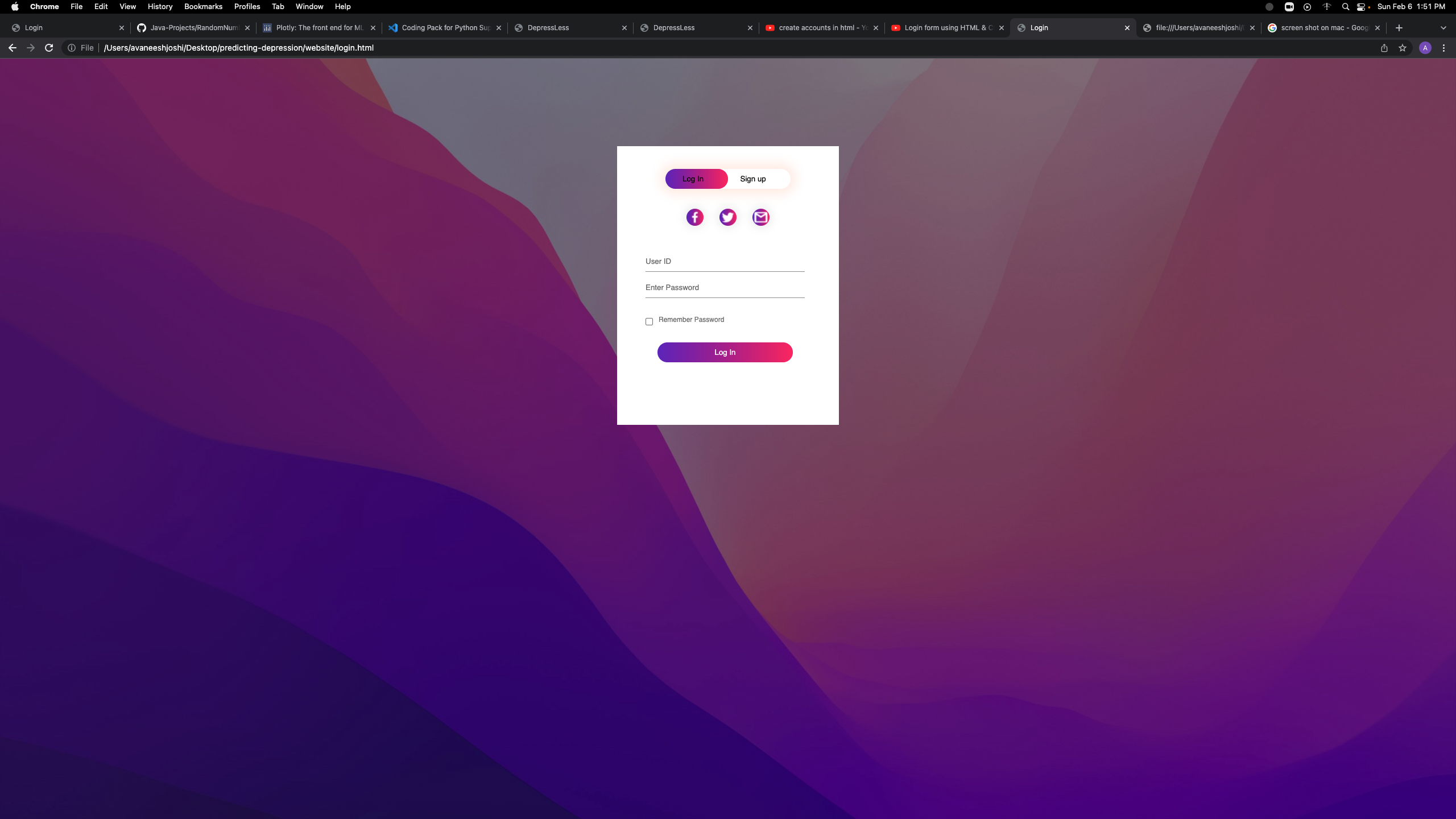
log in
-
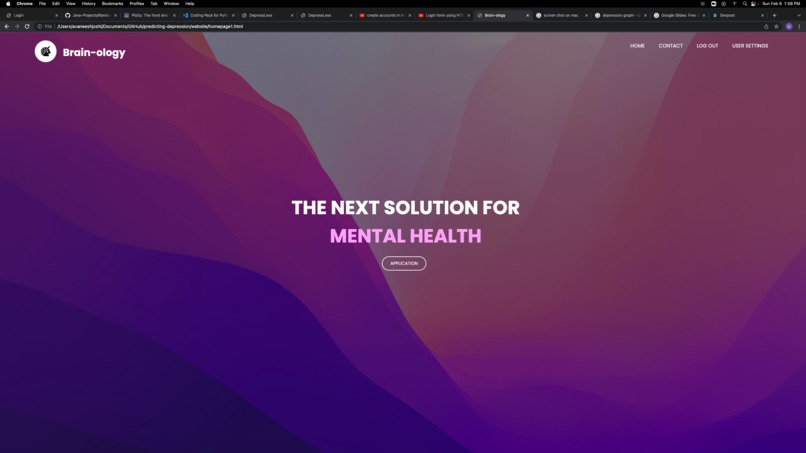
homepage after log in
-
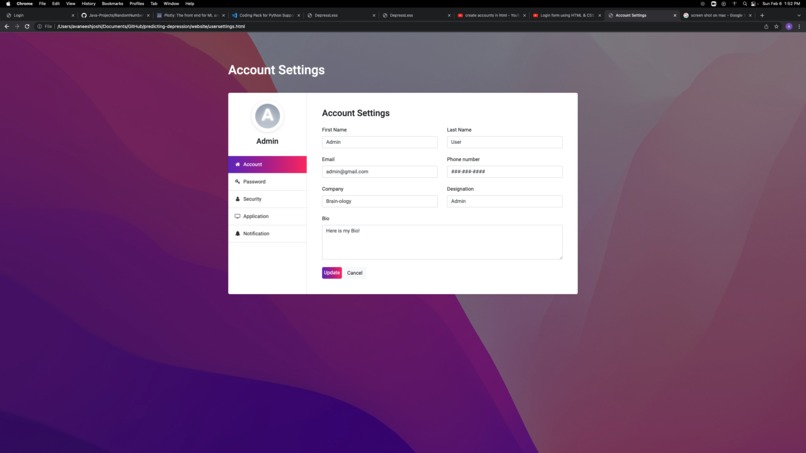
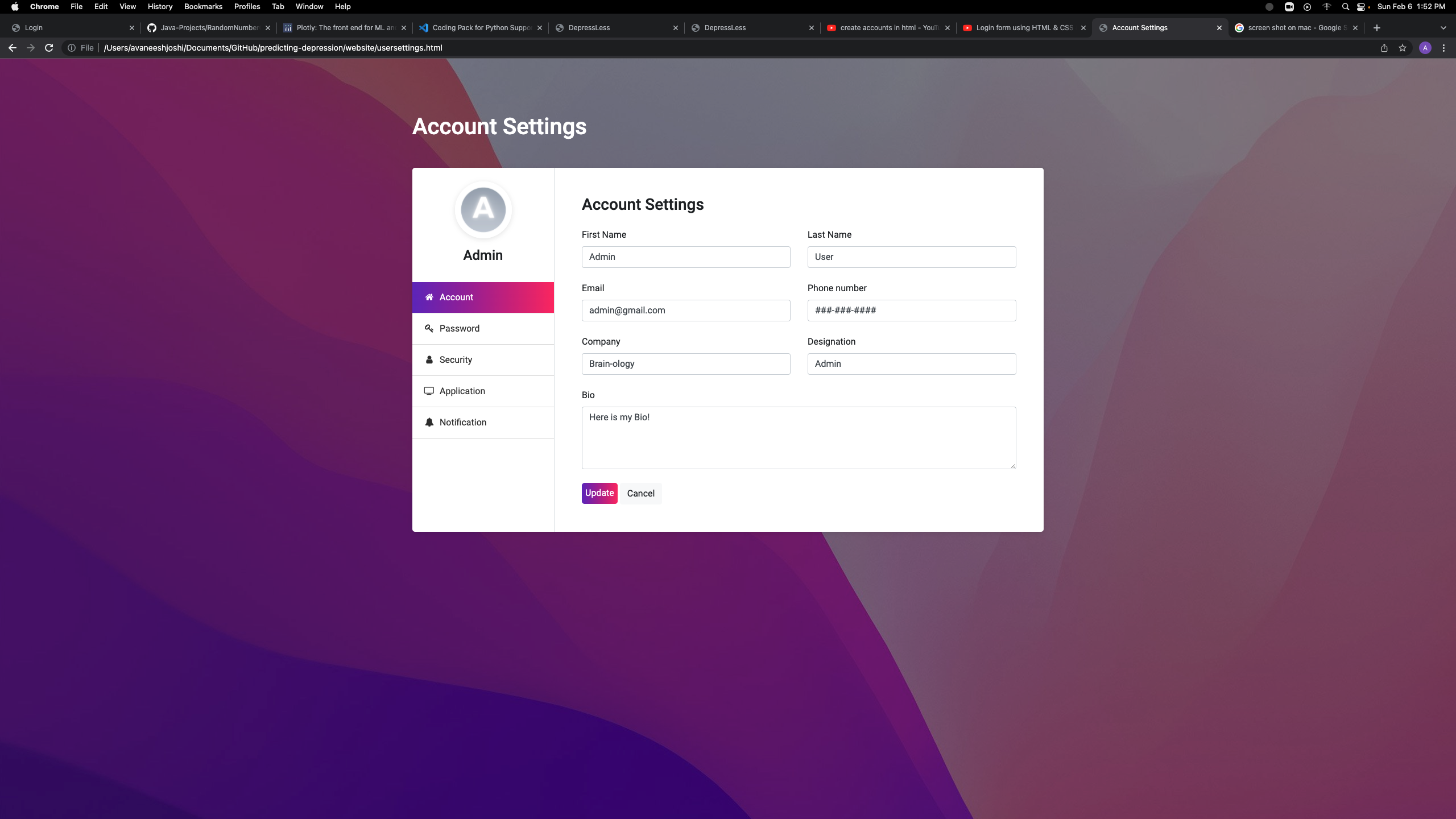
user settings
-
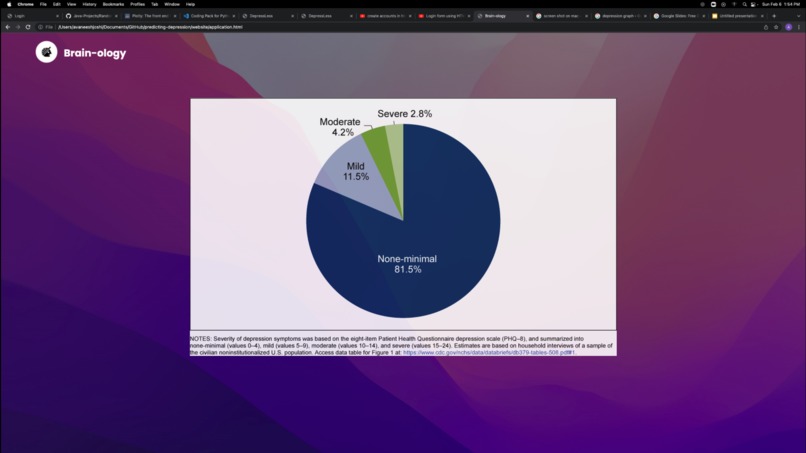
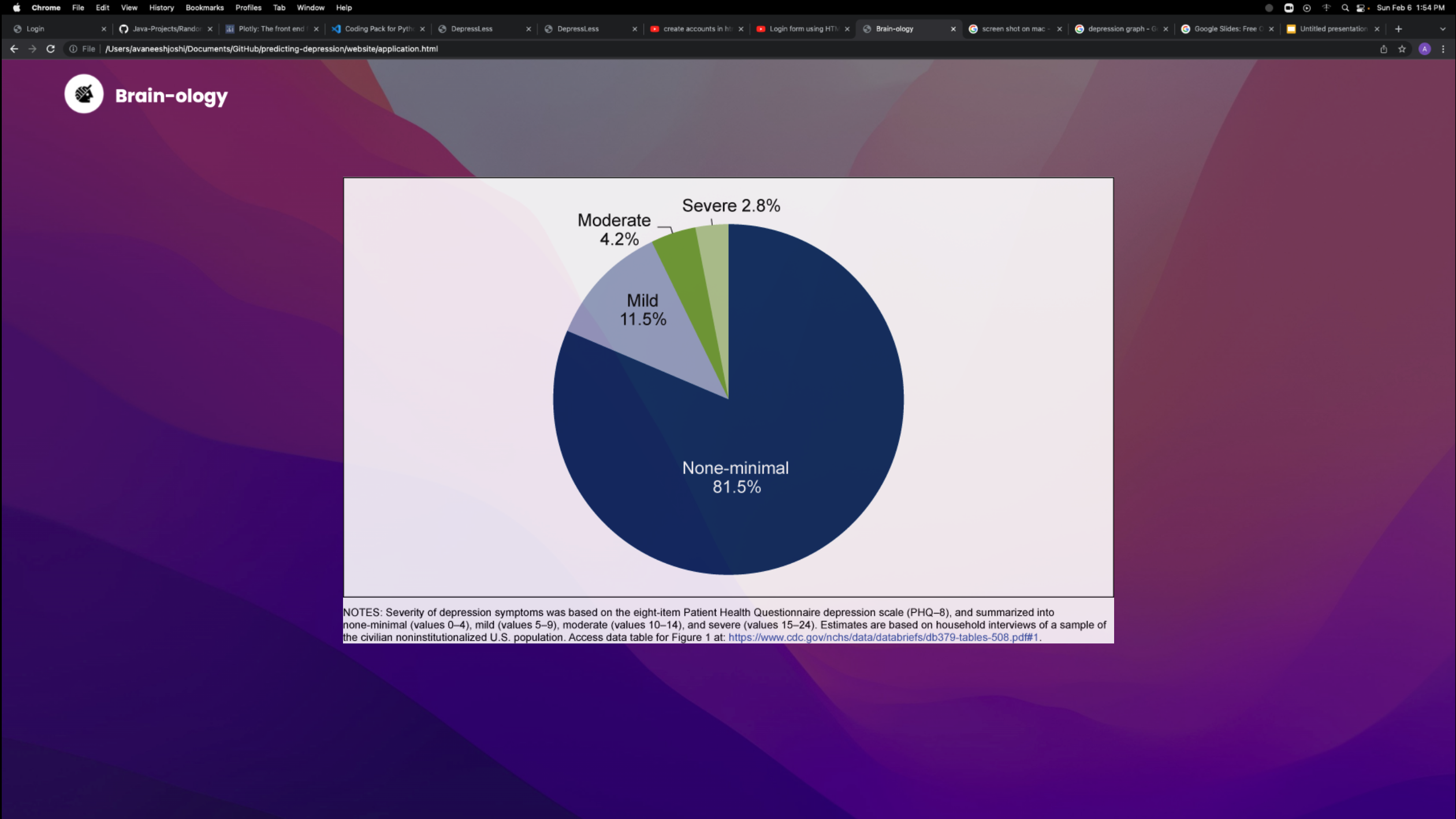
application
Inspiration
We know that in today's time there is an increasing amount of people who have depression. For this reason, we wanted to create this product. Millions of people globally suffer from depression and it is a debilitating condition. At best it can be difficult for people to live their lives normally and happily, and at worst it leads to death by suicide.
What it does
It finds if you have depression. Using machine learning and data that may otherwise be in a patient’s medical file, the goal is to predict who may have depression in a way that requires very little human participation from doctors and has lower time and money costs associated. The patients who are predicted to have depression could potentially be referred straight to mental health professionals in their area or who accept their health care coverage. The patient’s file could also be flagged to alert the medical staff the next time they have any kind of physician appointment to prompt doctors to start the conversation with patients. At the very least information and resources could be sent to patients directly to encourage them to take action on their own behalf.
How we built it
We used HTML, CSS, JS, and ML predictions. Using cases of people's depression and how they encountered life differently, we were able to make the ML predict if the user is in need of help or severe help (meditation or intense resources). For the website such as the login and sign-up page, we used firebase and JS so that it would integrate into an account-based website (each user is added to the database so they can continue and re-use this survey help resource).
Challenges we ran into
We had a problem with combining the ML Product with the Website. We also need to write more valuable features and get more descriptive entries.
Accomplishments that we're proud of
We liked how everything looked and how this product could be the next way to help detect depression.
What we learned and how we can improve
Predicting depression is a complex and multidimensional problem so it is hard to make an actual model. Perhaps exploring more model types could reveal a strategy that was just right for this task. A neural network, for example, could open up a huge range of possibilities that have not been explored in this project. The downside of neural networks is of course the lack of transparency in what features the model is using to make predictions.
What's next for Brain-ology
We want to improve the ML code overall and use different algorithms to get a more accurate prediction. We would also like to add this resource to a mobile app both on Android and Apple.


Log in or sign up for Devpost to join the conversation.