Inspiration
Amputees face physical and emotional challenges in their day-to-day life, and their struggle is immeasurable. To solve this problem, I'm presenting a robotic joint, that can be used as a limb (once combined with prosthetics) and can help them control an artificial arm or leg using their brain. Although the headset contains only a single channel, it can still be a stepping stone to cutting-edge technology.
What it does
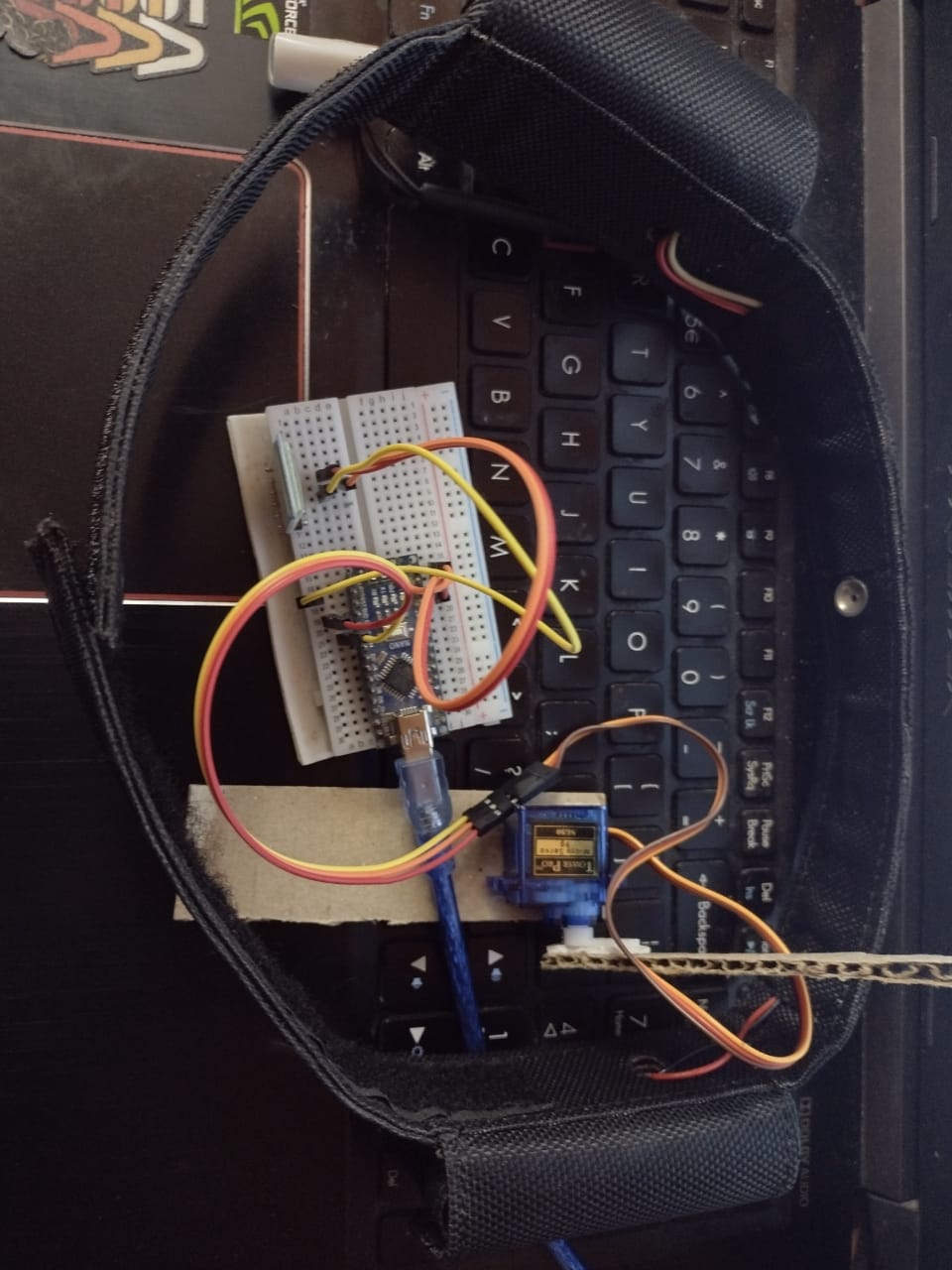
It is a brain-controlled robotic joint, so the user can control their artificial limb using their brain. Some practice might be required to consider focus levels. If more electrodes are added to it, it can be highly accurate as well.
How we built it
Challenges I ran into
Interfacing the headset and configuring it further was a bit troublesome.
What we learned
I learned about EEG, had to go through some research papers, and also gained motivation to solve real-world problems
What's next for Brain Controlled Robotic Joint
I'll try to gather funds and increase the number of electrodes in my headset, to convert it into a fully-fledged prosthetic arm that can be used in real time. (basically turn this prototype into a product)
Citations
[1] Laurell, Katarina, Bo Larsson, and Orvar Eeg-Olofsson. "Prevalence of headache in Swedish school children, with a focus on tension-type headache." Cephalalgia 24.5 (2004): 380-388. [2] Seo, Ssang-Hee, Jung-Tae Lee, and Marius Crisan. "Stress and EEG." Convergence and hybrid information technologies 27 (2010). [3] Ha, Unsoo, et al. "A wearable EEG-HEG-HRV multimodal system with simultaneous monitoring of tES for mental health management." IEEE transactions on biomedical circuits and systems 9.6 (2015): 758-766. [4] Vanitha, V., and P. Krishnan. "Real time stress detection system based on EEG signals." (2016). [5] Fingelkurts, Andrew A., et al. "Impaired functional connectivity at EEG alpha and theta frequency bands in major depression." Human brain mapping 28.3 (2007): 247-261.


Log in or sign up for Devpost to join the conversation.