-
-
thumbnail
-
-
-
-
-
Inspiration
Over 253 million people live with vision impairment worldwide, yet less than 1% of published books exist in Braille. Even those who can read Braille face a slow, tactile-only experience with no way to quickly scan a full page. We asked: what if a smartphone camera could read Braille for you, instantly?
What it does
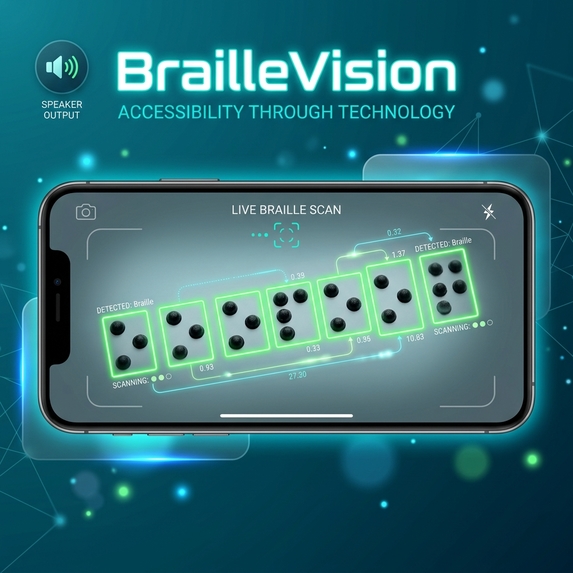
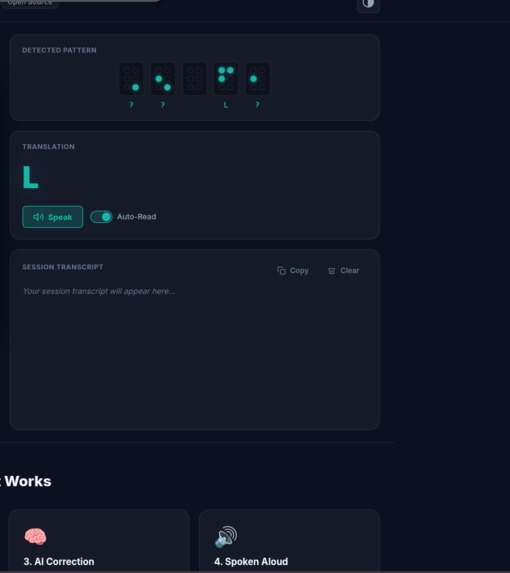
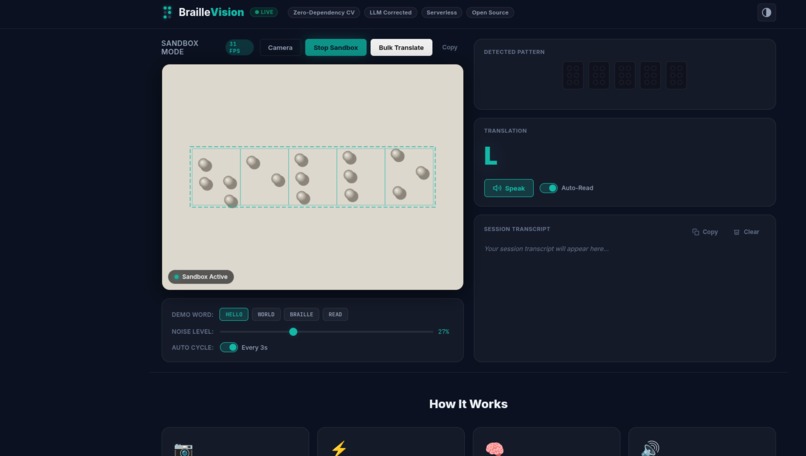
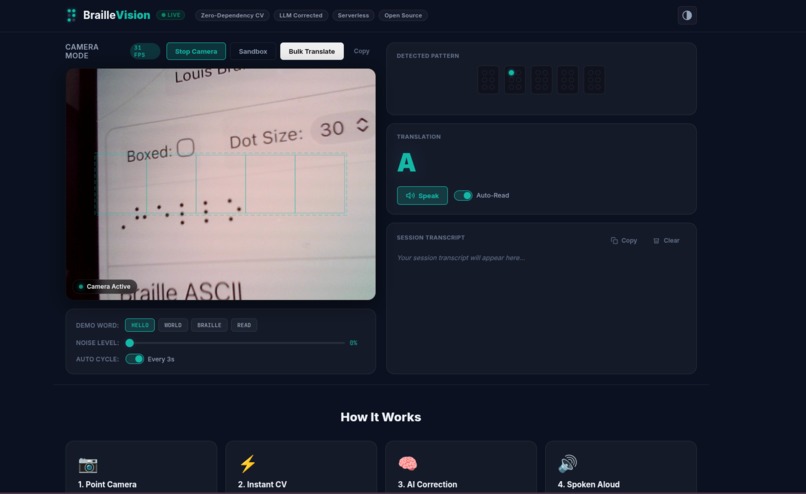
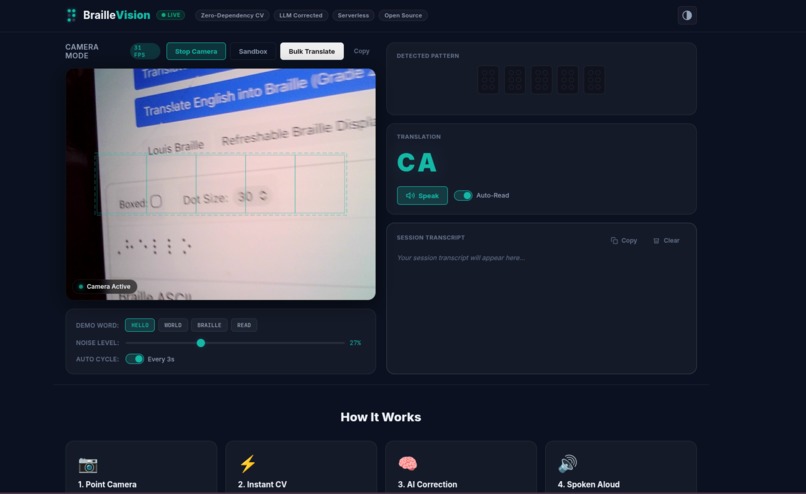
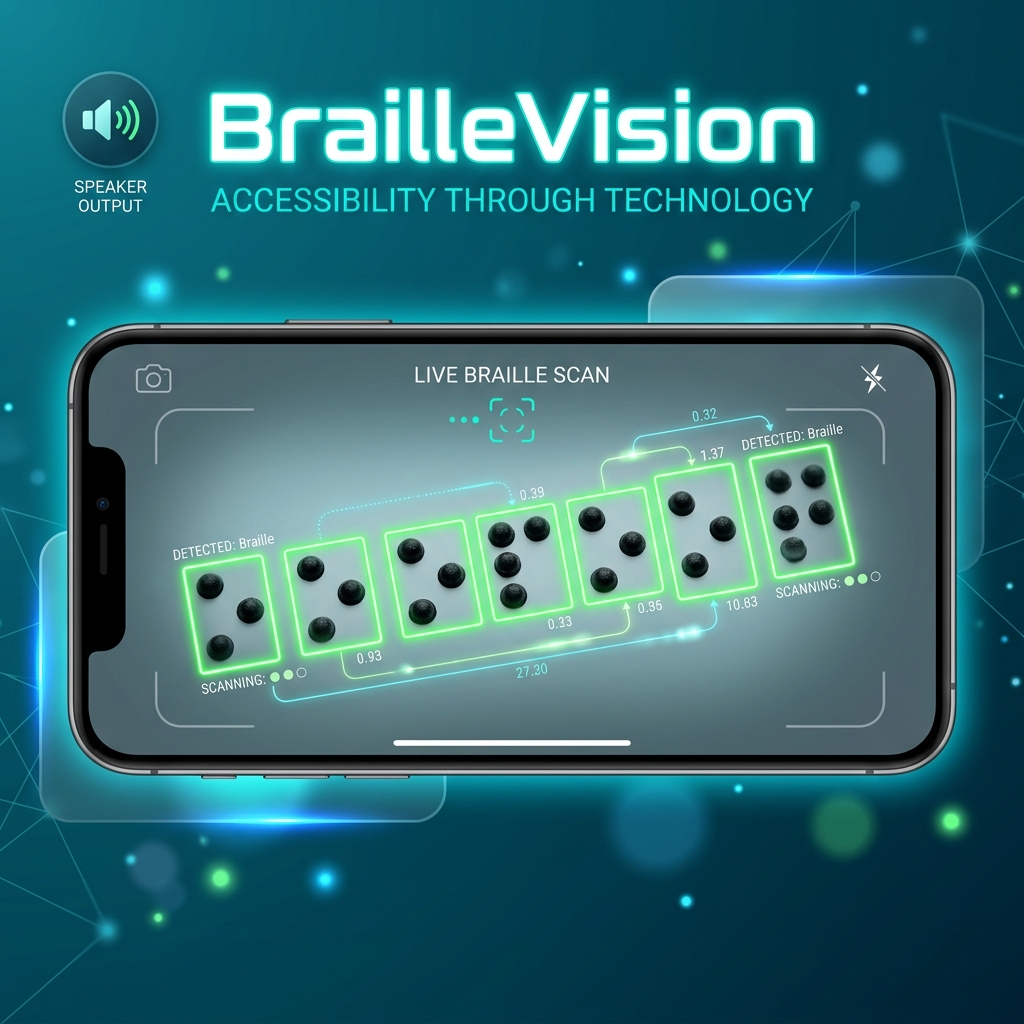
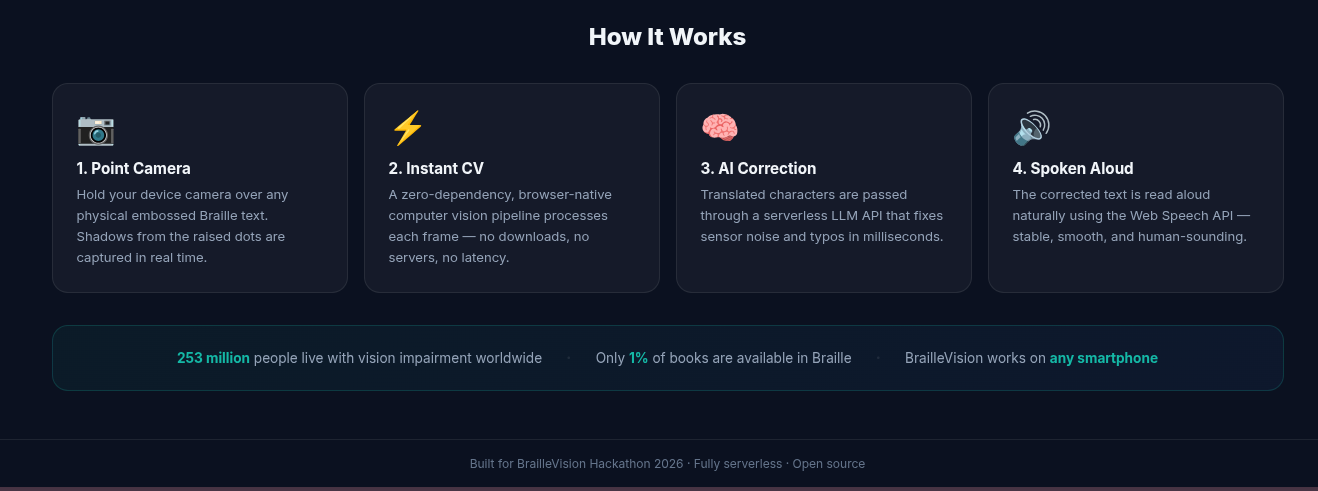
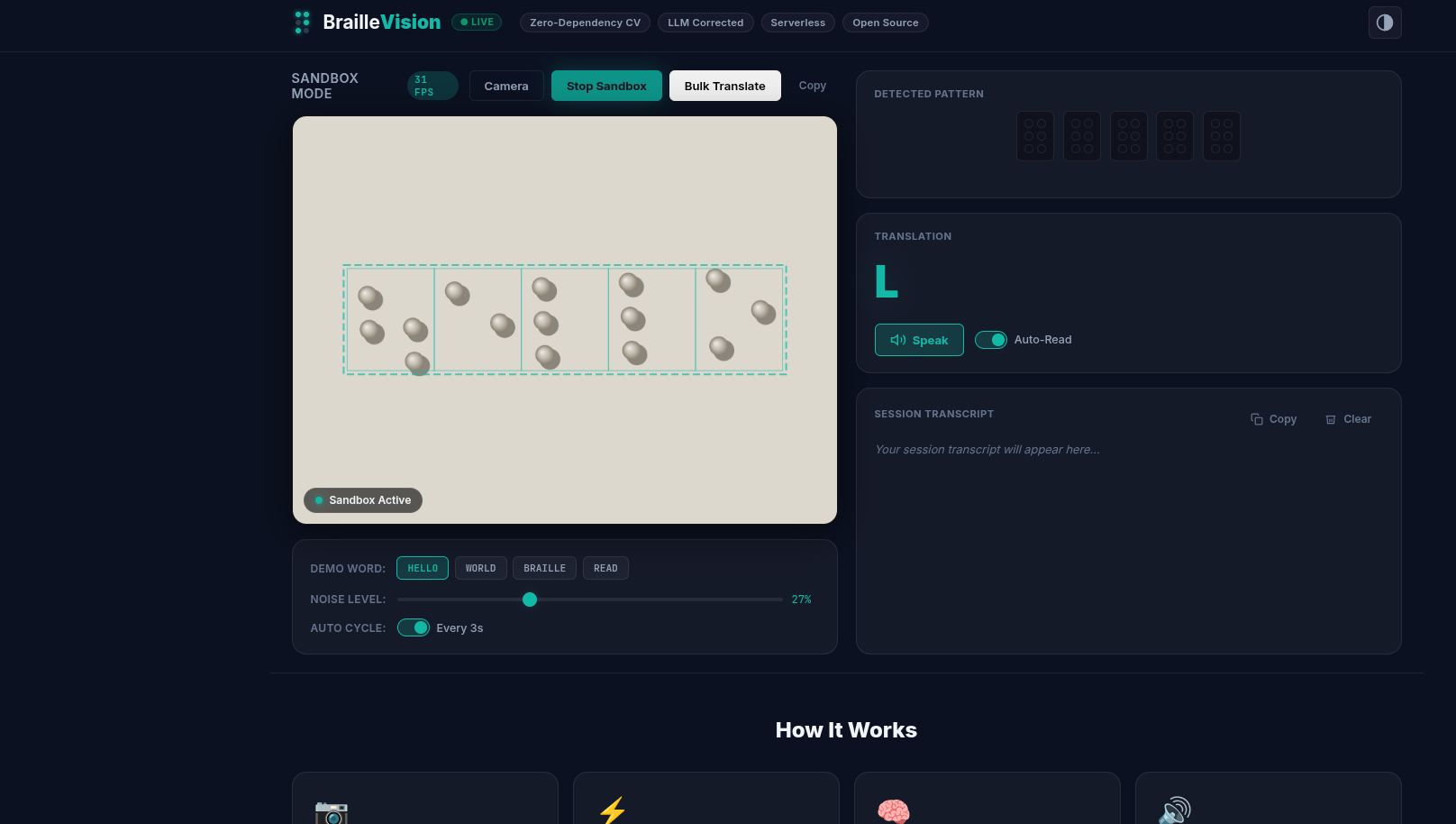
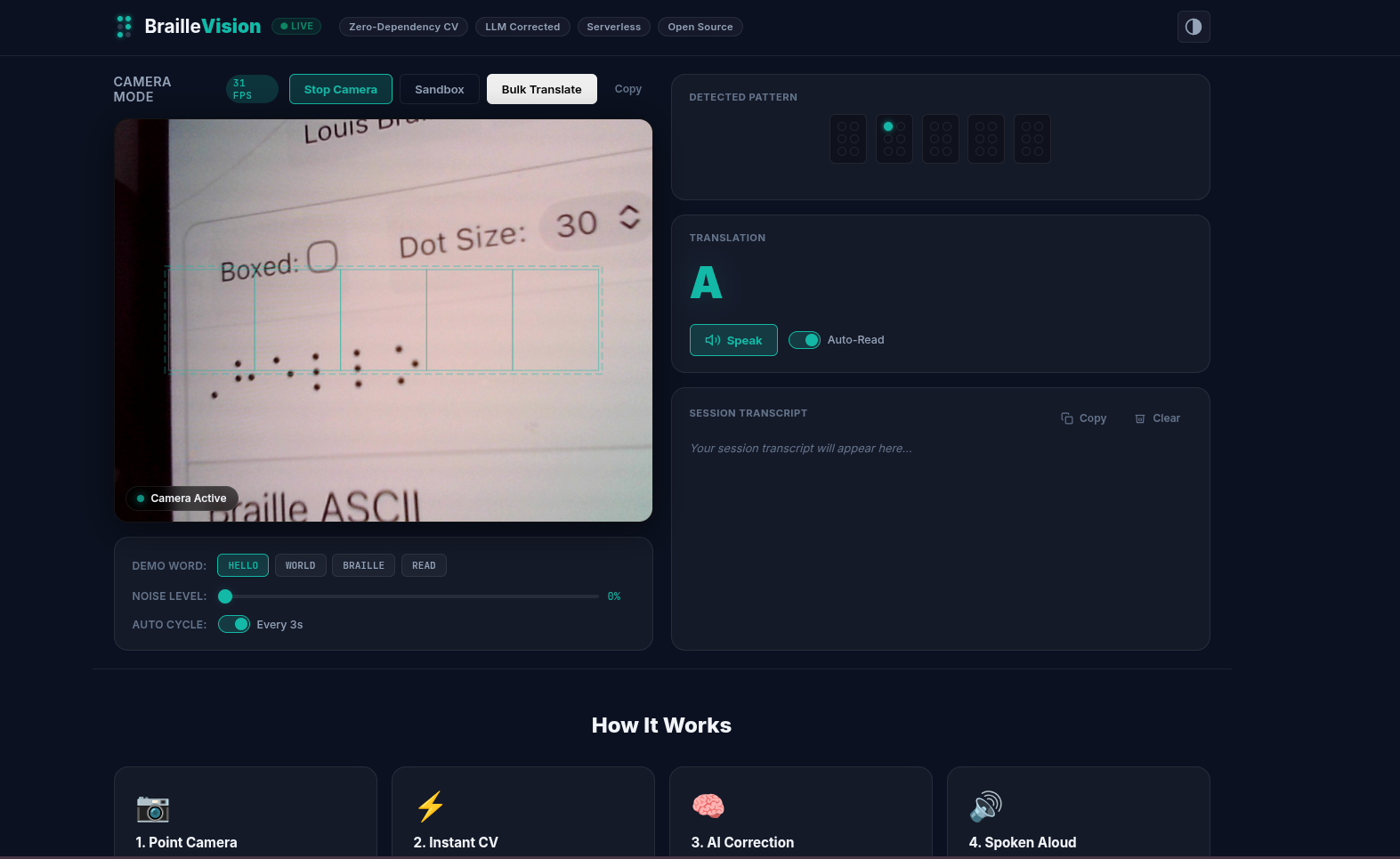
BrailleVision is a real-time, browser-native Braille reader. Point your phone camera at any physical embossed Braille page — the app detects the raised dot patterns using computer vision, translates each 2×3 Braille cell to English, and speaks the result aloud using text-to-speech. A Bulk Translate mode captures entire pages and builds a full readable passage. No app download. No server. Just a URL.
How we built it
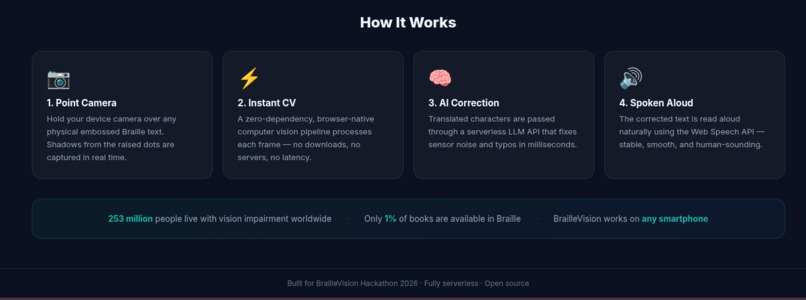
- Zero-dependency CV Pipeline: Instead of loading the 8MB OpenCV.js library (15s load time), we wrote a pure JavaScript Canvas 2D pixel-analysis pipeline that runs at 30+ FPS with sub-1s startup.
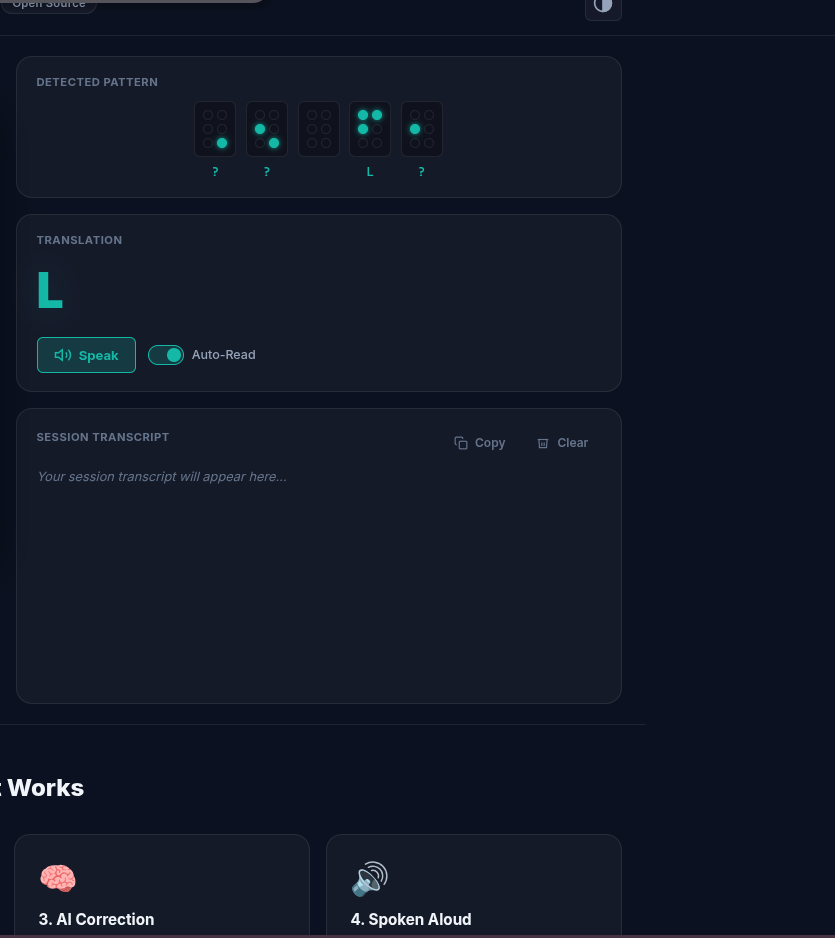
- Braille Tracker: A temporal majority-vote stabilizer smooths out noisy frames so the translation doesn't flicker.
- LLM Post-Correction: A Vercel serverless function calls GPT-4o-mini to fix detection errors and produce clean English output.
- Web Speech API: Stabilized TTS reads translations aloud naturally.
- Bulk Translate Mode: Aggregates frame-by-frame translations into a full passage with copy-to-clipboard support.
- Accessibility-first: ARIA live regions, high-contrast mode, keyboard navigation, and screen reader support baked in.
Challenges we ran into
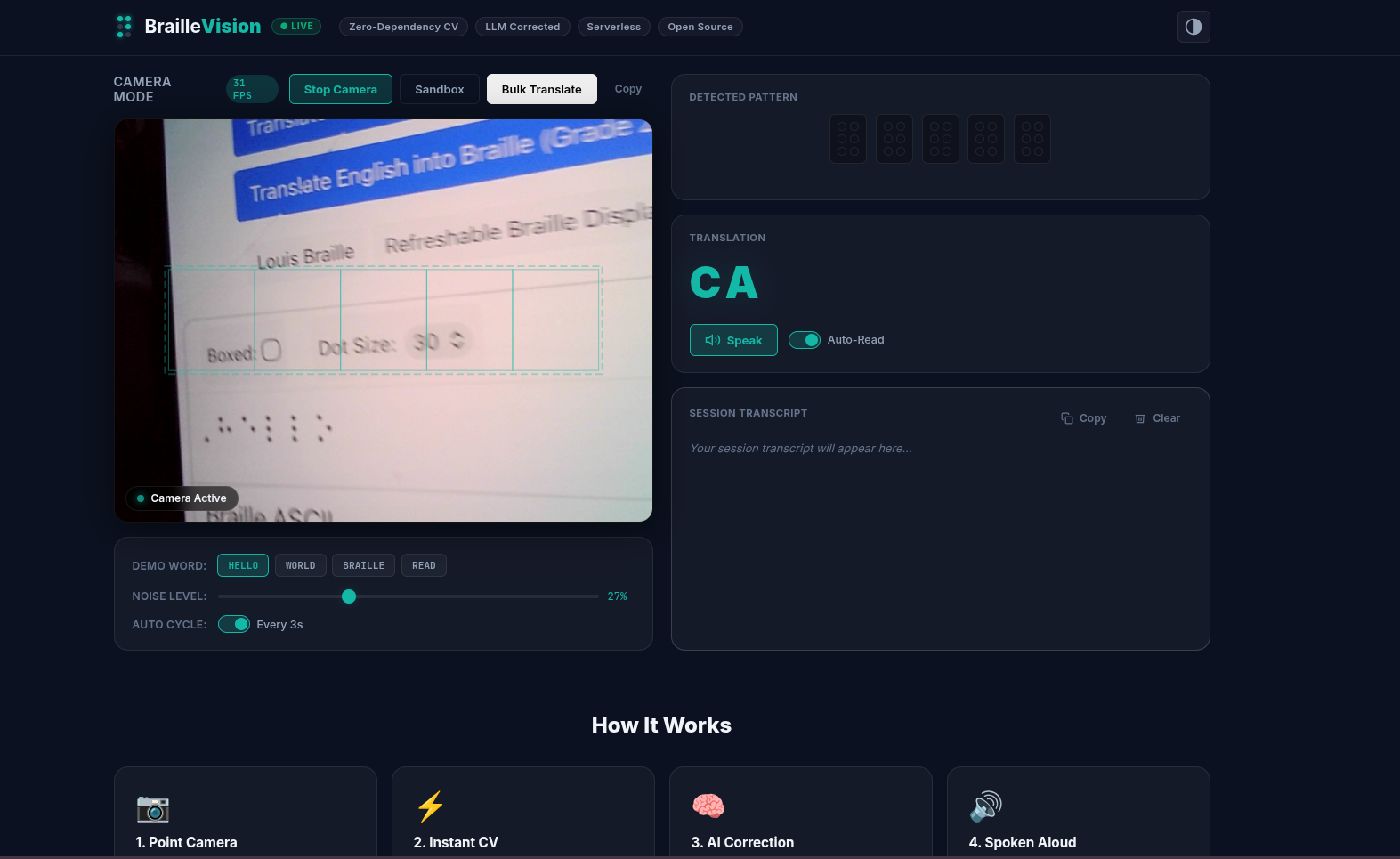
- Physical embossed Braille produces only shadows, not color contrast — detecting these reliably across different lighting conditions required careful pixel-mean threshold tuning.
- Replacing OpenCV.js with a lightweight pure-Canvas pipeline while maintaining detection accuracy was a significant engineering challenge.
- Stabilizing real-time translation to avoid character flickering required building a custom temporal voting tracker.
Accomplishments that we're proud of
- Sub-1-second load time with zero external CV dependencies
- Fully serverless — zero infrastructure cost
- Works on any device with a browser and camera
- Complete accessibility compliance (WCAG AA)
What we learned
Lightweight, purpose-built pipelines consistently outperform general-purpose libraries for constrained use cases. Browser APIs (Canvas, Web Speech, Clipboard) are powerful enough to build real assistive technology without any backend.
What's next for BrailleVision
- Multi-line Braille page scanning with automatic line detection
- Support for Grade 2 contracted Braille
- Offline PWA mode (no internet required)
- Export translated passages as audio files
Built With
- css3
- html5-canvas-api
- javascript
- node.js
- openai-gpt-4o-mini
- vercel
- vercel-serverless-functions
- web-speech-api

Log in or sign up for Devpost to join the conversation.