-
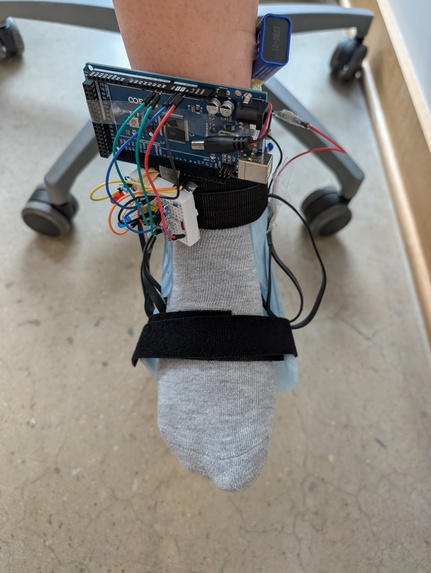
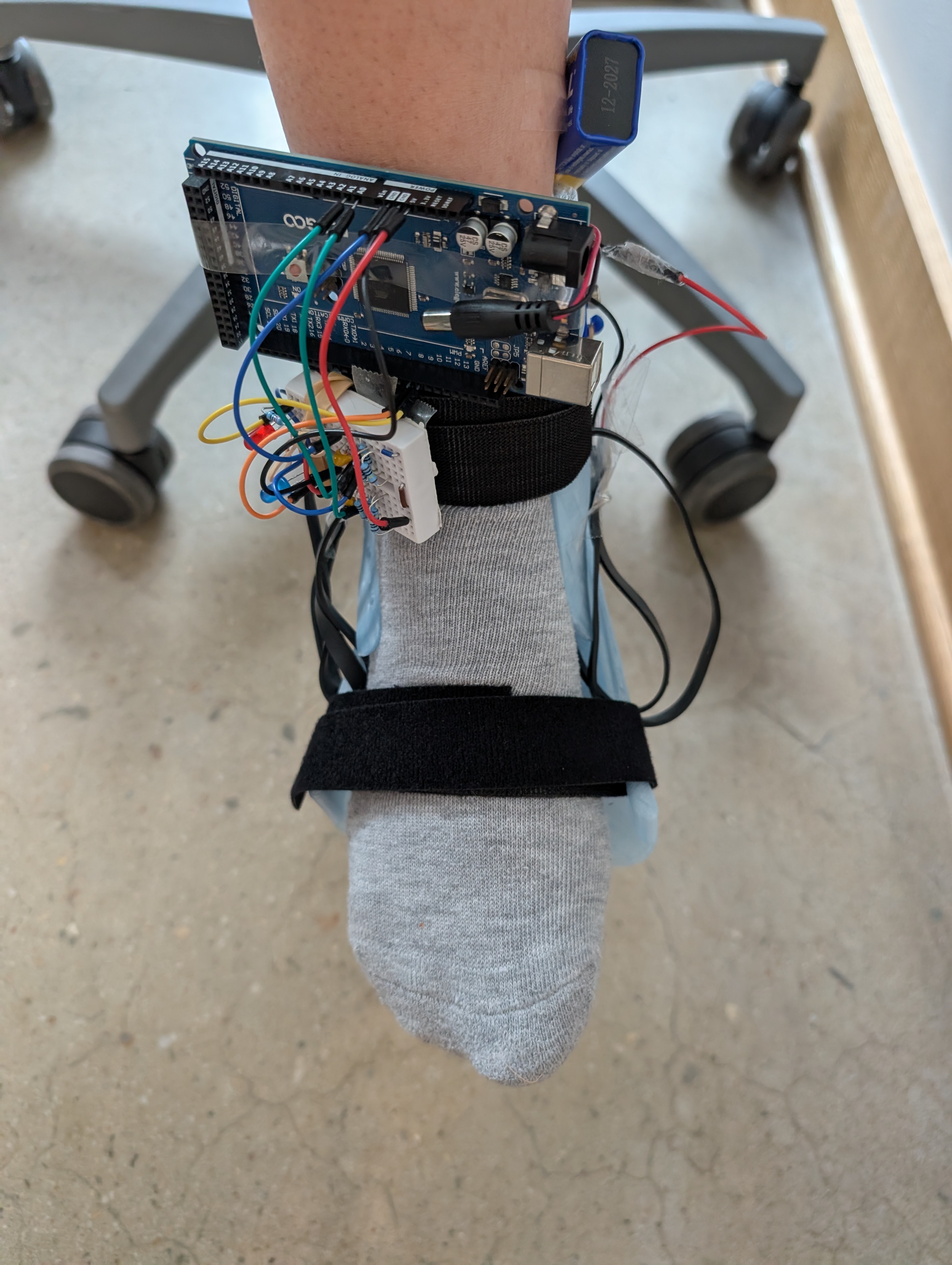
Front View of Brace
-
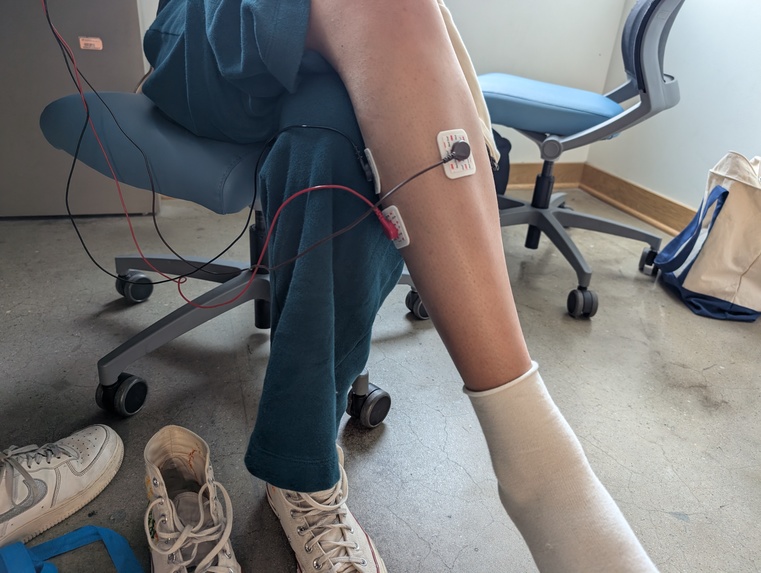
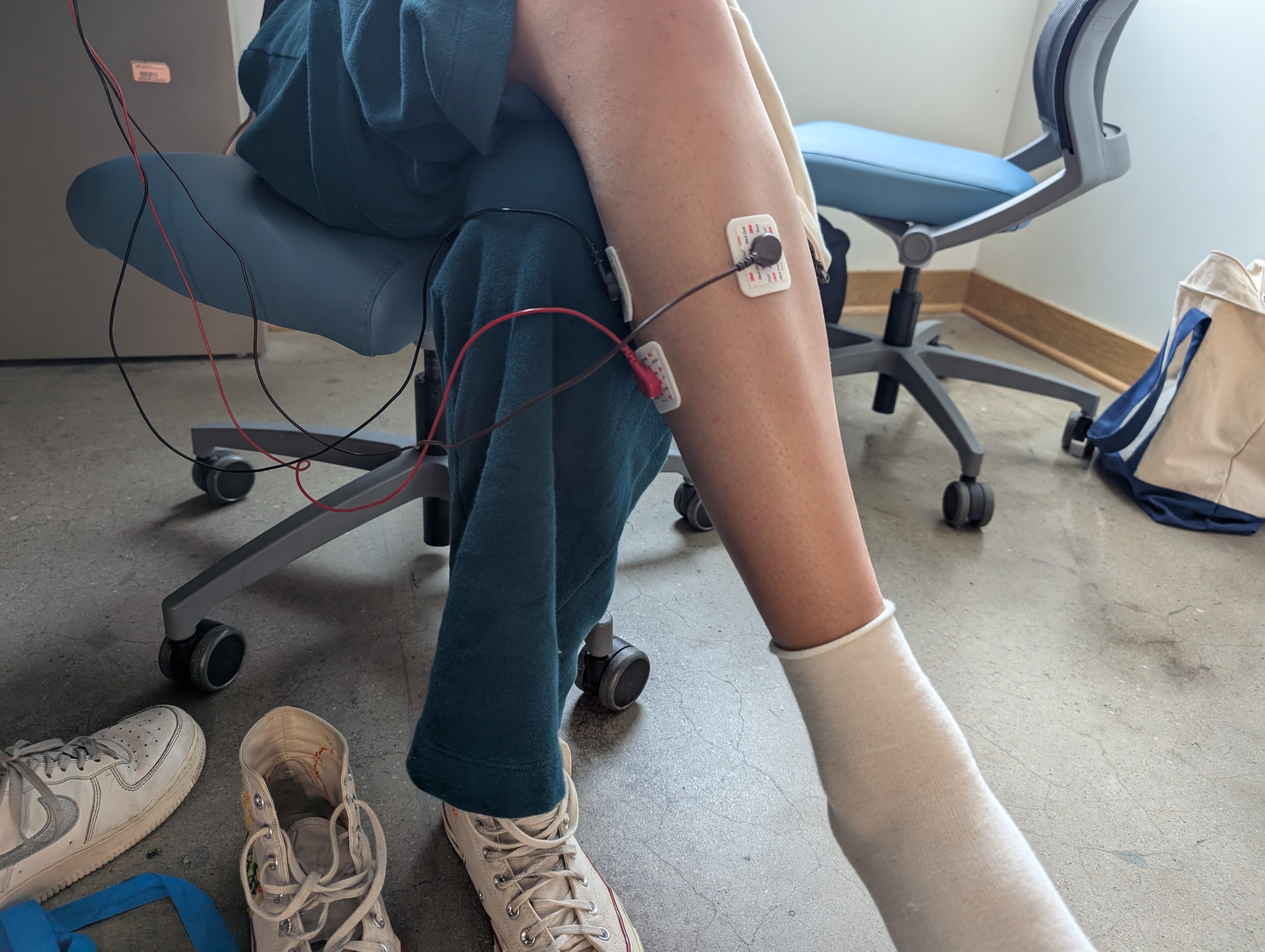
EMG Placement
-
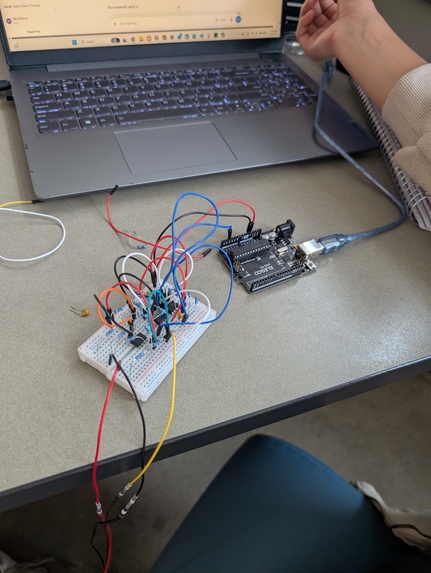
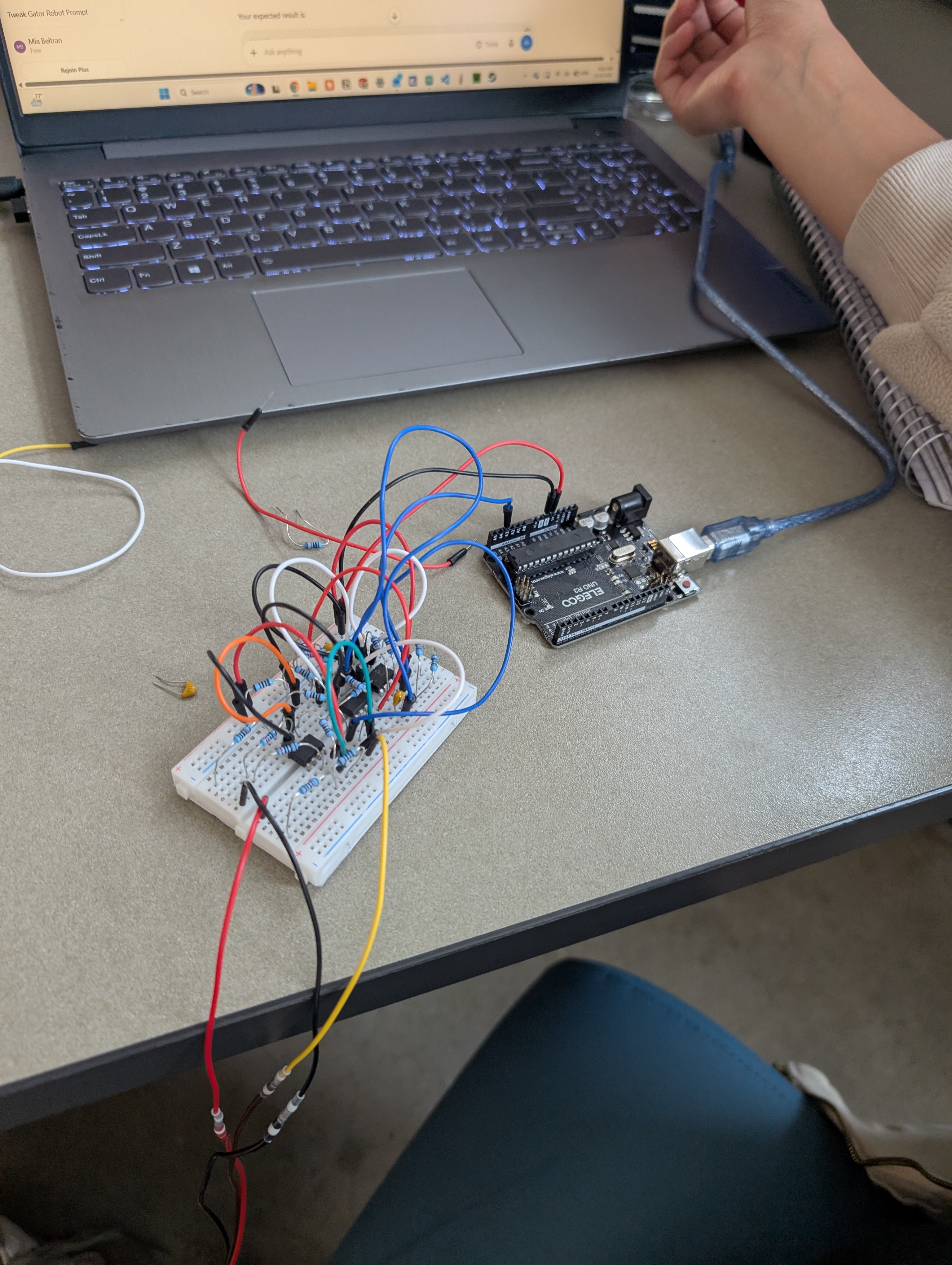
EMG Prototype Circuit
-
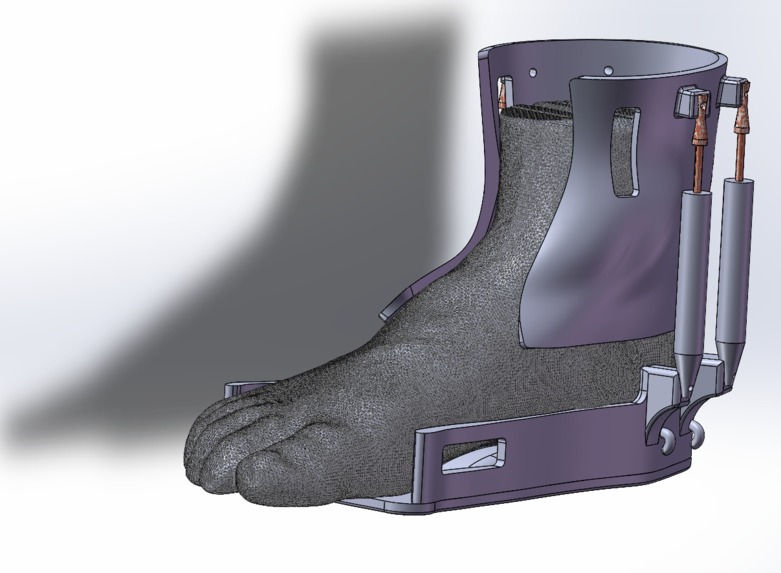
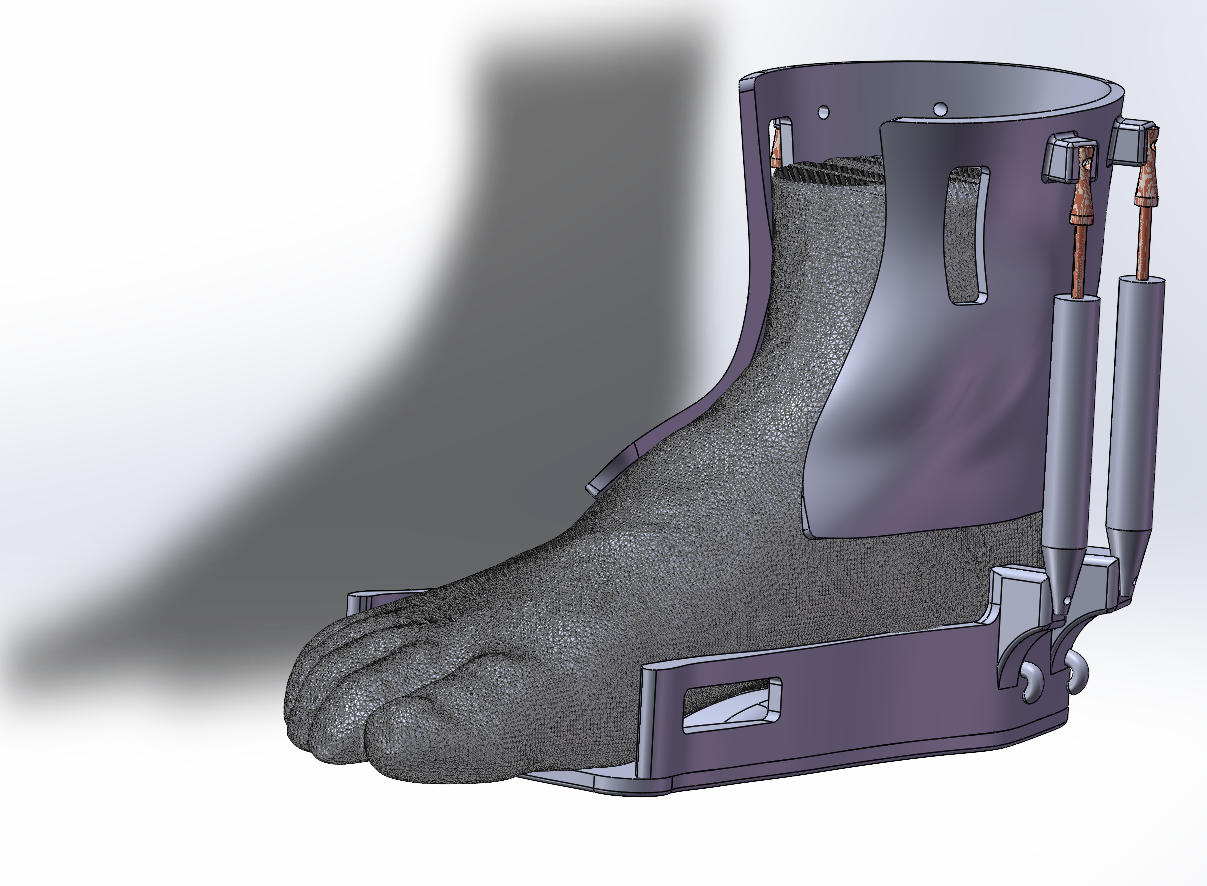
Full CAD Brace
-
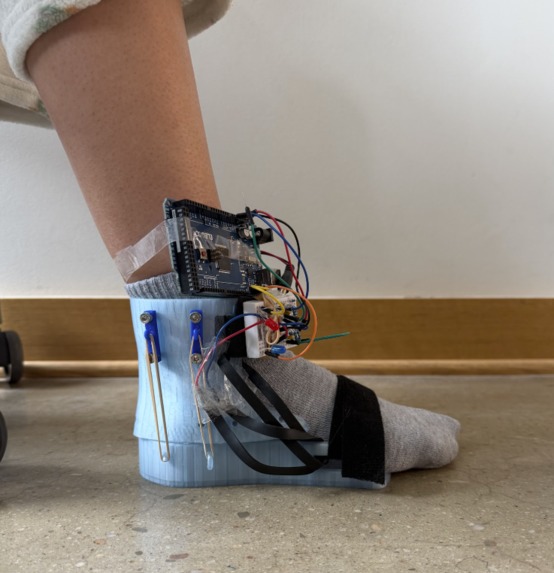
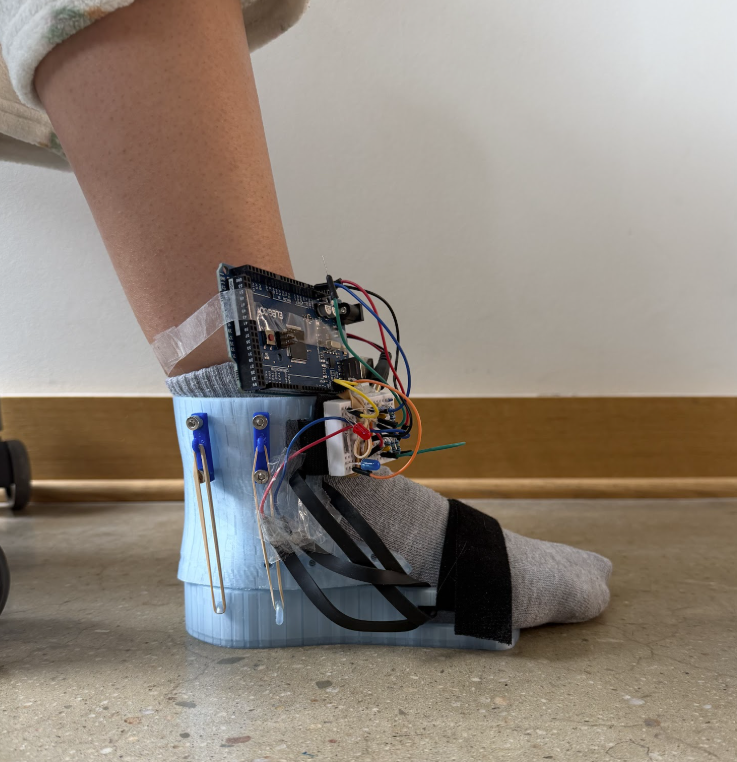
Side View
Inspiration
After reviewing common athlete injuries our team realized multiple people had ankle sprains. Furthermore a member's favorite basketball player also had one. We found out ankle sprains are one of the most common injuries in sports, especially during sudden cuts, jumps, and changes in direction. Traditional ankle braces provide constant support, but they can also restrict natural movement and reduce athletic performance. We wanted to create a system that allows athletes to move freely during normal motion while providing increasing support only when the ankle approaches dangerous positions that could lead to injury.
What It Does
Our project is an adaptive ankle brace that changes its level of support based on the user's movement. During normal athletic activity, the brace remains flexible and allows natural ankle motion. As the ankle begins to rotate toward potentially unsafe angles, the brace gradually increases resistance in its magnetorheological (MR) hydraulic dampers to help prevent excessive inversion and reduce the likelihood of a sprain.
The system combines rotational awareness and surface EMG monitoring for fatigue to detect how the ankle is moving and how the surrounding muscles are responding in real time. These all influence what information the user receives as well as the support/MR resistance that is electrically provided.
When the brace detects danger, the user gets a "Danger mode approached" alert on their phone and Apple Watch, asking whether to increase stiffness. The notification has Increase and Decrease stiffness buttons, which send the choice back to the brace. LEDs on the brace show the current stiffness level: green for low, yellow for medium and red for high.
How We Built It
We developed both a digital design and a physical proof-of-concept prototype.
For the mechanical design, we created a custom ankle brace in CAD that integrates a variable-resistance support mechanism with MR hydraulic dampers. The brace structure was designed to fit around the ankle while maintaining comfort, flexibility, and stability.
For sensing, we used:
Potentiometers to measure ankle position and rotation. Stretch sensors to measure ankle rotation. EMG (electromyography) sensors to measure muscle activity in the lower leg. TLV272 and MCP6002 op-amps to filter unwanted noise and amplify the signal, with Arduino boards reading the EMG. An ESP32 devkit to process sensor inputs, determine when additional support should be activated, and communicate with the user.
For alerts, the ESP32 connects over WiFi (including a phone hotspot) and sends push notifications through ntfy, a free notification service. They appear on the phone and mirror to the Apple Watch, so no custom app is needed. The user's response comes back to the ESP32 the same way and sets the stiffness level.
The sensor data is analyzed continuously. When the system detects ankle motion approaching unsafe ranges, it can increase resistance within the brace mechanism, helping stabilize the joint before an injury occurs.
Challenges We Faced
One of the biggest challenges was creating a system that provides protection without limiting normal movement. Initially we imagined using a stiff brace, but this would not be novel or different than current market options. We then moved towards adaptive support systems using motors, pulleys, and elastics. Each of these support mechanisms though required either bulky electronics or difficult to control resistances. So we settled on MR hydraulics, which allow for an electrically controlled microhydraulic that does not require the large components of many other dampers. It is also semi-active, so it requires few moving parts.
Another challenge was working with low-amplitude EMG signals. We had to design amplification, filtering, and signal-conditioning circuits to reliably capture muscle activity while minimizing noise.
Integrating the electronic components with a wearable mechanical structure was also difficult. The brace needed to remain lightweight and comfortable while still housing sensors and support mechanisms. The stretch sensors were particularly tricky as they were significantly larger than the ideal length.
Getting the ESP32 onto WiFi was harder than expected. Phone hotspots often default to 5 GHz or WPA3, which the ESP32 can't use, so we had to debug the connection before the alerts worked.
Modelling organic shapes is often a slow and arduous process. One member spent the majority of their time just doing the upper brace CAD. Given all the other pieces we were making, we ran out of time to do organic modelling for the lower brace too, although we tried to use some tricks to make it more life-like. Future work with more time would spend that effort in organic modelling.
Finally, translating biomechanical concepts into a practical prototype required extensive testing and adjustments to both the hardware and CAD design. Not being able to manufacture the hydraulics meant that we created prototype versions and a final CAD submission.
What We Learned
Throughout this project, we gained experience in biomechanics, wearable technology, sensor integration, signal processing, and CAD design. We learned how EMG signals can be used to monitor muscle activation, how motion sensors can track joint position, and how multiple data sources can be combined to create an adaptive support system.
We had never used an ESP32's WiFi or Bluetooth capabilities, nor had we used any of the op-amp ICs that we came across. We learned to send two-way notifications between the ESP32 and an Apple Watch. Most of us had never gathered EMG data, although we had done EKG work, which was helpful in transferring over. In our design we had to make a 60 Hz filter to remove wall outlet noise. Finally, applying Wheatstone bridges to stretch sensors was a new application of an old theory.
Future Development
Future versions of the brace could incorporate more advanced control algorithms and compact variable-stiffness mechanisms. Additional testing with athletes would allow the system to be refined and personalized for different sports, movement patterns, and injury risks.
Our long-term goal is to create a wearable injury-prevention system that protects athletes without sacrificing mobility, allowing support only when it is truly needed.

Log in or sign up for Devpost to join the conversation.